
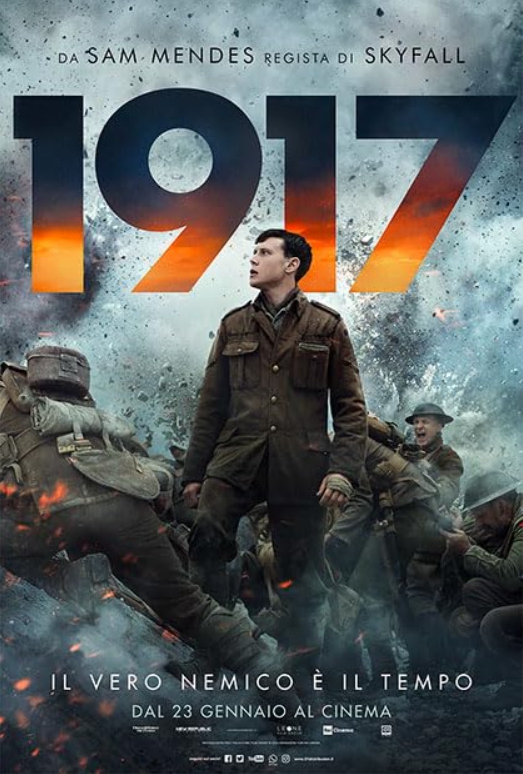
What the Film Is About
“1917” is an immersive World War I drama that follows two British soldiers as they traverse deadly terrain to deliver a vital message intended to save hundreds of lives. While the narrative is anchored in this urgent military mission, its heart lies in a personal and psychological odyssey through fear, loss, sacrifice, and hope beneath the relentless pressure of war. The film unfolds almost in real time, emphasizing not only the horrors that lie outside but also the emotional transformation that happens within. As the central characters confront both natural and man-made obstacles, the story becomes a meditation on duty, mortality, and the fragile thread of humanity that persists in the grimmest circumstances.
At its core, “1917” is less concerned with battle strategy or grand heroics than with the intimate cost of war. The film thrusts its audience into a soldier’s disorienting, relentless perspective, asking us to inhabit the vulnerability of youths grappling with impossible expectations. The journey is both physical and existential as it probes what it means to endure, to care for others amid chaos, and to find pockets of grace in a landscape scarred by violence.
Core Themes
“1917” explores themes of sacrifice, the arbitrary brutality of war, the endurance of individual will, and the fleeting nature of compassion against an indifferent backdrop. At its heart, the film grapples with the question of whether individual acts of decency can pierce the impersonal machinery of conflict. The raw urgency of the characters’ mission underscores how violence and destruction consume personal agency, yet the protagonists repeatedly assert small but profound moments of agency and kindness.
Loyalty—both to one’s comrades and to a larger cause—is interrogated throughout the film. The characters must weigh obedience to orders against their own morals and instincts, creating a tension between duty and empathy. The film is also steeped in the theme of time—how it stretches, compresses, and sometimes stands still in traumatic circumstances. The ticking clock not only introduces suspense but also reflects on the arbitrary drawing of lines between life and death, action and inaction.
Released in 2019, “1917” resonated against the backdrop of a global landscape still riven by conflict, nationalism, and questions about the human cost of war. Its themes remain painfully relevant, underscoring that the fundamental challenges of recognizing a shared humanity amid polarized ideologies and violence—and the courage required to reach across those divides—are as urgent today as they were a century ago.
Symbolism & Motifs
The film’s visual storytelling is rich with recurring motifs and symbols that amplify its larger messages. One of the most striking is the use of the continuous, unbroken shot: the camera’s relentless movement mimics the inescapable forward push of time and fate, forcing both characters and viewers to confront each moment without respite. This technique also emphasizes the isolating experience of war, as the protagonists are rarely afforded the comfort of distance or retrospection.
Nature emerges as a key motif, serving both as an adversary and as a source of fleeting beauty. Barren landscapes, muddy trenches, and waterlogged fields reflect both the physical and psychological devastation of war, underscoring the soldiers’ vulnerability. Water—whether as rivers to be crossed, fields to be waded, or streams that offer a rare moment of cleansing—becomes a symbol of both danger and renewal.
Other recurring symbols include abandoned buildings and ruined churches, which speak to the dissolution of faith, home, and civilization in wartime. The cherry blossoms carried by a character evoke memory, loss, and the longing for life beyond conflict. Even personal objects—photographs, letters, and dog tags—are imbued with meaning, representing the thin threads that tie the characters to their loved ones and their pre-war selves.
Key Scenes
Key Scene 1
A pivotal scene unfolds when the protagonists must traverse a desolate no-man’s-land, moving through a landscape littered with corpses and decaying machinery. This passage is crucial because it confronts the audience with the senseless destruction endemic to war—every step is heavy with risk and the remnants of lives lost. More than mere suspense, the scene’s emotional power lies in its visual argument: war flattens individuality, reducing soldiers to anonymous bodies. Yet, amidst this, the central characters assert their humanity through their interactions and determination to keep moving, suggesting that even in the darkest environments, empathy and partnership persist as acts of defiance.
Key Scene 2
Midway through the film, an encounter with a civilian—a French woman sheltering with an infant amid the ruins—serves as a profound thematic crossroads. Here, the violence of the war is interrupted by the vulnerability and innocence of noncombatants. This interlude is vital not for its plot implications, but for how it reframes the experience of war. The protagonist’s choice to offer comfort and sustenance, despite his pressing mission, underscores the tension between duty to orders and duty to conscience. The film suggests that acts of compassion, however small or transient, acquire immense significance in a world gone mad with violence. It is in these tiny, often unnoticed moments that meaning survives.
Key Scene 3
As the film approaches its climax, a scene in which the protagonist races against the clock to reach a commanding officer and deliver his message bursts with both literal and metaphorical urgency. The physical act of running through a barrage of explosions, past soldiers preparing for a doomed assault, captures not just the weight of one mission but the larger futility and courage of war. This moment crystallizes the film’s overarching meditation: that heroism is not about grand victories but about perseverance and principles in the face of overwhelming chaos. The decision to frame this as a desperate sprint through the trenches accentuates both the individual’s insignificance and the miraculous significance of choosing to try anyway.
Common Interpretations
Critics and audiences frequently interpret “1917” as a meditation on the individual’s role within the brutal machinery of war. Many argue that its immersive technique—placing the viewer in the immediate, continuous flow of time—serves to personalize the scale of loss and heroism typical of war stories, shifting focus from statistics and strategies to the lived, moment-to-moment experience of combat. The film is praised for highlighting the anonymity and vulnerability of soldiers, as well as the ways small, individual acts create ripples of significance in an otherwise indifferent environment.
Some viewers emphasize the film’s existential overtones, viewing the characters’ journey as a metaphor for life itself: a relentless march through uncertainty, defined as much by small gestures of kindness and solidarity as by suffering. Others interpret the narrative as ultimately anti-war, using the characters’ ordeal not to celebrate military valor but to interrogate the costs and futility of conflict. There are also readings that focus on the film as an elegy—an attempt to bridge past and present, ensuring that the sacrifices and traumas of earlier generations are not forgotten in an age increasingly disconnected from the direct scars of global war.
Films with Similar Themes
- Saving Private Ryan (1998) – This film also immerses viewers in the experiences of ordinary soldiers caught in extraordinary conflict, focusing on the messy realities of war and the bonds forged among those who must endure it.
- Paths of Glory (1957) – Stanley Kubrick’s anti-war classic interrogates military bureaucracy, blind obedience, and the moral choices soldiers make within the machinery of war, echoing the themes of duty versus conscience found in “1917”.
- All Quiet on the Western Front (1930/2022) – Both versions adapt Erich Maria Remarque’s novel to show the psychological toll of World War I, offering unvarnished depictions of battlefield horror and the loss of innocence among young soldiers.
- Dunkirk (2017) – Christopher Nolan’s film similarly uses real-time pacing and innovative cinematography to plunge audiences into the immediacy and chaos of warfare, emphasizing survival, sacrifice, and the resilience of the human spirit.
Ultimately, “1917” communicates that even in the most catastrophic, dehumanizing circumstances, the individual’s courage, compassion, and commitment to duty matter profoundly. Its focus on the interior landscape of its characters serves as a reminder that history is shaped not only by grand events and strategies, but also by the quiet, often unnoticed choices people make for one another. In a world too often numbed by spectacle, “1917” insists on the persistent value of empathy, endurance, and ethical resolve—and on the fragile but vital possibility of meaning amid chaos.