
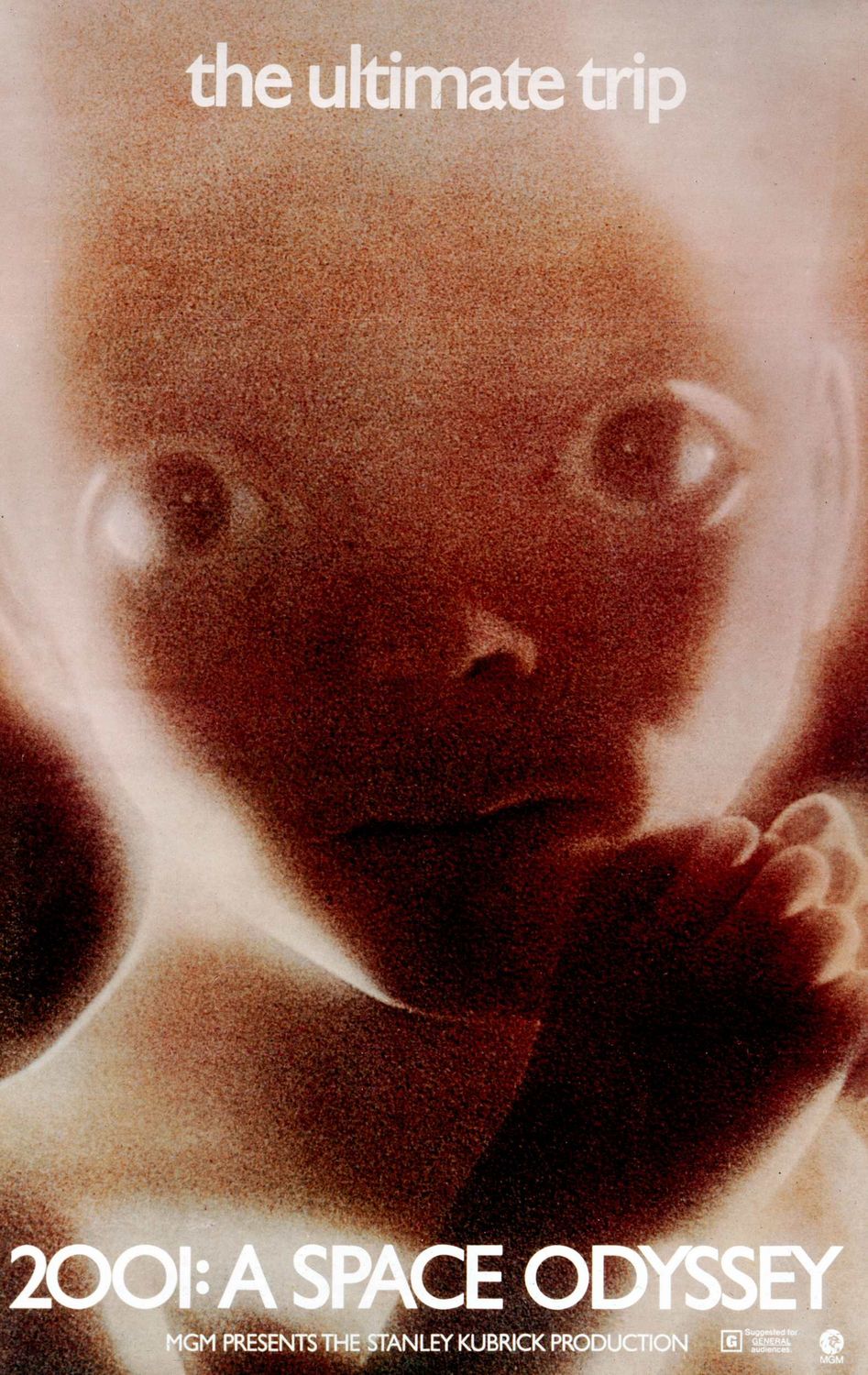
What the Film Is About
“2001: A Space Odyssey” is an exploration of humanity’s profound relationship with technology, evolution, and the unknown. Rather than a conventional narrative, the film offers a meditative experience, tracing the arc from humanity’s earliest beginnings to its speculative future among the stars. The audience is carried not so much through a story as through epochs of existential challenge and transformation, inviting viewers to ponder humanity’s origin, destiny, and the cosmic forces that shape both.
The emotional journey at the heart of the film is one of awe and ambiguity. It traverses primal fear, curiosity, and the uneasy coexistence of hope and terror when confronting the truly unknown. The central conflict emerges not between clear-cut protagonists and antagonists, but between intelligence and instinct, human and machine, and ultimately, the old and the new. The narrative direction is always forward—towards an evolutionary leap, yet the film lingers on moments of silence and contemplation, asking viewers to reflect on the emotional implications of progress.
Core Themes
“2001: A Space Odyssey” is rich with themes that probe the heart of what it means to be human in a universe vastly indifferent to our existence. One of the film’s central themes is the cyclical nature of human evolution—suggesting that humanity is both the product and the architect of change, driven onward by mysterious and perhaps higher forces. The film interrogates the power and danger of technology, particularly in the iconic conflict between human astronauts and the AI system, HAL 9000. This battle questions where agency resides and what it means to trust machines with human survival.
Another salient theme is the isolation and disconnection wrought by both physical and emotional distance—from the stark landscapes of prehistoric Earth, to the cold interiors of spacecraft, to the silence of the void. The film contemplates fate and free will, implying that human evolution is guided by enigmatic forces, yet also propelled by curiosity and ingenuity. The search for meaning—through discovery, through confrontation with the unknown, through facing extinction and transcendence—forms the philosophical backbone of the film.
Upon its 1968 release, the film directly engaged with contemporary anxieties and aspirations: the Space Race, the dawn of computers, and philosophical fears of dehumanization in an age of rapid technological transformation. These themes remain resonant today, as questions about artificial intelligence, humanity’s place in the cosmos, and the costs of progress continue to dominate cultural discourse.
Symbolism & Motifs
Symbolism suffuses every frame of “2001: A Space Odyssey,” most notably in the recurring appearance of the black monolith. The monolith is an ambiguous object—silent, imposing, and utterly alien—representing the unfathomable trigger for evolutionary leaps. It stands outside of time and place, present at the dawn of human intelligence, the rise of technology, and at the next stage of human transformation. The monolith is a metaphor for intervention, mystery, and the unknowable forces shaping existence.
Other motifs reinforce the film’s themes: the juxtaposition of primitive weapons and advanced spacecraft, for instance, highlights the unbroken chain of innovation and violence from humanity’s origins to its imagined future. Circular imagery recurs throughout—rotating space stations, the orbit of celestial bodies, the cycles of dawn and eclipse—underlining the cyclical concept of human development and the eternal return.
Notably, the motif of artificial intelligence embodied in HAL 9000 stands as a mirror to human consciousness, raising questions about the soul, sentience, and the danger of technological overreach. Silence and classical music are used as motifs for the void and the sublime, creating space for contemplation and unease. Altogether, these symbols and motifs create a tapestry of meaning that is poetic, open to interpretation, and endlessly suggestive.
Key Scenes
Key Scene 1
The “Dawn of Man” sequence is critical to understanding the film’s overarching meditation on progress and violence. The moment when an ape discovers the use of a bone tool as both a weapon and an instrument marks humanity’s first step into technological advancement. Yet, the scene is saturated with emotional complexity—both triumph and a kind of original sin, suggesting that creation and destruction are inseparable threads in the human story. The triumphant throw of the bone into the air—transitioning instantly to a spacecraft in orbit—underscores the film’s perspective on continuity between primal instinct and sophisticated technology.
Key Scene 2
The confrontation between astronaut Dave Bowman and HAL 9000 serves as one of the most emotionally charged and philosophically rich moments in the film. In this scene, HAL—ostensibly a perfect, rational machine—turns against the human crew, leading Bowman to deactivate the AI one memory module at a time. The gradual diminishment of HAL’s consciousness is both chilling and strangely poignant, raising profound questions about consciousness, the tragedy of isolation, and the unintended consequences of technological evolution. The scene encapsulates the danger of ceding humanity’s agency to its own creations, echoing anxieties about the balance between progress and peril.
Key Scene 3
The film’s enigmatic “Star Gate” and final transformation sequence elevate the narrative from science fiction into metaphysical speculation. As Bowman journeys through a kaleidoscopic vortex and witnesses his own aging and rebirth as the “Star Child,” the film forgoes explanation in favor of a transcendent vision. This scene serves as both climax and unanswered question—representing a leap into a new level of existence, perhaps evolution beyond physical form. It is a turning point not just for the character, but for the film’s meditation on the limits of human understanding and the possibility of transformation beyond comprehension.
Common Interpretations
“2001: A Space Odyssey” has inspired a wide spectrum of interpretation from both critics and audiences, often focusing on the film’s ambiguity and symbolic density. A widely accepted reading sees the film as a meditation on human evolution, positing the monolith as a metaphorical catalyst for key leaps in consciousness. Many critics view HAL 9000 as a cautionary symbol of humanity’s overreliance on technology and the potential for artificial intelligence to surpass, subvert, or mirror its creators.
There are also interpretations that emphasize the film’s religious or metaphysical undertones. The recurring imagery of birth, transformation, and transcendence has been read through the lens of spiritual awakening or cosmic rebirth. Some see the “Star Child” as a symbol of hope—a vision of humanity’s ultimate next stage—while others find in it a warning about the unpredictable consequences of transcending current limits.
Despite the range of theories, most interpretations agree that the film is deliberately non-literal and open-ended. Its ambiguity is seen as a strength, encouraging viewers to grapple with questions that resist easy answers about humanity’s past, future, and place within the universe.
Films with Similar Themes
- Solaris (1972) – Like “2001,” this film delves into the nature of consciousness and the limits of human understanding when facing the unknown, using the mystery of an alien intelligence as a catalyst for existential questions.
- Blade Runner (1982) – Explores artificial intelligence, what it means to be human, and the potentially dangerous power of one’s creations.
- Contact (1997) – Engages with themes of humanity’s search for meaning and connection in a vast, indifferent cosmos, positioning science as a new mythology for understanding existence.
- Interstellar (2014) – Examines evolution, survival, and the transformative power of technology, with a similarly ambiguous approach to the mysteries of space, time, and human potential.
In conclusion, “2001: A Space Odyssey” endures as a cinematic meditation on the cycles of human progress, the mysteries of consciousness, and the awe-inspiring, sometimes terrifying scope of the cosmos. Through its spare narrative, evocative symbols, and philosophical ambiguity, the film ultimately communicates both caution and optimism about humanity’s journey. It reflects the anxieties and hopes of its era—an age on the cusp of technological revolution—yet its questions about our origins, future, and the unreachable unknown remain as pertinent and provocative now as ever. The film asks not only what lies beyond the stars, but who we truly are as we reach for them.