
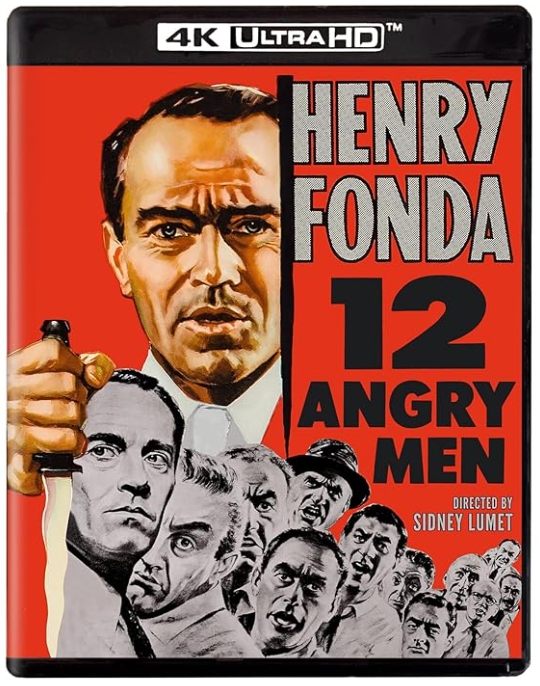
What the Film Is About
“12 Angry Men” is a film that places viewers within the crucible of a single, sweltering room where twelve jurors deliberate the fate of a young man accused of murder. The emotional core of the film lies in this group’s confrontation—not just with the task of reaching a verdict, but with their personal biases, moral convictions, and the structures of justice underpinning society. The central conflict is less about the details of the crime and more about the process of collective reasoning. As tempers flare and arguments unravel, the narrative exposes the delicate line between certainty and doubt. The story is propelled by the jury’s struggle to move from prejudice and presumption to careful reflection, shaping an emotionally charged journey toward understanding and moral responsibility.
This high-stakes process unfolds almost in real time, escalating from initial indifference and impatience to intense self-examination. The film challenges its characters—and by extension, its audience—to consider what it means to truly listen, to question one’s impulses, and to commit to justice not as a static concept, but as a rigorously examined human endeavor. “12 Angry Men” is less a whodunit than a meditation on how truth is sought, discovered, and debated within the confines of society’s most essential institutions.
Core Themes
At its heart, “12 Angry Men” is a searching exploration of justice, prejudice, and moral courage. The first, most prominent theme is the fragility and complexity of justice. The film scrutinizes the American legal principle of “innocent until proven guilty,” inviting viewers to contemplate how easily personal prejudices, assumptions, or fatigue can undermine this ideal. It underscores the importance of due diligence in civic duty, warning of the dangers that haste, apathy, or ego pose to the process.
The spectrum of prejudice—racial, class-based, generational—threads through every exchange. The jurors’ backgrounds and predispositions silently shape the way they interpret evidence and testimonies. In this, the film confronts the persistence of bias, illuminating how often society’s decisions are haunted by unexamined beliefs. This theme was especially powerful at the time of the film’s release, when America was wrestling with civil rights upheaval and questioning its democratic ideals.
Connected closely is the idea of moral courage: the willingness to stand alone against a majority in the name of conscience. Juror #8’s initial dissent is not only an act of skepticism but a challenge—a prompt for others to consider the weight of their decision. The film thus offers a profound commentary on responsibility, empathy, and the necessity of dialogue in resolving collective conflicts. Even now, the film’s themes remain urgently relevant as societies worldwide grapple with systemic bias and the challenge of protecting individual rights within flawed systems.
Symbolism & Motifs
“12 Angry Men” is rich in symbolism and recurring motifs, each reinforcing the film’s contemplations on truth, judgment, and collective responsibility. The single, claustrophobic jury room becomes a microcosm of society, a crucible in which hidden biases, suppressed anger, and differing values are brought to the surface. The oppressive heat in the room is symbolic of the mounting tension and stress, as tempers flare and the task grows more daunting. Only after substantial progress is made—only when the group genuinely listens and debates—does the relief of rain and a cooling breeze arrive, mirroring a kind of moral cleansing.
Another important motif is the repeated use of hands—pointing, clenching, or fidgeting. These gestures subtly evoke the act of accusation, guilt, and nervous responsibility. The passing of evidence from one hand to another dramatizes not merely the shifting of physical objects, but the transfer of burden, scrutiny, and doubt.
Finally, the recurring motif of the switchblade knife acts as a symbol for both the supposed certainty of evidence and the need to question assumptions. The knife becomes a literal focal point for debate but also represents the ease with which even the most damning “facts” can be misunderstood when filtered through the lens of human error or carelessness.
Key Scenes
Key Scene 1
The scene in which Juror #8 first votes “not guilty,” standing alone among eleven dissenters, is crucial for understanding the film’s message. This moment is not about bravado but about integrity—a willingness to shoulder discomfort and resist the pressure of conformity. The emotional force of this scene arises from the recognition that justice depends on the courage to slow down and doubt, even in the face of overwhelming opposition. It’s a scene that asks viewers: Who will speak up when silent acquiescence is easier?
Key Scene 2
A later exchange, in which the jurors examine and discuss the reliability of a key piece of eyewitness testimony, brings the film’s core themes into sharp relief. Here, the group moves from abstract argument to detailed, empathetic consideration of the witness’s circumstances. This scene is not simply about reinterpreting evidence; it is about moving beyond stereotypes and superficial judgments. The film reveals the dangers of relying on partial truths and uncovers the complexity involved in truly understanding another person’s experience—whether a defendant, a witness, or a fellow juror.
Key Scene 3
The climactic moment when the last holdout reveals the personal prejudice underpinning his insistence on a “guilty” verdict serves as the film’s moral apex. As this character’s anger dissolves into vulnerability, the film reaches its final, sobering stroke: judgments shaped by hatred or trauma are inherently compromised. This turning point stands as a statement about the necessity of self-examination, collective patience, and the difficult but redemptive work of empathy. It’s a moment that elevates the film beyond the parameters of a legal drama to a meditation on healing the divides that run through communities and conscience.
Common Interpretations
Critics and audiences have frequently interpreted “12 Angry Men” as an enduring meditation on the strengths and weaknesses of jury-based democracy. One primary reading frames the film as a defense of rational, skeptical thinking—a call to guard against the dangers of groupthink and apathy in civic life. In this interpretation, Juror #8 becomes an emblem of the ideal citizen: skeptical, ethical, and committed to fairness.
Another common interpretation focuses on the film’s exposure of prejudice, examining how the juror’s personal histories and societal stereotypes warp the pursuit of justice. Here, the film is regarded as an indictment of systemic bias—one that resonates with ongoing social struggles to ensure just treatment for all. A more nuanced perspective considers “12 Angry Men” as a study in character and change, with the jury room representing a pressure cooker where self-reflection becomes possible, if not inevitable. In these readings, the film’s ultimate affirmation is of dialogue itself: the messy, incremental way that conversation leads to consensus—and, sometimes, to truth.
Films with Similar Themes
- To Kill a Mockingbird – This film similarly interrogates the complexities of justice, prejudice, and moral conscience within the American legal system, focusing on the dangers of bias and the value of integrity.
- A Few Good Men – Through its courtroom drama, this film examines questions of authority, personal responsibility, and the pressure to conform, echoing the moral dilemmas of “12 Angry Men.”
- The Verdict – This story follows a flawed lawyer seeking redemption, closely paralleling themes of justice, doubt, and ethical advocacy against a backdrop of institutional indifference.
- Rashomon – Kurosawa’s classic explores the subjectivity of truth and the unreliability of eyewitness testimony, resonating with the way “12 Angry Men” challenges viewers to reconsider the nature of evidence and perspective.
Ultimately, “12 Angry Men” is a film that compels us to reflect on the hard work embedded in collective decision-making. It reminds us that justice is not automatic—it is a fragile, evolving ideal, dependent on the willingness of individuals to question, to listen, and to extend empathy even in the fraught terrain of disagreement. As relevant now as in the era of its creation, the film’s gaze remains fixed on the human heart at the center of every society—a heart capable of error, but also of hope and change when confronted with reason and compassion.