
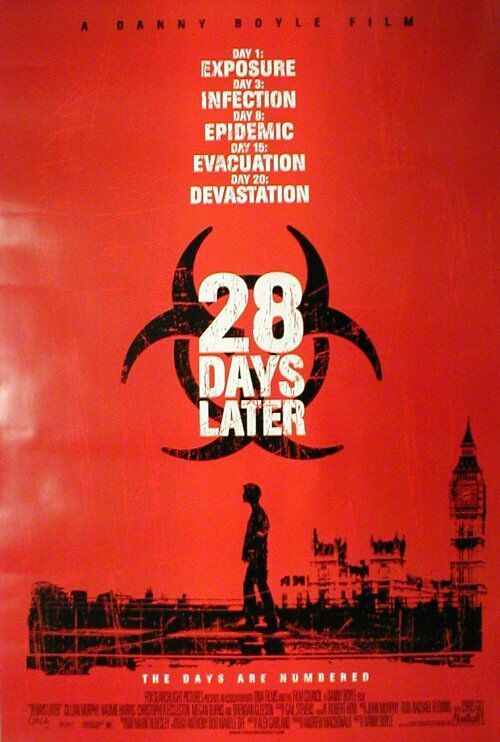
What the Film Is About
“28 Days Later,” directed by Danny Boyle, is not merely a straightforward horror film or disaster spectacle—it is a relentless journey through a world stripped of structure, questioning the very boundaries of humanity. At its core, the film charts the emotional evolution of individuals forced into an extreme environment, confronting the collapse of social order and the fragility of both personal and collective morality. Rather than focusing on the infected or the mechanics of the outbreak, the narrative centers on human response to chaos, painting a landscape where decency, hope, and violence are constantly at odds.
The central conflict is both external and internal—survival in the face of monstrous threats, and the equally daunting task of preserving one’s humanity when every familiar support system has vanished. Through the characters’ alliances, betrayals, and moments of intimacy, “28 Days Later” explores the difficulty of maintaining empathy and trust in circumstances that seem to reward brutality over compassion.
Core Themes
“28 Days Later” lays bare a host of pressing themes, both timeless and pointedly modern. The most evident is the exploration of civilization’s veneer and what happens when it is violently ripped away. The film interrogates the idea of morality under duress—not merely the struggle to survive, but the question of what is worth keeping (or discarding) when survival is at stake. The boundaries between human and monster blur, as acts of violence are committed not only by the infected but also by the uninfected, raising unsettling questions about the potential for darkness within us all.
Another significant thematic concern is the anatomy of power and its misuse. The film investigates how individuals and small groups reconstruct authority and hierarchy after societal collapse, often echoing the same systems of control and abuse that led to catastrophe in the first place. At heart, there is a consideration of resilience—the stubborn persistence of hope, love, and solidarity, however fleeting. The relevance of these themes in 2002, shadowed by global fears around terrorism, environmental disaster, and institutional mistrust, has only deepened in subsequent years, as “28 Days Later” continues to echo in a world facing new pandemics, social fracture, and debates over the nature of community.
Symbolism & Motifs
The film brims with potent visual and narrative symbols. One persistent motif is emptiness: wide shots of deserted London, silent cityscapes, and abandoned infrastructure conjure a post-apocalyptic loneliness, underlining civilization’s fragility. This emptiness is not just physical, but emotional—characters are forced to confront their own isolation, the loss of loved ones, and the absence of meaning in a ravaged world.
The motif of infection itself, far beyond its use as a plot device, operates as a metaphor for the contagious spread of violence and fear. The speed and ease with which civility unravels mirror the transmission of the virus, suggesting a deep unease about how quickly humans can turn on each other. Another recurring symbol is eye imagery—the film frequently focuses on the eyes of both the infected and the survivors, reflecting fear, recognition, brutality, and ultimately, moments of connection. This attention to eyes hints at themes of perception, awareness, and the ability (or failure) to see the humanity in others.
Lastly, the use of natural light—harsh, unfiltered, and clear—removes any romantic or comforting veil from the world. Unlike many traditional horror films, “28 Days Later” employs daylight for its most terrifying sequences, reinforcing the idea that the most troubling dangers are not lurking in the shadows but in plain view, a direct commentary on the visibility of violence and despair in contemporary society.
Key Scenes
Key Scene 1
The early sequence of the protagonist wandering through an abandoned London is essential to understanding the film’s existential message. The powerful absence of others, the eerie stillness, and the protagonist’s bewilderment evoke not just fear, but a sense of almost existential dread. It is here that the film lays the groundwork for its exploration of what remains when society’s scaffolding has fallen away—identity, agency, and, ultimately, the raw drive for connection. This moment immerses the audience in the emotional isolation that permeates the narrative, making the collapse of civilization personal and immediate.
Key Scene 2
A pivotal scene comes with the introduction of the military encampment, which initially appears to offer hope but quickly reveals more insidious threats. The officers’ plans and behaviors under the guise of restoring order expose the dangers of unchecked power and the predatory instincts that can arise in lawless environments. In this moment, the film’s commentary on the fragility of ethics and the capacity for abuse—even among supposed saviors—comes to the forefront. The scene powerfully interrogates who the real monsters are, challenging viewers to consider the limits of civility and the perils of authoritarianism.
Key Scene 3
One of the film’s final sequences, marked by frantic violence and desperate improvisation, offers a grim but ultimately redemptive reflection on sacrifice, transformation, and hope. As the protagonist resorts to extreme measures to protect others, the film questions whether survival justifies any act—or if, in the face of horror, one can still choose compassion or mercy. The denouement, framed by a fleeting sense of peace and the possibility of rescue, suggests that even in the aftermath of utter devastation, humanity’s fundamental values—a desire for connection, a willingness to help others—can endure. This closing note reframes the entire journey as one not merely of survival, but of reclaiming what it means to be human.
Common Interpretations
Critics and audiences have approached “28 Days Later” through a variety of interpretive lenses, most notably as an allegory for societal breakdown and the thinness of civilization’s moral fabric. Many see the film as a post-9/11 meditation on fear—how societies react to existential threats, the erosion of trust, and the hazards of viewing outsiders or the “infected” as irredeemably other. Others point to its ecological undertones, highlighted by imagery of nature reclaiming urban spaces and the consequences of scientific overreach, interpreting the narrative as a warning about humanity’s impact on the world and the dangers of unchecked technological ambition.
Some viewers focus on its psychological reading: the outbreak as a metaphor for trauma, grief, and the struggle to find meaning after unthinkable loss. The film’s ambiguity—leaving the boundaries between hero and villain, human and monster—deliberately blurred, instead asks the audience to contemplate the choices they might make under similar circumstances. While there is broad consensus that “28 Days Later” is centrally concerned with the ethics of survival and the nature of hope, the film’s refusal to offer easy answers has encouraged ongoing debate about its ultimate position on human nature.
Films with Similar Themes
- The Road (2009) – Explores the endurance of love, hope, and morality in a devastated world, focusing on a father and son navigating post-apocalyptic dangers and the temptation to surrender to despair.
- Children of Men (2006) – Examines societal collapse, the erosion of empathy, and the possibility of redemption in a near-future without children, offering a meditation on hope in the face of extinction.
- Dawn of the Dead (1978/2004) – Uses the zombie apocalypse as a critique of consumer society, community, and the loss of individual agency within crisis, paralleling “28 Days Later” in its exploration of human behavior under pressure.
- The Mist (2007) – Focuses on fear, mob mentality, and the ease with which ordinary people can become monstrous when confronted with the unknown, mirroring the examination of group dynamics and the breakdown of social norms.
Ultimately, “28 Days Later” is a film that grapples with the most elemental questions of human existence: when civilization falls away, what is left? Through its unflinching portrayal of despair, brutality, and fleeting acts of kindness, the film contends that the struggle to remain humane—even when inhumane choices are easier—defines the core of our shared identity. By forcing viewers to confront the shadows within themselves as much as the dangers without, it remains a bracing reflection on society’s strengths and vulnerabilities in a crisis-ridden age.