
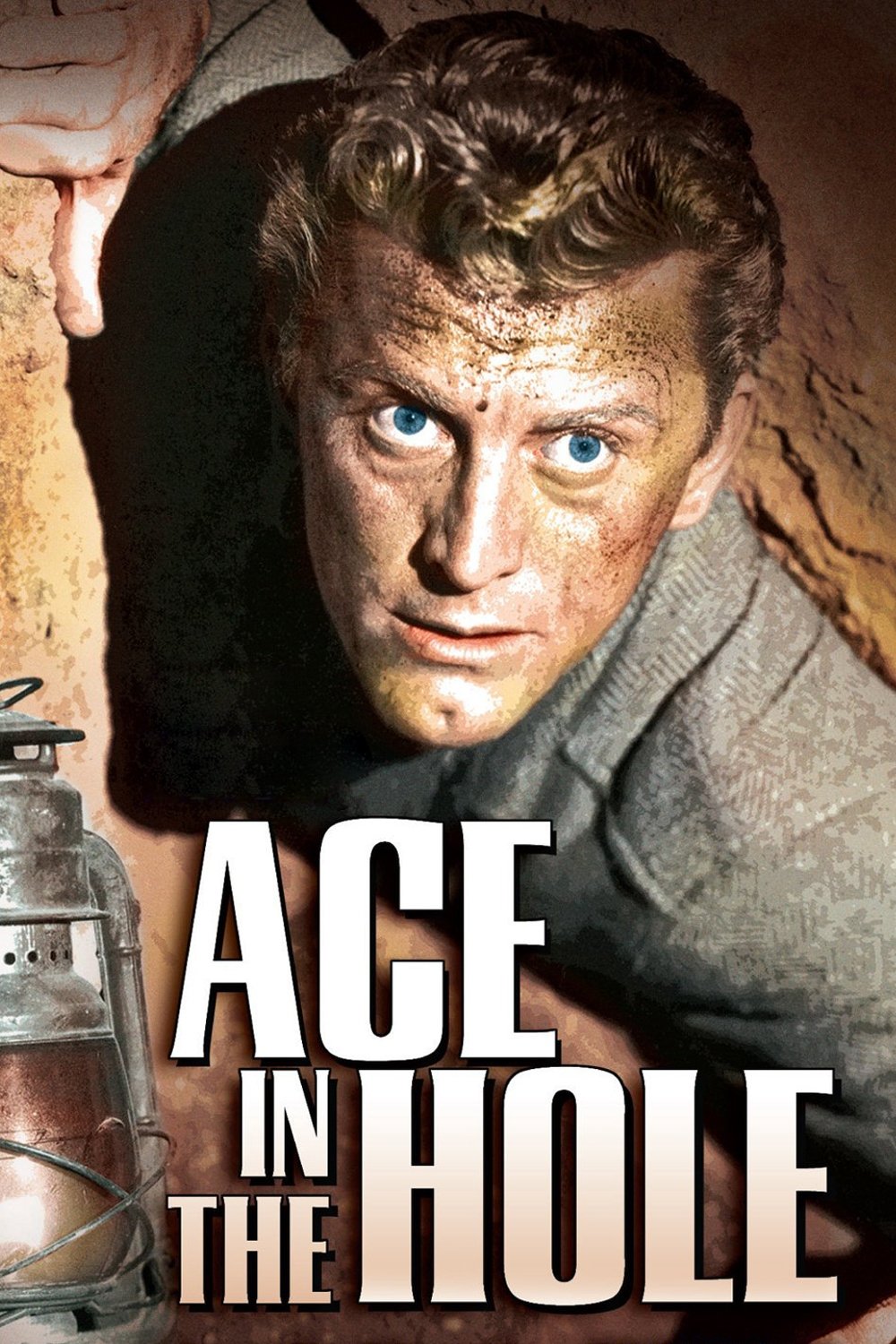
What the Film Is About
“Ace in the Hole,” directed by Billy Wilder in 1951, is a bleak exploration of ambition, media ethics, and the darker impulses lurking behind public spectacles. The film follows a disgraced newspaper reporter, Chuck Tatum, who stumbles on a story about a man trapped in a collapsed cave. Instead of facilitating a swift rescue, Tatum manipulates circumstances to turn the tragedy into a national sensation for his own professional gain. At its core, the film is less about the physical rescue attempt and more about the emotional unraveling—how greed, desperation, and the relentless pursuit of relevance drive people to transgress moral boundaries.
The narrative functions as an intense character study of Tatum’s ruthless hunger for redemption and recognition, set against the backdrop of a world all too eager to consume and capitalize on sensational news. The film’s emotional trajectory is marked by cynical calculation, escalating tension, and a sense of inevitable disillusionment that envelopes every character drawn into Tatum’s orbit.
Core Themes
At its heart, “Ace in the Hole” grapples with themes of media manipulation, moral decay, and the commodification of human suffering. Wilder’s film sharply criticizes how truth is often sacrificed for spectacle, especially in the realm of journalism. Tatum’s actions—engineering the prolongation of the rescue to keep public interest alive—expose the extent to which profit and personal ambition can distort communal values and empathy.
The film explores the intersection of individual ambition and collective complicity. Tatum is a singular, driven figure, but the crowds that converge on the rescue site and the other complicit parties underscore a broader societal appetite for sensationalism. The story unfolds during the postwar era—a time when the power of mass media and the emergence of the “event” culture were wielding increasing influence over American life. In an age of “fake news,” viral tragedies, and instant global coverage, this theme remains strikingly modern. “Ace in the Hole” also warns about the corrupting influence of self-interest, as individuals and institutions alike capitalize on disaster, eroding compassion and integrity in the process.
Symbolism & Motifs
Wilder employs a range of symbols and recurring motifs to reinforce the film’s central concerns. The literal hole in the mountain, for instance, serves as a metaphor for moral emptiness—a physical and psychological chasm that swallows integrity and conscience alike. The ever-growing carnival that springs up around the tragedy is another potent symbol: what should be a solemn rescue becomes a grotesque fairground, complete with rides, vendors, and rubbernecking crowds. The transformation of a crisis into entertainment powerfully underscores the dangers of media-fueled collective hysteria.
Reporters’ notebooks, microphones, and cameras recur as motifs throughout the film, highlighting the omnipresence—and intrusive power—of the media. The encroachment of outsiders onto the private suffering of the trapped man, Leo Minosa, and his family represents the dissolution of empathy beneath the weight of spectacle. Meanwhile, reflections and glass—often found in shots of Tatum watching events unfold—suggest a world mediated and distorted by perception, rather than direct experience. These elements combine to critique not just those who manufacture news, but also those who habitually consume it.
Key Scenes
Key Scene 1
A pivotal scene unfolds when Tatum successfully convinces the local sheriff and the construction crew to use a slower, riskier method for freeing Leo, all to prolong the story’s shelf life. This moment is essential not just for what it reveals about Tatum’s cunning, but for its emotional chill—empathy is methodically set aside for manufactured drama. The scene encapsulates the film’s central accusation: that personal advancement can outweigh basic decency when ambition eclipses morality. Viewers are forced to confront the consequences of elevating the story above the human beings at its core.
Key Scene 2
As the days wear on, the rescue site morphs into an impromptu festival, with families traveling miles to “witness history” from the sidelines. This sequence exposes the complicit relationship between media purveyors and their audience. The crowd’s festive attitude, even as a man’s life hangs in the balance beneath their feet, lays bare the dangers of detachment and dehumanization. Through visual and narrative juxtaposition, this scene challenges viewers to reflect on their own consumption of tragedy and sensation—how easily the boundary between empathy and entertainment blurs when confronting distant misfortune.
Key Scene 3
A crucial turning point arrives as Tatum, increasingly worn down by guilt and the mounting costs of his deception, attempts to orchestrate a more rapid rescue. By this stage, Leo’s fate is sealed, and Tatum’s efforts are both too late and self-serving. This culminating moment is less about potential redemption than about the irreparable harm done to all involved. The camera lingers on Tatum’s waning bravado, underscoring the film’s ultimate pessimism: that recognition of wrongdoing does not necessarily bring solace, restitution, or escape. Instead, it punctuates the film’s bleak outlook on human self-interest and the high price of exploitation.
Common Interpretations
“Ace in the Hole” is frequently interpreted as a scathing critique of tabloid journalism and the corrosion of ethical boundaries in the pursuit of fame and profit. Many critics see the film as a prescient warning about the dangers of media sensationalism, a theme that has only grown more relevant with the advent of 24-hour news cycles and social media. Audiences often read Tatum as both villain and tragic antihero—a cautionary example of what happens when ambition runs unchecked.
Other interpretations focus on the film as an allegory for postwar American disillusionment. Rather than celebrating individual achievement—a hallmark of the American dream—Wilder exposes the consequences of isolated ambition unfettered by conscience or community. Some have also pointed to the film’s exploration of complicity: how ordinary people become spectators and, by extension, participants in others’ suffering when mediated through spectacle. While the media-industry critique is most common, a parallel reading considers the film an indictment of a broader societal malaise—the tendency to treat real human drama as consumable content.
Films with Similar Themes
- Network (1976) – This film explores the corrosive pursuit of ratings and spectacle in television news, echoing “Ace in the Hole’s” focus on media manipulation and ethical collapse.
- Nightcrawler (2014) – Through its portrayal of an ambitious stringer who stages and exploits tragedy, “Nightcrawler” scrutinizes self-serving journalism and public complicity in sensationalism.
- To Die For (1995) – Gus Van Sant’s dark satire tracks a woman’s ruthless climb to broadcast fame, examining the blurring of morality and ambition under the spotlight, much like Chuck Tatum’s arc.
- All the King’s Men (1949) – Focusing on political ambition and the corrupting effects of power, this classic American drama draws thematic parallels to Wilder’s criticism of self-interest overruling ethical restraint.
In summary, “Ace in the Hole” stands as a timeless critique of the lengths to which people and institutions will go for attention, advancement, and success at the expense of truth and integrity. Wilder’s unsparing vision holds enduring resonance, inviting viewers to reflect on the ease with which empathy can be compromised, and on the collective responsibility society bears when it chooses spectacle over substance. The film’s relevance persists as both media and public continue to grapple with the consequences of prioritizing the extraordinary over the ethical—a question that remains as unsettling today as it was in 1951.