
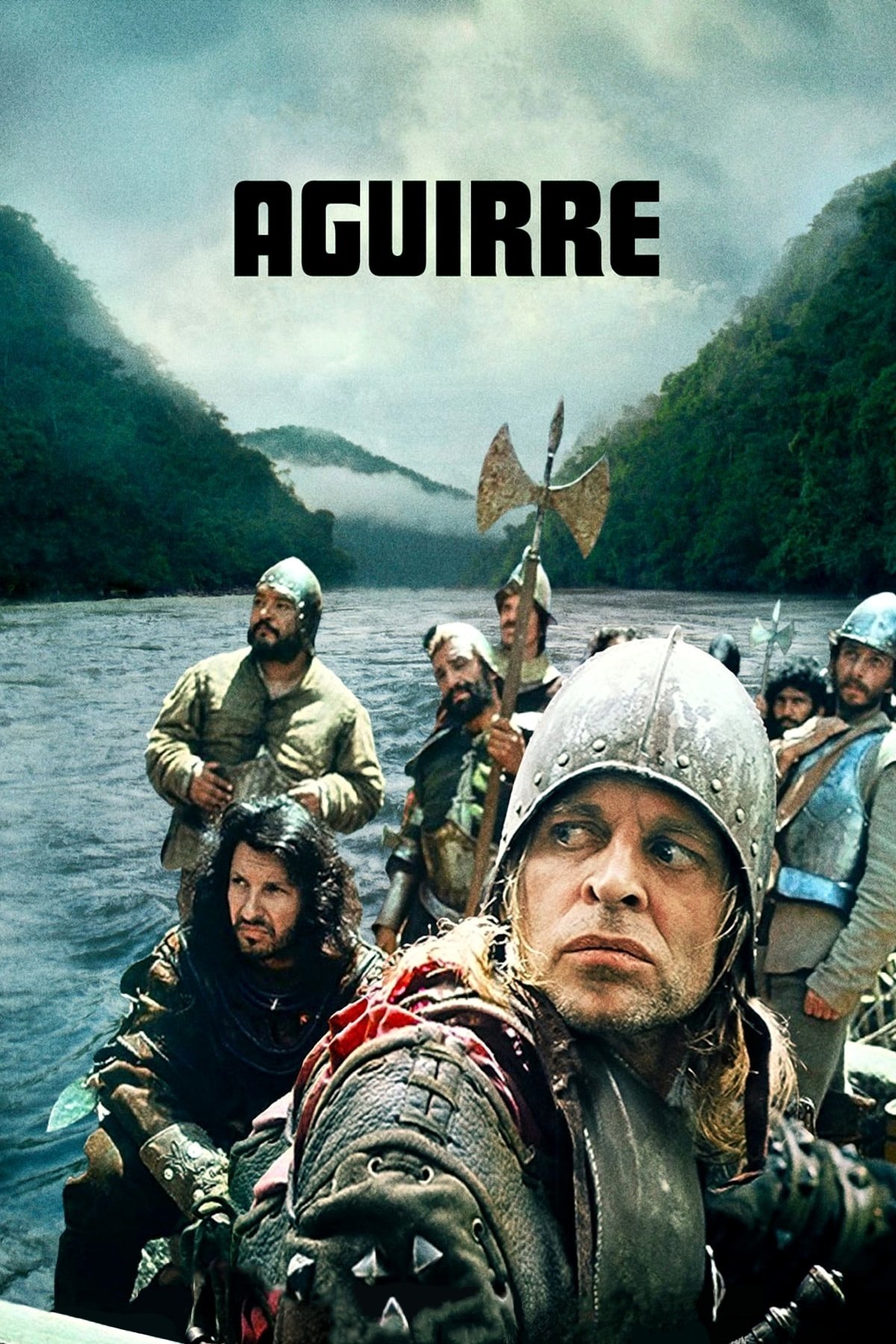
What the Film Is About
Werner Herzog’s Aguirre, the Wrath of God is an evocative meditation on the extremes of human ambition and delusion. Rather than following a classic narrative about explorers in search of riches, the film constructs a haunting emotional journey: one of obsession, power, and isolation. The central conflict is less about man versus nature and more about man against his own all-consuming desires and unchecked madness. The progression of the story draws us steadily into the heart of darkness, as we watch a group of conquistadors, led by the increasingly unhinged Aguirre, slide toward self-destruction amidst the unforgiving jungle.
Above all, the film is concerned with the inner landscapes of its characters—their fears, obsessions, and ultimate unraveling. Herzog drapes this descent in an atmosphere of otherworldly dread, inviting us to contemplate what happens when human dreams of conquest and glory unleash forces far beyond their control. The emotional weight of the film comes not from battles won or lost, but from the inexorable dissolution of purpose, reason, and humanity itself.
Core Themes
At the heart of Aguirre, the Wrath of God lies a potent exploration of ambition’s corrosive effects. The film is a meditation on power—how the hunger for it distorts reality, upends morality, and ultimately leads to ruin. Aguirre himself is less a typical villain than a figure possessed, driven by a vision of glory that erases all else. Herzog uses this historical canvas to reflect on the broader questions of destiny and delusion: What does it mean to pursue a dream so vast it cannot possibly be fulfilled? What price do we pay for believing we’re chosen, superior, or immune to failure?
Another significant theme is the encounter between civilization and the unknown—that is, the ways in which European arrogance and assumptions of superiority are tested by the overwhelming power and indifference of the natural world. The film critiques colonialism both implicitly and directly, depicting its violence, its entitlement, and ultimately its futility when set against forces it cannot hope to understand or control.
These themes resonated powerfully in the early 1970s, an era marked by disillusionment, political upheaval, and the aftershocks of imperial decline. Yet they remain relevant today, echoing contemporary anxieties about hubris—whether political, corporate, or personal—when faced with the limits of nature and the unpredictability of fate. Herzog’s relentless tone insists that ambition divorced from humility is as destructive now as it was centuries ago.
Symbolism & Motifs
Herzog’s filmmaking in Aguirre, the Wrath of God is rich with symbolism that amplifies the film’s themes. The river, for instance, emerges as a central motif—both a literal means of travel and a metaphor for the relentless, uncontrollable flow of fate. As the raft drifts deeper into the jungle, it becomes a symbol for the characters’ descent into psychological chaos and spiritual dissolution. The river carries them inexorably toward demise, trivializing their grand plans.
Costuming and physical decay serve as additional motifs. The ornate armor and tattered finery of the conquistadors gradually become incongruous amidst the wild landscape, highlighting the absurdity of their aspirations. Their tools of conquest—swords, guns, banners—are rendered useless by the jungle’s vast indifference. The recurring image of fog and mist adds to the sense of ambiguity and menace, obscuring vision and suggesting that these men are not only lost geographically, but morally and philosophically.
Aguirre himself, often shown standing alone and gazing out over the wilderness, becomes a symbol of solitary obsession. His presence is echoed in nature’s vastness—tiny, deluded, yet disturbingly tenacious. The monkeys that swarm the raft by the film’s end pile hauntingly atop this symbolism, speaking to nature’s ability to reclaim and mock human folly.
Key Scenes
Key Scene 1
Early in the film, the mutiny sequence marks a vital moment not only in the plot but in the film’s exploration of authority and ambition. Rather than portraying straightforward rebellion, Herzog frames this event as a transition in which Aguirre’s seductive vision starts to bend reality to his will. The camera lingers uncomfortably on faces as loyalties fracture, highlighting the contagious nature of obsession. This scene crystallizes Aguirre’s transformation from officer to self-styled prophet, and signals the group’s collective slide into delusion.
Key Scene 2
The encounter with the native communities—incidents where the Spaniards attempt to assert dominance and “civilize” their surroundings—lays bare the film’s critique of imperial arrogance. Here, Herzog juxtaposes ritualized violence with futile gestures of diplomacy, showing how the conquistadors’ worldviews are met with indifference or outright hostility from the jungle and its inhabitants. The tension of these interactions undermines any certainty about who is civilized and who is savage, exposing the ultimately hollow nature of the conquerors’ moral claims.
Key Scene 3
The film’s finale—Aguirre utterly alone on a raft overrun by monkeys—serves as an unforgettable metaphorical endpoint. His madness is complete, but surpassingly, so is his conviction; he still speaks as if he commands nations, even as the world he sought to conquer has disappeared. This closing moment encapsulates the film’s bleak vision: the near-religious intensity of obsession, and the annihilation that follows when reality yields to fantasy. The monkeys symbolize not just nature’s final triumph, but the relentless, indifferent cycle that swallows all human endeavor.
Common Interpretations
Critics and audiences alike most often interpret Aguirre, the Wrath of God as an allegory about the destructive power of unchecked ambition and the delusions that come with absolute authority. Many see Aguirre’s journey as a cautionary tale, a fever-dream rendering of historical conquest as tragedy rather than triumph. Some further emphasize the film’s existential dimension, reading it as a meditation on the futility of human striving in a universe fundamentally beyond our control.
Others have underscored the anti-colonial reading, arguing that Herzog deliberately frames the Spanish incursion into the Amazon as an act both arrogant and doomed—a vision of the violence inherent in all attempts to subdue what is foreign or unknown. While most interpretations focus on the psychological and philosophical, there is also a strong environmental dimension: the film warns against human efforts to bend nature to its will, serving as an early indictment of anthropocentrism.
Ultimately, whether read as historical critique, psychological portrait, or cosmic parable, the film’s ambiguity and refusal to provide conventional answers invite viewers to confront the lingering questions about power, sanity, and the limits of human agency.
Films with Similar Themes
- Apocalypse Now (1979) – Shares a vision of obsessive, corrupt authority unraveling amidst a hostile environment, using the journey upriver as a metaphor for psychological and moral descent.
- Fitzcarraldo (1982) – Another Herzog epic that explores the madness of ambition and the hostility of the natural world, this time through one man’s quest to haul a steamship over a mountain in the Amazon.
- Heart of Darkness (various adaptations) – Based on Joseph Conrad’s novella, which inspired Herzog’s film, this story interrogates colonialism, obsession, and the perilous journey into the unknown.
- The Revenant (2015) – Examines human perseverance, the collision between man and nature, and the relentless pursuit of personal destiny, set against an indifferent wilderness.
In its final analysis, Aguirre, the Wrath of God delivers a stark, unromantic assessment of human ambition. Herzog’s vision strips away the grand narratives of conquest to reveal a core of vulnerability and hubris, asking us to consider how far we can go before our fantasies consume us. The film suggests that while our aspirations may reach for the divine, they are forever at the mercy of forces—both internal and external—that we cannot control. It stands as a timeless reflection on the cyclical nature of ambition and folly, and a warning that the drive to master the world may ultimately leave us lost on a raft, surrounded by the very chaos we once believed we could command.