
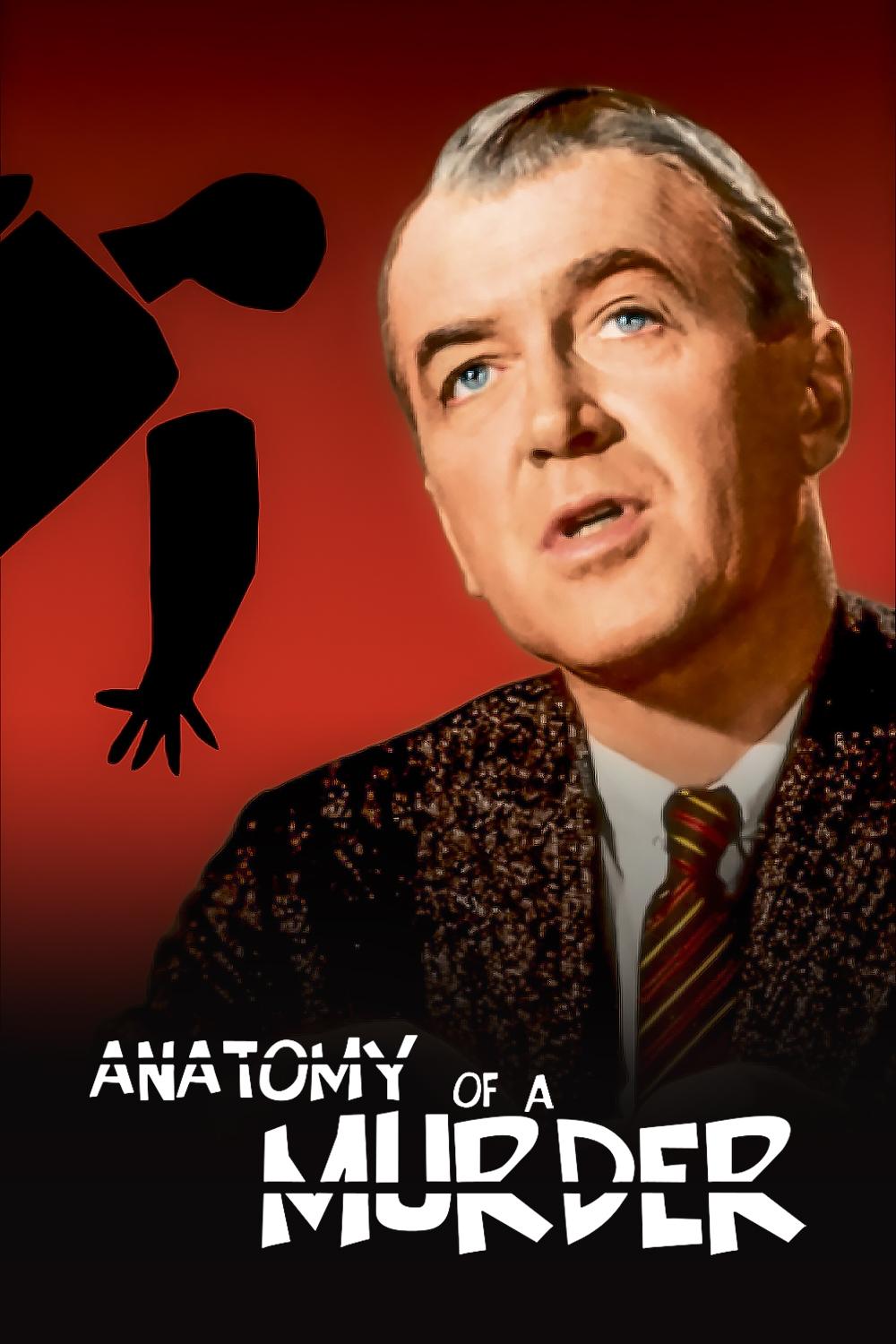
What the Film Is About
What first struck me about “Anatomy of a Murder” is that its courtroom isn’t just a setting—it’s a battleground for ambiguity, inhabited by wounded people and flawed systems. For me, this film is less concerned with whodunit or the technical maneuvering of a trial and more captivated by the raw tension between subjective truth and formal justice. The deeper I delved, the more I sensed director Otto Preminger pressing me not to pick a side, but to live uncomfortably between competing testimonies and moral uncertainties. Each character is forced to excavate their own buried instincts—to defend, to judge, and to justify who they are beneath the surface of “normal” law-abiding life.
I never felt that “Anatomy of a Murder” was about simply solving a crime. Instead, it’s a mosaic of longing, trauma, bravado, and sexual politics, all filtered through a small-town trial. I found myself on an emotional journey that started with outrage, edged into skepticism, and finally rested in the uneasy realization that the justice system is as much about human frailty as it is about evidence or truth. The film’s central conflict is thus not merely legal but existential—a ritual inquiry into the limits of objectivity, and the messy ways people construct (and reconstruct) themselves under immense pressure.
Core Themes
The core theme that resonated with me most is ambiguity—moral, legal, and even emotional. The film refuses easy answers at every turn; it questions whether “truth” is ever something pure, or always something negotiated, especially in a legal context. What intrigued me was not just the ambiguity of guilt or innocence, but the way this uncertainty creeps into every relationship on screen, whether between defense attorney Paul Biegler and his client, or between victim and accused. For me, the narrative devotes itself to showing how everyone—lawyers, judges, jurors, and bystanders—must grapple with partial knowledge and their own capacity for bias.
Power and gender politics shape much of my experience watching this film. “Anatomy of a Murder” isn’t shy about discussing sexual violence, but it’s equally invested in the spectacle that surrounds such claims in the courtroom. Laura Manion, the alleged victim’s wife, is subjected to varying gazes—from suspicion to leering, from protective to predatory—all of which reveal more about the men interrogating her than about herself. For me, the film’s nearly unprecedented candor about rape, trauma, and desire in 1959 remains shocking; this is a world in which justice and chauvinism overlap, often uncomfortably. These themes felt radical for their moment, but they remain unsettlingly current in how our own society treats victims, accusers, and legal process itself.
There is also a quietly subversive meditation on the limits and theater of law. I’m struck by how the trial becomes a dramatic performance, where artful phrasing and emotional manipulation sometimes eclipse matters of simple fact. The film’s depiction of Biegler—a lawyer who’s as much improviser as investigator—got me thinking about how advocacy in the courtroom can tiptoe into artistry, and how lawyers often play characters themselves. The broader question “Anatomy of a Murder” ultimately poses for me is: Can justice truly be objective, or is it doomed to reflect shifting social values and imperfect personalities?
Symbolism & Motifs
Diving deeper, I kept noticing recurring motifs that whisper their own commentary on the film’s themes. For one, the law books piling up on Biegler’s desk serve as more than background; to me, they represent both the weight of legal tradition and the complexity of human motivation. The cold, procedural trappings of the courtroom look imposing, but I could never escape the sensation that every bit of “official” decor—from the judge’s gavel to the witness stand—was a mask, concealing the emotional turbulence of everyone present.
Music—especially the jazz score, brimming with irregular rhythms—felt cosmically important to me. Duke Ellington’s jazz seeps beneath the drama, underscoring the lack of smooth order in either law or life. Jazz, with its improvisational spirit and syncopated unpredictability, becomes a stand-in for the trial itself: structured yet chaotic, rational on the surface but turbulent underneath. The musical motifs blend unease with anticipation, and I think they quietly echo the idea that answers are rarely harmonious in the real world.
Alcohol recurs as a subtle but persistent motif, pointing to both escapism and suppressed desire. Biegler, the defense attorney, is almost always accompanied by a drink—sometimes poured as a matter of comfort, other times as a sign of boredom or insecurity. I noticed that moments of greatest candor or misjudgment often involve a glass in hand, reminding me how truth gets fuzzy not just in the heat of cross-examination, but in those everyday lapses when people lower their guard.
Perhaps most indelibly, mirrors and glass windows turn up again and again, reflecting characters or fragmenting their features. I see these visual cues as reminders that every person in this story is partly a performance, never wholly revealed. We only catch glimpses—always indirect, always colored by the observer’s viewpoint.
Key Scenes
Key Scene 1
One scene that has stayed with me is Laura Manion’s grilling on the witness stand. The moment she’s forced to answer intimate, invasive questions about her behavior and appearance, I was struck by how the courtroom becomes an arena of judgment, not just for legal guilt but for moral character. The way the defense and prosecution volley assumptions and insinuations at Laura exposes the precariousness of her position. For me, this scene brilliantly distills the film’s unease with how legal procedures can devolve into exhibitions of personal bias, especially along gendered lines. Here, the ostensible pursuit of facts slides dangerously into spectacle, with Laura’s dignity caught in the balance. I felt the raw discomfort of a society more eager to scrutinize and shame the victim than to search for actual justice.
Key Scene 2
I often revisit the pivotal conversation between Biegler and his client, Lt. Manion, outside the court. There’s a moment when the attorney confronts the possibility that Manion’s version of events might not be entirely truthful—or even that his insanity plea is more a clever tactic than a genuine defense. Watching this exchange, I realized how the film asks us to question the very framework of advocacy and belief. The uneasy rapport between lawyer and client showed me that the pursuit of justice isn’t always about upholding abstract ideals; more often, it’s about maneuvering through contradictions and half-truths, weighing the risks of faith and doubt. This scene, for me, lays bare the inherent conflict between the duty to defend and the nagging specter of moral responsibility.
Key Scene 3
The film’s final courtroom exchange—the verdict announcement and what happens immediately after—is where everything comes full circle for me. There’s no blaring triumphant music or sense of catharsis. Even as proceedings conclude, nobody appears truly vindicated or relieved. Instead, characters shuffle out of the courtroom weighed down by what hasn’t been resolved. For me, this lack of resolution is the film’s central argument: justice is rarely conclusive, and the effect of a trial ripples on in those who must live with its consequences. The ambiguity lingers in every tired movement, every averted glance. I walked away from this ending feeling both unsettled and deeply moved, compelled to confront the possibility that the justice system often serves as little more than a provisional, imperfect stage for human drama.
Common Interpretations
Over the years, I’ve encountered several dominant interpretations of “Anatomy of a Murder.” Critics typically regard the film as a meditation on the impossibility of knowing objective truth—a dramatization of legal processes, yes, but more broadly an allegory for the moral messiness of everyday life. Many analyses focus on the tension between legal correctness and ethical ambiguity, suggesting that the film urges viewers to remain skeptical of procedures and verdicts no matter how convincing they sound.
Some commentators highlight the film’s progressive approach to taboo subjects. In my experience, both contemporary and modern voices point to the unflinching depiction of sexual violence and the portrayal of a female character whose agency is constantly threatened by men in power. This reading regards the film as ahead of its time, challenging the puritan codes of Hollywood’s Production Code era and spotlighting social issues that remain unresolved to this day.
Yet there’s a contrary thread of interpretation as well. Some viewers—myself included at times—have questioned whether the film’s ambiguity descends into moral evasiveness, softening the blow of uncomfortable truths by leaving everything uncomfortably open-ended. Rather than a plea for radical empathy, this perspective warns that ambiguity can become a tool for noncommittal moral relativism. Still, I find the enduring power of “Anatomy of a Murder” is that it never quite settles the argument, instead forcing us back onto our own values and doubts.
For many, the legacy of the film also lies in its keen observation of the rituals and performances that underpin American legal ideals. The trial itself becomes a kind of stage, and the characters actors, all struggling to command the narrative and the sympathies of those who judge them. It’s a vision of society where the search for truth is as fragile and subjective as the people who pursue it.
Films with Similar Themes
- 12 Angry Men (1957) – I see a strong connection in this film’s resistance to easy moral judgments, as a jury struggles with doubt, prejudice, and what it means to seek justice within an imperfect system.
- To Kill a Mockingbird (1962) – This shares a similar focus on legal ethics, social bias, and the flaws of the justice system, especially in its empathetic attention to the powerless and the ways in which personal integrity is tested by public scrutiny.
- In the Heat of the Night (1967) – I connect with its exploration of small-town tensions and the intersection of legal process with deeper social prejudices, much like “Anatomy of a Murder” uses its courtroom to reveal broader social failings.
- Primal Fear (1996) – Here, too, the themes of legal ambiguity, manipulation, and the shifting ground between truth and narrative take center stage, echoing my own fascination with the systems and individuals that shape justice.
When I reflect on “Anatomy of a Murder,” what stands out most is its refusal to flatter the viewer with moral certainty. The film ultimately tells me that our systems of law and justice—lauded as pillars of order—are peopled by individuals every bit as flawed, opportunistic, and vulnerable as anyone else. Its unblinking portrayal of trauma, power, and ambiguity is a challenge that remains urgent today, inviting me to reckon with the uncomfortable truth that justice is rarely clear-cut and always, inevitably, human.
To explore how this film has been judged over time, consider these additional viewpoints.