
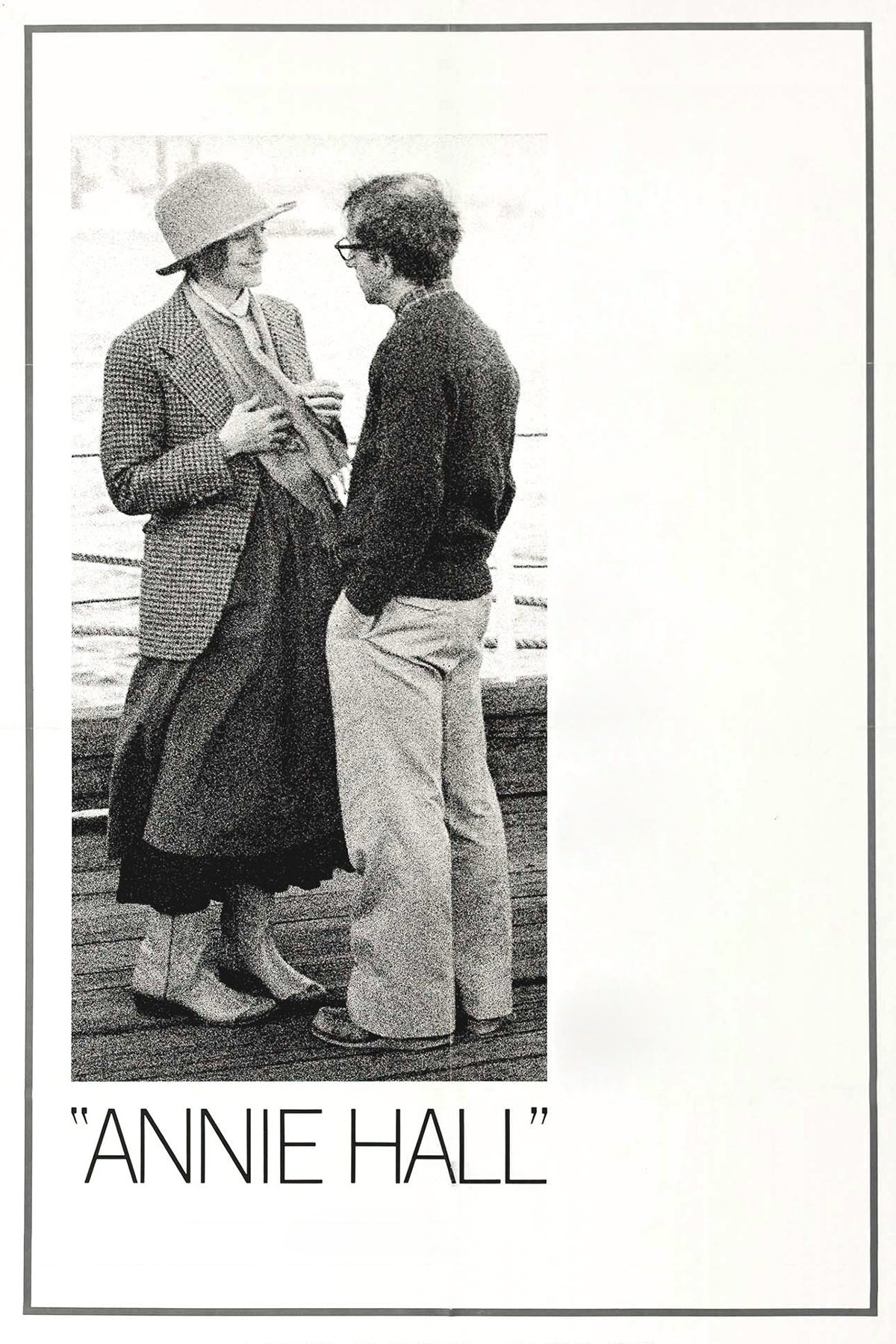
What the Film Is About
There’s always been something about Annie Hall that makes me want to reach for words like “bittersweet” and “elusive,” but they never quite capture what the film does to my sense of nostalgia and reality. At its core, I found the movie to be about the awkward, exhilarating struggle of two people trying to love and understand each other amid their own insecurities. Unlike most romantic films where the destination is a happy ending, here the emotional journey is cyclical—full of hope, neurosis, and reflection—making every misstep or silent pause between Alvy and Annie feel heartbreakingly honest.
To me, the driving conflict isn’t just between the characters but within each of them; their own doubts and desires complicate the romance as much as, if not more than, any external force. I’ve always walked away from Annie Hall with this sense that life’s most meaningful connections are tinged with impermanence, and the film gently urges us to savor the ephemeral beauty of intimacy, even when it’s destined to fade. The journey isn’t toward bliss or closure, but toward a deeper understanding of how love can be both transformative and fleeting.
Core Themes
What always strikes me on rewatch is how indelibly Annie Hall dives into the chaos and splendor of love—not as some grand declaration, but as an accumulation of neuroses, expectations, tenderness, and failure. There’s a raw honesty here about communication: the film exposes how easy it is to misunderstand, to talk past each other, or to sabotage happiness with self-doubt. I see identity as a central theme: Alvy and Annie’s dynamic is shaped as much by their personal histories as by their chemistry. Alvy’s fixation on his New York Jewish identity and his self-deprecating humor create a lens through which every interaction is refracted, often distorting his connection to Annie. Meanwhile, Annie’s growth—her desire to break free from expectations and define herself on her own terms—echoes the changing roles of women and individualism in the 1970s.
I can’t ignore how the film foregrounds memory and subjectivity. Its non-linear narrative structure, and scenes where the characters literally step outside themselves or address the audience, feel like a meditation on how we reconstruct and reinterpret our lives. Love becomes a story we edit as much as an experience we live. It’s deeply relevant; the film’s anxiety about authenticity and fulfillment feels as sharp now as it did when social roles and relationship norms were first shifting in the aftermath of the sexual revolution. Today, as questions about identity, connection, and self-understanding continue, I see Annie Hall as an enduring investigation into the search for authenticity in a world that keeps demanding compromise.
Finally, I’m repeatedly drawn in by the film’s probing of fear versus vulnerability. The comic irony—where the punchline is always about how hard it is to let anyone truly know us—captures the perennial struggle to risk heartbreak for connection. The wisdom in Annie Hall isn’t just in its humor, but in the way it admits that loving another person requires a kind of bravery that few of us ever master. It’s a theme that cuts through generations, and I think that’s why the film resonates even decades later.
Symbolism & Motifs
I’ve always felt that what elevates Annie Hall above everyday romantic comedies is its subtle tapestry of symbols and recurring motifs. Take the motif of New York versus Los Angeles—not just as cityscapes, but as stand-ins for divergent worldviews. Alvy’s obsession with New York, with its mess, intellectualism, and neurosis, is more than just personal taste. To me, it symbolizes an unwillingness to let go of the familiar, to embrace change, even if change means growing closer to someone else. Los Angeles, dazzling and alien to Alvy, becomes a symbol of Annie’s evolving independence and the alluring, sometimes unsettling new directions love can take us.
The use of breaking the fourth wall is another motif that intrigues me. There’s something intimate about Alvy speaking directly to the audience. It’s as if he’s inviting us into the folds of his memory, letting us experience not just what happened, but how it felt to him. I see this as a comment on the very nature of storytelling and on the way our most significant relationships become the stories we repeatedly tell ourselves.
Character quirks themselves become symbols—I think of Annie’s ever-present hat, an icon of her offbeat charm and her gradual assertion of individuality, or Alvy’s physical discomfort (his sneezes, slouches, and tics) as a kind of armor. The visual motif of mirrors and reflections turns up at key moments, reminding me that both characters are searching for versions of themselves in the other. And when the animated scene drops us inside Annie’s subconscious as the Evil Queen from “Snow White,” I read it as a playful but pointed metaphor for the underlying insecurities that haunt the most ordinary moments.
Annie Hall is filled with other recurring elements—split screens, subtitles revealing inner thoughts, or even casual discussions about death—that all connect to the film’s fascination with the complexity of communication and the chasm between how we appear and how we feel. Each motif quietly nudges me to notice how love isn’t just something that happens, but something we perform, interpret, and relive.
Key Scenes
Key Scene 1
The scene that has stayed with me longest is the split-screen moment where Alvy and Annie are in therapy, side by side, each with their own therapist, voicing their versions of where things are going wrong. For me, this isn’t just a comic set piece—it’s a crystallization of the film’s entire thesis: that intimacy is shaped and often distorted by our private interpretations. The spatial separation on screen reveals the emotional distance between them, even in vulnerability. I read this scene as a gentle, wry comment on how even the most earnest self-examination can miss the mark unless we risk seeing ourselves through the eyes of the other.
Key Scene 2
Another crucial scene, one I revisit every time I reflect on love’s impermanence, is the quiet montage at the end—a recollection of small gestures, moments of joy and longing from Alvy’s perspective. This isn’t a grand goodbye or narrative closure; instead, the film shows the way memory polishes some moments and distances others, blurring the agony and the wonder into something quietly beautiful. Here, I see the film’s commentary on how we hold onto the best parts of our relationships, repurposing them as bittersweet reminders that even love destined to end still matters. It’s a practice in acceptance, and for me, a call to embrace growth without bitterness.
Key Scene 3
If there’s a single scene that encapsulates what I believe the film is truly saying, it’s Alvy’s monologue at the end, after trying—and failing—to reestablish things with Annie. He shares the old joke about a person whose brother thinks he’s a chicken, but they don’t turn him in “because we need the eggs.” I’ve always interpreted this as the film’s philosophical summation: we keep searching for connection, repeating the same mistakes, because, despite the angst, we need the moments of love—however flawed—more than we fear their end. It’s a resonant admission that the pursuit itself, and the memory of it, lends meaning to our otherwise uncertain lives.
Common Interpretations
When I talk with other cinephiles or read criticism about Annie Hall, I find general agreement that the film is ultimately a meditation on the intricacies of human relationships and the obstacles we create for ourselves. Many interpretations focus on its authenticity; it’s seen as one of the first major romantic comedies to admit that love stories often don’t resolve tidily. Critics often highlight its innovation in structure and how that connects to its exploration of memory—suggesting that the act of storytelling is not just a narrative device, but the point of the film itself.
There are also readings that situate the film as a kind of meta-commentary on the role of comedy and self-examination in relationships. For many, Alvy’s neurotic wit is more than a personality quirk; it’s a form of armor, a way to process disappointment and stave off vulnerability. I’m struck by interpretations that see the film as advocating for emotional honesty, even as it chronicles spectacular failures to achieve it. Some see the relationship as dangerously imbalanced—that Alvy’s possessiveness reflects deeper anxieties of the era, critiquing both his failings and the societal pressures on Annie.
At the same time, I’ve encountered a more hopeful line of thought: that Annie Hall celebrates resilience, in that both characters ultimately grow, learn, and move forward, however uncertain the outcome. Whether the film is more melancholy or optimistic is still debated, but for me, its greatest wisdom comes from embracing both perspectives simultaneously. Love shapes us because it isn’t perfect, and the meaning lies not just in the happiness we find, but in what we’re willing to risk for even the briefest connection.
Films with Similar Themes
- Manhattan – For me, this film echoes Annie Hall in its exploration of romantic longing, self-doubt, and the entanglements between place and personal identity. It continues to ask: Can we ever escape our own hang-ups long enough to connect?
- Eternal Sunshine of the Spotless Mind – I’m reminded of the way both films treat memory as something mutable and longing as both curse and gift. They each probe how love leaves imprints that persist long after relationships end, challenging us to decide what we keep and what we let go.
- Before Sunrise – This film, like Annie Hall, finds meaning less in resolution than in dialogue. Both dwell on the ephemeral nature of connection and the power of simply being present with another person, however brief the encounter.
- Her – For me, Her encapsulates the modern struggle for authenticity and the loneliness at the edge of intimacy, extending Annie Hall’s questions into an era of technological mediation and shifting norms about what it means to love and be known.
So much of what Annie Hall communicates is a reflection on the human tendency to cling to illusions about ourselves and others, to rewrite our histories, and to mistrust both happiness and loss in equal measure. Watching it, I feel a kind of wistful gratitude for every awkward conversation, every misunderstood moment, every attempt at connection that falls shy of perfection. The film doesn’t scold us for our failures; instead, it honors the messiness of love and memory, suggesting that the mess is the meaning. For its time—and for ours—it’s a gentle but insistent reminder that all our searching, even when it ends in heartbreak, is what makes us achingly, beautifully human.
After learning the historical background, you may also want to explore how this film was received and remembered.