
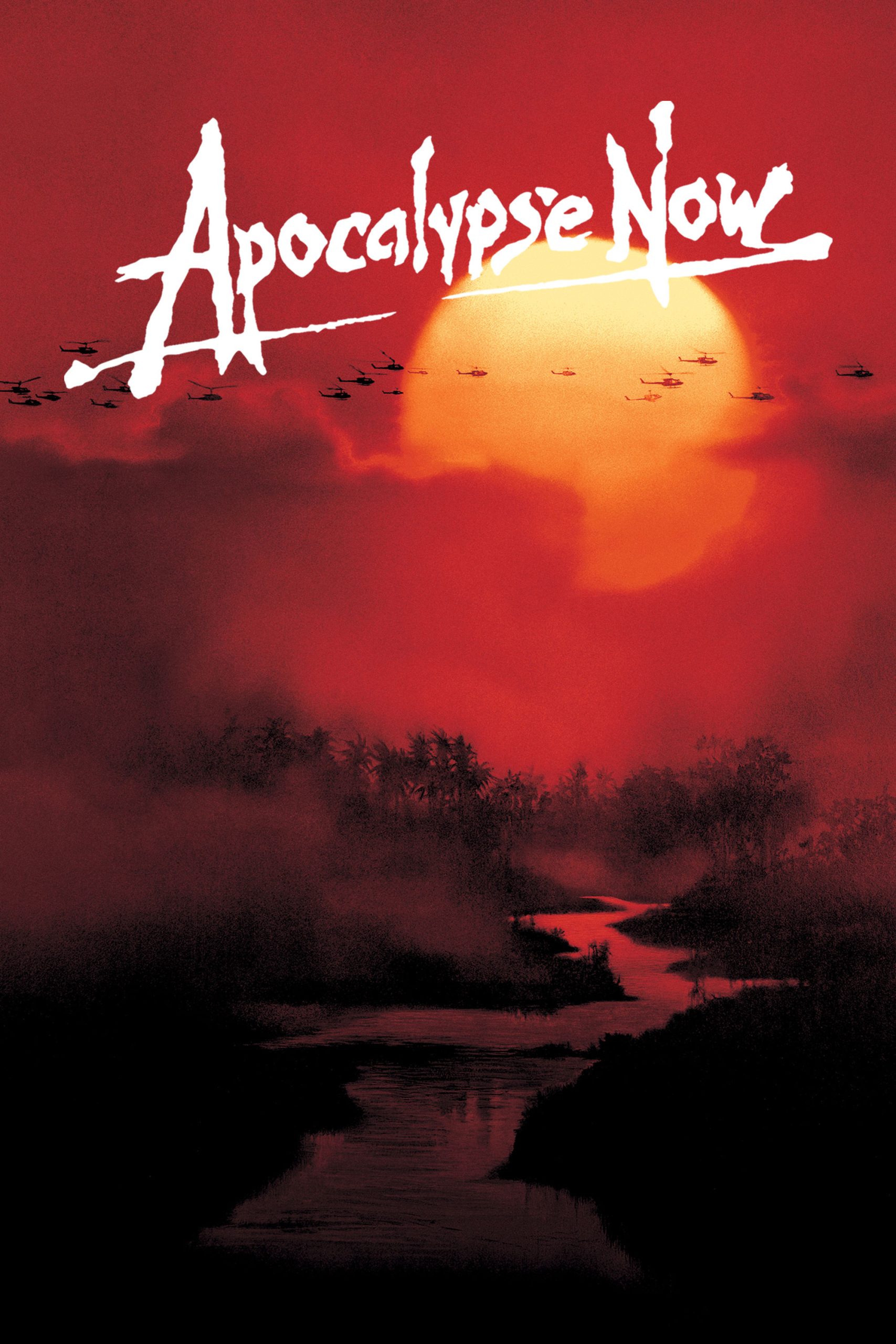
What the Film Is About
Apocalypse Now always strikes me as less of a war film and more of a fever dream that interrogates the boundaries of the human psyche. The film does not simply depict a physical journey upriver through war-torn Vietnam; it is, above all, a descent into the existential abyss. The central conflict, as I experience it, lies not just between Captain Willard and Colonel Kurtz, but within the fractured souls of all those battered by conflict. It’s a confrontation not of armies, but of personal morality, collective madness, and the haunting void beneath civilization’s surface.
Watching Willard’s emotional unraveling, I am taken on a plunge through layers of denial, horror, fascination, and clarity. Each mile closer to Kurtz seems to strip away not just cultural tales about heroism and military order, but any comforting illusions about human nature itself. Apocalypse Now isn’t interested in tidy resolution; instead, it drags the viewer through ambiguity, raising unsettling questions and refusing to provide neat answers.
Core Themes
One theme dominates all others whenever I reflect on Apocalypse Now: the corrupting influence of unchecked power and the seductive pull of moral ambiguity. For me, the film dares to lay bare the savage core lurking inside even the most disciplined individuals. It’s not only the violence of the Napalm strikes that’s chilling, but also the ease with which ordinary people transition into casual brutality — all rationalized by duty, fear, or the chaos of war. The question the film returns to—where does civilization end and savagery begin?—remains profoundly disquieting.
The film’s exploration of identity and self-destruction comes to the fore as Willard draws closer to Kurtz. I always find myself asking whether Kurtz’s “madness” is merely the clearest, most honest response to the insanity of the war itself. Apocalypse Now doesn’t just ask who is the real monster; it wonders whether the entire system—war, command structures, even society itself—functions by denying the darkness within. This was a theme painfully relevant when the film debuted in the aftermath of Vietnam, as America grappled with its reflection in the mirror. Decades later, in a world still marred by endless conflict and uncertain morality, the film’s warning about what happens when ideals erode into dogma feels as urgent as ever.
For me, Apocalypse Now is a relentless meditation on violence: both its external devastation and its corrosive effects on the soul. Each act of brutality seems to hollow out the characters, leaving them emptied of certainty or faith. The film is fixated on the collapse of structure—military, moral, even psychological—under the relentless pressure of fear and meaninglessness. I am always struck by how little separates “us” from “them” in this world, how thin and fragile the masks of civilization can be when stripped by horror.
Lastly, I cannot watch Apocalypse Now without sensing its painfully honest commentary about colonialism, otherness, and how the West frames the East as a primitive backdrop for its own crises. The haunting spectacle of imperial force turned in on itself—soldiers lost, unsure what they fight for—becomes a mirror for America’s anxieties about power in the late twentieth century, and I feel its echo in contemporary debates about intervention and empire. The film never lets me forget: war is not an adventure; it is a revelation.
Symbolism & Motifs
When I allow myself to linger on Apocalypse Now’s most indelible images, I see a tapestry of recurring motifs and symbols, each deepening the film’s unsettling questions. The journey upriver is, in my eyes, not just a change of scenery, but a symbolic return to humanity’s roots—toward the primordial, where order breaks down and instinct reigns. The river is time, decay, and psychological regression all at once; as Willard travels farther, the boundaries between soldier and savage, self and other, dissolve into confusion.
The infamous recurring image of the jungle—dense, oppressive, alive with concealed danger—stands for the subconscious itself. I read these landscapes as external projections of the characters’ states of mind; the deeper into the foliage I go, the more logic and daylight recede. Light and shadow themselves work as motifs: sunlight often slashes across otherwise dark frames, suggesting moments of false clarity or fleeting revelation. Shadows grow deeper as Willard nears Kurtz, echoing a growing recognition that the true horror lies inside.
Helicopters, with their mechanical shriek and brute force, represent for me America’s industrial arrogance—its attempts to bend nature (and conflict) to its will, often with disastrous results. In sharp contrast, rituals and statues that appear around Kurtz’s domain evoke a primeval, mythic quality, as if the war has sparked not progress but regression into ritual violence and cult worship.
Perhaps most famously, the phrase “the horror, the horror” functions almost as an incantation: a distilled acknowledgement of truths too terrible to rationalize. For me, those words are not just Kurtz’s confession, but a universal cry about unfiltered reality. The mirrors, fires, and ritualized imagery that permeate the final act reinforce the film’s sense that everyone—viewer, character, nation—is implicated in confronting the darkness within.
Key Scenes
Key Scene 1
No matter how many times I see it, the early scene in which Willard is given his mission stands out as fundamental to understanding the film’s psychological weight. As Willard sits sullen and broken in his Saigon hotel room, there is a sense of emotional inertia: he is both eager for purpose and already haunted by what he has seen and done. When officers brief him about Kurtz, the sterile language they use (“terminate with extreme prejudice”) jars against the chaotic reality outside. I feel that this tension—between bureaucracy and violence, civilized orders and primal urges—is what powers the entire film. Willard’s silence and measured movements, the camera’s slow orbit, and the strange calm of the briefing room tell me that nothing about this mission will be simple, that the true enemy may in fact be within.
Key Scene 2
Later, the iconic sequence where helicopters attack a Vietnamese village to Wagner’s “Ride of the Valkyries” makes the film’s critique of war’s dehumanization visceral for me. The juxtaposition of classical music, choreographed violence, and utter destruction is both mesmerizing and revolting. The soldiers transform the massacre into a spectacle, cheering as chaos reigns. I see here the seductive, almost theatrical nature of violence—how aestheticizing brutality can numb participants to its horror. In one sequence, the film calls out not just the irrationality of war, but how quickly violence can be disguised as entertainment, adventure, or even beauty.
Key Scene 3
The film’s conclusion, amidst Kurtz’s shadowy temple domain, serves as the ultimate revelation for me. As Willard faces Kurtz, I see the dichotomy of man versus monster collapse into one self. The surreal ritual killing that unfolds—interspersed with images of sacrificial slaughter—feels like a final, inescapable merging of violence and transcendence. Willard’s decision, juxtaposed with the worshipful looks of Kurtz’s followers, leaves me wrestling with whether any act of violence can escape the cycle of horror that bred it. The film doesn’t offer catharsis; it refuses to say who is right or wrong. Instead, I depart questioning whether anyone can emerge unscathed from the confrontation with their own darkness.
Common Interpretations
When I talk to other cinephiles or dive into criticism, I find that Apocalypse Now is commonly seen as a scathing critique of the Vietnam War and, by extension, the corruptibility of human institutions. Critics often emphasize its adaptation of Conrad’s Heart of Darkness, highlighting the journey not only as a literal trek but as a metaphor for moral and existential disintegration. Many interpret the film as a howl against the myth of righteous warfare, suggesting that in the jungle—stripped of societal norms—moral distinctions collapse.
Some viewers focus on the anti-colonial undertones, seeing Kurtz as both a product and a victim of imperial arrogance. Others argue that the film is not just about the Vietnam War, but about trauma and the dangers of letting fear or guilt define our actions. I’ve noticed that audiences sometimes latch onto the film’s psychedelic visuals and elliptical narrative to argue that it’s a meditation on madness itself: the impossibility of clinging to rationality in a world where violence reigns.
Of course, debates abound. Some interpret scenes as self-indulgent, while others insist the film reflects the very chaos and dissolution it seeks to critique. There’s also heated discussion about the film’s portrayal of Vietnamese characters—some see it as part of the film’s critique of Western blindness, while others view it as perpetuating problematic stereotypes. But nearly everyone I’ve spoken with agrees that after watching Apocalypse Now, you can’t escape its lingering questions about civilization’s fragility and the ambiguous line between duty and atrocity.
To explore how this film has been judged over time, consider these additional viewpoints.
Films with Similar Themes
- Platoon – I connect this film strongly with Apocalypse Now for its raw exploration of the Vietnam War’s moral chaos. Both films reject glorification, focusing instead on how violence deforms identity and erodes trust within military ranks.
- Aguirre: The Wrath of God – I see Herzog’s tale of madness on the Amazon as a spiritual sibling to Coppola’s vision. Both films follow journeys into the unknown where the jungle becomes a metaphor for man’s inner darkness, and colonial ambition turns to obsession.
- Full Metal Jacket – Kubrick’s film, for me, shares Apocalypse Now’s fascination with dehumanization by machinery and hierarchy. The psychological toll of war and the breakdown of the individual’s sense of self are central threads in both works.
- The Deer Hunter – I find this film’s meditation on survivor’s guilt and the psychic wounds of Vietnam aligns closely with Apocalypse Now. Both movies resist simple moral judgments, instead lingering in painful ambiguities about home, masculinity, and national trauma.
When I sit with the memories and resonances of Apocalypse Now, what ultimately stays with me is its unflinching exposure of the double-edged nature of humanity—our capacity for nobility and horror, faith and nihilism, order and chaos. The film doesn’t argue that war creates monsters, but rather that under the right pressures, any system or individual can slide toward brutality and madness. Watching it through the lens of history, culture, or my own emotional response, I feel compelled to recognize both the fragility of civilization and the seductive pull of violence masquerading as necessity. Apocalypse Now offers no clean boundaries, no final judgments—only the unsettling recognition that, given the right circumstances, the horror lies as much within as it does without.