
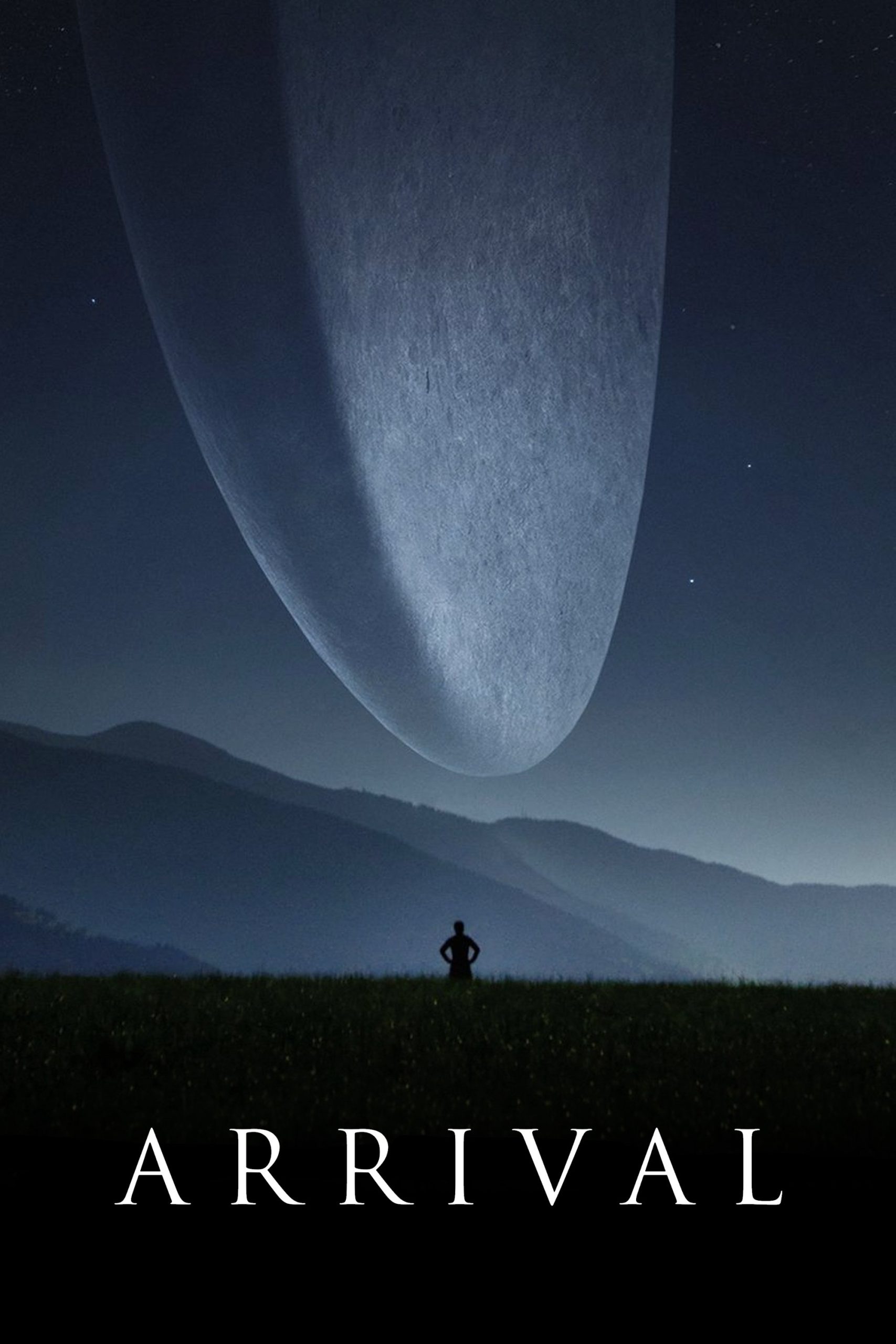
What the Film Is About
Arrival hit me unlike any other science fiction film of the last decade. Beneath its surface of alien ships and cryptic languages, I felt it was less a story about extraterrestrials than an emotionally resonant meditation on human connection, mourning, and the possibility of hope in the face of uncertainty. As I watched Louise Banks—the linguist at the film’s heart—confront her own grief amid global crisis, I found the movie delicately balancing between the personal and the universal, the ache of individual loss set against the larger unknowns of existence. The central conflict wasn’t, for me, the classic scramble to “save the world,” but how to bridge fundamental divides when language, memory, and fear threaten to keep us apart. Arrival’s narrative, by its end, felt like a spiral: intimate and encompassing, leaving me with more questions than answers—and, somehow, a sense of peace within ambiguity.
Core Themes
What struck me most about Arrival was its refusal to settle on simple answers—especially in its approach to communication. I interpreted the film as centering on the challenges and possibilities that arise when we confront radical otherness. It probed not only the technicalities of translation, but the far messier emotional and philosophical terrain that opens up when we truly listen to others, or to ourselves. Louise’s journey made me reflect on how meaning is negotiated, not inherited; how much of conflict is cultivated through misinterpretation, suspicion, or a desperate need for control.
Another recurring theme I found captivating is time—how we experience it, whether it is linear or cyclical, and how memory forms our sense of self. Arrival introduced me to a kind of storytelling where time’s arrow is bent, if not broken outright, presenting a vision of life in which understanding the past, present, and future is both a curse and a gift. This resonated deeply, especially in a world increasingly wrestling with uncertainty. To me, Arrival also explored the pain and beauty of loving fully while knowing the inevitability of loss. Its meditation on fate and free will felt freshly relevant in an era marked by political polarization, global fears, and technological change.
Perhaps most of all, the film is a meditation on empathy—on the radical possibilities that open if we approach the unfamiliar not with suspicion, but with curiosity and vulnerability. In a time defined by fractures of language, culture, and ideology, I saw Arrival as quietly revolutionary in its insistence that understanding is the only path to survival, both collectively and as individuals.
Symbolism & Motifs
Having watched Arrival multiple times, I remain fascinated by its tapestry of recurring visual and narrative patterns. The most prominent, to me, is the circular motif—embodied both in the written language of the heptapods and in the structure of the narrative itself. I see these circles not just as communication tools but as representations of nonlinear time, the endless cycles of love and loss, and the possibility that our stories don’t progress in straight lines. I’m reminded of mandalas or ouroboros imagery, evoking both repetition and renewal.
The motif of language itself operates on several levels, both as literal text and as metaphor for human limitation. Each time Louise laboriously constructs a bridge between herself and the visitors, I feel the weight of what cannot be said, the immense effort behind genuine understanding. Ink, smoke, and water recur throughout the film—fluid substances that suggest permeability and uncertainty, the porous boundaries between self and other, certainty and mystery. To me, the glass wall separating Louise from the heptapods symbolizes both the divides that language attempts to breach and the inherent isolation of individual consciousness. The contrast of darkness and light, especially in the alien vessel’s interiors, seems to mirror the struggle to find clarity and meaning amidst confusion.
But perhaps the subtlest symbolic motif involves memory—the film’s sequencing of images, its recurring visual echoes, reinforcing the idea that our lives are patterns we only recognize in hindsight. The gentle, insistent repetition of certain musical cues and visual parallels brought me face-to-face with the idea that understanding can only emerge from repetition, from an openness to return and reinterpret the seemingly familiar.
Key Scenes
Key Scene 1
The first time Louise makes deliberate contact with the heptapods is, for me, not just a cinematic set piece but the true heart of the film’s message. This scene crackles with tension, not from the threat of violence, but from the vulnerability required to reach out into the unknown. Louise’s choice to remove her protective gear, to physically and emotionally expose herself, resonates deeply. I see this as a moment of radical trust—a willingness to meet the foreign not through defenses or aggression, but with the humility to acknowledge fear and curiosity in equal measure. It’s here that Arrival, for me, transforms from a movie about extraterrestrial contact into a meditation on what it truly costs (and demands) to understand another being.
Key Scene 2
When Louise begins to “dream in their language,” I felt as if the fabric of the film’s reality was shifting along with hers. This scene undermines the boundaries between self and other, past and future. To me, this is where the film’s central theme of empathy flowers: in learning the heptapod’s language, Louise doesn’t just gain a new method of communication—she acquires a fundamentally different relationship to time, memory, and her own identity. I view this as a direct challenge to the Western notion of linear progress and selfhood. By showing the mind’s capacity for radical transformation, Arrival urges us to reconsider how deeply language shapes, and sometimes limits, our ability to imagine different ways of being.
Key Scene 3
The revelation that the film’s “flashbacks” are actually “flashforwards”—and that Louise is making the conscious decision to embrace a future filled with both love and pain—is the scene that still haunts me most. It’s here, in her acceptance of both joy and sorrow, that Arrival’s philosophical stakes become clear. I believe this moment encapsulates the film’s invitation: to embrace our lives in their completeness, not despite suffering but with the knowledge that pain and beauty are inseparable. Rather than seeking to control fate or escape grief, the film offers a vision of acceptance and compassion. To me, it’s not a story about mastering destiny, but about finding meaning in presence, connection, and the courage to choose—even when the outcome is known.
Common Interpretations
Talking with fellow cinephiles, and reading critical responses, I’ve found that Arrival is often understood as an allegory about communication across divides—national, linguistic, even existential. Many people see the film as a plea for patience and humility in a world marked by misunderstanding and hasty violence. Others interpret it through the lens of personal loss, focusing on Louise’s journey as a metaphor for the grieving process: the ways we revisit our pain, reconstruct our stories, and ultimately learn to live with the knowledge that love always comes with risk.
I’ve also encountered readings that emphasize the film’s treatment of time and determinism—specifically, the idea that seeing one’s future, and still embracing each moment fully, is an act of radical courage. Some critics tie this interpretation to broader philosophical questions: whether destiny is fixed or mutable, whether sacrifice gains meaning only through conscious choice. While there are outlying theories about global politics or conspiracy, most viewers, in my experience, agree that Arrival ultimately champions empathy, compassion, and the endless struggle to really, truly understand one another—both at the grand scale of civilizations and in the quiet intimacies of family and self.
Films with Similar Themes
- Contact (1997) – I see a clear window between Arrival and Contact, with both exploring the excitement and existential uncertainty of humanity’s first contact with extraterrestrials. At their core, both films ask whether true understanding across seemingly irreconcilable divides is possible—and what we risk if we fail.
- Interstellar (2014) – My mind often drifts to Interstellar when thinking about Arrival’s meditation on time, memory, and love’s endurance. Both films foreground characters who make impossibly difficult choices, entwining personal sacrifice with cosmic-scale events and offering hope even in the bleakest uncertainty.
- The Fountain (2006) – Aronofsky’s The Fountain, like Arrival, explores cyclical time, the inescapability of loss, and the search for meaning through connection. What resonates for me is the depiction of love not as something that conquers time, but as the thread that gives our ephemeral existence meaning.
- Solaris (1972/2002) – Both adaptations of Solaris, to my eyes, share with Arrival an interest in what it means to encounter the truly alien—outside and within ourselves. By focusing less on spectacle and more on emotional and philosophical landscapes, these films challenge viewers to question whether understanding (of others, or ourselves) is ever truly complete.
Reflecting on Arrival as a whole, I’m left with the sense that it is ultimately about choosing compassion in a world governed as much by uncertainty as by certainty. It challenges me to see the ways language, memory, and fear can limit what is possible—and how, by embracing the fullness of life (pain and joy, past and future), we can reach toward understanding and healing. Released in a time of escalating division and anxiety, Arrival’s message is evergreen: only by listening—and by refusing to retreat into easy answers—can we hope to find connection and peace, both with others and within ourselves.
After learning the historical background, you may also want to explore how this film was received and remembered.