
What the Film Is About
Every time I watch Badlands, I’m reminded of how delicately it peels away at the American myth of innocence. At its center, the film is less about the outlaw lovers Kit and Holly than about the emotional emptiness and yearning that narrows their choices. I always feel as if Terrence Malick is asking me to look past the surface—past the romanticism, past the violence—to see two lost souls drifting through a world that’s both lush with possibility and utterly indifferent to their existence.
For me, the story isn’t so much about crime or love as it is about disconnection—the aching sense of not quite belonging to the world. The stilted narration, Kit’s inscrutable bravado, and Holly’s numb observations evoke a mood of alienation that sits with me long after the credits. There’s a sense of wandering, both literally and emotionally: two young people running from something they can’t name, unsure whether they’re searching for meaning or simply imagining one might exist.
Core Themes
If I had to pinpoint what’s most urgent in Badlands, it’s the way the film interrogates ideas of innocence, moral ambiguity, and the seductive power of myth. I see Kit and Holly as two characters who are not so much evil as existentially adrift. Their violence feels at once meaningless and surreal, which makes it all the more disturbing. I’m always struck by how the film resists passing obvious judgment—it doesn’t glamorize nor fully condemn. Instead, I sense Malick inviting me to question the stories we tell ourselves about heroism, rebellion, and youthful freedom.
When the film was released in 1973, America was reckoning with cultural upheaval and disillusionment. I think Badlands fit that moment precisely because it’s about the collapse of myth—how the stories you grow up with about romance, adventure, and the American landscape can turn hollow, even tragic, if you can’t find your place inside them. Today, those themes still thrum with relevance. The confusion of identity, the search for purpose, and the way violence can be mythologized in the media—they’re just as potent now as they were then, if not more so in our era of spectacle and mass alienation.
Symbolism & Motifs
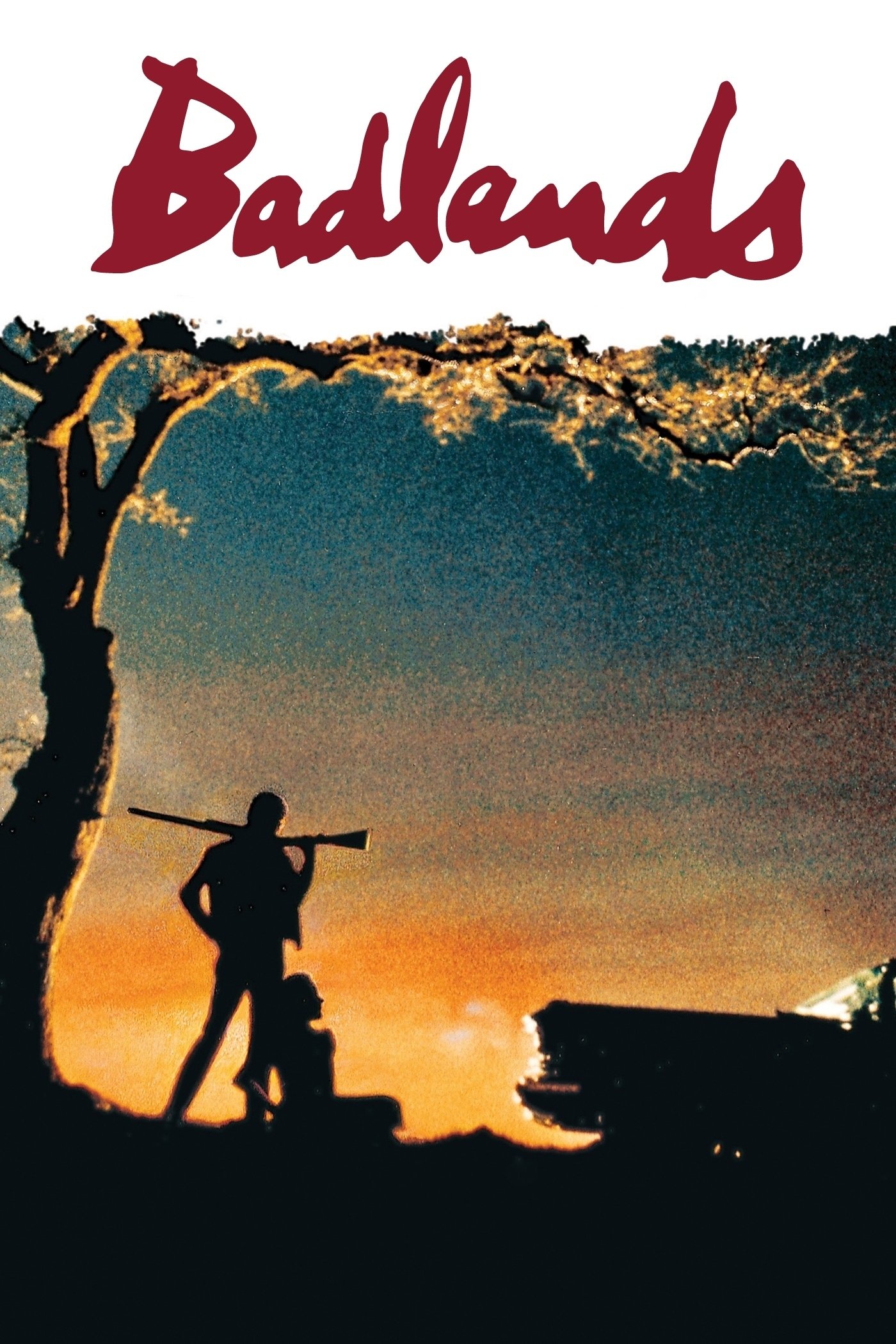
If there’s one thing I continually marvel at in Badlands, it’s Malick’s use of natural imagery to comment on the characters’ journey. The endless grasslands, the shifting weather, and the recurring shots of wildlife give the violence an almost dreamlike abstraction. For me, the landscape becomes a kind of silent witness—oblivious and beautiful, persisting long after human folly has passed through. The recurring motif of light—sunset glows, shafts of sunlight filtering through trees—feels to me like an ironic grace, making the moments of brutality seem both insignificant and tragically poetic.
And then there’s Holly’s narration, which I always find disturbingly flat: her words are disconnected from the horror around her. That deadpan voiceover is, in my mind, a motif in itself, symbolizing the way trauma can numb or distance us from reality. Kit’s obsession with imitation—channeling James Dean’s looks, relying on borrowed gestures—serves as another motif, reinforcing how constructed and performative his sense of self really is. I find these recurring patterns amplify the film’s central critique: that our search for meaning can turn us into actors playing parts we barely understand, within myths that ultimately betray us.
Key Scenes
Key Scene 1
The moment that lingers with me most is the couple’s makeshift “treehouse” hideout, complete with traps, wooden sculptures, and a naive sense of security. I see this scene as an emblem of their attempt to build a private utopia—almost a childlike retreat from reality. The juxtaposition between their domestic fantasy and the looming threat of discovery underlines the futility of escapism. To me, it’s a scene that condenses the film’s haunting message: innocence, when removed from moral responsibility, can quickly turn perilous.
Key Scene 2
The scene where Kit is captured stands out for its almost farcical undertones. I’m always struck by the way he signs autographs and gives away trinkets to the officers, performing as if he were the hero of his own legend. This moment is pivotal because it exposes how media and myth can conspire to transform violence into celebrity. I read Kit’s interaction with authority as a tragicomic bid for significance—a hollow attempt to etch himself into the American imagination even as he remains totally misunderstood. It underscores the film’s skepticism toward the narratives we construct about outlaws and heroes.
Key Scene 3
For me, the film’s closing images—Holly’s blank resignation, Kit’s calm compliance, the silence of the endless plains—crystallize its vision of futility and moral evasion. There is no catharsis or resolution, just a lingering sense of emptiness and inexorable movement toward oblivion. This final stretch drives home what I believe to be Malick’s central concern: the impossibility of redemption through narrative or myth, and the enduring mystery of why we tell these stories in the first place.
Common Interpretations
From the conversations I’ve had and the criticism I’ve read, Badlands draws a variety of interpretations, but most seem to orbit around its ambivalence toward violence and mythmaking. Many critics see it as a meditation on the banality of evil—how ordinary, even gentle-seeming people can become agents of destruction when meaning is absent from their lives. Others read it as a critique of American cultural narratives: the way young people are fed images of romance and rebellion without a moral framework to anchor them. There’s also a line of interpretation that frames Holly’s narration as a commentary on female disempowerment—her passivity reflecting the limited roles available to women in both fiction and reality.
I’ve also come across some who argue that the film is primarily a fable about adolescence and coming of age—less a crime story than a metaphor for the bewilderment of growing up in a world where nothing feels fully real or trustworthy. Yet what I find most compelling is how the film refuses to settle on any single perspective. Its lingering silences and elliptical storytelling leave me with questions rather than answers, which is perhaps why I keep returning to it, searching for meaning in its gaps and omissions.
Films with Similar Themes
- Bonnie and Clyde – Like Badlands, it explores the glamorization of crime and the destructive allure of youthful rebellion, using violence as a way to interrogate American myths.
- Natural Born Killers – I see a clear thread here: both films challenge the spectator’s complicity in the spectacle of violence, focusing on how criminals can become celebrities and symbols.
- True Romance – This film mirrors Badlands in its doomed lovers-on-the-run structure, but leans more heavily into the fantasy versus the emotional numbness that Malick examines.
- Days of Heaven – Another Malick work, it echoes the poetic landscapes and existential mood of Badlands, using nature and fleeting happiness to unravel larger questions of morality and fate.
To me, Badlands ultimately communicates a deep skepticism toward the stories we use to justify ourselves—whether those are tales of love, adventure, or fame. Beneath the film’s haunting beauty is a quiet accusation: that society’s myths, when absorbed uncritically, can lead not to transcendence, but to tragedy or oblivion. It’s a film that traces the longing for meaning across empty landscapes and silent nights, suggesting that sometimes, the greatest danger is not wickedness, but disconnection and dreamless drift. Watching it, I’m compelled to question not just the characters, but the ways in which all of us seek to matter in a world that may ultimately be stranger—and more indifferent—than we care to admit.
To explore how this film has been judged over time, consider these additional viewpoints.