
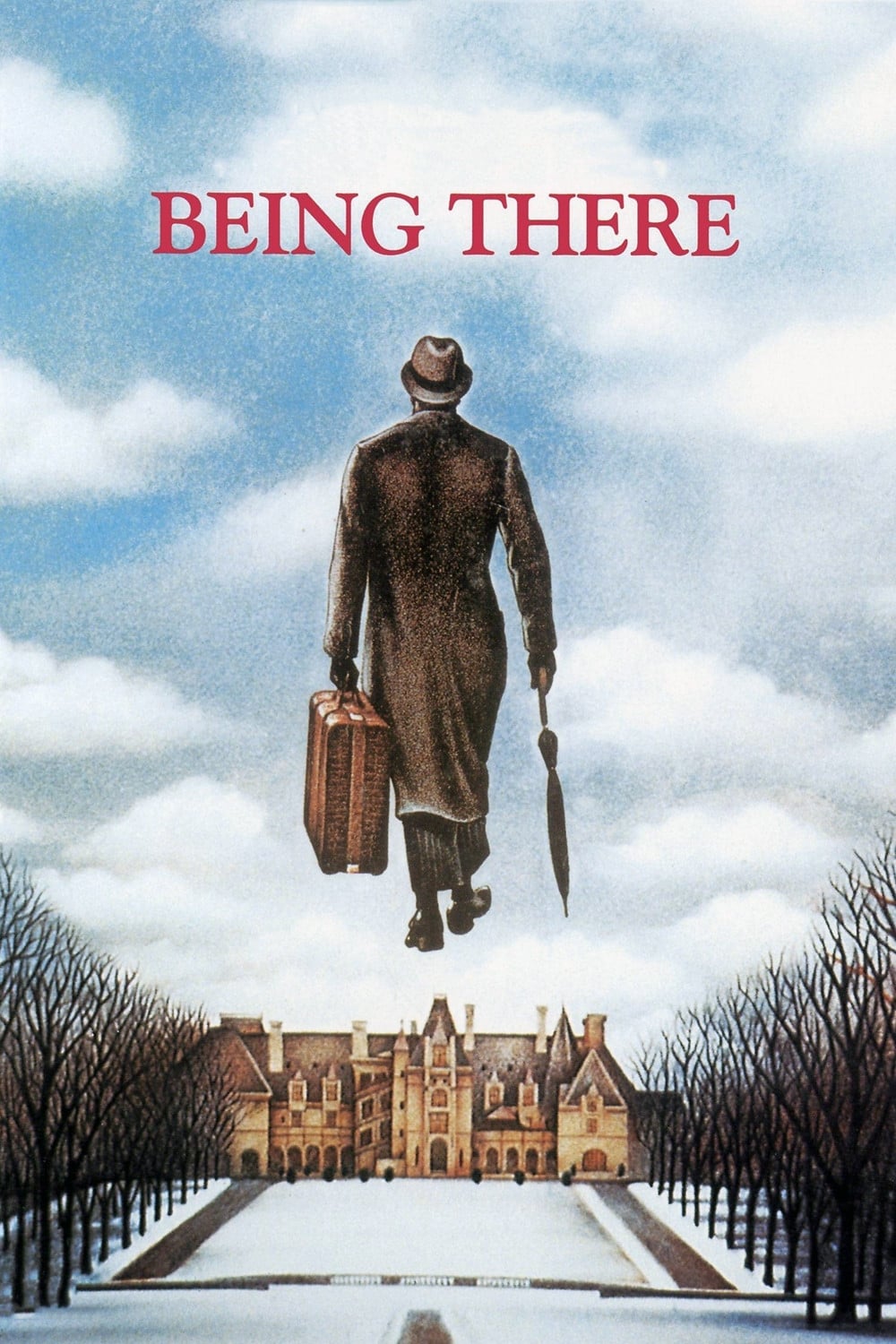
What the Film Is About
Whenever I think back on Being There, I’m struck most by its capacity to unsettle and amuse me in equal measure. The film doesn’t just follow an individual’s path through society—it invites me, at every step, to question the basic assumptions we make about intelligence, perception, and meaning. The emotional journey is, for me, a strange blend of gentle comedy and sharp social indictment. As I watch Chance, the sheltered gardener, drift through a world that instantly mistakes his simplicity for wisdom, I find myself reflecting on the fragile scaffolding that supports public identity.
The central conflict, in my eyes, is almost existential: Chance’s unintentional rise within the upper echelons of power and influence challenges our notions of authenticity. Is it ignorance or innocence that propels him? The film’s narrative direction isn’t about resolution or transformation in a traditional sense; it’s a winding survey of how meaning is constructed—by others, and by ourselves—when faced with the unknowable interior world of another person.
Core Themes
I’ve always felt that Being There operates as a parable about the illusions of clarity and the dangers of projection. Power, for one, emerges as a slippery, almost comical notion: those with the language and posture of authority are never questioned, while those who stay silent or speak plainly are imbued with mysterious wisdom. This is especially relevant to me given the socio-political backdrop of the late 1970s, a time defined by widespread disillusionment and cynicism toward political and media elites. Watching the film now, its critique remains evergreen; we still grapple with the persuasive force of image over substance.
Identity and perception are likewise at the heart of my experience with the film. I see Chance as an empty vessel, his identity always defined by external observers. He’s a void onto which others project their needs, insecurities, and ambitions, and in this way, the film dissembles the notion of a fixed, stable self. There’s a deep current of satire here—a suggestion that social roles, rather than individual essence, dictate meaning. In our era of curated personas and viral misinformation, I can’t help but marvel at the film’s prescience.
The theme of language—and by extension, misunderstanding—permeates every encounter. Chance’s gardening metaphors are intended literally, but society’s hunger for metaphor and meaning turns them into profound commentary. This leaves me questioning the very process of interpretation: Who creates significance? How easy is it for misunderstanding to masquerade as enlightenment?
Symbolism & Motifs
As I look closely at Being There, one motif I can’t escape is that of the television screen. Chance’s upbringing in isolation, surrounded only by televised images, turns the TV into a primary influence—perhaps even a surrogate parent. For me, this symbolizes the distortion of reality by media, and the ease with which image supplants substance. Every time I see the flicker of a TV in the film, I’m reminded of the gap between mediated experience and genuine engagement with the world.
Gardening itself becomes a pervasive symbol. At first glance, Chance’s constant references to tending a garden may seem simple or even naive. However, as others insist on decoding his words as allegories for economic policy or the human condition, I realize the film is satirizing the tendency to over-interpret and misconstrue. The garden is a living metaphor for what is natural, cyclical, and honest—qualities that stand in stark contrast to the manufactured significance ascribed by politicians, pundits, and power-brokers.
Even the motif of walking—Chance moving through ornate mansions, corporate offices, and finally, the foggy expanse of Washington—has always struck me as deeply symbolic. To me, his passive, drifting journey underscores the randomness of fate and the superficiality of societal structures. The shoes he wears, borrowed almost by accident from his former employer, suggest how easily one can step into privilege without merit or awareness.
Key Scenes
Key Scene 1
One moment that lingers with me is the scene in which Chance appears on television for the first time. The interview, staged and formal, offers a kind of social validation that the character has never experienced. As I watch this, I’m painfully aware of how thoroughly media exposure transforms Chance in the eyes of society. It’s not his content, but his presence on TV that legitimizes him. For me, this sequence exposes the vacuum at the heart of public discourse, where appearances and aura outweigh genuine substance or intent. Watching the audience react with awe to his vague platitudes, I come face-to-face with the seductive power of spectacle.
Key Scene 2
The scene where Chance is mistaken for a high-level political advisor during a private dinner strikes me as a masterclass in social satire. Here, his detached gentleness is mistaken for gravitas, and his comments about gardening set off a chain reaction of intellectual acrobatics. I find myself both amused and troubled by how easily the most powerful people in the room interpret ambiguity as insight. In this instance, the film sharpens its gaze on class and access, laying bare the arbitrariness of elite discourse—how often it’s a game of reading between lines that were never intended to convey anything profound to begin with.
Key Scene 3
The final scene, with Chance walking serenely across the surface of a pond, is, for me, the film’s ultimate puzzle and provocation. This moment has always made me reconsider everything that came before; it hovers somewhere between the miraculous and the absurd. Is it a statement about faith and acceptance, or an underlining of Chance’s otherworldly detachment? The ambiguity of the act—walking on water with total innocence—seems to suggest that society often rewards confidence and poise, even in the face of impossibility. I see this sequence as a distillation of the film’s central message: our expectations, not reality, define what we believe.
Common Interpretations
In conversations with fellow critics and filmgoers, I’ve noticed that Being There is most often read as a trenchant satire of political and media culture—a lament for a world where style dominates substance and emptiness is lionized as genius. Many share my sense that Chance’s rise reflects not intelligence or merit, but the power of collective projection and the peculiar rules of elite society. Yet there are those who read the film differently; some interpret Chance as a modern holy fool or even a Christ-like figure, whose innocence exposes the corruption and decadence of those around him.
I’ve also seen interpretations that focus on media literacy. Chance, raised on television, flawlessly embodies and reflects the shallow aesthetics of mass communication. To some, this is a dire warning about society’s reliance on screens, where image is everything and content is optional. Others, though, see the film as a gentle, almost melancholy exploration of human gullibility—an absurdist parable about our thirst for meaning in randomness and our discomfort with the inexplicable.
To explore how this film has been judged over time, consider these additional viewpoints.
Films with Similar Themes
- Forrest Gump – This film also features a protagonist whose simplicity and innocence are continually misinterpreted as profundity, allowing him to influence historical and political events by chance rather than intent.
- Network – Like Being There, this biting satire explores the power of media and the ease with which authenticity is manufactured, showing how television can both shape and distort public consciousness.
- The Truman Show – I’m reminded of this film’s meditation on identity crafted through spectacle; its protagonist’s world is constructed entirely by others, forcing us to confront the artificiality of what we accept as real.
- Dr. Strangelove – Satirizing politics and authority, this film echoes Being There’s core message about the folly and danger of power vested in those who may lack understanding or wisdom.
Whenever I return to Being There, I’m left with a lingering sense of both wonder and discomfort—an impression that the film has shown me a funhouse reflection of society’s collective delusions. For me, its enduring relevance lies in how it asks us to interrogate the stories we tell about one another, the way institutions manufacture meaning, and how easily ignorance—if dressed up in the language of certainty—can be mistaken for wisdom. In the quiet, unfathomable figure of Chance, I recognize both the vulnerability of innocence and the curious power of social projection. The era in which the film was made might seem distant, but the anxieties and ambiguities it explores feel as urgent as ever to me—a mirror held up not just to a single moment, but to the ongoing drama of misunderstanding, hope, and invention that defines human society.