
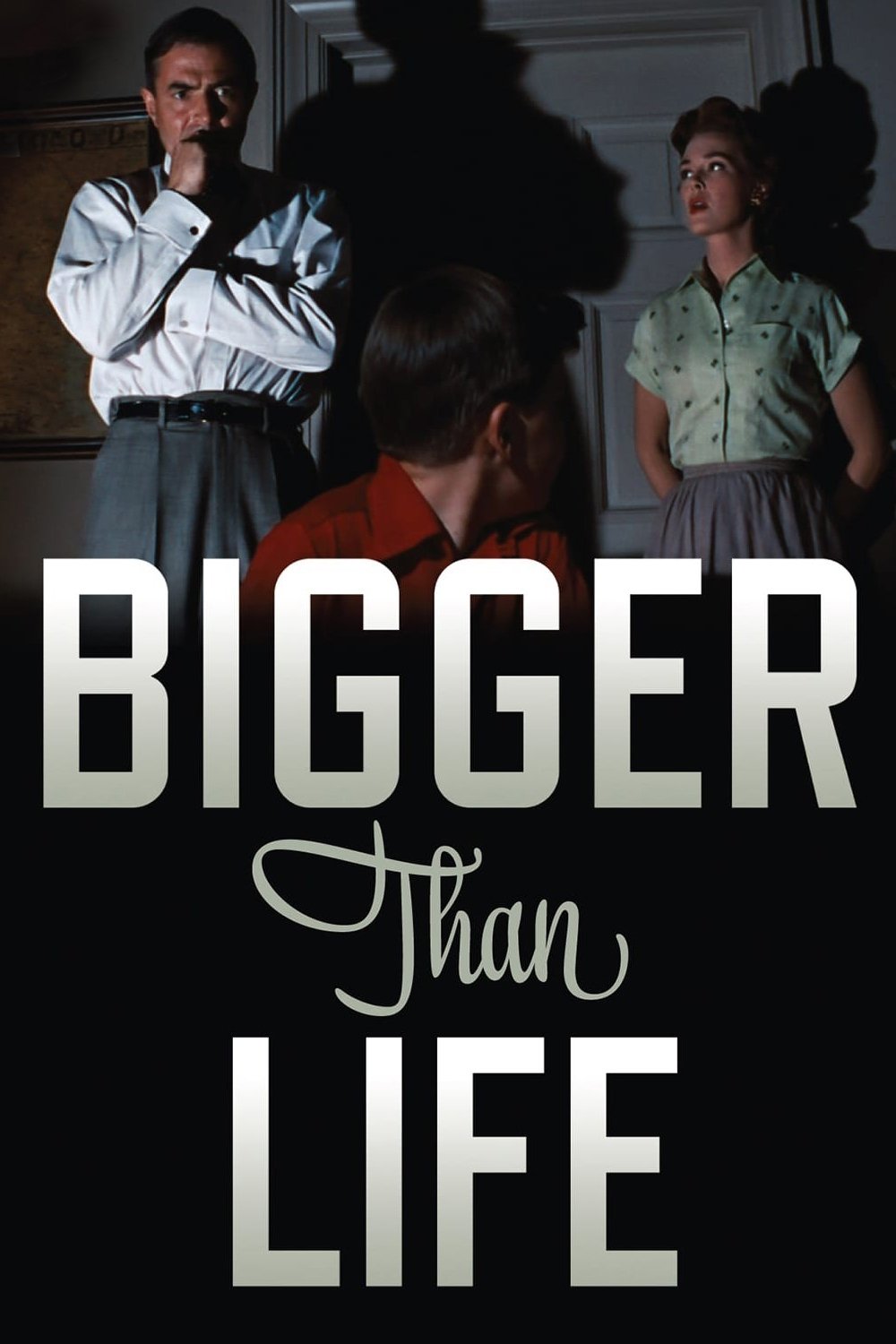
What the Film Is About
Few films have left me as shaken—and quietly awed—as “Bigger Than Life.” When I first watched this haunting 1956 melodrama, I was struck by how it unsettles on such an intimate, domestic level. For me, “Bigger Than Life” isn’t just a film about illness or addiction; it’s about the sheer terror lurking behind the masks we wear at home. I found myself witnessing a family’s emotional core fracture in slow motion, all under the orderly veneer of 1950s America. The central conflict—one man’s unraveling as a husband, father, and teacher—grabs hold early and never lets up. As the protagonist transforms under the influence of prescription medication, the story became less about physical suffering and more about psychological implosion, not just for him but for those who love him. I felt the emotional journey was about suffocating expectations, how quickly affection turns to fear, and how authority at its most intimate can become monstrous. The narrative’s direction is relentless—not toward healing, but toward exposing the deep fault lines underneath suburban “normalcy.”
Core Themes
What has always fascinated me about “Bigger Than Life” is how it takes the safety of the American middle-class dream and turns it into a waking nightmare. The themes reach far past the specifics of drugs or even mental instability. I see the film as a complex meditation on authority—especially paternal authority—and its shadowy flipside: tyranny. The house, with its neat lines and traditional roles, becomes both a stage and a trap for the entire family. I sensed a profound anxiety about the costs of conformity, especially for those who cannot live up to rigid social standards. The protagonist’s deepening illness serves as both metaphor and magnifying glass, exposing what happens when personal identity is subjugated to social expectation.
Watching it from a modern vantage, I’m struck by how the film’s warnings about medical “miracles” and the consequences of uncritically embracing scientific progress have only grown timelier. In the 1950s, America believed in easy solutions; today, we know better, and the film’s skepticism reads as prophetic. For me, “Bigger Than Life” is ultimately about the costs of repression—emotional, intellectual, even spiritual. The core theme of power—whether at home or in the classroom—becomes, in this film, a question of morality: Who gets to wield it, and at what cost to others? If love means obedience, the film asks, what happens when that obedience becomes dangerous? These questions—posed in a tidy living room—feel as urgent now as they did nearly seventy years ago.
Another theme I can’t shake is the distortion of masculinity. The film ruthlessly interrogates what it means to be a “man” in postwar America: breadwinner, disciplinarian, unassailable authority. I ended up feeling that the protagonist’s descent is also the collapse of these ideals. The tragedy isn’t just his breakdown, but the system that made it impossible for him to be vulnerable, weak, or uncertain. The theme of family—supposedly a haven—here becomes the crucible in which all these tensions ignite.
Symbolism & Motifs
When I think back on the film’s visual style, I’m consistently haunted by its use of the suburban home as both sanctuary and fortress. For me, the house is a recurring symbol for the “order” that 1950s families were pressured to maintain. But the way director Nicholas Ray frames domestic spaces—doorways like prison bars, stairways steep and labyrinthine—turns each room into an arena for conflict. It’s more than a backdrop: the set design becomes an active participant, reinforcing a sense of entrapment.
One of the motifs that stood out to me is the recurring image of mirrors and reflections. These moments strike me as far more than decorative flourishes: they signify the double lives of the characters, especially the protagonist, who cannot reconcile who he is with who he’s supposed to be. Mirrors become battlegrounds for identity—spaces where self-loathing and hubris face off in silence. I also find the motif of medication—the ritual of taking pills, the sterile bottles stacked ominously in drawers—operating like a secular sacrament. The pills that promise salvation in fact drive the story’s tragedy; they’re both remedy and poison, hope and doom.
The color scheme, especially the contrast between warm domestic hues and sudden, jarring reds or blues, routinely unsettled me. Those lurid colors seem to hint at the raw emotional chaos seething just beneath the surface. I sense that Ray uses color not just to create mood, but to reveal inner states—flashes of anger, episodes of mania, or moments when the mask of normalcy slips. Even the protagonist’s profession—teaching—feels laden with symbolic meaning. The classroom, just like the family home, is an arena for authority, the transmission of morals, and, ultimately, for repression.
Key Scenes
Key Scene 1
The sequence that always lingers in my mind is the protagonist’s first violent outburst at home, when the family dinner devolves into chaos. For me, this scene is much more than a plot point or a depiction of illness—it’s a symbolically charged eruption of the tensions the film has been quietly building. The breakdown of the father’s composure, witnessed by his wife and child, becomes an indictment of domestic order itself: the ceremony of meals, the binding routines, suddenly turn threatening. I read this as the moment the film’s critique comes into sharp focus, exposing how fragile the American family’s peace truly is. The shame, the confusion, the terror etched onto each family member’s face in this scene tell me more about the era’s culture of silence than any speech could.
Key Scene 2
Later, there’s a devastating classroom sequence where the protagonist, now changed by his dependency, delivers a lesson both grandiose and authoritarian. I can’t forget the way his rhetoric drifts from the lesson at hand to pronouncements about discipline, obedience, and the “proper” way to live. It’s clear to me in this scene that the mania is not just personal, but ideological. His unraveling ceases to be about his own suffering and begins to echo dangerously with the unspoken rules that govern both school and family life. Here, the film’s interest in power is laid bare: education, like parenting, becomes another site of tyranny when divorced from empathy. This scene deepened my understanding of how authority, if unchecked and unexamined, seeds the very chaos it claims to control.
Key Scene 3
There’s no forgetting the climactic sequence, where the protagonist’s delusions climax in what feels like a nightmarish parody of “father knows best.” The threat to his own child crystallizes all the film’s anxieties about love, control, and the boundary where guidance slips into violence. Watching this, I felt overwhelmed by both its horror and its inevitability: everything leading up to this point felt as if it was always going to arrive here. This scene, for me, refuses easy catharsis. Instead, it leaves me contemplating whether redemption is truly possible, or if the wounds opened by authority abused will quietly fester long after the credits roll. I see this sequence as the film’s final, authoritative statement: the very structures meant to protect can just as easily destroy when fear and pride rule the heart.
Common Interpretations
Digging into how others have seen “Bigger Than Life” has always been illuminating. Many critics, I find, view the film as a searing critique of 1950s conformity—a domestic melodrama retooled into a psychological horror story. The prevailing interpretation sees the protagonist’s breakdown not strictly as a medical issue, but as a consequence of impossible social expectations. The film’s “villain,” then, isn’t simply the pills or even the man himself, but the suffocating pressure to be the ideal father, citizen, and employee.
Some readers, myself included, interpret the film as a vicious indictment of patriarchal authority. The father’s transformation from caring parent to looming tyrant feels less like a quirk of illness and more like a magnification of everyday authoritarian tendencies—that quiet cruelty hidden in so many “ordinary” households. On the other hand, there are those who see the narrative principally as a cautionary tale about the dangers of unchecked scientific advances. The wonder drug that promises deliverance turns lethal—an allegory for how American faith in technology so often backfires.
I’ve also come across interpretations focusing on class and consumerism, which I find compelling. The carefully maintained home, the aspirations of a better life, the need to “keep up appearances”—all serve as an indictment of material ambition gone sour. A handful of critics have compared the protagonist’s suffering to that of the tragic hero—a man destroyed by hubris and circumstance alike. For me, the most resonant reading of all is deeply humanistic: the film reveals how quickly love can morph into fear, and how brittle the structures of family and society remain when built on repression.
Films with Similar Themes
- All That Heaven Allows (1955) – My experience of this Douglas Sirk melodrama echoed many of the same anxieties about suburban judgment, conformity, and the struggle to be true to oneself. Both films dissect the hidden costs of outward respectability.
- Revolutionary Road (2008) – Here, I felt the relentless pressure of postwar American expectations distilled to a breaking point. Like “Bigger Than Life,” it paints domestic harmony as a dangerous myth, dissecting the emotional toll of abandoned dreams and enforced roles.
- The Shining (1980) – While in a very different genre, my viewing of “The Shining” always returns to the same fear: the threat posed by a father figure turned monstrous within the walls of the home, and the horror lurking beneath familial rituals.
- Ordinary People (1980) – This film’s insightful examination of grief and the failure of communication within an affluent family connects deeply with what I see in “Bigger Than Life”: the danger of silence, and the fragility of bonds meant to hold us together.
Having lived with this film for years, I see “Bigger Than Life” as a devastating exploration of the human need for validation and control—and the destruction left in the wake of rigid ideals. The film isn’t preaching against science, family, or authority outright. Instead, it peels back the comforting myths of American prosperity to ask what happens when we refuse to confront our own weaknesses and fears. It’s a film that made me rethink not just the era it critiques, but the lingering echoes of those same anxieties in our lives today. Few movies have made me feel the cost of silence, repression, and idealism quite so acutely. This is a story about how easily we become strangers to those we love most—often in our desperate attempt to be seen as bigger, better, or more righteous than we truly are.
To explore how this film has been judged over time, consider these additional viewpoints.