
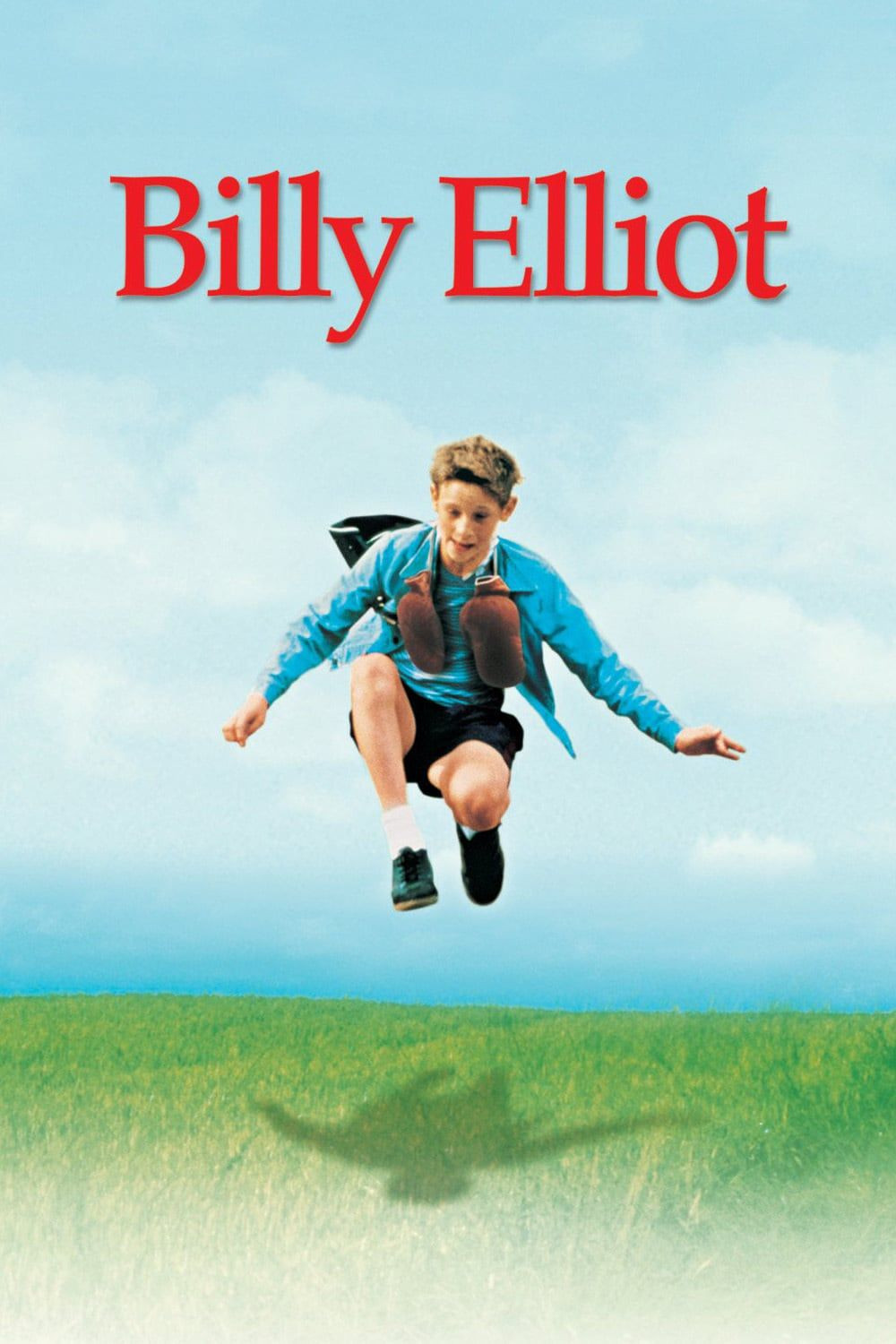
What the Film Is About
Whenever I think about Billy Elliot, it isn’t the plot mechanics that come to mind. Instead, I’m brought back to the pulse of longing that thunders underneath every frame. I see it as an intimate portrait of a boy whose hunger to dance forces both his family and his community to confront their own stifling limitations. For me, the film is less a chronicle of a working-class child striving for a dream, and more an elegy for all the unconventional ambitions that can emerge within the least likely contexts. The emotional journey here is a tightrope: Billy, caught between the inherited expectations of his mining family and the irrepressible force of his own hope, must carry the consequences of both obedience and rebellion.
What strikes me, every time I revisit this film, is how its narrative current carries far more than one boy’s battle against the odds. It feels to me like a friction between two entire worlds—one rooted in tradition and survival, the other glowing with possibility. The true heart of Billy Elliot is not just about ballet, but about the emotional landscapes we cross when forging an identity that refuses to snap to anyone else’s shape. The story moves inexorably toward the question: What will you risk to be fully yourself, and who will stand with you along the way?
Core Themes
When I peel back the layers of Billy Elliot, I’m most captivated by its interrogation of masculinity, class, and the transforming power of art. Above all, the film asks whether we get to define ourselves, or whether the larger gears of society will do that work for us. For me, it’s about liberation—personal, artistic, and by extension, collective. Billy’s passion for ballet is doubly transgressive: first, as a working-class pursuit of high culture, and second, because dance is coded as “feminine” in his coal-mining community. The film’s emotional stakes are buried in this friction: the fear that loving the “wrong” thing could cost you not only your dreams but your place in the world.
I’m consistently drawn to how Billy Elliot uses the miners’ strike as more than just a backdrop. This isn’t window dressing; the desperate struggle for dignity and survival under Thatcher-era austerity suffuses every relationship. The film is haunted by the knowledge that opportunity is scarce, and that working-class families often must shut down any deviation from reliable paths. To me, the legacy of that era still echoes today, in societies where the margins for risk remain frighteningly slim. The beauty of the film is how it offers the possibility of escape—not just for Billy, but for anyone who dares to dream beyond inherited limitations. Ultimately, I see it as a testament to why creativity, especially when embattled, is worth fighting for.
Symbolism & Motifs
One of the aspects of Billy Elliot that has always lingered in my mind is how subtly it deploys visual and narrative motifs. Billy’s battered ballet shoes, for instance, are not just props—they become almost talismanic, representing both his stubborn hope and the wear caused by fighting for that hope. They evoke to me the cost of dreams, worn visibly on the body. Just as telling is the repeated motif of barriers: locked doors, fences, and stark lines strung across the mining town. These boundaries are not just physical but emotional—the sharp delineation between what is allowed and what is forbidden.
Electricity as an image recurs throughout the film: not just in the literal sense (the recurring imagery of flickering lights and power outages), but as a symbol for the kinetic, uncontrollable energy in Billy. Whenever I see Billy dance, I’m reminded of something raw finally finding an outlet. Dance is presented not as performance, but as exorcism—a purging of grief, frustration, and hope that would otherwise have nowhere to go. Mrs. Wilkinson’s chain-smoking, hard-edged presence is another motif: she embodies a kind of tough love that, while unsentimental, is a rare and essential source of encouragement in an otherwise unyielding world.
There’s also the recurrent motif of mirrors and doubling. I interpret Billy’s periodic glimpses of himself—sometimes at distorted or odd angles—as a literal and figurative reckoning with self-image. These moments seem, to me, to represent the ongoing negotiation between his public role and private self. The film’s color palette even functions symbolically, steeped in ashen grays and blues that only break open in rare, luminous flashes when Billy dances. I’ve always read these color leaps as visual affirmations that art, even for a fleeting second, can interrupt the bleakest of realities with something genuinely transformative.
Key Scenes
Key Scene 1
Whenever I try to understand the emotional core of Billy Elliot, I return to the early moment when Billy, left alone in the boxing gym, impulsively joins the girls’ ballet class. This is not a splashy or triumphant scene—instead, it trembles with anxiety and possibility. What moves me about this moment is how quiet it is. There’s no dramatic pronouncement; Billy simply follows an impulse, one that he barely dares to acknowledge. For me, this marks the first fracture in a solid wall of tradition. In that split second, the film suggests that subversion and courage often begin as a whisper. I view this as the film’s statement that genuine desire emerges organically, not as some grand announcement, but as a subtle refusal to follow the expected script. It’s here that the tension between conformity and individuality first comes to the surface.
Key Scene 2
Midway through the film, Billy’s father stumbles upon his son dancing in the gym. The emotional temperature of this scene is unbearable—anger, shame, confusion, and a flicker of awe war for dominance on his father’s face. What’s always struck me is how this confrontation embodies the film’s larger emotional geometry. Billy’s dancing, previously private and fragile, is now exposed and vulnerable. In my reading, this moment is not just about a parent and child; it’s about the collision between deeply held social codes and a new, destabilizing possibility. The silence that follows is what I remember most—it seems to stretch between generations, echoing all the unspoken hopes and disappointments that are impossible to articulate. Here, the film refuses to offer easy reconciliation. It risks everything on the authenticity of the exchange, making it for me one of the truest illustrations of generational confrontation and the pain of loving someone you can’t understand.
Key Scene 3
The final audition at the Royal Ballet School stands, to my eyes, as the film’s most distilled statement of meaning. When asked to explain what it feels like to dance, Billy answers awkwardly at first, but then surrenders to honesty: “It’s like electricity.” This description is more than a metaphor—it’s a confession, an exposure of something ungovernable that can no longer be concealed or discussed away. For me, this climactic moment is not about winning approval. It encapsulates the entire struggle: the necessity of naming one’s own experience, in defiance of category or stereotype. The scene always feels like a minor miracle, where the internal finally proves impossible to suppress. To my mind, it threads together all of the film’s anxieties about belonging, masculinity, and authenticity, and concludes that self-expression is its own justification—even if it “fits” nowhere else.
Common Interpretations
When I talk to others who’ve watched Billy Elliot, I’m always fascinated by the sheer variety of interpretations, even though certain threads run consistently through both critical and popular response. For most, the film is read as an underdog story—a classic narrative of talent overcoming adversity. But I see, and often hear discussed, a richer layer: an allegory for social mobility in a rigid class system. Critics frequently point out how Billy’s journey is about trading one set of limitations (his mining town, masculine strictures) for another (the hierarchies and codes of the ballet world). Some viewers see the film’s final scenes as almost utopian, imagining the kind of “escape” that seems categorically denied to everyone else in Billy’s world.
There’s considerable discussion among critics about masculinity. I often hear the film praised (and sometimes critiqued) for not aligning Billy’s interest in ballet with any explicit sexual identity narrative; his outsider status is about passion, not orientation. Audience members from working class backgrounds sometimes see the film as an affirmation of the importance—and difficulty—of pursuing non-traditional forms of self-actualization. Others interpret the film as a broader critique of the social realities faced by Thatcher-era Britain, reading the miners’ strike as a metaphor for all the aspirations that are stifled by systemic inequality. Among these varied readings, what’s stood out for me is how almost everyone agrees on a single point: the film’s profound empathy for difference, and its insistence that beauty often appears just where it’s least expected.
Films with Similar Themes
- The Full Monty – For me, this film shares Billy Elliot’s focus on working class resilience and the creative strategies people use to reclaim dignity in unlikely circumstances. Both are rooted in Northern England at times of economic hardship, tracing how art and performance can create new possibilities.
- Dead Poets Society – What connects this film to Billy Elliot, in my mind, is the struggle between conformity and authenticity. Both center characters who risk social alienation and familial disappointment in order to pursue their truest selves.
- Bend It Like Beckham – I see a strong parallel in the way both films explore generational tension, cultural tradition, and the pressure to conform to gendered expectations. Each protagonist finds liberation through a talent or passion deemed inappropriate by their community.
- Whiplash – While the tone and setting differ, the obsessive pursuit of artistic excellence—and the costs it exacts, both personal and relational—links these films for me. Each asks whether the price of fulfilling an extraordinary talent is ultimately worth the sacrifice.
What I carry most from Billy Elliot, long after the credits finish rolling, is a restless sense of hope and heartbreak in equal measure. The film insists that identity is not something dictated by birthright or environment, but rather something carved out in acts of passion and risk. I’m left reflecting on the courage it takes, not only to dream, but to claim that dream in the face of scorn and misunderstanding. The film’s compassion for those who are left behind—for fathers, brothers, and friends bound by the expectations of their own histories—is as moving to me as Billy’s eventual escape. In the end, what the film speaks to is the way creativity can crack through even the hardest asphalt, inviting us to imagine a world where the boundaries of possibility are always just a little wider than we thought.
After learning the historical background, you may also want to explore how this film was received and remembered.