
What the Film Is About
When I first sat down to watch BlacKkKlansman, what struck me immediately wasn’t the outlandish premise or even its dark humor, but the deep vein of tension humming beneath every exchange. To me, the film is less a caper and more an emotional battering ram—an unflinching look at identity and the cost of standing up to hatred within systems rotted by bigotry. The central journey isn’t just the infiltration of the Ku Klux Klan, but the psychic toll endured by those who attempt fervently to change, or even just navigate, an America cleaved by race. The story pulls you through a landscape where every small personal victory feels temporarily monumental, only to be undercut by the enormity of societal forces arrayed against genuine progress.
My experience with the film was not so much following a detective’s investigation as being swept up in a personal, political, and historical reckoning. There’s a palpable sense of frustration, defiance, and sometimes ironic triumph. But at its heart, I felt it’s about wrestling with how one’s sense of self—culturally, professionally, ethically—collides and warps under the relentless pressure of racism that, as Spike Lee reminds us, adapts across generations.
Core Themes
If I’m honest, the resonant power of BlacKkKlansman for me lies in how it frames racism, not as a relic, but as a living, mutating force. The film’s primary thematic currency is the illusion of progress. Lee laces every frame with the tension between hope and regression, making me question: What has really changed? Why do the same social cancers metastasize through time? The idea of infiltration—both literal and metaphorical—keeps returning: Can you work inside corrupt systems to defeat them, or do you inevitably risk compromise? This theme leaps out most forcefully in the police protagonist’s collaboration with an entity as virulently hateful as the Klan, mirrored uncomfortably by the police force’s own history.
Identity and passing, something I find both fascinating and deeply unsettling, is at the film’s core. Through the twin performances—Ron Stallworth (a Black officer) and Flip Zimmerman (a Jewish officer)—the movie scrutinizes what it means to “belong” or play a role within both white supremacist society and law enforcement. I couldn’t help but reflect on how both characters, in their own ways, must contort or suppress vital parts of themselves to survive and achieve their goals.
What strikes me is how timely the film feels, despite its period setting in the 1970s. Released in 2018, at a moment of resurgent white nationalism and emboldened hate groups in America, BlacKkKlansman felt like a plea for vigilance. The film’s themes—systemic racism, complicity, the seduction of hate—were agonizingly relevant then, and, heartbreakingly, remain just as urgent now. It’s as if Lee is holding up a mirror, forcing us to confront ongoing cycles rather than pat ourselves on the back for incremental progress.
Symbolism & Motifs
Whenever I revisit BlacKkKlansman, I’m drawn to Lee’s use of juxtaposition: telephone wires connecting black and white lives but always carrying static, mirrors used as portals to both self-reflection and deception, and blurred lines between reality and performance. These aren’t mere stylistic ticks—they feel like deliberate reminders of the precariousness and permeability of individual identity amidst societal roles. The wig Flip wears, the phone calls between Ron and David Duke, the iconic, flamboyant Klan robes—all become loaded props, crying out the dangers of hiding in plain sight.
One motif that lingers with me most is the use of historical footage and moments of direct address. There’s an infamous “Birth of a Nation” sequence, refashioned not just as a symbol of racist propaganda but as a spine-chilling echo chamber for how such messages remain embedded. This scene, paired with Harry Belafonte’s recollection of real-life lynching, made me realize how cycles of trauma and hate regenerate through retelling and ritual. Lee doesn’t let the audience sit passively—he disrupts comfort with these ruptures in narrative, drawing vivid connections to past and present.
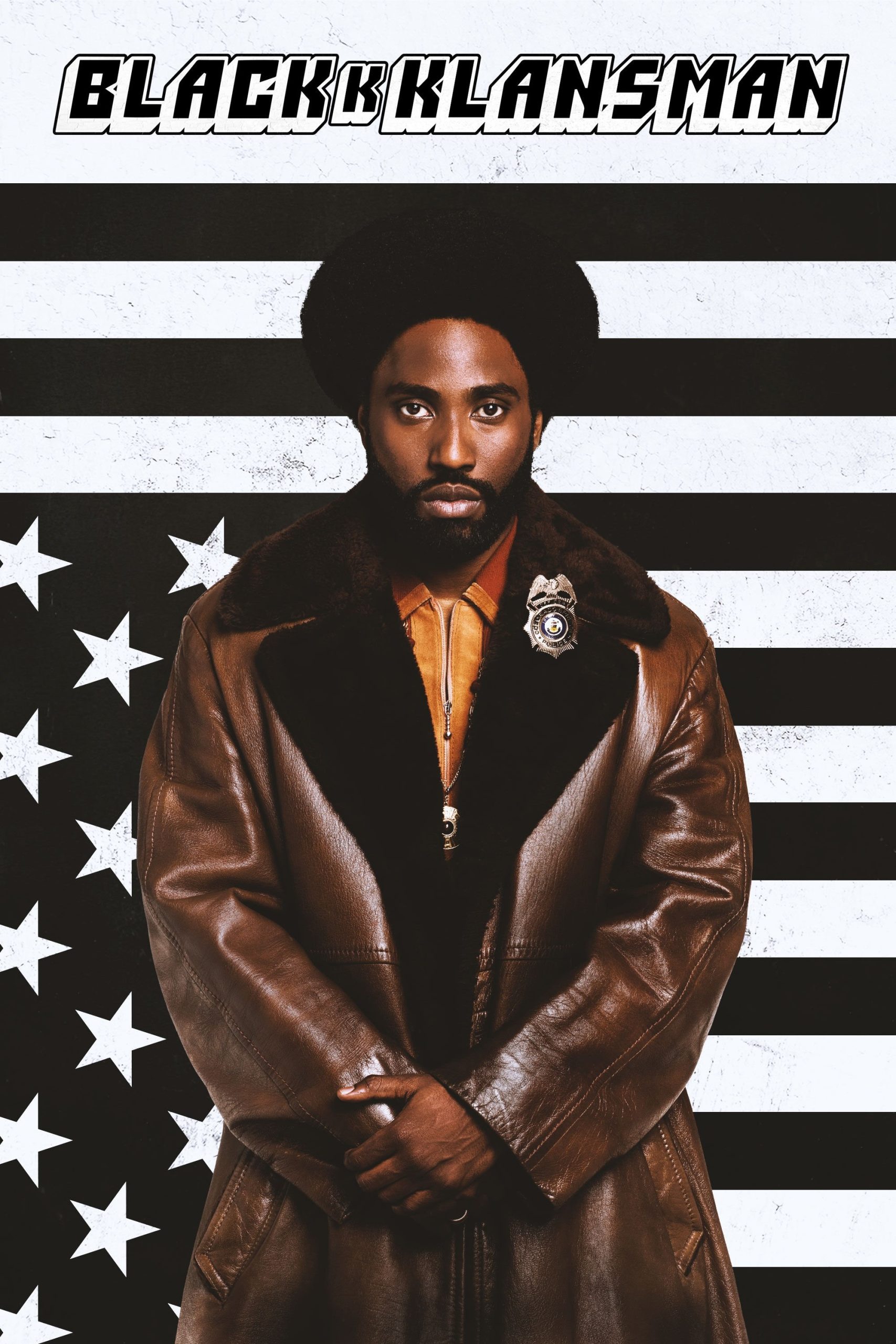
The presence of the American flag, reframed throughout the film, always felt to me like a taunt—a challenge to consider who claims ownership of the national narrative. The flag waves from the Klan rally as much as in Ron’s police office. Lee is deft in showing how symbols of supposed unity can be weaponized by exclusion—and how reclamation and resistance remain fraught, unfinished struggles.
Key Scenes
Key Scene 1
For me, the induction ceremony scene—where Ron makes contact with David Duke via phone as Flip stands in for him in person—is the film distilled. Here, the physical and psychological negotiation of identity, belonging, and duplicity is at its most electric. What haunts me about this scene isn’t just the comedic juxtaposition of Ron’s swagger on the phone against Flip’s nervousness in the room, but the surreal experience of Blackness and Jewishness being both invisibly attacked and violently visible. The emotional core here is a kind of tragicomedy: by “passing,” the protagonists survive, but they must, for a moment, become invisible within systems built to erase them. Spike Lee forces me to consider the cost of this kind of survival—for both individuals and entire communities.
Key Scene 2
The Harry Belafonte monologue cuts me to the bone every time. Here, an elder recounts a harrowing lynching witnessed as a child. What is extraordinary isn’t just the narrative—delivered like an incantation or oral history—but the way it is intercut with the Klan’s celebration of “Birth of a Nation.” The dual scenes are wrenching in their symmetry. For me, this sequence crystallizes the central theme: that violence, both symbolic and physical, is cyclical and shared across generations. Lee uses parallel storytelling to force an uncomfortable reckoning—connecting the overt brutality of the past to the casual racism and coded nostalgia still present in contemporary culture.
Key Scene 3
The film’s coda—flashing forward to footage of the 2017 Charlottesville march—left me breathless. Up until this point, I felt the narrative existed safely in the past, making my discomfort manageable through irony and period distance. But Lee shatters that illusion with a direct, unmediated confrontation: reality bursts into fiction, and suddenly the stakes are no longer abstract. For me, this is where the film lays down its final, uncompromising statement. It’s not merely a history lesson, but a call to action. The connective tissue is drawn with boldness—white supremacy is not defeated, merely adapted, and the moral struggle is ongoing. This scene transforms the entire film into a living document, implicating us all in its aftermath.
Common Interpretations
Over the years, I’ve read a range of responses to BlacKkKlansman, and what fascinates me is how the film draws both consensus and contention. Many critics see it as a scathing indictment of American racism’s endurance and adaptability. I find that most viewers, myself included, read it as a statement on the dangers of complacency—how hatred is never truly vanquished and requires constant vigilance. The ending, with documentary footage, is commonly interpreted as a jarring provocation: a refusal to let us dismiss the story as ancient history.
I’ve also encountered interpretations that focus on the moral complexity of Ron’s infiltration—whether “working from within” can meaningfully change institutionalized racism, or simply masks it. Some viewers are unsettled by the film’s treatment of the police, arguing that it flirts with suggesting real reform is possible through individual heroism, even as the film showcases persistent corruption. I lean toward a more ambiguous reading: Lee presents no easy answers, only questions about complicity, agency, and the boundaries of activism versus assimilation.
Still others see BlacKkKlansman as an act of satire—using humor and absurdity to illuminate just how normalized such hatreds have become. I appreciate how the comedic elements aren’t merely for relief; they border on the grotesque, encouraging a sense of discomfort rather than catharsis. This tension is, to my mind, crucial: it mirrors the experience of living in a country where the stakes of racism are deadly, but still routinely treated with incredulity or mockery.
Films with Similar Themes
- Do the Right Thing – For me, this earlier Spike Lee film unpacks the eruptive forces of race, anger, and gentrification in America, spotlighting how everyday interactions fuel cycles of violence and misunderstanding.
- Mississippi Burning – Here, the focus is also on white supremacist terror and law enforcement’s ambivalent role in fighting it, revealing how the quest for justice in the South is shaped by both heroism and entrenched bias.
- Hidden Figures – I see this film as a celebration of Black excellence amidst institutional racism. Both films interrogate the costs of being a trailblazer behind enemy lines and the emotional labor of navigating hostile environments.
- Fruitvale Station – This story devastates me with its unvarnished look at contemporary, everyday racism. Like BlacKkKlansman, it leaves an open wound—reminding us that each era has its own Oscar Grant or Ron Stallworth, fighting for dignity in the shadow of systemic oppression.
To me, BlacKkKlansman ultimately insists that the battle against hate is never over, demanding something more than passive optimism. The film reveals just how seductive—and dangerous—it is to pretend America’s racial traumas are safely behind us. By refusing to separate history from the present, it exposes the persistence of institutional violence and the psychic toll of resistance. What I carry away from Lee’s vision is equal parts warning and challenge: that in order to truly reckon with the era we live in, we must be willing to look directly at both the machinery of hate and the quiet heroism required to oppose it.
After learning the historical background, you may also want to explore how this film was received and remembered.