
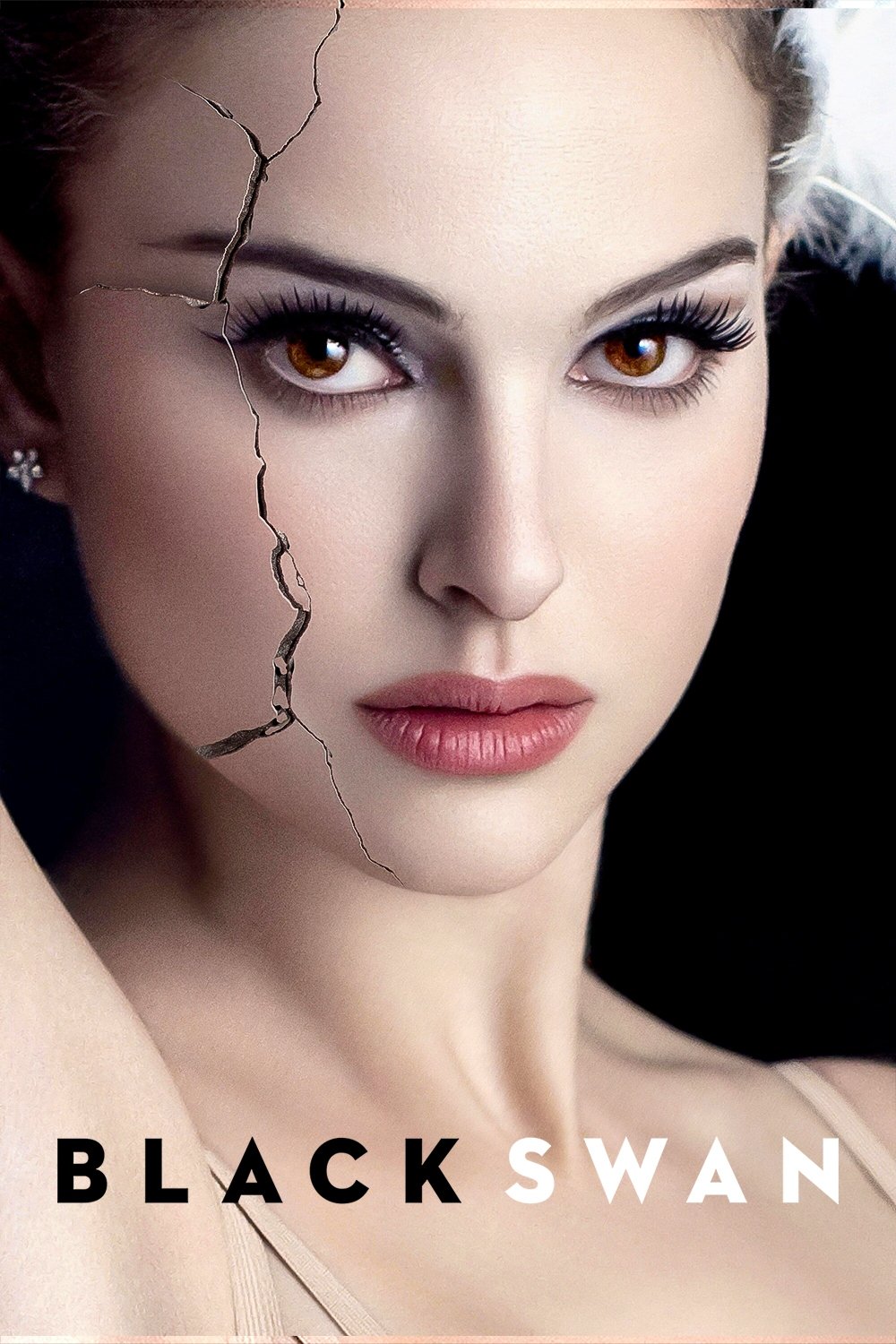
What the Film Is About
Whenever I think of “Black Swan,” I’m immediately pulled back into that feverish sense of unease and fascination it evoked in me the first time I watched it. Rather than presenting a straightforward story, the film felt more like a psychological descent—a relentless quest for artistic perfection that mutates into something both beautiful and grotesque. For me, Natalie Portman’s Nina isn’t just a ballet dancer fighting for the lead role; she’s the embodiment of every person who’s ever tormented themselves in pursuit of an unattainable ideal, where triumph and catastrophe swirl dangerously close together.
At its core, what I found most unsettling and exhilarating about “Black Swan” was its emotional candor—an almost painful transparency about the inner lives of those who chase greatness. The film lures me into Nina’s orbit, inviting me to experience her suspicion, her euphoria when she believes she’s succeeded, and, most of all, her consuming fear that someone else will steal her part or reveal her as a fraud. With every pirouette, every cracked toenail and haunted glance, I felt the cinematic pressure mounting, turning her pursuit of art into an existential crisis.
Core Themes
What stands out most to me is how “Black Swan” becomes a meditation on duality—not just in the literal sense of portraying both the innocent White Swan and the sensual Black Swan, but on a deeper level of exploring the split within the self. I’m fascinated by how the film interrogates the costs of perfectionism, asking whether truly transcendent art can ever emerge without the artist experiencing some degree of suffering—or even self-destruction. This duality plays out in every corner of Nina’s world: innocence versus experience, discipline versus freedom, and ambition versus self-preservation.
I’ve always believed that one of the film’s most relevant themes, both at the time of its release and now, is the razor-thin margin between dedication and obsession. In a post-2008 era when questions about personal sacrifice and toxic work environments had entered public consciousness, I saw “Black Swan” as a stark reflection of these anxieties. Its relentless focus on the personal toll of artistic ambition feels just as relevant today, especially in an age defined by hustle cultures and the glorification of “going all in.” The film urges me to confront my own boundaries: where does healthy striving end and self-destruction begin?
Another thread I couldn’t ignore is the theme of identity and self-ownership. Nina’s struggle isn’t only with her mother, her director, or her rival, Lily. She’s at war with her own reflection, with slivers of herself she can’t control. Watching her, I see a frightening but honest portrait of how desire, repression, and anxiety can become inseparable, especially when they’re stoked by the gaze of others—be it a parent, a lover, or a crowd.
And at the heart of all these themes pulses the question of transformation—not just literal metamorphosis within the story, but the transformative cost of trying to forge yourself into something (or someone) completely new. For me, “Black Swan” remains a chillingly relevant interrogation of what we lose when we relentlessly chase an ideal, and whose voices are truly guiding that pursuit.
Symbolism & Motifs
Every time I revisit this film, I’m struck by how meticulously it uses imagery and repetition to reinforce its deeper messages. Take mirrors, for instance—ubiquitous throughout the ballet studio, Nina’s bedroom, and backstage. I came to see these mirrors as more than mere reflective surfaces; they multiply Nina’s anxieties and fractured selves until she no longer knows which image is hers or which voice is her own. Watching her, I began to wonder how often we all fail to recognize ourselves when caught up in the performance of life.
Then there are those shadowy doppelgangers—Lily, most obviously, but also flickers of a darker, more uncontrolled Nina haunting the periphery. I’ve always interpreted these shadow selves as symbolic of repressed desires and fears, the parts of ourselves that we deny in daylight but can’t escape in the dark. When Nina’s hallucinations spiral, I feel the boundaries between self and other dissolve—reminding me how our conscious identities are always under threat from what we conceal or refuse to acknowledge.
Even the color palette feels loaded with meaning. The flawless whites, coquettish pinks, and pitch blacks not only mirror the dual roles of the ballet but, for me, chart Nina’s psychological journey from innocence to corruption. The persistent motif of blood—blistered toes, scratched skin—carries its own weight, always foregrounding the physical and emotional costs of Nina’s obsession. The violence done to her own body, willingly or otherwise, makes me question how much pain we’re willing to endure for what we perceive as greatness.
In a subtler vein, the motif of transformation—wings sprouting, skin puckering—serves as a destabilizing reminder that true change often comes with pain and ambiguity. Through these motifs, I’ve come to believe the film is less interested in external reality than in the subjective horror of overreaching: what it feels like to break through the skin you’ve always inhabited, only to be unsure what lies beneath.
Key Scenes
Key Scene 1
The moment that always gets under my skin is Nina’s first real encounter with the character of Lily—the sequence where they rehearse together, their dynamic tense and electric. For me, this scene isn’t important merely because of the rivalry it sets up; it’s a masterclass in visual and emotional doubling. Watching Nina attempt to mimic Lily’s sensual abandon, I feel the trap closing. The tension here drives home the central message that true artistry isn’t about mechanical perfection but about surrendering control, even if that surrender is deeply terrifying. Lily becomes more than just a competitor—she’s the manifestation of everything Nina has suppressed in herself. I find myself unsettled by how easily admiration can overflow into envy and self-doubt, exposing the dangerous fragility of identity.
Key Scene 2
The scene that lingers with me most viscerally is the climactic performance, when Nina seems to fully inhabit both the White and Black Swan. The transformation sequence, where her arms feather out and she becomes her role, isn’t just a play for visual spectacle—I see it as a symbolic rupture. In that moment, Nina fuses her innocence with her darkness, ceasing to distinguish between them. As the music swells and the camera swirls dizzyingly around her, I am forced to consider what it means to become the thing you most fear—even as the world applauds. There’s a kind of triumph in her performance, but for me, it’s always tinged with deep loss and a sense of the irretrievable. She’s crossed a Rubicon, and there’s no returning to who she was before. I’m left wondering about the price we pay for moments of brilliance—how often ecstasy and tragedy unfold as two sides of the same coin.
Key Scene 3
The final moments—Nina’s collapse after her triumphant last dance—never fail to haunt me. As she looks upward, uttering “I was perfect,” I feel the crushing weight of her realization. It’s as though the film finally articulates what it’s been circling all along: that perfection is not a destination but a brief, destructive flash. Nina achieves what she thought she wanted, but at unimaginable cost. In those seconds, I am confronted with the question: is a moment of artistic transcendence worth total personal obliteration? It’s a reflection that resonates far beyond the world of ballet; it challenges me to reevaluate the cultural myth that greatness requires total sacrifice. Her apotheosis is both horrifying and beautiful, leaving a lasting ache.
Common Interpretations
Every time I meet someone else who has seen “Black Swan,” I’m struck by how divisive and deeply personal interpretations of the film are. For some, it’s undeniably a story of psychological collapse—a descent into madness born of repression, parental control, and the brutal world of high art. I often meet viewers who are drawn to its depiction of mental illness: they see in Nina’s unraveling a cautionary tale about what happens when vulnerability goes unrecognized or unaddressed, especially in competitive, high-pressure environments.
Others, myself included, tend to read the film as an allegory for creative ambition itself. The horror elements function less as literal threats and more as manifestations of internal conflict. In these readings, Nina’s hallucinations and body horror aren’t just symptoms of psychosis; they’re externalizations of the destructive perfectionism that art (and society at large) so often demands. I find this interpretation resonates particularly strongly in artistic circles and among those who’ve felt the burning need to dissolve boundaries in pursuit of something sublime.
There’s also a substantial contingent who read “Black Swan” through a feminist lens—emphasizing how Nina is manipulated by controlling men and mothers, pressured to embody conflicting ideals of femininity (purity versus sexual availability), and ultimately consumed by a system that profits from her destruction. This reading has always struck me as deeply insightful, especially in how it anticipates (or even echoes) later discussions around the #MeToo movement, agency, and the costs of objectification in creative industries. For me, these different lenses don’t contradict each other; instead, they enrich my understanding, suggesting that the film functions more as a fever dream than a straightforward treatise.
Finally, some critics view the film as a gothic coming-of-age tale, a tragic story of late blooming and individuation. Nina’s transformation into the “Black Swan” is both a sexual and psychological awakening, one that veers so violently because her foundational sense of self is so fragile. I see truth in this. “Black Swan” is, in its own way, about what happens when a young woman tries to carve an identity in a world intent on defining her before she even begins.
Films with Similar Themes
- Perfect Blue – What always jumps out for me is how both films blur the boundary between reality and fantasy, using doppelgangers, performance, and mounting paranoia to explore the psychological costs of fame and ambition.
- Whiplash – This film hits a similar nerve with its depiction of the masochistic, almost religious devotion to craft and the line between greatness and self-destruction, though from the masculine perspective of jazz drumming rather than ballet.
- The Red Shoes – I see this as a spiritual predecessor to “Black Swan,” weaving obsession, artistry, and sacrifice together within the framework of ballet and the tragic arc of a young woman who loses herself to the dance.
- Mulholland Drive – For me, both films are haunted by fragmented identity and the corrosive effects of desire within the performance world, albeit through David Lynch’s hallucinatory lens rather than Aronofsky’s horror-infused realism.
When I step back from the feverish swirl of “Black Swan,” what lingers for me is a kind of painful truth about what it means to crave transformation in a world that rewards extremes. The film communicates, with rare honesty, the price of immersing oneself so completely in a role—whether artistic, personal, or societal—that one’s own boundaries dissolve. It speaks to the dangers lurking beneath perfectionism, to the intimate violence of shaping the self for others, and to the unsettling beauty of transcending all limits, even as it costs everything. “Black Swan” refuses easy comfort, offering instead a mirror for anyone who has ever been haunted by internal division or tempted by the myth of total perfection. It remains a film that sparks introspection and discomfort long after the credits roll—precisely because what it’s saying about ambition, identity, and sacrifice is never as far away as we’d like to believe.
After learning the historical background, you may also want to explore how this film was received and remembered.