
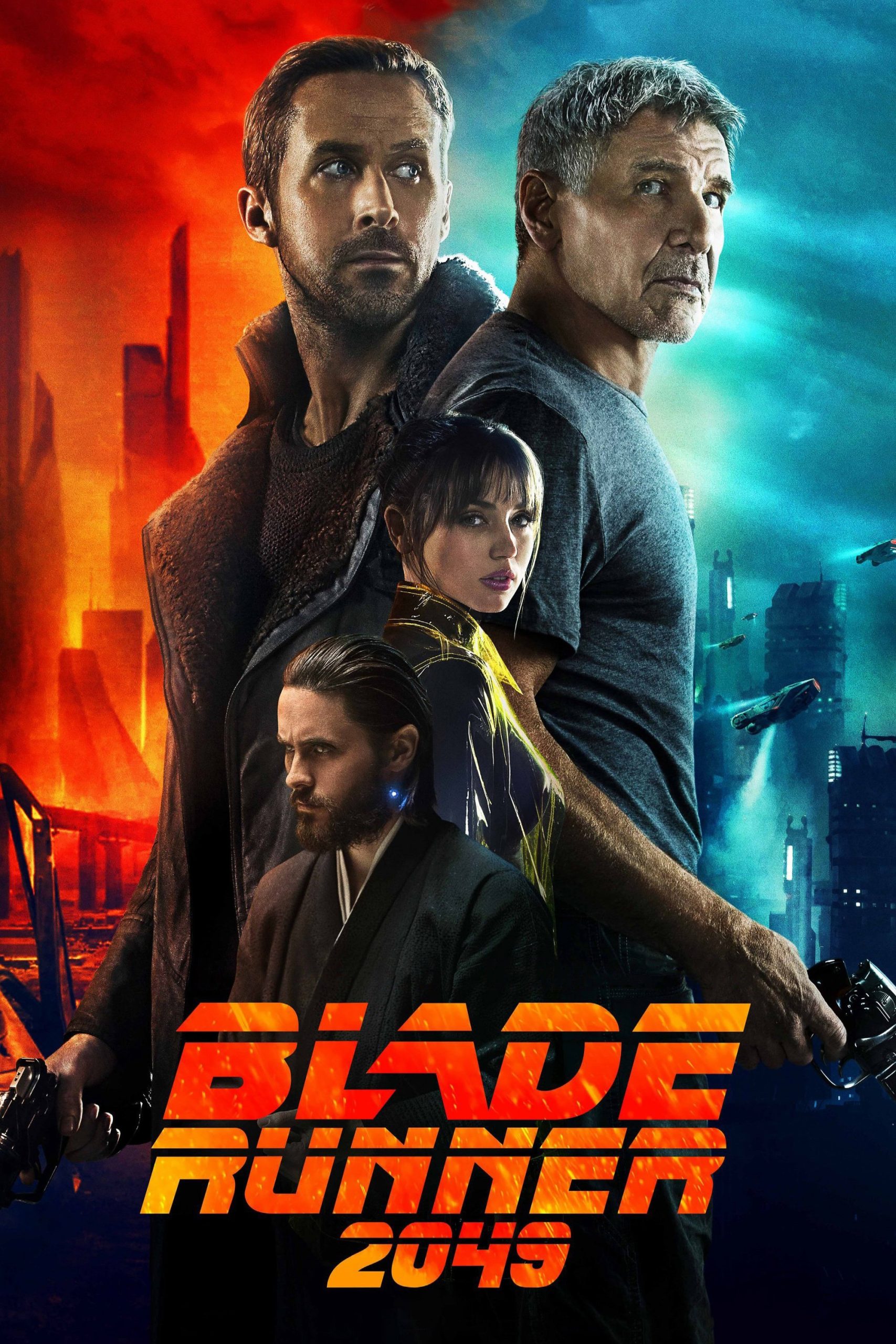
What the Film Is About
Whenever I revisit Blade Runner 2049, it feels less like entering a film narrative and more like wandering through a haunting meditation on what it means to exist at all. I always perceive it as a slow-burning odyssey through loneliness and longing—a journey that feels suspended between the mechanical and the organic, the synthetic and the sacred. At its core, the film struck me as a quiet, aching search for meaning in a world built on layers of artifice, a kind of dreamscape where every character seems to be chasing the shadow of something real, even as reality evades them.
Unlike most science fiction that foregrounds spectacle, I find Blade Runner 2049 to be deeply intimate in its emotional terrain. The central conflict, to me, isn’t just a simple manhunt or a secret to be unearthed. It’s the struggle over who gets to claim the label “human”—or whether, in that vast neon wasteland, such a label even matters anymore. This emotional current, woven through the motifs of memory and belonging, pulls every character into a search for something transcendent: love, identity, or freedom from predestined roles. Every frame thrums with the longing for a genuine, unmanufactured connection, leaving me questioning what divides maker from made.
Core Themes
I’m always struck by how the film’s central themes worm their way into my own anxieties about technology, selfhood, and the burden of history. The most powerful theme, in my reading, is the interrogation of “authenticity.” Is identity something you inherit, or is it something you carve out through action, memory, and sacrifice? Watching K’s journey, I can’t help but reflect on how the film pokes holes in the boundaries we draw around consciousness. K’s programmed obedience, his search for his own past, and his yearning for connection with Joi—another artificial being—raise the question of whether the longing to mean something isn’t the most human emotion of all, synthetic or not.
Another theme I often wrestle with in the film is the inheritance of trauma—not just as personal baggage, but as a kind of toxic legacy passed down between generations, both human and replicant. The ghostly echoes of the earlier Blade Runner linger within every frame. The world K inhabits is decayed, run down by the mistakes and cruelties of those who came before. Characters seem compelled either to atone for that history or to transcend it entirely—and both paths come with profound cost.
It’s impossible for me to miss the film’s commitment to exploring the seduction of control: who gets to write the rules, who has power over memories, and who stands outside the system. With digital surveillance, genetic engineering, and constant monitoring echoing the realities of our own society in 2017 and beyond, I’m reminded that these themes remain pressing. As I watch, I feel the cold friction between autonomy and systemic rigidity, a reflection of contemporary tensions about privacy, hyper-capitalist exploitation, and surveillance culture. The relevance of the film’s questions—Who counts as fully human? Who has agency, and who is rendered invisible?—seems to deepen every year.
Perhaps the most personally resonant theme for me is that of hope in bleakness. As the rain-soaked city pulses with artificial color and the desert remains blank and abandoned, I’m left with the sense that even when systems dehumanize us, the quiet insistence on meaning—on connection, memory, or sacrifice—can become an act of rebellion. The film’s insistence on the possibility of grace, no matter how faint or painful, lingers long after the credits roll.
Symbolism & Motifs
What’s always fascinated me about Blade Runner 2049 is how thoroughly its meaning is reflected in its visual and narrative symbols. If I close my eyes, it’s the persistent motif of eyes that returns to me—the windows through which characters seek to understand, be understood, or surveil. This isn’t just a nod to the original film; for me, it’s a running inquiry into the very act of seeing: Who gets to perceive, and who is rendered invisible? It’s as much about empathy as about control.
Another symbol that resonates on every rewatch is the ever-present motif of artificiality—most prominently through the use of light and color. Neon advertisements, holographic companions like Joi, and the ceaseless rain and smog form an atmosphere where nature is not just absent, but actively replaced by fabricated substitutes. In this context, even small traces of organic life—like the wooden horse or the appearance of snow—take on almost sacred significance. I often interpret these small, tactile moments as metaphors for genuine experience; they punctuate a world starved of the real, offering flickers of something authentic in a landscape of simulation.
Memory, both implanted and lived, loops through the film like a refrain. The motif of the artificial memory designer, Anna, sculpting recollections for others, is to me a symbol for the paradox at the heart of consciousness: are we more than just the sum of our memories, or are memories themselves what makes us who we are? The ambiguity is never settled, forcing me—as a viewer—to confront my own suspicion of nostalgia, the ways I may be tricked by my personal narratives.
Finally, there’s the repeated image of barriers: glass walls, gridded windows, blurred reflections. Every important exchange seems filtered through a screen or surface, as if true connection is always just out of reach. For me, these visual cues reinforce the central ache of the film—the simultaneous yearning for and impossibility of fully belonging, whether to a family, a cause, or even one’s own story.
Key Scenes
Key Scene 1
The scene I return to most often, when wrestling with the film’s message, is K’s visit to the memory artist, Dr. Ana Stelline. Here, the act of remembering is literalized: she creates artificial memories for replicants, sculpting fragments of happiness or pain that will root themselves in their minds. For me, this scene isn’t just about K learning his own history—it’s about the agony and beauty of longing for authenticity in a world that deals only in facsimiles. The emotion that flickers across Ana’s face when she views K’s memory reveals the blurred line between real and artificial suffering. I find this moment to be a quiet manifesto for empathy: to feel deeply, even if those feelings have been programmed or curated, is to be alive in the fullest sense. It’s a potent reminder that meaning resides not in the origin of an experience, but in how it is felt.
Key Scene 2
The rooftop confrontation between K and Deckard never ceases to haunt me. Here, two outcasts—one a ghost from the past, the other desperate to control his own future—circle each other with suspicion, curiosity, and wounded yearning. What makes this scene so vital, in my eyes, is how it unspools the film’s themes of paternity and legacy. Deckard’s refusal to claim the lost child as simply “his” invites me to consider whether families are determined by biology, fate, or choice; whether freedom lies in breaking from our programming or embracing the connections that shape us. The hard, rain-soaked setting and clipped dialogue throw into relief the loneliness of these men, forcing me to confront how the pain of history can be the doorway to grace. It’s an anguished, beautiful scene that never quite resolves, echoing the unresolved questions at the film’s heart.
Key Scene 3
The closing sequence, when K lies on the snowy steps after ensuring Deckard’s reunion with his daughter, strikes me as the film’s emotional thesis. The soft fall of snow, in contrast to the omnipresent rain and neon haze, feels like absolution—a rare, natural touch in a fabricated world. K, lying vulnerable in the snow, has transcended the role he was built for: no longer a tool, he’s become an agent of quiet rebellion and sacrifice. I see this act not as a triumph, but as the brutal, necessary price of forging meaning in a universe that offers no guarantees. When Deckard enters the sealed room to meet Ana, I’m moved by the rarity of genuine connection—hard won, fragile, and all the more precious for it. This ending offers no tidy resolutions, but it does leave me with the hope that even the smallest act of kindness, even the briefest moment of real contact, can become a radical gesture.
Common Interpretations
When I talk to fellow viewers or read critical essays, I’m always fascinated by the range of interpretations this film provokes. Many critics, I’ve noticed, regard Blade Runner 2049 as a philosophical rumination on artificial intelligence—less concerned with the mechanics of world-building and more invested in exploring how identity is manufactured, maintained, and contested. A common thread in these readings is the idea that the boundaries between human and replicant exist to be challenged. I tend to agree: the film is at its most powerful when it unsettles the idea that soul, spirit, or love are the sole property of biological beings.
Some audiences, though, see the narrative as a critique of late-stage capitalism and environmental decay—a vision of the future where everything from memory to romance has become a commodity. I’ve always found these interpretations convincing, especially given the film’s fixation on surveillance, mass-produced pleasure, and the scarcity of natural life. The visual architecture of the film—with its monolithic corporate structures and endless advertisement—mirrors my own unease about where technology and commerce are leading us.
Others, however, approach the film more as an existential parable. For them, K’s journey is less about winning freedom from his creators and more about the basic human experience of forging identity through suffering, choice, and self-sacrifice. I resonate strongly with this interpretation; it moves the story away from technological angst and toward a universal meditation on what it means to choose meaning over nihilism, to find value in acts that may never be known or memorialized.
What I rarely see is consensus. Some view K as a Christ-like figure, his sacrifice mythic rather than tragic, while others insist the film’s real message is a cautionary tale about technological hubris. That very ambiguity, to me, is the source of the film’s lasting power: it gives shape to fears and desires that remain unresolved, both in the film’s world and in my own.
Films with Similar Themes
- Ex Machina – I see a strong thematic kinship here, as both films dig into the ethics and emotional complexities of creating artificial consciousness, raising questions about autonomy, empathy, and the moral responsibilities of creators.
- Her – I’m often reminded of Her’s poignant inquiry into digital intimacy and human longing, as well as the vulnerability of loving an entity that straddles the line between algorithm and personhood.
- Children of Men – This film, like Blade Runner 2049, confronts a dystopian world on the brink of despair, offering a small flicker of hope through sacrifice and the resilience of the human (or synthetic) spirit.
- Ghost in the Shell (1995) – To me, this animated classic shares Blade Runner 2049’s obsession with blurred identities, memory, and cyborg subjectivity, refusing to draw easy lines between human and machine.
For me, watching Blade Runner 2049 is an invitation to negotiate the messy boundaries between real and artificial, past and future, isolation and intimacy. It speaks to the desperate need to find meaning in a world fractured by technology and haunted by its own history. What I ultimately take from the film is a deeply personal meditation on the act of searching itself: the belief that to ask questions, to hurt, and to hope is what makes us most alive, no matter how manufactured our origin may be. In this world—so much like our own—the pursuit of empathy, even when destined to falter, remains the most radical, human gesture there is.
To explore how this film has been judged over time, consider these additional viewpoints.