
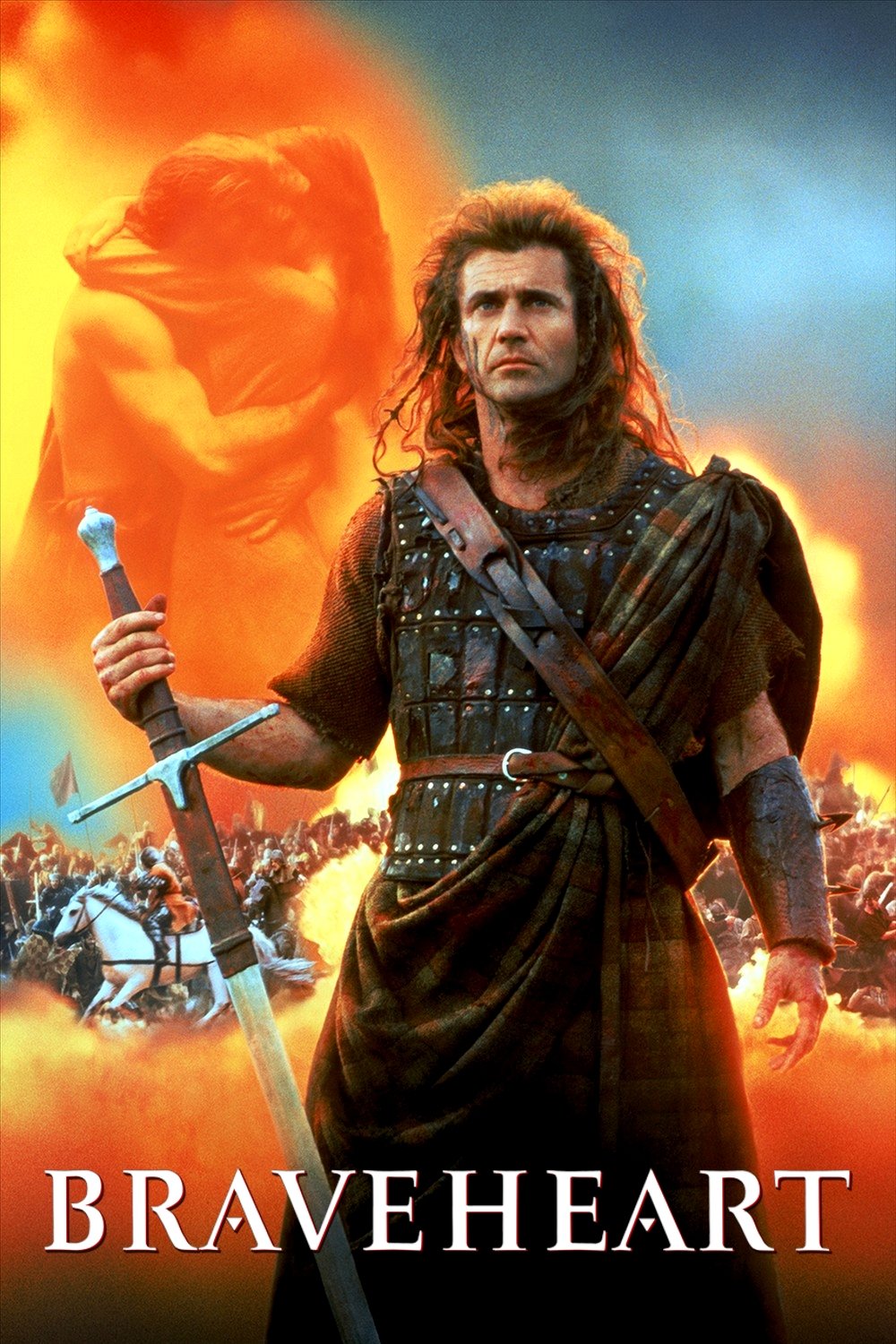
What the Film Is About
Every time I return to “Braveheart,” I’m struck by how little the film confines itself to historical retelling and how much it captures an electrifying, almost desperate longing for freedom. For me, this film is about the emotional turbulence that arises when the yearning for self-determination butts up against implacable power. The human drive toward liberty—at both the personal and the national level—serves as the throughline, igniting the narrative and shaping every character’s trajectory.
What I find most compelling is how “Braveheart” channels rage and hope in equal measure. The central conflict, to my eyes, isn’t just a struggle between Scottish rebels and English oppressors—it’s a deeper psychological story, almost a fever dream of resistance and betrayal. Mel Gibson’s William Wallace is less a precise historical figure and more a vessel for universal outrage and longing for meaning in a wounded world. The film’s direction moves inexorably toward the question: What will people endure—and what will they sacrifice—just for a taste of dignity?
Core Themes
Reflecting on the themes woven throughout “Braveheart,” I’m always impressed by the film’s meditation on freedom—not as a political abstraction, but as a visceral, spiritual necessity. The very marrow of the story aches with questions about what it means to be free, not simply from kings or armies but from fear, betrayal, and the corrosion of compromise. This thematic current surges through every frame, inviting me, as a viewer, to question not only the legitimacy of authority but the moral cost of submission.
I also can’t ignore the theme of sacrifice, which shadows the film like a persistent echo. What will one risk for an ideal? At the time of the film’s release in the mid-1990s, collective anxieties about identity, nationalism, and integrity were bubbling up globally, possibly explaining the resonance “Braveheart” enjoyed across diverse cultures. Faced with a new world order reeling from the end of the Cold War, people began asking themselves what, if anything, was truly worth fighting for. Watching the film now, in an age when the concept of liberty has become both weaponized and hollowed out by politics, its resonance hasn’t dulled—it’s become almost prophetic.
Another layer that I find endlessly rich is the idea of legacy versus survival. The tension between living quietly in the shadows versus daring to shape one’s destiny is ever present. Where some characters cling to self-preservation, others commit to something larger than themselves, even if it means obliteration. And underscoring it all is a meditation on love—romantic and platonic, familial and patriotic—as both a sanctuary and battleground. The film seems to whisper that love, in all its forms, is as much an act of rebellion as picking up a sword.
Symbolism & Motifs
“Braveheart” is saturated with recurring images and motifs that, over the years, have stuck with me like half-remembered dreams. The Scottish landscape looms as a living force: stormy skies, mist-clad glens, and rolling fields become more than backdrops—they embody the wild, untamable spirit of the people. In my mind, these landscapes symbolize the possibility of liberation and the ruthlessness of fate. The use of blue war paint, daubed across faces with a sense of ceremony, reads not just as preparation for battle, but as a kind of shamanic transformation—an outward expression of an inward vow.
Flags and banners flutter throughout the story, signifying the larger-than-life struggles to which individuals are tethered, for better or worse. To me, they represent the tricky interplay between personal agency and the suffocating embrace of nationhood. Moreover, the repeated appearances of thistles and wildflowers serve as poignant reminders of lost love and fragile hope. These delicate things persist even amid brutality, underlining the film’s insistence that defiance is as much a matter of the heart as of the sword.
I’ve also noticed how shadows and candlelight turn up whenever the characters contemplate betrayal, death, or destiny. This motif continually draws my attention to the movie’s obsession with choices—how every decision is tinged by doubt, how the margins between right and wrong are always flickering and unstable. Rather than orienting us with clear heroes and villains, the visual language immerses us in ambiguity, echoing the film’s larger questions about morality and faithfulness.
Key Scenes
Key Scene 1
For me, the moment when Wallace gathers the ragtag rebels and—under a blue Scottish sky—gives his incendiary speech about freedom, is the film’s emotional engine. What makes this scene so vital isn’t the rhetoric itself, but rather the intimacy and ferocity of collective yearning. I often find that the camera lingers on faces rather than armor, on trembling hands rather than blades. This is where the film lifts the struggle out of history and plants it squarely in the enduring realm of myth. I can feel the tremor in the air: the possibility that a wild idea, amplified by suffering and hope, might remake the world.
Key Scene 2
When Wallace is confronted with the betrayal by his allies—particularly the powerful Scottish lords—I’m left with a sense of existential heartbreak. This isn’t just a personal loss; it’s a shattering of trust that stains the rebellion itself. I see here a mature treatment of idealism—how revolutions are most perilously threatened from within, when cynicism and self-interest corrode the common cause. The film seems to ask: Can the fight for freedom ever survive the slow poison of human frailty? In this pivotal exchange, themes of loyalty, pragmatism, and the messy reality of politics come crashing together, reminding me that heroism always bleeds at the margins.
Key Scene 3
The final execution sequence—I still feel the ache every time I watch it—is as much about the spirit as the flesh. I’m haunted by how Wallace’s refusal to ask for mercy, his agonizing but unwavering stare toward his friends and the future, becomes an act of communion with those left behind. The word “freedom,” uttered with his last breath, isn’t just a plea; it’s a bequest. Here the film illuminates the paradox of martyrdom: how death, properly witnessed, can seed a thousand rebellions. This scene is the distilled essence of the film’s truth—that the idea of liberty, once kindled, will outlive the body it inhabits. It transforms private suffering into a generational legacy, challenging me to consider what ideals I’d hold onto, even at the cost of everything.
Common Interpretations
Whenever I discuss “Braveheart” with fellow cinephiles or students, I encounter a fascinating variety in interpretation. For some, the film reads as a straightforward salute to individual heroism—a paean to uncompromising resistance against tyranny. These viewers see Wallace as a mythic avatar, the kind of leader who crystallizes collective frustration into action. I’ve often found that such readings emphasize the emotional resonance of the film over its factual liberties, viewing historical inaccuracies as artistic license in service of universal truths.
Other interpretations, which I sometimes find more provocative, center on the film’s ambivalence toward nationalism. While “Braveheart” is undeniably a rousing call for national unity, it’s also laced with skepticism about the motives of those in power. The suspicion that even the liberators are vulnerable to corruption or pragmatism tempers any simplistic reading. Critics have pointed to how the story’s macho idealization of violence risks feeding into a cycle of mythmaking that can be dangerous, especially when co-opted by real-world politics. I share that concern: the line between inspiration and manipulation is razor-thin.
There are even those who see the film as a meditation on masculinity—one that at times indulges in but also critiques the cult of the warrior. The frequent focus on personal loss, longing, and the fragility of hope interrupts the bravado with reminders of heartbreak. I’ve met viewers who connect most strongly with these moments, arguing that “Braveheart” is ultimately less interested in conquest than in the soul-wounds endured by those who dare to dream of change.
Films with Similar Themes
- Gladiator – I find that “Gladiator” echoes many of the same questions about vengeance, honor, and the forging of identity through rebellion against empire. Both films situate their heroes as outcasts seeking justice in a broken system.
- Spartacus – Watching this classic, I’m reminded how stories of doomed revolutions repeatedly probe the price of dignity and the allure of martyrdom. Like “Braveheart,” “Spartacus” grapples with the costs and contradictions of collective action.
- The Last of the Mohicans – I see strong thematic ties in the ways both films wrestle with the disappearance of cultures and the existential toll of colonization. The interplay between personal love and sweeping historical tides is, for me, powerfully resonant in each.
- The Patriot – In this film, the echoes of “Braveheart” are unmistakable: questions of family, loyalty, and revolutionary zeal set against the backdrop of another war for independence. Watching both, I come away reflecting on how bloodshed and hope are always entangled in the stories nations tell themselves.
Ultimately, what remains most vivid to me about “Braveheart” is its volatile mix of pain and possibility. The film refuses to offer easy answers; instead, it dramatizes the cost of transformation—personal, political, emotional. When I reflect on its meaning, I see a work that pleads for the possibility of redemption through resistance, yet warns of the ever-present shadow of compromise and loss. In the era in which it was made—a time marked by upheaval, identity struggles, and suspicion of authority—its message cut with the grain of popular anxieties. The emotional echoes linger for me now, a challenge and a comfort: that the desire for freedom, once awakened, pulses through history like a persistent drumbeat, demanding to be heard.
After learning the historical background, you may also want to explore how this film was received and remembered.