
What the Film Is About
Every time I revisit “Breakfast at Tiffany’s,” I find myself returning not to its plot mechanics, but to a sense of yearning that lingers long after the credits roll. The movie isn’t simply about the misadventures of a dazzling young woman in New York City—it’s about the loneliness that can hide beneath even the most glamorous surfaces. Watching Holly Golightly drift through sophisticated parties and casual acquaintances, I always feel an undercurrent of searching: for belonging, for stability, for a kind of peace she can’t quite name. The film takes me on an emotional journey from detachment to a fragile kind of acceptance, inviting me to wonder what it means to truly know oneself while also craving acceptance from others.
At its core, for me, “Breakfast at Tiffany’s” is a reflection on the contradictions between independence and intimacy. Holly’s flightiness, her refusal to be tied down, and her insistence on calling herself a “wild thing” create a tension that animates every encounter. This tension—between running away and wanting to be found—drives the film’s emotional heart. Watching her, I’m reminded that sometimes the biggest battle is not against other people, but against the barriers we build to protect ourselves from being hurt.
Core Themes
What has always resonated most with me about “Breakfast at Tiffany’s” is its exploration of identity and the courage it takes to reveal our true selves. Holly, as I see her, is a master of reinvention, constantly shifting her persona to fit the expectations of those around her—a Southern girl reborn as a Manhattan socialite. But beneath the layers of charm and nonchalance, there’s a vulnerability as universal as it is personal. She fears dependence and dreads the prospect of being “caged,” as she calls it, but her actions betray a deep longing for connection.
I believe the film speaks profoundly about escapism—both literal and emotional. Holly’s restless spirit is both a rebellion and a shield against the disappointments she’s endured. She clings to illusions, especially the fantasy of Tiffany’s as a sanctuary from life’s messiness, seeking solace in spaces that promise order and beauty. The tension between reality and fantasy is palpable, and it asks me to examine the stories I tell myself to get through difficult days.
Love, too, is a central preoccupation—not the easy, fairy-tale kind, but love that demands authenticity. Holly resists intimacy because it threatens her carefully cultivated detachment. Watching her struggle to trust and be known reminds me how exposing real affection can be. The film’s themes struck a chord in the early 1960s, when the world was caught between postwar traditionalism and the upheaval of social change. Even now, these questions about self-definition and vulnerability feel startlingly fresh—maybe even more relevant in a world obsessed with curating perfect versions of ourselves.
Symbolism & Motifs
One of the pleasures I get from “Breakfast at Tiffany’s” is watching how symbols quietly accumulate meaning. The most prominent, of course, is Tiffany & Co. itself. To me, Tiffany’s is less a jewelry store than a symbol for safety and unattainable serenity. Holly likes to go there “when I get the mean reds”—her name for those moments when anxiety takes over. Walking past glittering display cases, she yearns for a sense of control, order, and beauty that she can’t find in her daily life. Tiffany’s becomes a metaphor for the calm and security she lacks, a golden cage of her own choosing.
The recurring motif of the cat, whom Holly pointedly refuses to name, fascinates me every time I watch the film. This nameless cat is more than a pet; it’s Holly’s mirror—unclaimed, untethered, and adrift. When she insists, “We don’t belong to each other,” about herself and the cat, I feel that statement reverberate. It’s as if she is declaring her fear of attachments, even as she quietly yearns for them. The act of leaving and then seeking the cat again near the film’s end powerfully encapsulates the loneliness of living without roots—and the hope of finding someone who understands.
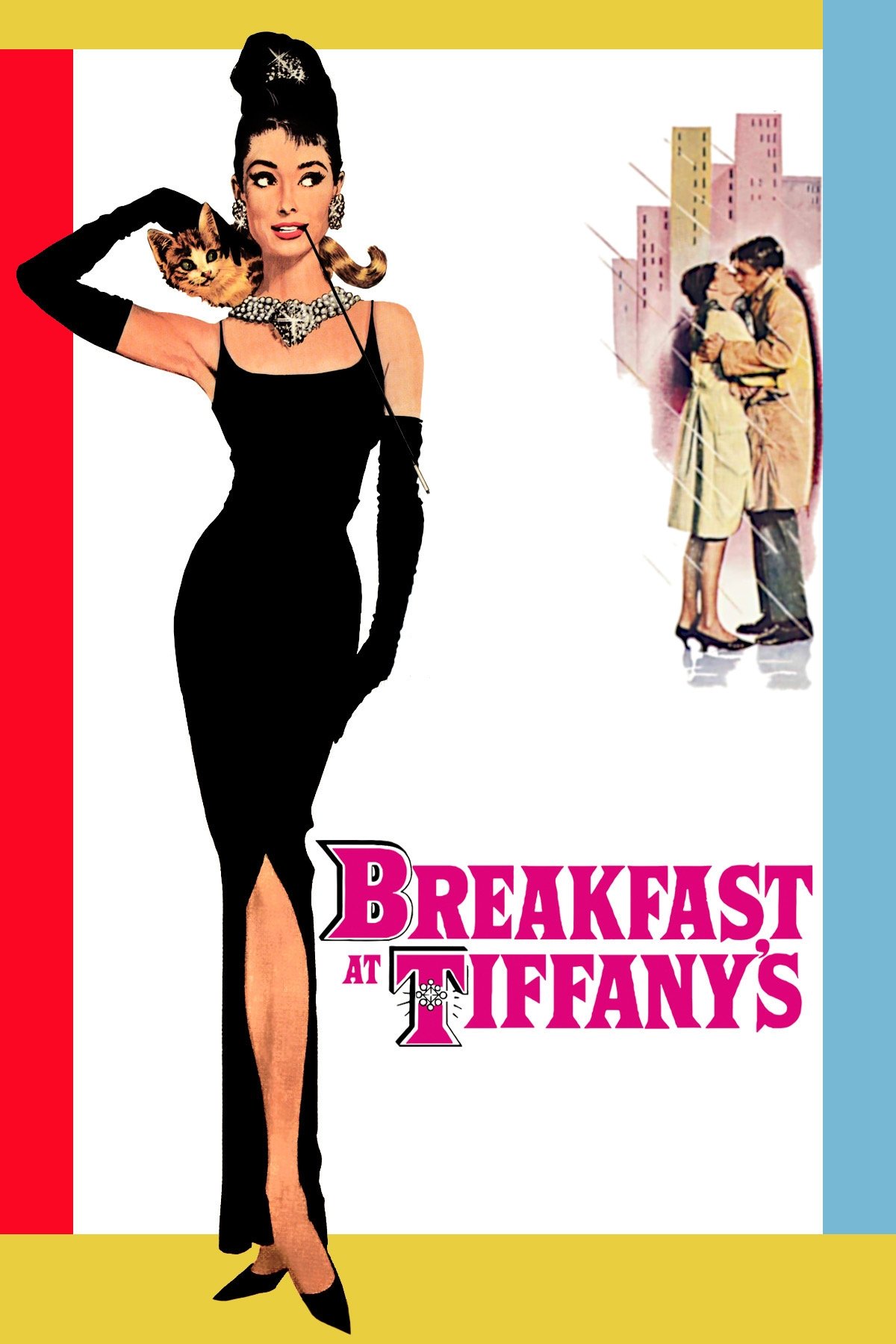
Costume and setting also reinforce the film’s themes in ways I find subtle but unmistakable. Holly’s iconic black dress and oversized sunglasses project sophistication, but for me, they also serve as armor—ways to fend off the world and hide her true anxieties. The city itself is another character: ever changing, full of possibility and heartbreak. New York in the film feels like a labyrinth of chance meetings and missed connections, reflecting both the thrill and fear that come with charting your own path.
Key Scenes
Key Scene 1
For me, the opening sequence—Holly in her black dress, standing at dawn outside Tiffany’s with her coffee and croissant—is quietly devastating. On the surface, it’s about glamour; but as I watch her gazing through the window, I’m always struck by the loneliness of the gesture. This is not a woman at home in the world, but someone on the outside longing to enter a place she associates with safety. The distance between Holly and the unattainable treasures behind the glass poignantly introduces her emotional isolation. I see this scene as a tone-setter: it’s about aspiration and the ache that comes with believing happiness lies just out of reach.
Key Scene 2
Later, Holly’s candid conversation with Paul Varjak about “the mean reds” is, in my mind, essential to understanding the movie’s emotional current. When Holly admits that nothing besides Tiffany’s can “calm her down,” I sense that she’s revealing more than a passing mood—she’s naming a kind of existential dread. Paul’s gentle, persistent questions break through her facade, and for a moment, Holly drops the mask. I often think this scene is where the film gets at the crux of its argument: the idea that, no matter how well we perform, genuine connection starts with honesty about our needs and fears.
Key Scene 3
The final scene in the rain, as Holly searches desperately for her lost cat, never fails to move me. This is a turning point, not just in her relationship with Paul, but in her relationship to herself. For most of the film, she’s defined herself by her ability to run, to evade anything that smacks of permanence. But as she cries out for the cat and, by extension, for someone to stay, I see her wrestling with the terrifying possibility of commitment. In that moment, she chooses vulnerability—embracing the messy, unpredictable parts of life that she’s spent the entire film trying to avoid. To me, this is where the film’s message finally lands: belonging isn’t just about finding a place of safety, but daring to love and be loved in return.
Common Interpretations
What’s fascinating about “Breakfast at Tiffany’s” is how critics and audiences have shaped such a wide array of interpretations. For some, the film is a glittering fantasy about Manhattan sophistication—a valentine to style and freedom. I’ve met many viewers who see Holly as an emblem of independence and modern femininity, a woman who refuses to be pinned down by society’s norms. There’s a certain thrill in watching someone so famously unconstrained, especially at a time when women’s roles were sharply circumscribed.
Other commentators, myself included, see Holly as a more tragic figure—someone trapped by her own illusions about autonomy. Beneath her witty banter and effortless charm, she is profoundly lonely, using glamour as camouflage against the world’s cruelties. I’m always struck by how often viewers miss this layer, mistaking surface sparkle for emotional resolution. To me, the film doesn’t so much celebrate independence as it asks what we lose when we make ourselves unreachable.
There has also been serious discussion around the film’s problematic aspects, especially the now notorious racial caricature of Mr. Yunioshi. Engaging with this element has forced me to reckon with the era’s blind spots—reminding me that even films with timeless questions about selfhood and love can be hobbled by the prejudices of their moment. While I continue to find value in the film’s core themes, I think it’s crucial to acknowledge how its legacy is complicated by these choices.
Ultimately, for me, the most powerful interpretations are those that balance the film’s romantic optimism with its underlying melancholy. The story endures because it captures that human ache—what it means to want freedom and belonging at once, and what it costs to risk the heart.
Films with Similar Themes
- Roman Holiday (1953) – I see a spiritual sibling in Audrey Hepburn’s earlier role, where another captivating woman must grapple with public persona versus private longing. Both films wrestle with independence and the bittersweet consequences of choosing one path over another.
- Annie Hall (1977) – This is a film I often connect with “Breakfast at Tiffany’s” thanks to its unsentimental look at relationships and the baggage we carry. Both stories ask whether true connection requires giving up a carefully maintained self-image.
- Lost in Translation (2003) – Watching Scarlett Johansson’s character wandering through a foreign city, I’m reminded of Holly’s urban drift. Both films move me with their meditations on loneliness, identity, and the search for meaning in unfamiliar landscapes.
- The Apartment (1960) – Like “Breakfast at Tiffany’s,” this film explores the vulnerable places where personal ambition, love, and integrity intersect, set against the isolating bustle of city life.
Reflecting on “Breakfast at Tiffany’s,” I’m left with a sense that the film is neither a straightforward romance nor a cautionary tale. For me, it’s a bittersweet meditation on the struggle to carve out an authentic self while longing to be loved and accepted. Holly Golightly’s journey is messy, incomplete, and all the more human for it. In her contradictions, I find echoes of my own insecurities—the wish to be free yet deeply wanted, to escape but ultimately to come home to someone. That unresolved tension gives the film its lasting poignancy.
If there’s one thing I take away every time, it’s that the search for belonging and the courage to drop our defenses is a journey with no easy endpoint. “Breakfast at Tiffany’s” captures what it feels like to live in a world where we are both the architect and prisoner of our own dreams, and where even the brightest surfaces can mask the most tender hopes. The film reminds me that to love, to risk ourselves in connection, is to risk disappointment—but also to find, sometimes, something beautiful beyond the glass.
To explore how this film has been judged over time, consider these additional viewpoints.