
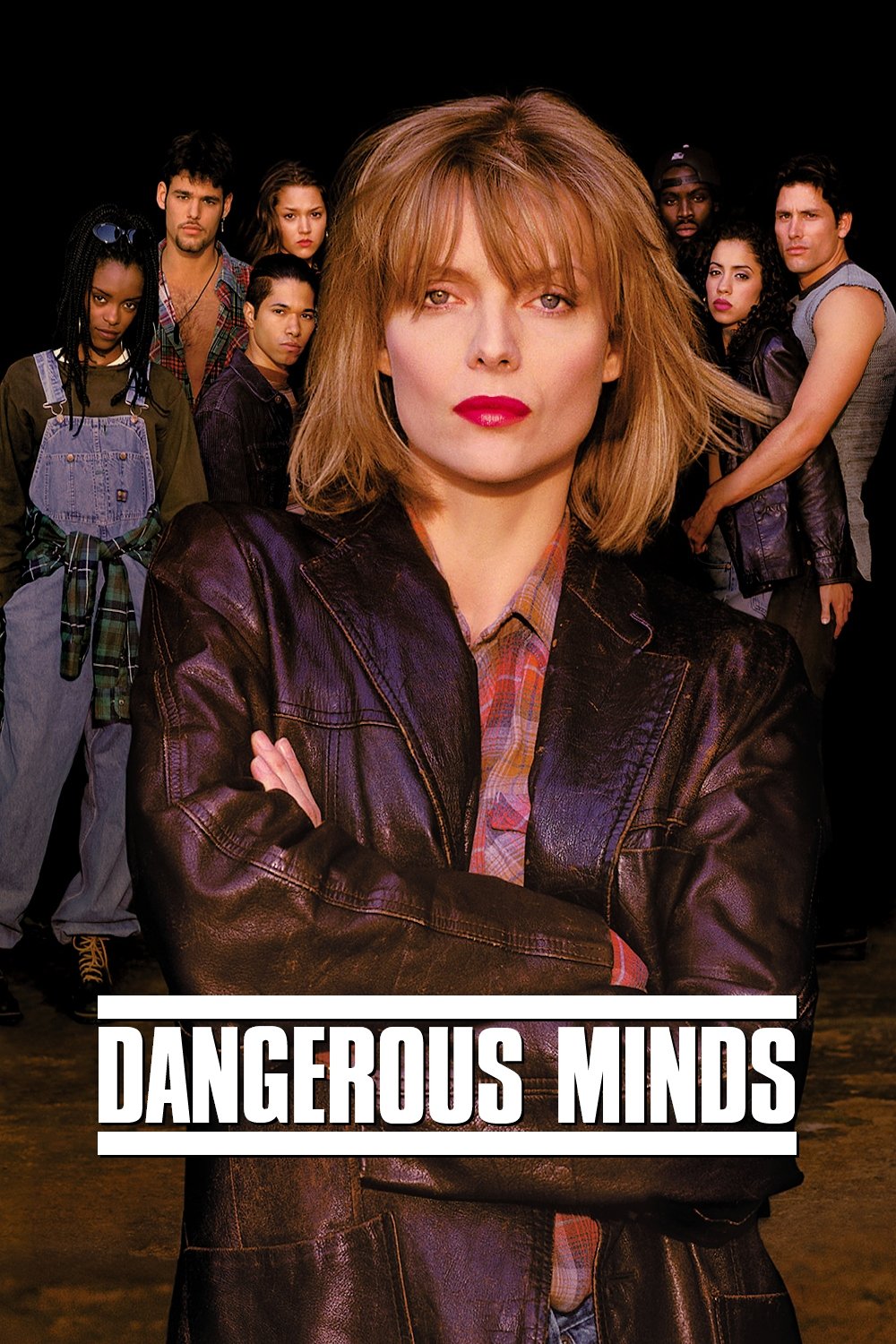
What the Film Is About
Sitting in the theater for the first time, I remember noticing not the plot but the emotional undercurrents that defined Dangerous Minds. For me, the film isn’t merely the story of a teacher assigned to a classroom full of “at-risk” students; it’s a meditation on hope and the intricate, sometimes painful, dance between two worlds—one cloaked in institutional comfort and the other hardened by systemic neglect. Watching LouAnne Johnson, I was drawn to her struggle—not just to teach English or poetry, but to reach students who had learned to expect disappointment from authority figures. The real narrative, as I see it, is her journey from outsider to advocate, and the students’ journey from distrust to the brink of self-belief.
What has always struck me is that the movie isn’t content to neatly resolve its central conflict—education versus survival. Instead, it constantly challenges notions of what constitutes “success.” It carries a bittersweet tone, as if acknowledging that while small victories matter, some battles are never entirely won. This isn’t just about a teacher transforming a classroom; it’s about the personal costs of caring, the limitations of the system, and the tiny acts of courage that echo far beyond school walls.
Core Themes
I can’t watch Dangerous Minds without confronting the way it wrestles with the idea of power: who holds it, who feels powerless, and how it shifts—sometimes unexpectedly—when genuine connections are made. To me, the film is most powerful when it exposes the fault lines between privilege and disenfranchisement, especially in the American education system. The classrooms in the film become a kind of battleground for identity, belonging, and agency. The students’ resistance often isn’t about laziness or apathy; it’s about defending dignity within a larger world that rarely grants them the benefit of the doubt.
One theme that resonates deeply with me is the persistent tension between hope and despair. As I watch the characters, I find myself wondering how many hands—literal and figurative—are needed to pull someone out of a sinking system. The film insists that education, approached with patience and respect, has a radical potential to change lives. But it never pretends this work is simple or universally successful. By throwing light on the personal risks and heartaches that teachers and students both face, Dangerous Minds refuses to peddle easy answers.
Another theme I can’t ignore is the film’s exploration of trust. The gradual thaw between LouAnne and her students mirrors the larger challenge of bridging cultural and socioeconomic divides. Watching it today, I’m struck by how the film’s anxieties—about institutional neglect, the value of empathy, and the fragility of opportunity—still pulse through headlines and education debates. When I revisit Dangerous Minds, it forces me to confront how slow real change is, and why the themes of perseverance and systemic injustice haven’t aged out of relevance.
Symbolism & Motifs
Throughout Dangerous Minds, I see certain visual and narrative motifs that quietly reinforce its central arguments. The blackboard, for example, stopped being just a classroom tool for me; it started to feel like an unspoken boundary, marking the gulf between what the curriculum prescribes and what these kids actually live through each day. Every time LouAnne picked up a piece of chalk, I heard an unasked question: Can knowledge truly cross this divide?
The recurring motif of confrontation—often verbal, occasionally physical—stands out to me as the film’s acknowledgment that growth rarely happens in comfort. I think about all the moments where classroom order is disrupted, not simply because students want to rebel, but because they want desperately to be heard. These flashpoints seem to embody the clash between worlds: the institutionalized world of school rules and the unpredictable world of survival outside.
One symbol that has always lingered with me is LouAnne’s leather jacket. Ostensibly a nod to her military past, it evolves into a kind of armor—worn both literally and emotionally as she learns to defend her students from bureaucratic indifference. I also notice the subtle symbolism in the gifts and tokens exchanged, such as the small poetry book or the chocolate bars. These objects, to me, represent fragile attempts to create a sense of belonging—a recognition that meaning emerges from shared trust and respect, not just classroom lectures.
Key Scenes
Key Scene 1
The scene that always sticks with me is the first time LouAnne chooses to rewrite the classroom rules—not by authority, but by offering her students choice and reward. She hands out candy bars and dubs the day “Dylan-Dylan,” inviting her students to interpret Bob Dylan’s lyrics. This is much more than a gimmick; it feels to me like a test of mutual vulnerability. LouAnne is risking ridicule by exposing her own methods, and the students are risking a glimmer of hope. The emotional charge here, as I experienced it, arises from witnessing an institutionally powerless group suddenly regain a sliver of autonomy. This shift subtly makes the case that genuine learning only flourishes when both parties risk trust.
Key Scene 2
Later in the film, there’s a fraught conversation between LouAnne and her student Emilio. The rawness of their exchange, in which LouAnne tries to guide Emilio away from violence and toward self-preservation, underscored for me the film’s core argument about systemic traps. Emilio’s sense of futility and LouAnne’s mounting frustration expose the limits of individual intervention. For me, this scene is less about “saving” a student and more about exposing how cycles of violence and mistrust run deeper than any one person’s good intentions. The moment lingers in my memory not for its outcome, but for its honesty about the stakes: reaching someone at the crossroads is never guaranteed, and sometimes even the best guidance can be tragically insufficient.
Key Scene 3
Near the film’s end, LouAnne’s decision to leave teaching—and her students’ passionate pleas for her to stay—becomes, to my mind, the film’s culminating statement about responsibility and belonging. When I watch this scene, I see the narrative push past the cliché of teacher-as-savior to arrive at something more nuanced: the acknowledgment that commitment to others cannot heal all wounds, and that personal cost is unavoidable. The emotional force of the students’ appeals is not triumphalist, but honest—an admission that genuine relationships matter most when they’re at risk of being lost. It’s a turning point that leaves me questioning my own assumptions about heroism: Who truly saves whom—and at what cost?
Common Interpretations
Whenever I discuss Dangerous Minds with other fans or critics, a few dominant readings always seem to surface. Many see it as an indictment of the public education system, where bureaucracy and apathy threaten to crush both teachers’ ideals and students’ hopes. In my circles, it’s still common to hear the film described as a stirring, if imperfect, call to action—a plea for reform and empathy within rigid, often indifferent systems.
Another interpretation I’ve encountered focuses more pointedly on its depiction of “white savior” tropes. Though I personally feel the film is aware of its own limitations and belongs to a specific moment in 1990s cinema, others argue that it inadvertently centers LouAnne’s heroism at the expense of developing its students as autonomous, complex individuals. I think there’s truth to both readings. There’s no question that the narrative lens follows LouAnne, but I also find that the students, when given space, are drawn with vulnerability and agency.
For some viewers—myself included—the film’s enduring emotional power emerges less from its politics and more from its depiction of human connection under pressure. The fragility of hope, the struggle to reach across gulfs of experience, and the weight of daily survival are themes that transcend the specifics of its plot. I see these elements as the source of the film’s resonance, even when its methods or messaging are debated.
Films with Similar Themes
- Freedom Writers – When I think of contemporary films that echo the same struggles, this one leaps to mind. It, too, centers on a teacher’s effort to inspire marginalized students, confronting institutional inertia and systemic prejudice, and embracing the redemptive power of storytelling.
- Stand and Deliver – This film’s portrayal of Jaime Escalante’s battle to empower disadvantaged math students reminds me of the way hope emerges, sometimes quietly, through perseverance and deep faith in student potential.
- To Sir, With Love – Decades before Dangerous Minds, this film explored the fraught relationships between a teacher and underserved youth. Watching it, I recognize similar themes: mutual respect, cross-cultural understanding, and the longing to dismantle stereotypes.
- Coach Carter – Though set within the context of high school athletics, the heart of this film, for me, is its insistence that discipline, commitment, and care can transform not just individual fates but entire communities—echoing the spirit of Dangerous Minds in a different register.
Ultimately, my years revisiting Dangerous Minds have only deepened my belief that its true message lies in its refusal to offer pat solutions. What stays with me are the moments of messy, imperfect connection—the split-second choices that determine whether hope dies or takes root. The film reminds me that society’s failures are never isolated to schools or individuals; they’re woven into the fabric of communities and carried, often invisibly, by the young. Watching its characters battle expectations, I recognize how easily any of us could wither or thrive based on circumstance and support. While some criticize it for simplicity, I see its power in asking us to care—even when caring feels futile. In this way, Dangerous Minds remains, for me, an incisive, bittersweet reflection on the ongoing struggle for dignity and possibility, both in and out of the classroom.
To explore how this film has been judged over time, consider these additional viewpoints.