
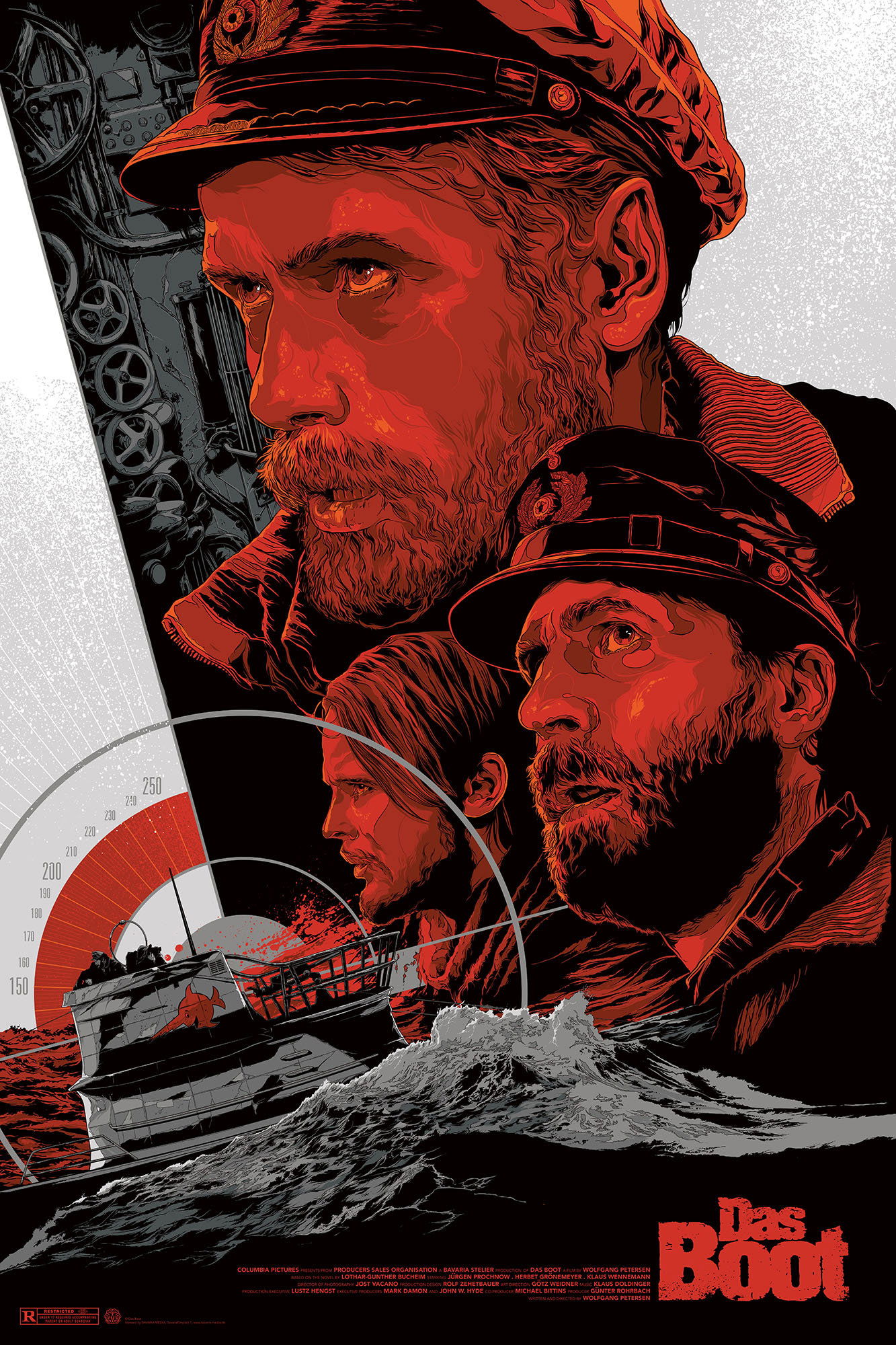
What the Film Is About
The first time I settled in to watch “Das Boot,” I was bracing myself for a typical wartime epic—heroics, sacrifice, maybe even jingoism. What I encountered instead was like being thrust into an emotional pressure cooker, right beside characters desperately fighting not for ideology, but for survival. For me, the film boils down not to the machinations of war, but to the claustrophobic, human cost of it—almost a meditation on fear, hope, and resignation. I see it as an experience defined by the torment between duty and dread, camaraderie and alienation, all submerged in a world where the surface barely matters.
In my eyes, the narrative of “Das Boot” isn’t concerned with the victories or losses that make it into history books; rather, it captures the raw, shifting emotional terrain inside a German U-boat. Day by day, I am invited to wrestle with the sailors’ increasing desperation, oscillating between moments of tension and fleeting relief, always aware that fate—not valor—will determine who emerges alive. The men are united by circumstance, not ideology, and that is what gives the film its lasting universality.
Core Themes
When I consider the film’s thematic center, I am always drawn to its unflinching examination of the dehumanizing consequences of war. “Das Boot” approaches conflict not as a staging ground for glory, but as an engine of fear, futility, and survivalism. The film gently, but persistently, picks apart the myth of wartime heroism. As I followed the faces of men contorted by hunger, exhaustion, and dread, I saw individuals ground down to their most vulnerable selves—where ideals crumble under the weight of reality, leaving only the primal instinct to endure.
I’m always struck by the overwhelming feeling of alienation that permeates the submarine. Despite being confined together, the men feel impossibly alone. Their connection is forged through shared suffering, yet I sense a distance from the outside world, their country, and even themselves. The film’s refusal to indulge in nationalistic fervor is, I think, what makes it resonate beyond its German setting. Released in the early 1980s, “Das Boot” emerged against a backdrop of changing attitudes toward the legacy of World War II, particularly in Europe. For me, this context only amplifies its core message—an insistence on seeing one’s supposed enemies as individuals, capable of fear and kindness, not faceless antagonists.
The other theme I continually return to is the slow erosion of faith—in leadership, in purpose, sometimes in humanity itself. I find “Das Boot” unafraid to expose how war mutates morality: acts once praised as courageous become exercises in futility or mechanized cruelty. At its heart, the film is a gut-punch for anyone who has ever wanted to believe that suffering in war somehow makes sense. After all these years, that perspective keeps “Das Boot” disturbingly relevant, especially when echoes of conflict resurface, and the allure of righteous violence tempts us again.
Symbolism & Motifs
The confined space of the submarine itself feels, to me, like the most forceful visual symbol in “Das Boot.” I’m always aware of the way metal bulkheads press in—the hull a constant, physical reminder that safety is one thin layer away from catastrophe. The sub becomes a metaphor for the mental pressure and emotional suppression experienced by its crew. Every rivet and gauge reinforces the sense that endurance is an act of will as much as machinery.
Another motif that stands out to me is the recurring focus on the ocean. Sometimes it’s beautiful and serene, other times it swallows ships and men without warning. To my mind, the sea represents an indifferent universe—the ultimate arbiter, unmoved by loyalty, fear, or valor. The men might sing or joke to keep their spirits up, but as I watch, I’m always conscious of how helpless they are, dwarfed by a force that doesn’t care who wins or loses.
I also notice how light (especially its absence) is used to fuel the film’s meaning. The darkness within the submarine is almost impenetrable. I interpret this not just as technical necessity, but as a metaphor for uncertainty, the psychological darkness of conflict, and the mental toll of constant threat. When flashes of light do appear—whether from a periscope view or a desperate emergency—they signal both hope and danger. It reminds me that in war, clarity is fleeting, and salvation and destruction often arrive together.
And then there are the faces. I’ve rarely seen such a prolonged, intimate focus on expressions. Sweat, beards, stubble, hollow eyes—each detail piles onto the motif of time passing, of youth being stripped away. These faces haunt me; they’re reminders that every broad historical stroke is etched on individuals’ bodies and spirits.
Key Scenes
Key Scene 1
There’s a heartbreaking moment early on, in a lull between assaults and drills, when the crew gather to celebrate a crewmate’s birthday. For me, it’s the most poignant declaration of the film’s entire outlook. Here are men starving for normalcy, using ritual, song, and laughter as a bulwark against despair. I always read this scene as “Das Boot” illustrating how easily humanity bubbles up even under pressure—how in the tightest spaces, small joys become acts of rebellion. It’s not a reprieve; rather, it’s a portrait of how war can warp time and meaning, turning a simple cake into a form of spiritual survival. When I reflect on it, I understand what the film is really saying: that ordinary happiness is precious, defiantly so, precisely because it’s threatened.
Key Scene 2
Later, during a prolonged, terrifying depth charge attack, the tension reaches a fever pitch. Here, I don’t just see mechanical spectacle. Instead, I’m drawn into a raw display of group psychology under threat. Men break down, alliances fray, and order nearly dissolves; heroics seem irrelevant compared to sheer human endurance. In this crucible, the film’s themes surface most starkly—fear, powerlessness, and the limits of camaraderie. What always strikes me is that these men don’t fight the enemy so much as the conditions fate has thrust them into. The enemy becomes abstract, almost irrelevant. The real struggle, as I interpret it, is against fear itself—both physical and existential. This is where “Das Boot” feels most radical to me; in peeling back the mask of wartime theater, it reveals the truest adversity: the battle to remain whole when the world splinters around you.
Key Scene 3
The film’s final moments have always hit me with a kind of stunned silence. Survivors, so recently delivered from death, return to port only to be caught in a sudden air raid. In a matter of minutes, safety is shattered, and hopes for peace or meaning drain away. I see this conclusion as the film’s last, savage punctuation mark: the universe offers no tidy resolutions, no guarantees. Decency and suffering are met with indifference. For me, this ending is not about personal tragedy as much as a searing indictment of the randomness and pointlessness of war itself. What “Das Boot” ultimately says, especially in its closing minutes, is that neither valor nor endurance grants immunity from fate; sometimes, war’s only reward is more loss.
Common Interpretations
When I read or discuss “Das Boot” with others, I encounter a range of interpretations that often overlap but sometimes diverge in emphasis. Most critics and viewers, like myself, view the film as a powerful antiwar statement, stripping away the romantic sheen of submarine warfare that had permeated decades of earlier cinema. Audiences tend to agree that the film’s refusal to glorify its subjects, instead showing them as flawed and frightened, is its greatest strength—as if the real conflict isn’t with an external enemy, but with one’s own endurance and morality.
Some commentators focus more on the idea of the submarine as a microcosm for society, where competing loyalties and personalities must coexist under stress. I find this reading compelling because it underscores how “Das Boot” isn’t ultimately about Germans or Allies, but about people tested to their absolute limits. Others discern a broader existential current running through the film: the submarine becomes a metaphor for the futility of all struggle in a universe that remains silent and unmoved.
I have also come across readings that place emphasis on generational memory. For audiences watching in the 1980s, especially in Germany, there was a collective reckoning with how the war had been memorialized. Some audiences saw the crew’s ideological skepticism—and even moments of anti-Nazi sentiment—as a way for postwar generations to humanize, but not excuse, those who fought on the losing side. Personally, I’m drawn to interpretations that highlight the film’s nuanced refusal either to demonize or to exonerate its subjects, always returning to the complexity of lived experience.
Films with Similar Themes
- The Thin Red Line (1998) – This film, like “Das Boot”, uses war as a backdrop for pondering the psychological and spiritual consequences of conflict. I see Terrence Malick’s poetic approach as a different, but equally powerful, meditation on isolation, fear, and survival inside a group dynamic.
- Come and See (1985) – Watching this film, I experience a similar sense of overwhelming dread and the senseless devastation wrought by war. Its focus on a young boy’s trauma powerfully echoes the way “Das Boot” charts how conflict chews up innocence and decency alike.
- Paths of Glory (1957) – Stanley Kubrick’s classic resonates with me for its dissection of military hierarchies and the moral bankruptcy they often shield. Like “Das Boot”, it’s a film that questions the costs of authority and the lies told to justify bloodshed.
- Stalingrad (1993) – Made by German filmmakers, this harrowing depiction of soldiers caught in a disastrous campaign mirrors the way “Das Boot” humanizes those trapped by their circumstances, emphasizing survival over ideology and the futility that permeates desperate battles.
When I step back from “Das Boot” and consider its lasting impact, I consistently find myself wrestling with the aching sense that war’s cruelties are both universal and endlessly personal. The film, for me, isn’t just a vivid immersion into a historical moment—it’s a plea to reconsider the assumptions we make about courage, enemies, and meaning itself. At its most honest, “Das Boot” reminds me that history isn’t written in headlines or treaties but in the haunted eyes of those who return, and the silence left by those who don’t. In immersing myself in its unrelenting claustrophobia, I’m left convinced that survival, stripped of glory, may be the truest form of victory—and that war’s cold indifference is something we ignore at our own peril.
After learning the historical background, you may also want to explore how this film was received and remembered.