
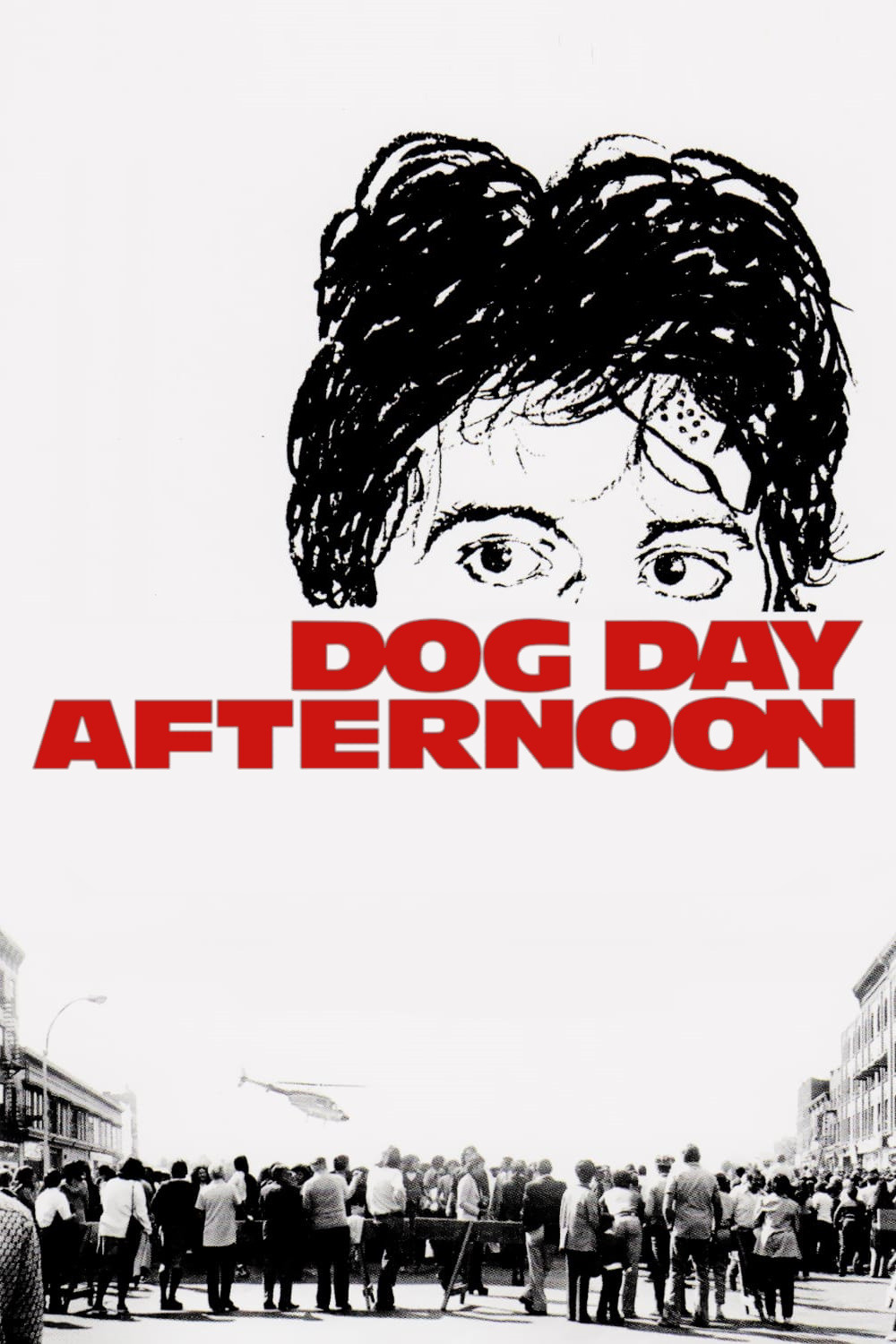
What the Film Is About
From the very first frame, I remember feeling immediately drawn into the tense, restless energy of “Dog Day Afternoon.” This wasn’t just a bank robbery story—it was a film that seemed to pulse with the sweaty desperation of its characters. For me, the movie captured what it feels like to be trapped: not only in a physical sense, but in the inescapable realities of identity, love, and social expectation. Every move made by Sonny, the protagonist, felt less like a choice and more like a scream for recognition in a world that hears only what it wants to hear.
Central to my experience was the emotional weight of watching ordinary people—flawed, complicated, and deeply human—wrestle with forces far larger than themselves. There’s no simple villain here, no clear line between “right” and “wrong.” Instead, I found myself empathizing with Sonny’s chaotic journey, swept up by a conflict rooted as much in personal longing as in the larger, nearly Sisyphean struggle against fate and society’s indifference.
Core Themes
When I reflect on “Dog Day Afternoon,” what lingers isn’t the mechanics of the heist, but the swirling constellation of themes it so vividly exposes. The most resonant, for me, is the search for identity. Sonny’s actions are less about money and more about being seen—for who he loves, what he wants, and the turmoil inside. At the heart of the film is an aching plea to be understood, not just by those closest to him, but by a voyeuristic crowd, a hungry media, and a society that would rather turn people into headlines than understand their pain.
The film’s moral ambiguity gnawed at me—first as a puzzle, then as a sort of wound. Loyalty and betrayal are flip sides of a coin: Sonny’s devotion to his loved ones clashes tragically with the fate awaiting him, raising questions about the cost of sacrifice in an unforgiving world. The story radiates with a quiet, subversive defiance of authority. In a decade when trust in institutions was crumbling, I saw the film as holding up a cracked mirror to my own hopes and suspicions. Authority figures—police, media, even the public—are never straightforward antagonists or allies; instead, they’re forces in a dance of manipulation, spectacle, and exploitation.
Then there’s the theme of spectacle itself. Being watched, put on display, twisted into an unwitting celebrity—Sonny becomes a symbol for how personal suffering is consumed by a dispassionate society. When I think about why these themes mattered in 1975, it’s impossible to ignore the context: the unraveling of trust post-Watergate, the shifting norms around gender and sexuality, and the growing cynicism toward the American Dream. Yet, the universality of these questions about recognition and identity hasn’t dimmed with time; I find them as urgent now as ever, in an era when our lives are constantly up for public scrutiny, and when empathy still feels both vital and in short supply.
Symbolism & Motifs
As I revisit “Dog Day Afternoon” in my mind, the use of physical heat—a relentless, suffocating summer day—strikes me as more than just setting. The oppressive weather becomes a living symbol for Sonny’s entrapment and agitation. I can almost feel everyone’s patience and propriety melting away, exposing the truth beneath social facades. The heat is chaos made tangible, a constant reminder that something volatile is always simmering just beneath the surface of public normality.
The recurring motif of the crowd—gathering outside the bank, jeering, cheering, shifting their allegiances—always felt to me like a pointed reflection of collective voyeurism. It’s not simply that people are watching an event unfold; they’re feeding off it, turning private collapse into mass entertainment. Every time the camera lingers on the faces in the crowd, I’m reminded of how quickly human tragedy morphs into spectacle and how empathy gives way to spectacle’s seductions.
Money, too, operates as a kind of anti-symbol in this film. Ostensibly the object of the heist, it quickly fades in significance compared with motifs of longing, love, and belonging. I sense that the film is asking: what is value, really, when human connection and self-realization are what’s truly at stake?
Finally, I always found the repeated phone calls—Sonny on the phone, negotiating with the police, pleading with his partners or loved ones—to be a motif for the desperate need to communicate. Lines of connection and lines of division are never far apart. Every failed connection becomes another illustration of how difficult it can be to bridge the gulf between self and other.
Key Scenes
Key Scene 1
The moment that sticks with me most, emotionally and philosophically, is when Sonny steps outside the bank, thrust into the glaring attention of the crowd and media. He tries to negotiate with the police—shouting, sweating, possessed by a need to shape the narrative that’s already spiraling away from his control. This scene crystallizes the film’s exploration of control and spectacle: Sonny is both actor and pawn, at once celebrated and condemned by onlookers who see what they want to see. In watching him try to fashion his own legend while still so utterly lost, I feel the deep ache of wanting to matter in a world that trades empathy for sensation.
Key Scene 2
There’s a quietly shattering sequence in which Sonny has a phone call with his partner Leon. For me, this exchange goes to the core of the film’s concern with identity and love. The raw vulnerability on both ends of the line—Leon’s pain, Sonny’s desperate devotion—lifts the film above a typical crime drama. The bank, the police, the robbery itself all seem to fall away, replaced by the immediacy of two people trying to connect in the face of impossible odds. Watching this, I was reminded of how often our real battles aren’t with institutions or strangers, but with the chasms between ourselves and those we care about most deeply.
Key Scene 3
In the film’s devastating final moments, what stands out to me is not just the betrayal Sonny suffers, but his expression—part resignation, part bewilderment. As the narrative closes in around him, what had been an act of desperate agency turns into a moment of powerlessness. The transactional brutality of the world outside the bank crashes in, and the story leaves Sonny—like so many dreamers—with nothing but his exposed humanity. This ending, for me, is the film’s ultimate statement on the futility of heroics in a world indifferent to individual dreams or struggles. It’s crushing, but also profoundly honest about the costs and limits of hope.
Common Interpretations
I’ve always been fascinated by the spectrum of responses “Dog Day Afternoon” inspires. Many critics regard it as a searing critique of American institutions. The robbery, in this reading, isn’t really about money but about those marginalized by society—whether because of sexuality, class, or simply circumstance—pushed to desperate measures. I recognize in these interpretations a belief that the film’s heart is its empathy: a challenge to viewers to look past sensational headlines and see flawed, striving humanity.
On the other hand, some audiences have honed in on the film’s depiction of sensationalism and the media circus. My own discussions with fellow cinemagoers and analysts reveal that many interpret the story as a biting commentary on how pain is commodified, turned into spectacle for the consumption of a restless public. There’s a sense that Sonny is not only running from the law, but being trapped by the society’s need for drama and distraction.
There’s also a more existentialist take: Sonny as a tragic figure struggling for authenticity, crushed by a society that weaponizes norms and expectations. I find this reading persuasive—his journey resonating as a metaphor for anyone who has ever tried, and failed, to break out of their assigned role. Across these interpretations, what unites them is acknowledgment of the film’s sensitivity: its willingness to explore ambiguity, contradiction, and the sometimes unbearable complexity of the human condition.
Films with Similar Themes
- Network – Like “Dog Day Afternoon,” this film investigates the nexus of media, spectacle, and personal breakdown. I see “Network” as a natural companion piece; both films dissect how individual suffering and social spectacle intertwine, and how the public’s gaze can transform private collapse into public theater.
- One Flew Over the Cuckoo’s Nest – I’m struck by how both stories pit vulnerable individuals against dehumanizing institutions. For me, the rebellion of the individual—against forces determined to suppress uniqueness—serves as a throughline. Both films bare the costs of resisting societal norms.
- Serpico – Not only do these films share Al Pacino as a leading man, but both explore the price of standing against corruption and systemic failure. Watching “Serpico,” I feel a kinship in the raw honesty and disillusionment that characterizes Sonny’s odyssey in “Dog Day Afternoon.”
- Sid and Nancy – While not a crime film per se, this biopic echoes the themes of transgressive love and destructive societal scrutiny. The way both films trace an outsider’s downward spiral under the pressure of cultural forces resonates deeply with me.
To me, “Dog Day Afternoon” ultimately communicates the loneliness of being misunderstood and the illusion of control in the modern world. It gives voice to the longing for dignity and connection in a reality shaped by spectacle, coercion, and systemic indifference. Watching the film, I confront uncomfortable truths about where my sympathy lies, how easily authenticity is sacrificed for spectacle, and why some battles—however bravely fought—are destined never to be won. In my view, it is this relentless honesty, this willingness to lay bare human hopes and failings, that earns “Dog Day Afternoon” its place as one of the most haunting, humane films of its time or any time.
To explore how this film has been judged over time, consider these additional viewpoints.