
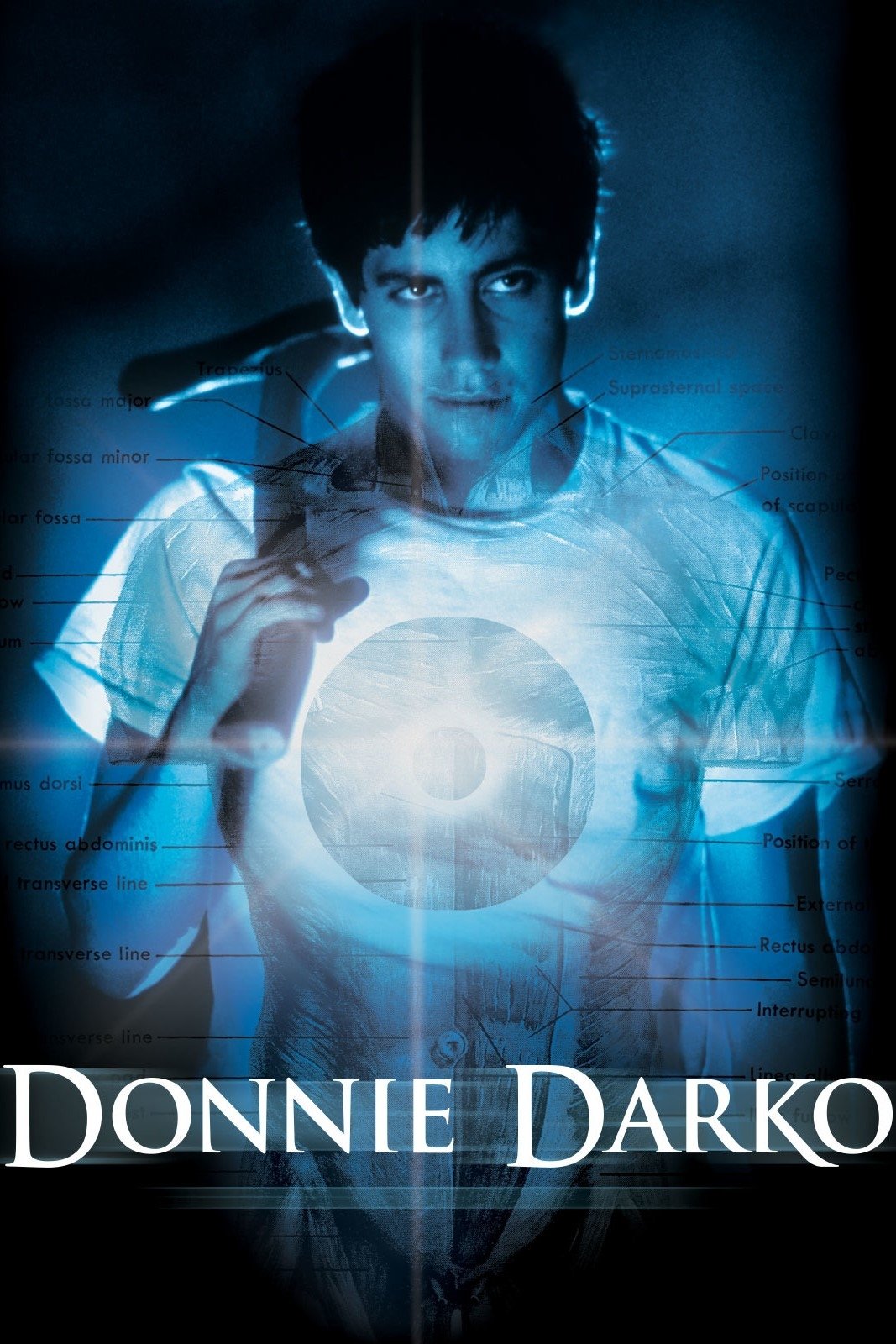
What the Film Is About
From the first moment I watched “Donnie Darko,” I felt thrown into a strange blend of existential dread and adolescent yearning that few films ever attempt to capture. For me, the film is less a science-fiction story and more an aching journey through confusion, fear, and longing—a spiraling odyssey in which one troubled teenager becomes the emotional center of a world seemingly spinning out of control. The film’s gravity wells are built from Donnie’s psychological fragility, his brushes with mortality, and that persistent uncertainty about what’s real. Navigating a surreal version of suburban American life, I saw Donnie struggle not only with outer forces—family, school, the suffocating mask of normalcy—but with his own fractured sense of self.
What truly grips me is how the movie refuses to offer easy answers. Every step in Donnie’s path—his encounters with the cryptic, monstrous Frank, his growing romance, his increasingly desperate attempts at understanding fate—becomes a meditation on the possibility (and cost) of finding meaning in chaos. The film’s conflict is internal and cosmic at once: Is Donnie a prophet, a pawn, or a doomed hero? Or simply a human being facing the unbearable fact of mortality and the search for purpose? That’s the question that has haunted me since my first viewing.
Core Themes
Whenever I return to “Donnie Darko,” what pulls me back isn’t just the allure of its mystery, but the web of themes that seem freshly relevant every time I revisit them. To my mind, the film’s exploration of fate versus free will stands tallest—Donnie, veering between moments of agency and the sense that his destiny is written, reflects that universal tension I feel whenever I wonder if my own choices truly matter in an unpredictable world.
At the same time, I find the film’s treatment of mental illness unflinchingly honest, especially within the suffocating boundaries of a picture-perfect suburban world. The sense of being misunderstood, of walking the line between sanity and madness, has rarely felt so acute to me as when watching Donnie navigate his own mind amid the blinkered indifference of adults and peers. There’s also a profound element of existential dread—evidence of director Richard Kelly’s fascination with the big, unanswerable questions: Why are we here? What is the cost of self-knowledge? These themes echo the cultural anxieties of the early 2000s, when old certainties were being upended and a generation was questioning the worth and possibility of authenticity.
But what keeps me truly invested is the film’s underlying compassion for loneliness and difference. There’s a vein of empathy running through “Donnie Darko”—not just for its troubled protagonist, but for all the broken, overlooked, or outcast figures orbiting around him. I see the film as a sharp critique of surface-level morality and the impulse to label those who don’t fit in. It examines how society weaponizes “normalcy” and often silences voices that challenge its conventions. Long after its initial release, these themes remain combustible, particularly in a world that still struggles to accept mental health issues and marginalized identities.
Symbolism & Motifs
When I sift through the fragments of “Donnie Darko,” I’m constantly struck by its dense tapestry of images and recurring motifs. The most obvious, of course, is Frank’s grotesque rabbit mask—a symbol that, for me, represents both the unknowable machinery of fate and the inescapable reality of Donnie’s fractured mind. The rabbit is a guide, a harbinger of doom, and possibly a stand-in for the arbitrariness of time itself. Its presence always disorients me, suggesting a logic at work that I—and Donnie—can only glimpse in flashes.
Time itself is another motif I can’t ignore. Spirals, countdowns, and repeated references to alternate realities suffuse the film with an almost claustrophobic sense of inevitability. Whether it’s the ticking calendar or the strange physics book Donnie pores over, I always feel an urgency, as if every moment is charged with the threat of unraveling. These motifs make the film’s cosmic questions feel deeply personal: Can we choose who we become, or are we doomed to play out our roles?
Mirrors and water—two visual through-lines—also stand out to me. The reflective surfaces Donnie encounters serve not only as portals but as reminders of the film’s obsession with dualities: perception versus reality, surface versus depth, sanity versus madness. Water, particularly in scenes of isolation or transition, becomes a kind of liminal space—where transformation, loss, or revelation occurs. I read these motifs as signals that Donnie’s journey is as much about internal discovery as it is about external events.
Finally, the recurring motif of school and suburban order, punctuated by their rigid rituals and phoniness, deepens my understanding of the tension between individuality and conformity—a tension I recognize in my own life and across society. It’s as if Kelly is asking: What is the cost of fitting in, and who pays it? The film’s motifs work to destabilize certainties, inviting me to look closely at what lurks beneath the placid surface of daily life.
Key Scenes
Key Scene 1
For me, the first moment that really crystallizes the film’s message is Donnie’s confrontation with his teacher about the “lifeline” exercise—a simplistic chart of good and evil. I remember feeling a jolt of recognition when Donnie calls out the vapid, binary categories that reduce human experience to a single dimension. This scene matters to me not only for its critique of authority but for its raw honesty about how society flattens complexity in its desperate attempt to enforce order. Donnie’s refusal to play along is a statement of resistance—one that resonates with anyone who’s ever been told that pain, fear, or confusion must fit comfortably into a pre-approved box.
Key Scene 2
Another pivotal sequence, in my eyes, is the Halloween party, which coincides with Donnie’s growing certainty that the world may literally end. The tension, the blurred boundaries between reality and fantasy, and the shivering vulnerability between Donnie and Gretchen all converge here. What strikes me about this scene isn’t just its narrative importance but the way it layers existential fear with adolescent hope. In the mix of joy and dread, of disguise and revelation, I sense the film’s central preoccupation: the terrifying beauty of being on the cusp of self-knowledge, even when that knowledge comes at a ruinous cost.
Key Scene 3
The final sequence—Donnie’s acceptance of his fate as the manipulated living—always leaves me breathless. There’s something devastating about the way he quietly returns to his room, knowing what must happen and embracing sacrifice. This is the film’s turning point, not because it explains the plot, but because it embodies the ultimate expression of self-awareness and agency. In Donnie’s willingness to shoulder the burden for others, I see the argument that true freedom doesn’t mean escape from consequence, but the power to choose one’s own meaning. That still resonates for me today, in a world that often feels adrift between fatalism and hope.
Common Interpretations
Whenever I discuss “Donnie Darko” with other viewers, I’m always surprised by the breadth of interpretations people bring. For some, the film is an allegory for mental illness—a cinematic rendering of schizophrenia, depression, or psychosis, with Frank as the embodiment of intrusive, uncontrollable thoughts. I see merit in this approach, since Donnie’s isolation and struggle to be understood are so central to the emotional texture of the film.
Others lean into the science fiction reading, focusing on the “tangent universe” and viewing Donnie as a reluctant messiah whose sacrifice resets reality. I’ve had long conversations with fans who pore over the in-film book “The Philosophy of Time Travel,” and while I appreciate the playful complexity of this interpretation, it often strikes me as less emotionally resonant than the film’s more existential aspects.
Yet another group sees “Donnie Darko” primarily as a critique of suburban hypocrisy and the suppression of difference. For them—and, at times, for me—the film’s real message lies in its attack on shallow moralizing, embodied by figures like Jim Cunningham and the authority figures who police boundaries but fail to offer kindness or understanding. No matter which lens I use, I’m left with the sense that the film is deliberately open-ended, inviting me to sit with uncertainty rather than offering closure.
If there’s a through-line connecting these interpretations, it’s the film’s insistence that meaning isn’t supplied by the universe—it’s forged, painfully and imperfectly, in the heart of the individual. Whether Donnie is a prophet, a victim, or simply a lonely kid desperate to be seen, I find myself returning to the same question: What do we owe each other when the world feels hopelessly broken?
Films with Similar Themes
- The Butterfly Effect – I see this film as a close cousin, especially in its preoccupation with time travel, fate, and the consequences of individual actions. Like “Donnie Darko,” it asks whether it’s ever possible to rewrite one’s pain without imposing new suffering elsewhere.
- Brazil – Terry Gilliam’s dystopian satire fascinates me for its surreal treatment of conformity, bureaucracy, and personal rebellion. I always sense a similar air of mounting paranoia and the longing for escape that permeates “Donnie Darko.”
- American Beauty – Although vastly different in tone, this film’s critique of suburban malaise and pretense hits many of the same emotional notes for me. Both films use troubled protagonists to puncture the illusion of normalcy and raise questions about authenticity and self-destruction.
- Pi – Looking at Darren Aronofsky’s paranoid odyssey, I find a shared fascination with mathematical inevitability and the dangers of obsessive self-discovery. “Pi” explores the collision between chaos and meaning, a collision I see mirrored in Donnie’s journey.
All told, my experience of “Donnie Darko” keeps shifting, but its essence remains: a challenge to find meaning in a disorderly world, an invitation to empathy for the misunderstood, and a warning against the easy binaries of good and evil that so often distort reality. For me, the film has always been a testament to the messiness of growing up, the terror and wonder of facing one’s own mind, and the redemptive possibility of choosing compassion—even at the edge of oblivion.
After learning the historical background, you may also want to explore how this film was received and remembered.