
What the Film Is About
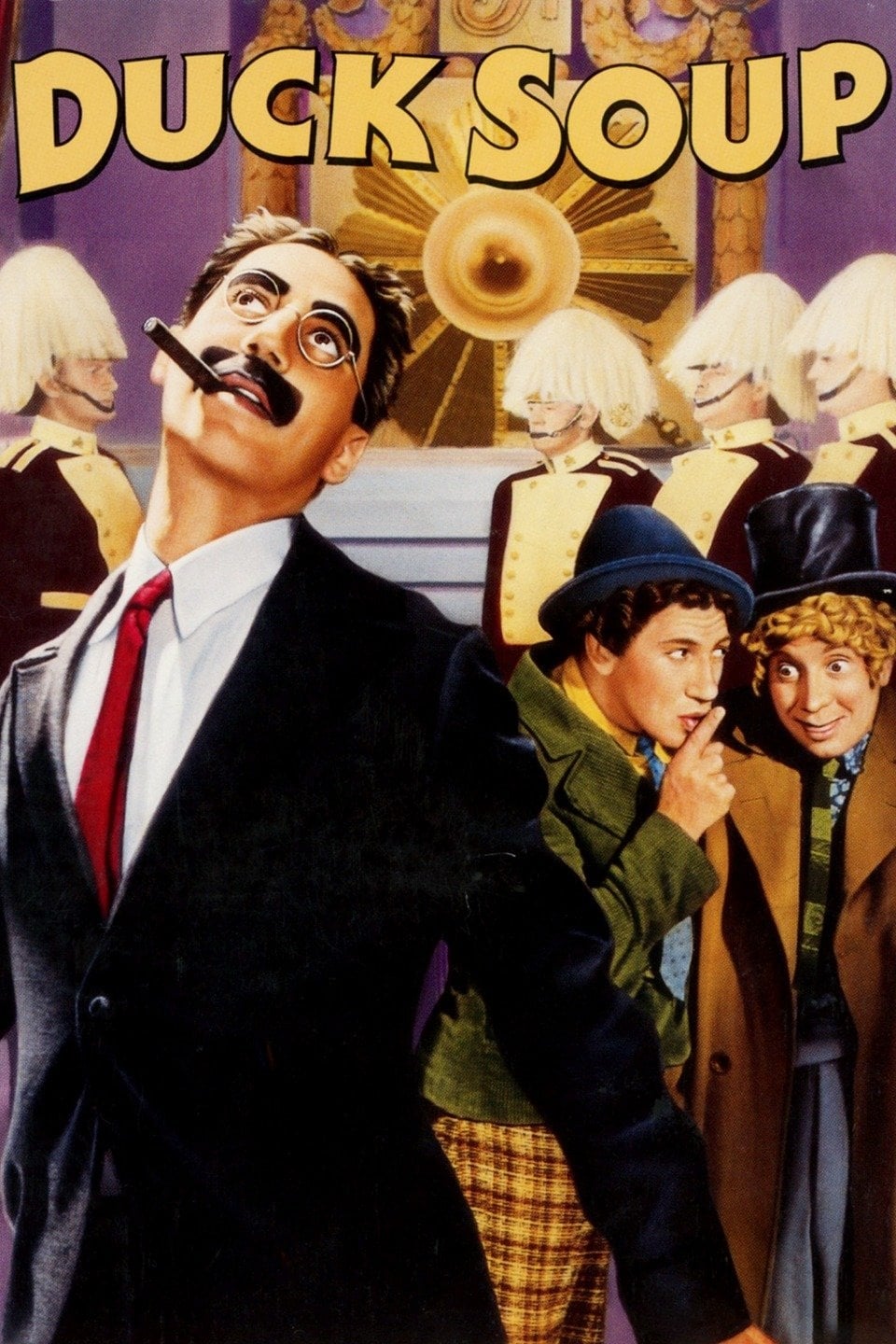
When I revisit “Duck Soup,” I’m never quite prepared for how subversive it still feels. The film wraps its barbed social commentary in an absurdist fiasco that, on the surface, looks like pure chaos. For me, “Duck Soup” isn’t just a comedy; it’s a riotous satire of power and the people drawn to it, a farce where logic gets tossed out the window, leaving political ambition and national pride exposed and absurd. The emotional journey, if I can call it that, is one of growing disillusionment—at first I find myself laughing, but by the end I realize how disarmingly clever the Marx Brothers were in suggesting that those in charge seldom know what they’re doing, and that our world, governed by such leaders, rests on a precarious pile of nonsense and bravado.
What strikes me most is how “Duck Soup” refuses to play by any established dramatic rules. The central conflict—Rufus T. Firefly’s chaotic rise to leadership and the looming, senseless war—feels less like a traditional struggle between good and evil, and more like an elaborate game designed to expose the bankruptcy of leadership, the flimsiness of borders, and the way people’s fates are determined by vanities beyond their control. I see this not as a narrative about particular characters, but as a broad, merciless sketch of how easily comedy bleeds into tragedy when authority is left in incompetent—or even clownish—hands.
Core Themes
Whenever I dive into “Duck Soup,” I’m immediately drawn to its core themes of authority, nationalism, and the madness of war. For me, the film eviscerates the concept of political power as something inherently rational or deserved. Instead, power appears arbitrary, sometimes even accidental, and those who wield it are more likely to be buffoons than statesmen. This is something I find both hilarious and haunting, because beneath all the pratfalls and rapid-fire wordplay lies a deeply skeptical view of anyone making decisions on behalf of the masses. The very act of governance, the film suggests, is a sort of larger performance—or perhaps a con—where illusion trumps substance.
Another theme that always resonates with me is the way “Duck Soup” lampoons patriotism and war. The film was released in 1933, sandwiched between two world wars, and though America was in the midst of the Great Depression, the specter of authoritarianism and ideological zeal was already stirring across the globe. Watching the Marx Brothers mock the rituals of national pride and the empty slogans that can sweep nations to conflict, I can’t help but see the film as a warning. Hollow rhetoric and the manipulation of patriotic feeling lead ordinary people to march toward disaster, often for the vaguest of reasons. That message stings just as much today, in a world still rife with propaganda and tribal division.
I also pick up a persistent skepticism toward the very idea of order and structure. The film runs circles around “logic”—Firefly delivers speeches that veer into pure nonsense, orders are given and retracted on a whim, and bureaucracy collapses with the faintest provocation. For me, this is more than a comedic device; it’s a rejection of the idea that leadership automatically knows best, or even knows what it’s doing at all. That sense of entropy, of systems breaking down under their own absurdity, feels timeless to me. Whether in 1933 or today, there’s an unsettling comfort in realizing how thin the veneer of civilization can be, and how quickly it can slip into anarchy, even if that anarchy is delivered with a song and a slapstick routine.
Symbolism & Motifs
One element I never fail to notice in “Duck Soup” is how it traffics in symbols that are at once familiar and utterly unmoored from their traditional meanings. Take the constant motif of uniforms and costumes—for me, every hat, sash, or ceremonial sword on display pokes fun at the pomp and circumstance that people are so willing to respect. Characters are defined by their attire, but also rendered ridiculous by it, as if the thin fabric of a leader’s uniform is as much a disguise as a costume in a vaudeville sketch. That’s always how I see Firefly’s get-ups: not so much emblems of authority, but as hollow shells cloaking incompetence.
Dissonance and doubling show up everywhere in the film. I’m always fascinated by the famous “mirror scene,” which is perhaps one of the most subtly unnerving motifs in all of comedy. Here, identities blur—who is the real person, and who is the imitation? The boundaries between self and other collapse in a way that makes me question whether anyone in power is truly authentic, or if public figures are simply mirrors reflecting what their audience wants to see. This keeps me thinking about the performance inherent in leadership—the need to mimic, to posture, to fit roles rather than to lead with substance.
Then there’s the persistent motif of musical numbers, which I interpret not merely as crowd-pleasing set pieces but as a sharp commentary on unity and discord. Songs like “Freedonia’s Going to War” are staged as triumphant marches, but the lyrics and choreography veer relentlessly into chaos and contradiction. Music, typically associated with harmony and social cohesion, becomes in the hands of the Marx Brothers almost a weapon—an excuse for zealotry, groupthink, and ultimately the abandonment of reason. What seems communal at first glance, I find, is often teetering on the brink of madness.
The slapstick violence, as absurd as it is constant, also acts as a symbolic undercurrent. I don’t see it merely as physical humor, but as a satirical embodiment of how political disputes devolve into brute force when logic and diplomacy fail. The ridiculous battles, fruit-throwing escapades, and pratfalls stand in for bigger, real-world conflicts that—when seen through the lens of the Marx Brothers—suddenly appear every bit as senseless and avoidable.
Key Scenes
Key Scene 1
For me, one of the film’s most revealing moments arrives when Rufus T. Firefly takes the oath of office. This isn’t just a silly inauguration—it’s a crucial set piece that cuts right to the film’s heart. Watching Firefly bungle through the ceremony, his irreverence exploding in every gesture, I feel a prickling discomfort beneath the laughter. This scene crystallizes the film’s skepticism about power: the trappings of state, the elaborate rituals, and the seriousness with which they are performed are completely at odds with the absurdity of the man assuming power. It’s in this juxtaposition that the film’s critique lands hardest for me—when authority is conferred by ceremony alone, divorced from real merit, anything can happen.
Key Scene 2
The aforementioned mirror scene, which has been so often imitated that I sometimes forget just how original it felt, strikes me as a near-perfect encapsulation of the film’s anxieties about identity and legitimacy. I always find myself transfixed watching Harpo and Groucho attempt to outwit one another as mirror images. It’s a masterclass in choreography, but more than that, it’s a moment where the boundaries between leader and subject, self and other, reality and illusion, become completely permeable. In this moment, the film asks me to consider whether anyone in a position of authority is truly genuine, or whether all leadership is just performance—one actor aping another, until nobody remembers who the original was supposed to be.
Key Scene 3
The chaotic final battle, with its slapdash strategy and ever-escalating nonsense, always strikes me as both a climax of humor and a sharp condemnation. As Firefly and his cronies are besieged and unable to maintain any semblance of control, I see the unraveling of everything the film has mocked: national pride dissolves, alliances shift, and the façade of competent wartime leadership collapses in a heap. The scene’s rapidfire escalation feels to me like the film’s ultimate statement—this is what happens when vanity, ego, and the empty trappings of authority are all that stand between society and disaster. It is chaos, masquerading as policy, and it leaves me laughing—but uneasily so.
Common Interpretations
When I speak with other film enthusiasts or read critical essays, I notice a few main currents in how “Duck Soup” is interpreted. Most commonly, it’s seen as a merciless satire of autocracy and the senselessness of war. Some audiences find it simply a product of its time, riffing on the growing anxieties about political strongmen and the tragic fallout of hypernationalism. Others read the film as a more general indictment—not just of specific leaders or nations, but of the very systems that allow incompetence and buffoonery to rise unchecked. I’ve also encountered interpretations that focus on the film’s anarchic style as a deliberate rejection of all forms of authority, including those of reason and narrative itself. There are some who see the Marx Brothers’ relentless lampooning as a kind of philosophical nihilism, suggesting that meaning is always second to laughter—or perhaps that laughter is the only sane response to a world that so often makes no sense.
Of course, not all readings are equally dark. Some viewers, especially those drawn to pure comedy, simply relish the film’s refusal to respect anything at all, seeing in its zany energy a kind of liberation—a breathless celebration of chaos as a counterweight to the injustices and oppressions of the adult world. What I personally find so brilliant is how “Duck Soup” lets these interpretations coexist. It can be a devastating political satire, a joyful act of comic rebellion, or a meditation on the emptiness of ritual. Depending on the angle I take, each reading feels justified, which is probably why the film has endured.
Films with Similar Themes
- Dr. Strangelove or: How I Learned to Stop Worrying and Love the Bomb – I’m always struck by how this later film echoes “Duck Soup’s” cynical view of war and the absurdity of those who wield military power. Both movies refuse to take the idea of rational leadership at face value, exposing the dangers lurking beneath farcical decision-making.
- The Great Dictator – Chaplin’s masterpiece, released in 1940, shares a thematic kinship with “Duck Soup” in its parody of fascism and probing skepticism about the cult of personality. Like the Marx Brothers, Chaplin uses laughter to highlight the terror and absurdity of despotic rule.
- Idiocracy – I find this modern satire to be a kind of spiritual descendent of “Duck Soup,” exploring how societies can elevate the least competent among them. The idea that public life can devolve into pure spectacle and senselessness is very much in the Marx Brothers’ wheelhouse.
- In the Loop – This sharp political comedy reminds me of “Duck Soup’s” take-no-prisoners approach to bureaucracy and government bluster. Both films hinge on the spectacle of those in power stumbling through geopolitical crises with comic ineptitude.
Ultimately, what I take away from “Duck Soup” is a message as liberating as it is unsettling: the world’s order is often a stage play, constructed from empty rituals, self-serving leaders, and the arbitrary accidents of fate. The Marx Brothers pull back the curtain—not to offer comfort or reassurance, but to show just how close the machinery of state is to unraveling into nonsense at any moment. That, for me, is why “Duck Soup” still matters, and why its laughter has an edge that refuses to dull, even after nearly a century.
After learning the historical background, you may also want to explore how this film was received and remembered.