
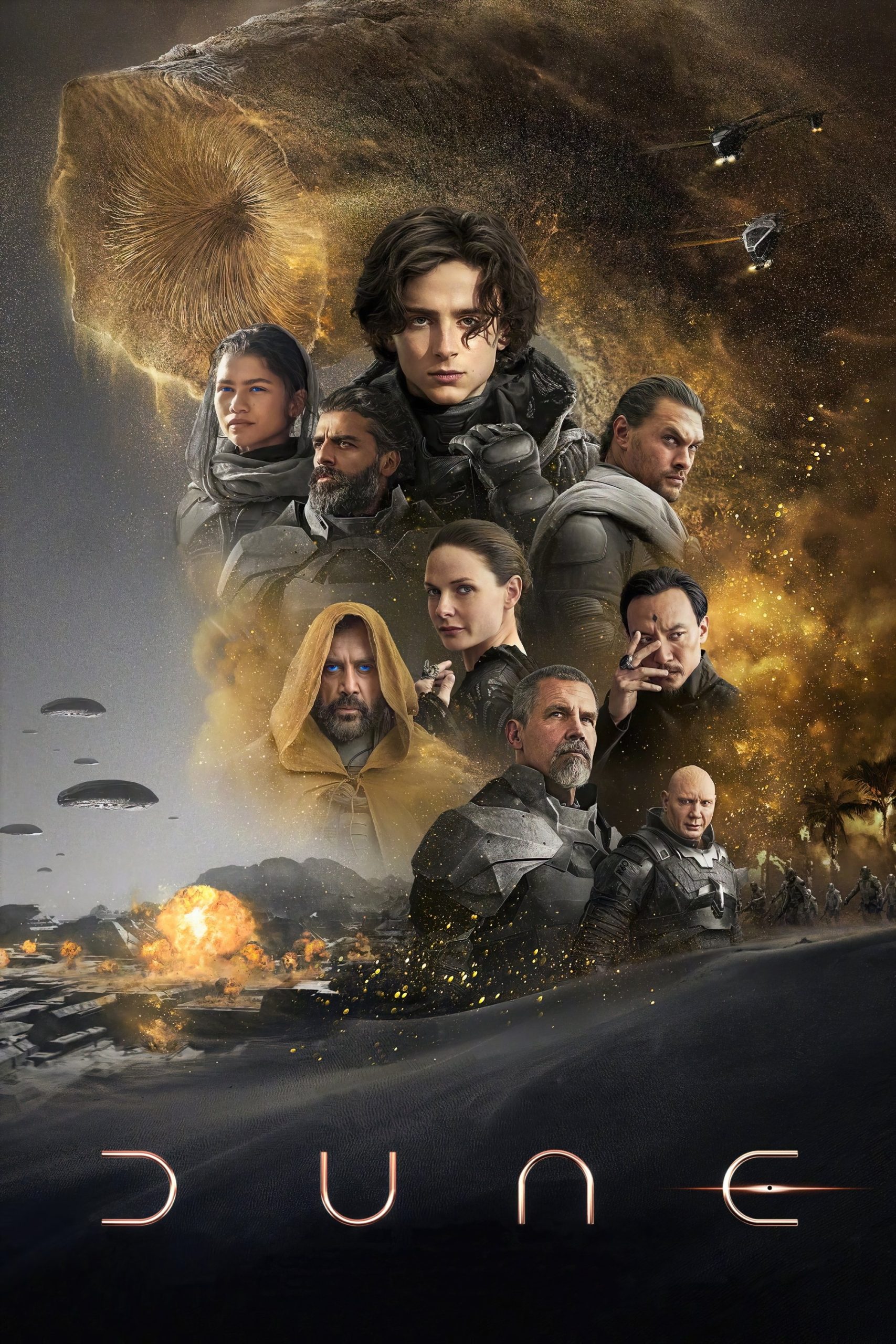
What the Film Is About
From the first images of Dune (2021), I felt the weight of destiny pressing down on the characters and world alike. It’s a film that, for me, is less about the specifics of warring houses or resource battles and far more about what happens to individuals caught in tidal forces of power, tradition, and prophecy. The central conflict isn’t simply external; it’s an internal reckoning—Paul Atreides’ journey to understand himself amid political upheaval and the expectations of a legacy he never chose. As I watched, what struck me was the film’s emotional core: a young man confronted not just with his family’s fate, but with visions that hint at the impossible burden of leadership and sacrifice.
What I find remarkable about Denis Villeneuve’s vision is how he transforms what could be a sprawling political epic into something deeply intimate. The overall narrative pivots on Paul’s psychic and moral struggle, making me question not just his choices, but the whole machinery of prophecy and inheritance. The tension between personal agency and the sweeping demands of history permeates every frame, and I found myself drawn into questions of whether it’s possible to break free from the destinies that others try to write for us.
Core Themes
For me, Dune is a meditation on power—its seductive promise, its corrupting influence, and its inescapable cost. What resonates most strongly is how the film explores the collision between political ambition and spiritual vision. I saw power not simply as control over others, but as something deeper, tied to systems of belief, ecological stewardship, and cultural identity. The ‘spice’ becomes this ultimate metaphor: consumption yields vision, but at immense risk to both planet and people. In this way, the story becomes a cautionary tale about resource exploitation and colonial entitlement—as relevant now as it ever was.
Villeneuve’s adaptation foregrounds themes of prophecy, fate, and messianic expectation, but I never felt that these were treated as unequivocally heroic. Rather, the film subtly interrogates the dangers of myth-making. When Paul is positioned as a prophesied savior, I see the exhilaration and terror of that mantle. The tension between personal desire and preordained destiny is everywhere—in Paul’s resistances, his mother’s ambitions, the hopes of the Fremen. I found myself reflecting on how narratives of messianism often conceal violent upheaval beneath promises of renewal. The film’s quiet moments are haunted by this awareness.
Identity—personal, familial, and cultural—is another theme that, in my view, grounds the story’s grand abstractions. The Atreides family’s sense of honor clashes with the cynicism of imperial politics, while Paul’s mixed heritage makes him both insider and outsider. The result is an ongoing negotiation of loyalty: loyalty to blood, to chosen people, to larger ideals. Violence is woven into this fabric—ritualized, stylized, but always with consequence. The film’s mood is mournful because it recognizes that even noble aspirations can lead to tragedy when shaped by inflexible systems and inherited agendas.
What makes these themes so current is their universality. I saw reflections of our own time: the allure of charismatic leaders, the devastating consequences of extracting too much from fragile environments, and the restless search for spiritual meaning in a disordered world. The moral complexity of Dune is that it offers no simple answers—only the challenge of questioning the narratives into which we’re born.
Symbolism & Motifs
From my perspective, Dune is a tapestry of evocative symbols and recurring motifs, each layering its own meaning onto the film’s atmosphere. Of all these, the desert stands out first. On one level, it is the setting—a harsh, unyielding environment—but experientially, it becomes much more. I see the desert as representing the crucible of transformation. It strips characters of pretense, reducing them to their most essential selves. The endless dunes, cyclical storms, and shifting sands evoke the instability of power and the volatility of destiny itself. I find the desert signifies rebirth and destruction at once.
The sandworms, too, are impossible to ignore. When I watch them, I see more than just monstrous ecology; I see them as the natural world rendered sublime and indifferent. Their movements are unpredictable and elemental, a reminder that human ambition is always at the whim of greater forces. The worms are guardians of the spice, so their appearance often coincides with moments of awe, terror, and revelation. To me, they signal that true mastery comes not from domination of nature but from learning how to coexist with forces beyond our control.
Another motif that I find deeply provocative is the use of visions and dreams. Paul’s visions are fragmented, often ambiguous, challenging us (and him) to decipher between future certainty and potentiality. These visions aren’t prophecies in the simplistic sense; for me, they reflect the danger of believing too strongly in any one narrative or predetermined role. This motif reinforces a central question: Are we bound to live out scripts handed to us by tradition, or can we forge new destinies through acts of will and imagination?
Technology versus tradition also stands out as a symbolic thread. In the world of Dune, advanced machines are largely absent, replaced by human talent, discipline, and training (like the Bene Gesserit’s voice). Watching this, I interpreted it as a commentary on the limits of technological solutions and the enduring power of tradition. The struggle between modernity and ancient practice underscores a conflict that feels especially resonant today.
Key Scenes
Key Scene 1
There’s one moment early in the film that haunts me every time I recall it: Paul’s test by the Bene Gesserit using the Gom Jabbar. From a technical perspective, it’s almost claustrophobic, the camera closing in on Paul’s face as pain and fear war with his discipline. But what makes this scene crucial, in my view, is that it distills the film’s preoccupation with choice, willpower, and the cost of survival. Here, in the silence and intensity, I felt the depth of Paul’s internal struggle—his attempt to assert identity in the face of monstrous expectation. The ritual is not about dominance over others, but over self, and it signals that real growth only occurs when one willingly faces suffering with courage and clarity.
Key Scene 2
Another scene that struck me was the initial encounter between Paul (and his mother) and the Fremen. When Stilgar tests their worthiness, I sensed the complexity of encountering the “other”—the anxiety of being seen as both potential savior and outsider. This moment, layered with suspicion and hope, develops the film’s themes of mutual recognition, adaptation, and trust. The scene reveals the fragility of alliances built on myth, and it underscored for me how easy it is for the powerful, even unknowingly, to trample over the autonomy of those they hope to lead or help. I read this as a challenge to facile narratives of heroism and as a prompt to reflect on what genuine solidarity and humility could look like.
Key Scene 3
The duel between Paul and Jamis is, for me, an emotional crossroads. Its importance isn’t just in the life-or-death stakes, but in what it represents: Paul’s passage from a sheltered heir to an active participant in the reality of Arrakis. The duel is viscerally filmed—deliberate, tense, with an inevitability that speaks to the darker side of the film’s narrative about fate. I see in this act not a triumph, but a deepening sense of loss and responsibility. Paul’s victory is pyrrhic; it marks his entry into a cycle of violence that his visions warn will only escalate. For me, this scene encapsulates the film’s ambivalence toward destiny, raising the unsettling possibility that even the most heroic paths can have unforeseen and devastating consequences.
Common Interpretations
Over many conversations and reviews, I’ve noticed that audiences and critics tend to interpret Dune through several overlapping frameworks. For some, the film is a straightforward allegory of ecological disaster and resource politics, with the planet Arrakis standing in for places throughout our own history shaped and scarred by extractive economies. This reading particularly resonates given 21st-century anxieties around climate change and the ethical failures of colonial powers. I agree with this perspective to an extent—resource exploitation is certainly at the story’s core—but I feel the film goes deeper than simple allegory.
Others emphasize the dangers of charismatic leadership and religious myth. Paul’s ambiguous status as a possible “Chosen One” is, in my view, purposefully destabilizing; the film doesn’t settle on whether such saviors relieve or reinforce cycles of violence and oppression. Many have pointed to Frank Herbert’s original warning against hero-worship and blind faith in messianic figures. I find myself drawn to this interpretation because it matches my discomfort as Paul is both made and unmade by collective expectation.
A third common reading centers on personal growth and the negotiation of identity, especially where competing loyalties and cultural values intersect. Critics frequently praise the film’s complex characters, but I think it’s more accurate to say that Dune is about the unmaking as much as the making of self. The film complicates any simple coming-of-age arc, and I notice that many viewers wrestle with the same ambiguity I do: is Paul becoming a liberator, or is he simply another actor in a cycle he cannot yet control?
These interpretations don’t contradict each other so much as they layer together, reflecting the film’s commitment to refusing easy conclusions. Each time I watch it, I find new nuances—a shifting interplay of warning, longing, and awe.
Films with Similar Themes
- Blade Runner 2049 – In Villeneuve’s own futuristic epic, I see similar explorations of identity, destiny, and the limits of free will, expressed within a stunning visual landscape that questions what it means to be human.
- Children of Men – For me, this film echoes Dune’s themes of hope and despair in a world wrecked by environmental and societal collapse, tracking a “chosen” figure whose journey is marked by violence, sacrifice, and unrealized ideals.
- Lawrence of Arabia – As a historical epic about Western involvement in the Middle East, I see this older classic grappling with similar questions about heroism, colonial arrogance, and the burden of prophecy—the dangers that come when myth and reality collide.
- The Matrix – Watching the evolution of Neo’s identity and predestined “savior” arc always brings to mind Dune’s meditation on the double-edged sword of prophecy and freedom, with a heavy emphasis on the cost of true revolution.
Reflecting on what Dune ultimately says about our world, I’m left with a feeling of deep ambivalence—a recognition of how easily power and vision become entangled, and how even the purest intentions can lead to tragedy when yoked to systems wider and older than any individual. The film, as I saw it, urges us to question our own stories: What myths do we inherit? Which cycles do we repeat unknowingly? And above all, how do we act—ethically, humanely—in a world where every victory has its shadow?
To explore how this film has been judged over time, consider these additional viewpoints.