
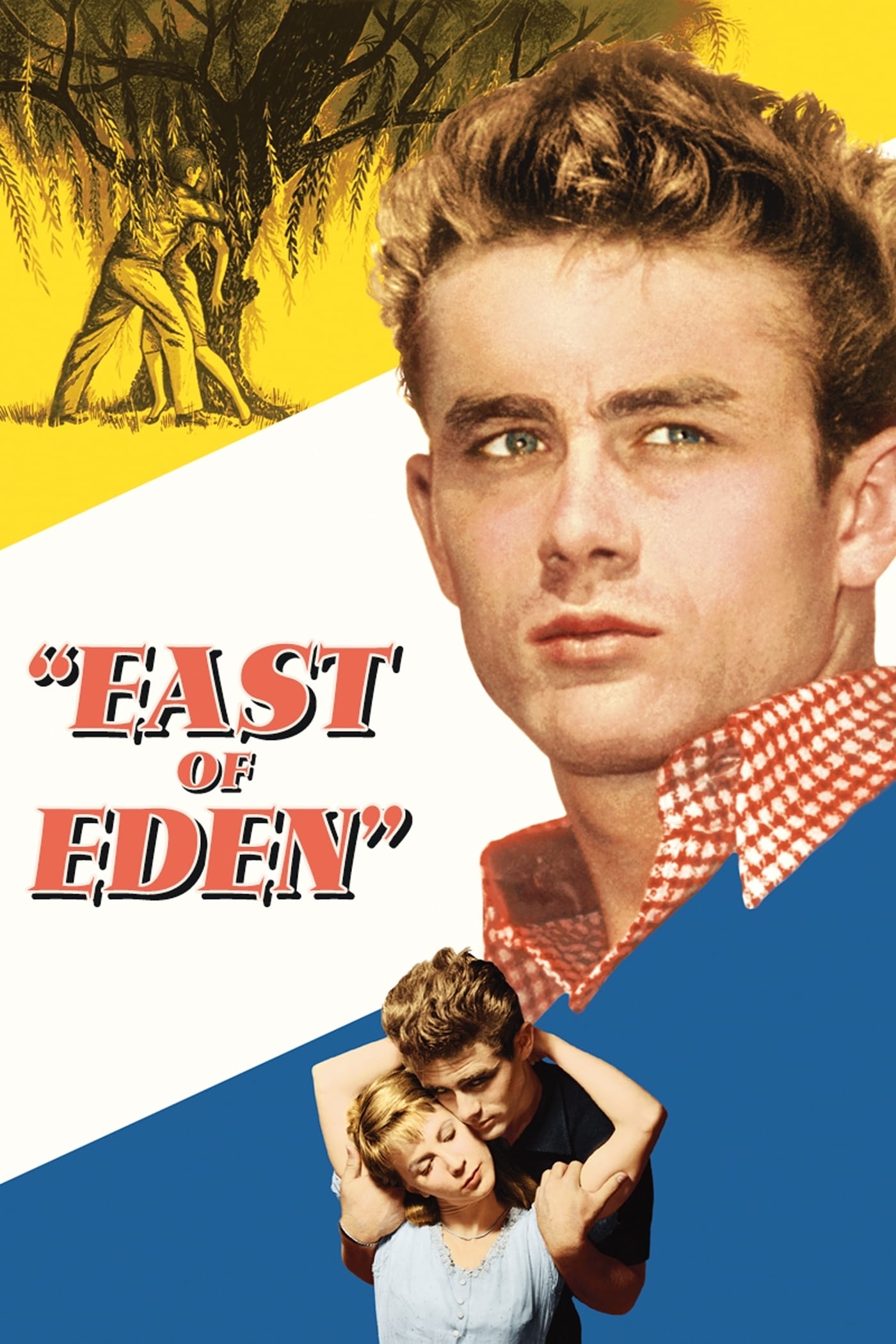
What the Film Is About
Watching “East of Eden,” I find myself drawn into an emotional struggle that feels both sweeping and intimate, centuries old yet unmistakably modern. What grips me most is its unrelenting examination of the desire for love and acceptance—especially filial approval—set against a broader search for moral footing in a divided world. The film is less about specific events than about aching need: one young man’s longing to be understood by his father, his jealousy toward a favored brother, and the stormy questions of goodness and worthiness that stir within him.
For me, the story’s direction isn’t about fate deciding destinies, but about individuals learning to define what’s right for themselves when all external certainties—family, community, faith—prove ambiguous or even cruel. The undercurrents of rivalry, shame, and desperate hope keep tugging its central character, Cal, between darkness and grace. I experience the narrative as a series of collisions: between love and rejection, innocence and guilt, old values and new realities. Each collision leaves scars, yet also reveals a glimmer of possibility for redemption.
Core Themes
What lingers with me long after the credits roll is the film’s deeply felt reckoning with the nature of good and evil. Rather than posing easy answers, “East of Eden” asks whether any of us are ever simply one or the other. Its great drama, I believe, lies in the ambiguity it stakes out: Can a person ever overcome their faults—or the burden of being unloved? Is morality inherited or chosen? These tensions spiral around Cal, whose actions are never simply venal or virtuous but rooted in a wounded yearning to be seen and accepted.
I’m particularly struck by how the film wrestles with the ideas of parental love and favoritism. For Cal, the ache of never measuring up to his father’s expectations becomes both his torment and his motivation. I read this not just as a private family drama, but as a metaphor for generational misunderstandings in changing times—something that must have resonated powerfully in the 1950s, when families, communities, and norms were shifting after World War II. Today, the anxiety of not fitting into systems you inherit—be it family, gender roles, or morality—remains just as relevant.
The film’s exploration of freedom and destiny stays with me, too. Drawing from its biblical allusions, it circles around the question of whether we are doomed by our heritage (our “East of Eden”), or whether we can choose our way forward. The suggestion that each person holds the power to define their own goodness, even when haunted by brokenness, strikes me as both radical and poignant, especially given the historical context. In the shadows of the atomic age, it’s as if the story whispers: who you become is not foreordained by blood or past sorrows—you can choose another path, if painfully.
Symbolism & Motifs
The symbols in “East of Eden” are, for me, the key to unlocking its richest layers. The recurring motif of the farm and field, for instance, seems to represent more than just a livelihood or American landscape. Every time I revisit these sun-drenched rows, I feel the weight of generational toil and the stubborn persistence of hope, even as crops fail or families break. The dust and soil, inseparable from the brothers’ conflict, speak to both the beauty and harshness of what they’ve inherited: the promise and cost of roots.
I also think frequently about the use of light and shadow. Scenes drenched in sunset gold one moment, plunged into shadow the next, highlight Cal’s inner divides. These are not subtle contrasts to me—they evoke the biblical struggle of Cain and Abel, but they also locate virtue and vice in the same trembling body, rather than two separate souls. Whenever Cal stands half in light, half in dark, I sense the presence of choice—the possibility of moving toward forgiveness or surrendering to alienation.
Money as a recurring symbol is another thread I can’t ignore. It’s never just economic—it’s freighted with meaning: a misguided offering seeking love, a tool of competition and betrayal, and ultimately, a false substitute for acceptance. In every tense exchange of currency, I see a stand-in for the things we try (and fail) to buy: redemption, belonging, absolution. That futile transaction echoes in so many relationships, even now, where love feels conditional upon achievement or apology gift-wrapped as sacrifice.
But perhaps the most haunting motif for me is that of mirrors and reflections. Characters glimpse themselves—literally and figuratively—struggling to recognize or accept what’s there. The motif deepens the idea that much of the battle is internal: the enemy is not the brother, but one’s own sense of worth and identity. Each reflective surface in the film is a silent question: Do you recognize yourself in this face? Can you forgive what you see?
Key Scenes
Key Scene 1
One moment that I always return to occurs when Cal tries, in his own desperate way, to win his father’s approval by presenting him with a hard-earned gift. The emotional rawness of this gesture, and his father’s stoic rejection, stuns me every time. To me, this scene is the crucible of the entire film: it contains the stubborn hope for love and the crushing realization that love, at least from this parent, is conditional—if not impossible. It’s not the facts of the exchange that matter so much as the emotional nakedness; I sense Cal’s hunger for forgiveness and his father’s inability, or refusal, to release past judgments. This is more than a family quarrel—it’s a meditation on how hard it is, sometimes, for one generation to see the pain and longing of another. For me, the scene distills the aching question: Is there anything we can do to finally feel worthy?
Key Scene 2
Another scene that gnaws at me unfolds late in the film, when Cal’s mother—previously cast in shadows—reveals herself in a moment of raw candor. The confrontation is charged not just with personal revelations, but with the shattering of simplistic categories: “good” versus “bad,” “beloved” versus “outcast.” In her eyes, I see the way that wounds repeat across generations. What’s striking is that the film offers her neither complete condemnation nor easy redemption, but instead a moment of tragic recognition: the possibility that all of us, parent and child alike, are caught in cycles of misunderstanding, pride, and fear. This recognition propels Cal to see his choices not as predetermined, but as his own responsibility. For me, the scene’s power rests in its refusal to let anyone off the hook easily, and yet it still opens up space for empathy where I least expect it.
Key Scene 3
For me, the third turning point isn’t wrapped up in a neat resolution; instead, it unfolds in the film’s concluding exchanges—a stuttering attempt at reconciliation. After a turbulent sequence of betrayals and confessions, what remains is not triumph, but the fragile possibility of forgiveness. This scene leaves me hopeful and unsettled in equal measure. The characters don’t magically transform, but they take a first step toward seeing each other as flawed, longing, and human. I interpret this as the film’s final argument: that while love can be withheld or misdirected, the choice to forgive—oneself and others—is always within reach, however tentative or incomplete. It’s an ending that refuses grand gestures, instead lingering in the messy, unfinished work of making peace with our own darkness.
Common Interpretations
I’ve encountered a range of interpretations when discussing this film with other viewers and scholars. The most widespread reading frames “East of Eden” as a modern Cain and Abel parable: a tale of sibling rivalry shaded by the failure (or inability) of patriarchal love. Many see Cal as a stand-in for misunderstood or misfit youth everywhere, especially those struggling with the feeling that virtue is always measured against someone else’s standard. This reading sees the film as a lament for those who are never quite “enough” in the eyes of their family or society.
Some critics lean into the film’s psychological nuance, highlighting the way it maps personal turmoil onto broader social shifts. In this light, I’m persuaded that the story speaks as much to the anxieties of its postwar audience—about masculinity, generational alienation, and the breakdown of old moral codes—as it does to its characters. Others go further, arguing that the film is ultimately a meditation on free will: that its great achievement is to suggest, contrary to determinist readings, that no one need be trapped by their heritage or their past. This strikes me as especially powerful in a time and culture so invested in family legacy, religiosity, and social expectation.
There are viewers who read the film through the lens of its performances—particularly James Dean’s. For them, the emotional urgency and physical expressiveness of Dean’s Cal become the conduit for the film’s meaning: not just a portrait of troubled youth, but an invitation to empathize with raw loneliness and longing. In all these interpretations, I find value; where they diverge is in how much weight they give to the possibility of change. Is the film ultimately tragic, insisting on the impossibility of true understanding across generational divides? Or is it, despite everything, a call to mercy and renewal? I’m not sure it gives a definitive answer, but I appreciate the space it leaves for hope.
Films with Similar Themes
- Rebel Without a Cause (1955) – I see a thematic sibling here, with its piercing exploration of misunderstood youth and generational estrangement. Both films channel postwar anxieties about identity, rebellion, and the hunger for community.
- Giant (1956) – While broader in scope, “Giant” also delves into shifting social landscapes, family power dynamics, and the painful process of self-definition amid tradition and change.
- Ordinary People (1980) – Set decades later, this film explores familial trauma, favoritism, and the question of whether broken relationships can ever truly heal—territory that feels very much in dialogue with “East of Eden.”
- The Tree of Life (2011) – I find in Malick’s film a haunting kinship: the tension between parental authority and grace, the struggle to forgive, and the search for meaning in the aftermath of familial wounds.
Thinking back on my own experience of “East of Eden,” what resonates is not the specifics of its era, but the universality of its ache: the longing to be chosen, the hope that love might survive failure, and the dawning realization that our wounds do not define us. The film doesn’t offer pat solutions, but it honors the messiness and courage required to love in full awareness of human frailty—then, now, and always.
After learning the historical background, you may also want to explore how this film was received and remembered.