
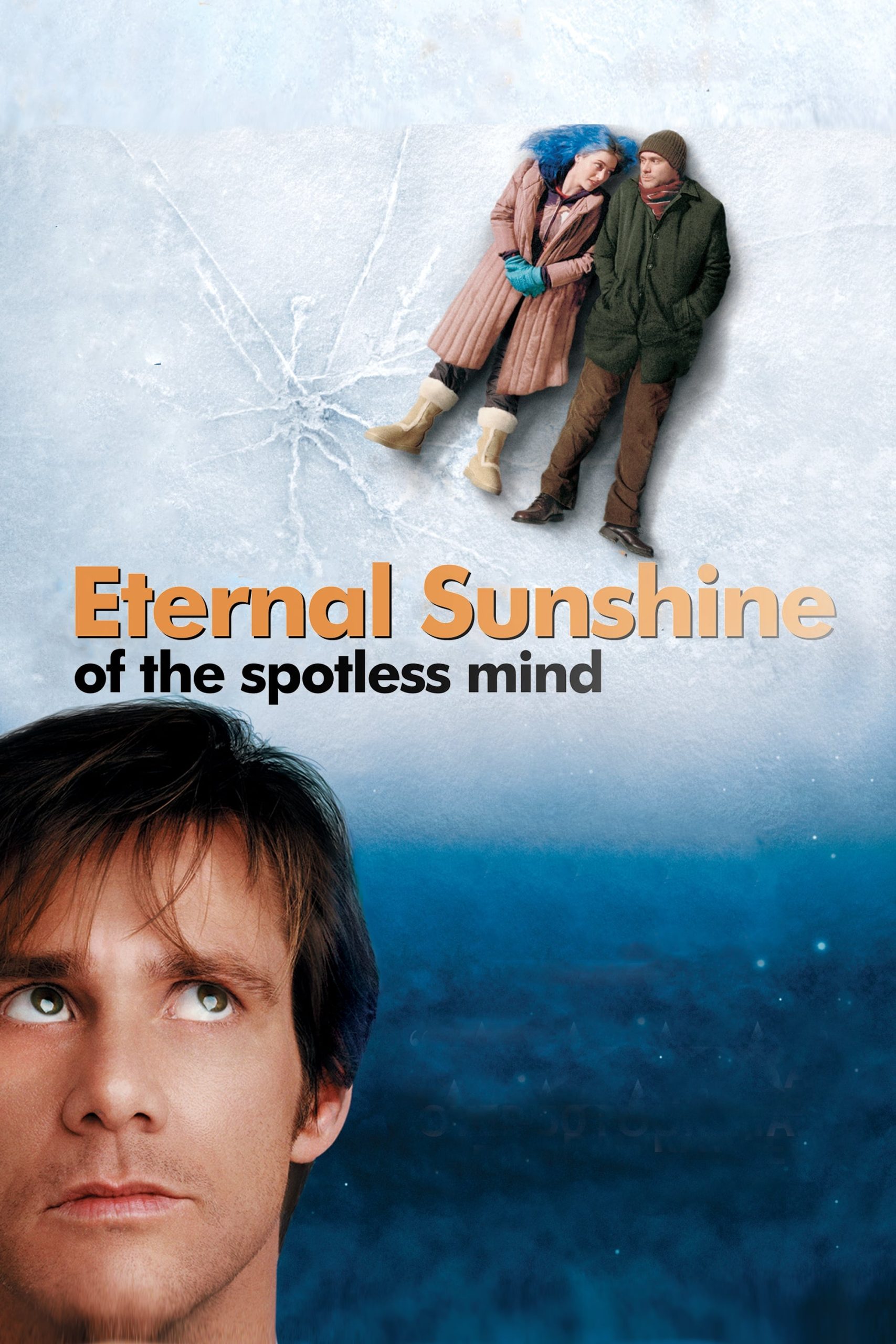
What the Film Is About
Some films haunt me with their questions long after the credits roll, and Eternal Sunshine of the Spotless Mind is one I find myself returning to more than any other. This is a film that, for me, isn’t about chronology or even the surface pain of heartbreak—it’s about the erratic, non-linear way we grasp at love and memory, and the deep urge we all share to reshape or escape the parts of ourselves forever tied to another person. The emotional journey here feels less like a plot to be followed and more like a landscape to wander. It’s not merely about a failed relationship; it’s about the primal experience of trying to rescue some fragment of hope or meaning amid the overwhelming messiness of loss.
What always strikes me as the central tension in the film is the collision between two simultaneous desires: the wish to erase pain and the equally fierce desire to hold on, even if it hurts. There’s a kind of holy war being fought within the characters—are they defined by their worst moments, or by the act of remembering, loving, and stumbling forward, wounds and all? It’s this emotional Rorschach test, this tug-of-war between forgetting and acceptance, that makes the film feel less like a tidy narrative than an honest search for meaning, which I find endlessly rewarding to probe.
Core Themes
The main ideas at the heart of Eternal Sunshine of the Spotless Mind have never felt limited to the mechanics of memory or romance. In my experience, the film is an excavation of what makes us who we are, and how much of our identity is built from the disasters, the joys, the mundane repetitions of daily life, and—especially—the suffering that comes with loving someone imperfectly. The most potent theme, to me, is the fundamental tension between memory and selfhood. I see the characters wrestling with whether their painful experiences are obstacles to happiness, or the very bedrock of their humanity.
When the film was released, the early 2000s were teeming with questions about identity: will self-reinvention or erasure bring peace, or just more alienation? For a culture obsessed with therapy, quick fixes, and technological progress, the film’s sci-fi premise felt uncannily prescient—would it ever be possible, or even wise, to edit the messier chapters of our personal histories? On every viewing, I find new relevance in the film’s examination of how people confront—or evade—the everyday cruelty of heartbreak. In today’s world, where it’s often tempting to “curate” memories or discard whatever fails to bring joy, I see the film’s cautionary warning as still urgent: our wounds shape us, not despite the pain, but because of it.
Love, as I see it in this film, is not depicted as a source of salvation or ruin, but as a kind of challenging apprenticeship in vulnerability. The romantic relationship is both tender and raw, a place where past traumas jostle against hope. I’m always left with the sense that the film isn’t prescribing an answer—it’s questioning whether the desire for a “spotless mind” is naive, or whether true connection lies in embracing all our faults, complications, and scars.
Symbolism & Motifs
Every time I watch Eternal Sunshine of the Spotless Mind, I’m attentive to its many recurring images and structural flourishes that act as visual shorthand for the film’s larger questions. Most enduring, in my mind, is the motif of erasure: memories dissolve into static, identities flicker and blur, faces become indistinct, voices turn to murmurs. I interpret the visual conceit of crumbling memories as a meditation on the fragility of experience—nothing is as secure as we imagine, not even the feelings we thought were permanent markers of who we are.
The use of color is especially evocative for me. Clementine’s ever-shifting hair hues trace not just her moods, but the ephemeral nature of infatuation and identity. Each color is a flag planted in time, a demand to be recognized, remembered, and yet impossible to hold onto. I’ve always taken these visual cues as reminders that memory is subjective—what’s vibrant in one light fades in another.
The motif of water and winter is also central to the film, in my view. Frozen lakes, snow-blanketed streets, and the hush of white all signal, for me, both the numbing and the clarity that comes with loss and reflection. Water stands as both barrier and mirror—a surface that can support us or sweep us under, much like the act of remembering itself. The motif of rooms—bedrooms, offices, living rooms, and especially the “domestic” traces of memory—points to how deeply love lives in the mundane and the private. It’s not grand gestures that persist, but tiny, accumulated details: a dented mug, a half-heard phrase, a book left on the floor. To me, the film is working on a micro level to show how our emotional lives are assembled from these barely noticed moments.
Key Scenes
Key Scene 1
The first scene that defines the film’s meaning for me is Joel’s desperate attempt to cling to Clementine as his memories of her are being systematically wiped away. I’m always undone by the emotional intensity with which he pleads, “Please let me keep this memory, just this one.” This is more than an expression of reluctance; for me, it’s a primal acknowledgment that our most cherished memories, however tinged with pain, constitute our very being. The scene gathers power because it isn’t just about losing Clementine—it’s about facing the annihilation of the self Joel once was. In that thrumming urgency, I hear the film’s central argument: the things we wish to escape are precisely what make us real.
Key Scene 2
Later, there’s a quieter—yet equally profound—moment when Joel and Clementine revisit the awkwardness and anxiety of their first meeting, not with the knowledge of lovers but with the trepidation of strangers. For me, this scene isn’t simply romantic nostalgia. It challenges the film’s themes by showing how, even stripped of context, the emotional terrain of a relationship is treacherous and uncertain. I read the scene as the film’s way of suggesting that love is always a leap, even if revisited with information gained through heartbreak. There is no safe passage. There are no guarantees, even with the wisdom of hindsight. What the film seems to be saying here, as I see it, is that the value of love isn’t in its absence of risk, but in how bravely we step toward it with all our past hurts in tow.
Key Scene 3
The final sequence, in which Joel and Clementine agree to begin again, knowing full well they are likely to hurt each other and repeat old mistakes, lands for me as the film’s true crescendo. This isn’t a message of “love conquers all”—it’s deeper and more honest than that. I experience this moment as a declaration that to be human is to accept messiness and imperfection, to choose another—again and again—not in spite of potential hurt, but precisely because the alternative is numbness or oblivion. Their decision is not naive; it’s defiant, a courageous acceptance of the cycles and echoes that come with loving, losing, and loving again. This is where I feel the film finally answers its questions: it’s not forgetting, but living and remembering with intention, that brings meaning to pain.
Common Interpretations
In conversations with film lovers and critics, I hear a range of interpretations that underscore the film’s richness. Some view it as a bittersweet meditation on love’s impermanence—an argument that even the best relationships, no matter how much we wish otherwise, are subject to entropy and decay. I share this perspective, but I also see something less fatalistic in the film’s final beat. Others, particularly those attuned to the sci-fi element, read the film as a cautionary parable about technology’s reach into our inner worlds—what is lost when we rely on external solutions to erase internal pain? For some viewers, it’s a poetic exploration of the cyclical nature of relationships: we repeat patterns, even as we strive to transcend them.
There are also readings—ones I find particularly compelling—that emphasize the motif of personal agency. Is it possible, the film asks, for us to grow past pain, or are we condemned to endlessly replay our traumas? To me, the lack of a tidy resolution isn’t a flaw but a feature; it’s a film built from the fragile ambiguity of real life. Rarely do I encounter interpretations that take the film’s premise at face value as pure science fiction—most agree the technology serves more as metaphor than prediction.
Films with Similar Themes
- Her – I often think of Spike Jonze’s Her as a spiritual cousin to this film, exploring technology-mediated love and the impossibility of erasing longing or loneliness, no matter how advanced society becomes.
- Lost in Translation – Sofia Coppola’s film, like Eternal Sunshine, dwells in emotional in-betweenness, the longing for connection, and the quietly life-changing impact of transient relationships.
- Synecdoche, New York – Charlie Kaufman’s surreal exploration of identity, regret, and memory shares not just a screenwriter but also a similar fascination with how our perceptions and choices define us over time.
- Anomalisa – Yet another Kaufman-scripted film, this one delves into the burdens and patterns of romantic repetition, asking whether anyone can truly see another person in their full, flawed humanity.
At the heart of Eternal Sunshine of the Spotless Mind, I find a radical statement about what it means to be human in a world increasingly obsessed with optimization and comfort. The film insists—sometimes gently, sometimes wrenchingly—that pain is not just an obstacle to happiness, but a vital chapter in our ongoing story. It argues, at least to my eyes, for the messy, glorious act of remembering honestly, of holding space for failure and beginning again, not despite our brokenness, but because of it. I return to the film for its fearless willingness to ask: What if forgetting isn’t the answer? What if our scars, illuminated with empathy, are what make real connection possible, in any era?
To explore how this film has been judged over time, consider these additional viewpoints.