
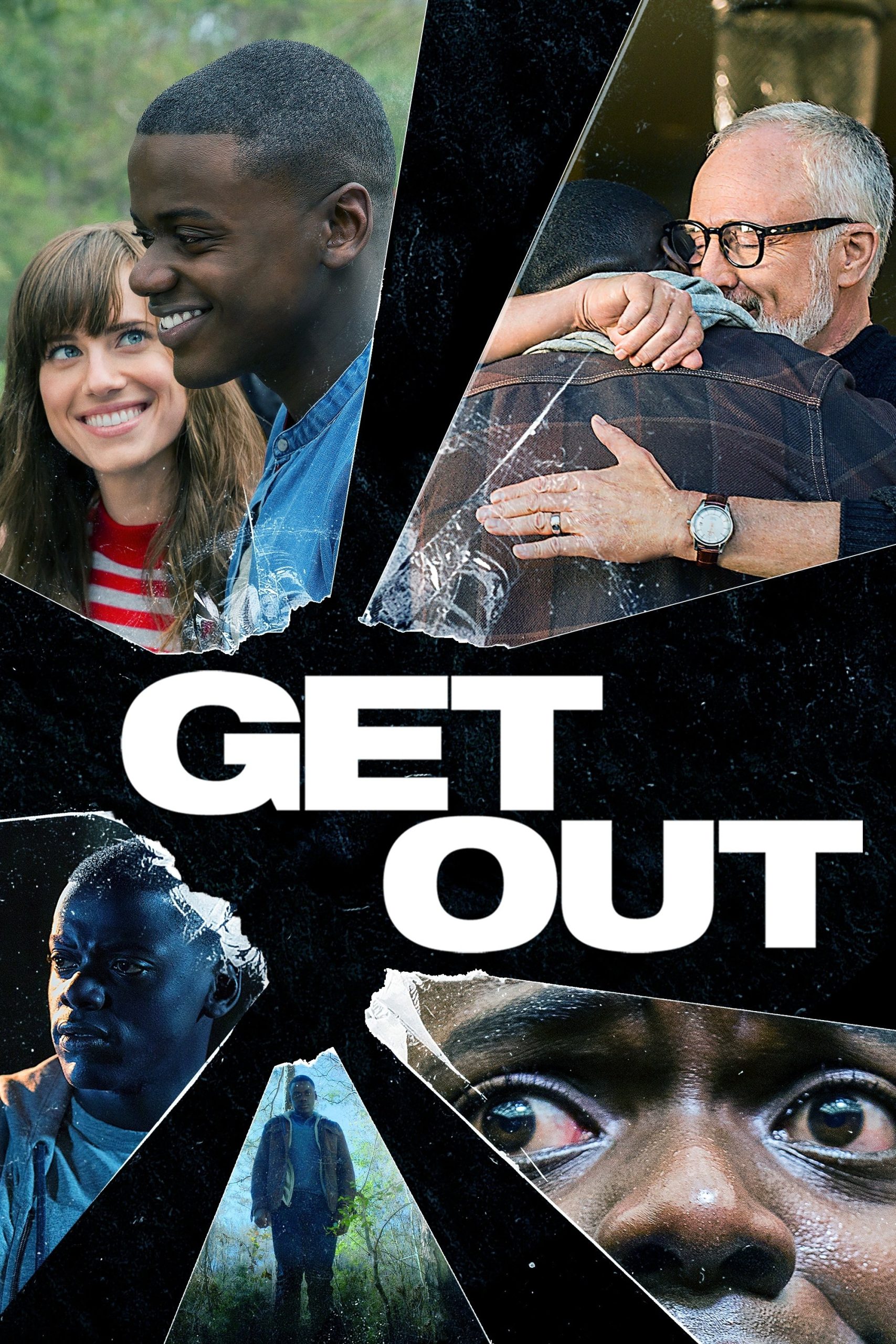
What the Film Is About
Every time I revisit Get Out, I’m left with the same, unresolved knot in my stomach—the kind that doesn’t unravel with the credits. For me, the heart of the film is a sustained sense of social and psychological unease. It’s an invitation to watch, alongside its protagonist, the slow transformation of seemingly ordinary interactions into a nightmare masquerading as politeness. What director Jordan Peele accomplishes here is more than just horror; he fashions a maze, both emotional and existential, through which I’m forced to confront questions that linger well after the final frame. There’s a tension at the center between belonging and betrayal, between being seen and being objectified, that dictates every movement and shadow.
I don’t just see the film as a contemporary thriller. It’s a movie that weaponizes familiarity, asking me to look at everyday gestures—compliments, jokes, parties—and discern the threat inside them. The emotional journey for me is a dizzying spiral from wary optimism to a suffocating awareness of danger. It never feels like a descent into chaos as much as a revelation that chaos was always beneath the surface, carefully arranged just out of sight. That slow, dawning realization—of being watched, consumed, and not truly heard—is what makes this story endure in my mind.
Core Themes
The first thing I recognize in Get Out is its unapologetic interrogation of race in America. I find the film refuses to settle for simple accusations or familiar villainy; instead, it drills into the subtler shapes that racism takes—liberal, well-meaning, but ultimately dangerous. For me, it’s about the performance of inclusivity and how that performance is often used to mask entitlement, exploitation, and violence. There’s a meditation here on the commodification of Black bodies and the erasure of Black subjectivity, themes as relevant now as they were in 2017, if not more so. It asks me, again and again: Who really gets to control a narrative, and at whose expense?
I’m struck by how Get Out uses horror not only to unsettle but to illuminate. It leverages genre tropes to show me the anxieties that simmer beneath polite surfaces—the fear of not being believed, the exhaustion of code-switching, the heartbreak of realizing an ally is nothing of the sort. Power and identity are always at stake. I find Peele’s portrait of trauma especially powerful: it’s not the messy, obvious kind, but quiet and cumulative, built up through a thousand small humiliations and erasures. That’s the terror that lingers long after—not isolated acts of violence, but the machinery that enables them, justified by smiles and social etiquette.
It’s hard for me to shake how the film is both contemporary and timeless. While clearly a response to the political moment of its release—one of resurgent white nationalism, viral hashtags, and divided America—it also echoes an older lineage of horror. I see the inheritance of films that have always warned us about the dangers of complicity and the thinness of our moral self-assurances. In the world of Get Out, what matters most is seeing—and calling out—that what looks like safety may simply be a new mask for danger.
Symbolism & Motifs
When I look for recurring symbols in Get Out, the first image that sears itself into my memory is the motif of looking and being looked at. Mirrors, photographs, the literally hypnotic stare—all these recur, demanding I consider who has the power to see and to define. The camera lens is no neutral observer here; it echoes the gaze through which Black bodies have been studied, fetishized, and appropriated for centuries. This is not just a metaphor; it’s the film’s nervous system. I feel the unease every time a character’s gaze lingers a little too long, or reassurance is offered just a little too smoothly.
The sunken place stands out to me as perhaps the most devastating symbol. More than just a nightmarish visual, it’s a perfectly articulated portrait of dissociation—the feeling of screaming out only to find your voice is gone, your agency hijacked. I can’t think of a more powerful way to externalize the experience of being marginalized and silenced. Each time the protagonist is dropped into that abyss, I’m reminded of histories in which people were reduced to spectators in their own lives, forced to watch their bodies become property and their subjectivities erased.
Small details—silver spoons scraping porcelain, the gleaming symbolism of a deer, the transplantation of consciousness—are all, for me, freighted with centuries of cultural baggage. The spoon, like a gavel or bell, signals who gets to wield psychological power; the deer evokes everything from hunted prey to reminders of roadkill, and by extension, the state’s indifference. Even the use of tea, something so innocuous, becomes a weapon. With each motif, the film asks me to distrust the ordinary, to interrogate the rites of comfort I’ve come to see as neutral.
Key Scenes
Key Scene 1
For me, the initial hypnosis scene is a masterclass not only in suspense but in psychological horror. I find myself, alongside the protagonist, lulled by seemingly innocuous gestures—care and concern, an innocent cup of tea—only to realize these gestures are deeply calculated. The way the film literalizes the process of losing agency is devastating. This scene haunts me because of how ordinary it feels at first, then how quickly my sense of safety is shattered. To me, it’s a direct commentary on how trust can be deliberately weaponized, and how violence can hide beneath surface gentility.
Key Scene 2
The garden party leaves a lasting impression on me due to its galling blend of comedy and dread. Here, I watch as conversations become microaggressions, as admiration curdles into objectification. It’s a scene where the film’s critique of liberal racism becomes razor-sharp—for every guest who claims to love Black culture, there is a moment where that so-called appreciation tips over into entitlement and appropriation. What I take from this is a sense of suffocation, of being constantly appraised and measured, never truly welcomed as a person but as a commodity. The social dance becomes a kind of hunting ground, and I can feel the protagonist’s growing isolation with every handshake and forced smile.
Key Scene 3
The final confrontation, when the protagonist breaks free both physically and psychologically, is, for me, a cathartic release as well as a demand for justice. This isn’t just a survival story—it’s a reclamation of narrative and selfhood. What resonates most is how the film never offers easy resolution: even escape is fraught, shadowed by the fear that the world outside may be just as indifferent or hostile as the confines of the house. The imagery of liberation here is complex—it’s violent, messy, and righteously angry. I see it as a direct response to generations of horror films where Black characters rarely get this agency, let alone survive to the end. The concluding moments linger, for me, as a scorching mark of empowerment—a refusal to remain submissive or invisible.
Common Interpretations
Over the years, I’ve heard Get Out discussed in so many different registers, and what fascinates me is how personal so many of those readings feel, regardless of the speaker’s identity. For many critics I follow, the film is understood primarily as a biting satire of post-racial America—a story that exposes the limits of well-meaning liberalism and the persistence of systemic inequality beneath progressive rhetoric. The lens here is often sociological: a diagnosis of how racism adapts, taking new forms even as it claims to disappear.
Other viewers, myself included, often read the film as an exploration of psychological horror—the lived reality of gaslighting. What stands out to me is the accuracy with which Get Out captures the alienation of being doubted and dismissed by those who claim to care. There’s a horror in feeling trapped not by physical force, but by the social contract, by the pressure to be polite, to not make a scene, to doubt your own perceptions.
I’ve also encountered interpretations that see the movie as a story of survival and agency; for some, it’s one of the rare horror films where a Black protagonist claims both narrative and literal authorship. And then there are readings that focus on the allegorical, with the film’s house standing for America itself—a labyrinth of hospitality masking violence, consumption disguised as affection. While debates exist on whether the film indicts all of white liberalism or simply a particular strain, I hear a near-universal agreement: Get Out holds up a mirror to viewers, daring them to recognize themselves in the gaze—and to ask what they’re willing to see.
Films with Similar Themes
- Rosemary’s Baby – Like Get Out, this film explores betrayal and gaslighting within the most intimate spaces, turning domesticity into terror and questioning whom we can trust.
- Sorry to Bother You – I find this movie resonates for its surreal, satirical portrait of code-switching, the commodification of Black labor, and the contortions of identity in corporate spaces.
- Stepford Wives (1975) – I can’t help but see the thematic overlap in how both films use body-snatching and mind control as metaphors for social conformity and the erasure of difference.
- Us – Another creation from Jordan Peele, this film expands on the themes of identity and social mirrors, challenging me to reconsider what lurks beneath the surface of my own self-image and society’s doublespeak.
What keeps drawing me back to Get Out is its urgent invitation to reconsider what safety, civility, and progress really mean—and at whose expense these are constructed. I see the film not only as a horror story, but as a rigorous act of social diagnosis: a narrative that reveals the lingering ghosts of racism cloaked in new language and new manners. For me, it’s a plea—sometimes angry, sometimes sorrowful, but always incisive—for honesty, vigilance, and above all, for empathy with those asked to live in the sunken place. Peele’s vision is both a warning and a beacon, reminding us that liberation is possible, but only if we’re willing to first see the depth of the trap.
To explore how this film has been judged over time, consider these additional viewpoints.