
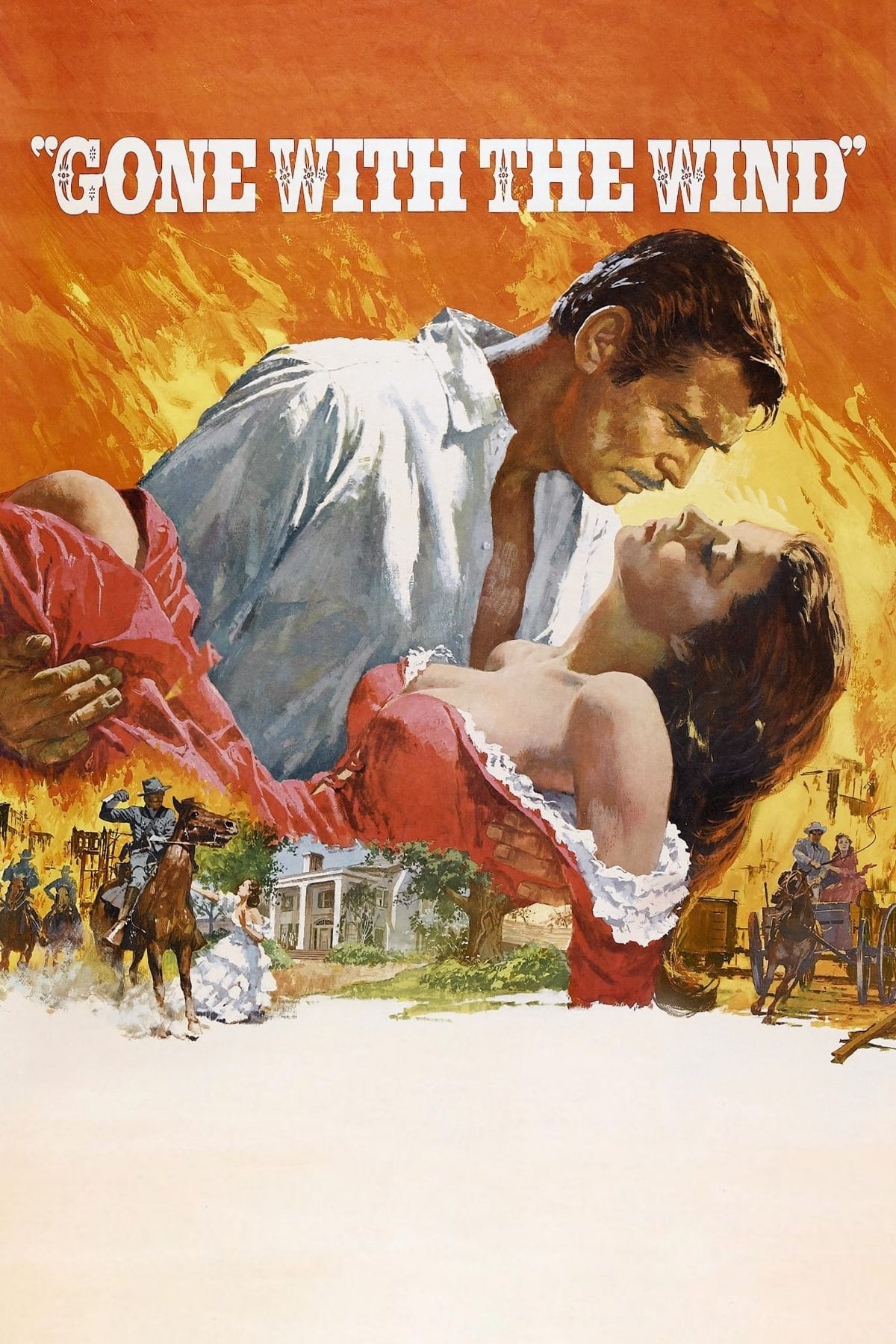
What the Film Is About
The first time I watched “Gone with the Wind,” I found myself knocked off balance by the scale of its emotional ambition and the complex contradictions swirling just beneath its surface. Rather than a straightforward romance or a simple Civil War drama, what struck me most was the relentless push-and-pull between nostalgia and brutal reality—a portrait of a world trying desperately not to disappear. Navigating the ruin of the Old South, the film follows Scarlett O’Hara’s struggle to bend fate and love to her will, ultimately revealing just how impossible it is to reverse the world’s tide.
Throughout the unfolding story, I felt as if I was watching two forces at war within every character: an aching attachment to the past and a ruthless instinct for survival in the face of seismic social and personal upheaval. What “Gone with the Wind” is really about, to me, is this grinding existential tension—the loss of a way of life, the painful birth of something new, and the raw, complicated humanity caught in between.
Core Themes
When I peel back the lush costumes and sweeping vistas, the first thing I notice is the film’s obsession with impermanence. The ever-present question of what can survive amid chaos sits at the center. I see themes of resilience and transformation everywhere—Scarlett’s determination to protect Tara at all costs, the shifting status of women in society, and the fading grandeur of the Southern aristocracy. What fascinates me is how these themes echo far beyond their historical context; in 1939, audiences faced a world upended by the Great Depression and stood on the brink of World War II. Today, the anxieties about identity, place, and change feel just as relevant.
Power and gender are another layer I continue to wrestle with. The film gives us Scarlett as an anti-heroine; I find her ambition, defiance, and emotional self-defense simultaneously shocking and invigorating given the era. She is both a product of and a rebel against Southern ideals of femininity, forcing me to ask uncomfortable questions about agency and societal expectation. The romantic entanglements are not simply personal but soaked in the larger currents of loyalty, ownership, and self-deception. Love, in “Gone with the Wind,” always arrives tangled with desperation and compromise—a mirror of a society grasping for stability as everything changes.
Most provocatively, the film is a time capsule of conflicted memory. While it is often critiqued for romanticizing the Confederacy and glossing over the inhumanity of slavery, I also see how it reveals the seductive nature of nostalgia, exposing how emotional attachment to the past can warp understanding and impede growth. This uneasy blend of longing and critique is a thematic undercurrent that still raises difficult questions about heritage, myth, and the stories societies choose to remember.
Symbolism & Motifs
As I’ve revisited “Gone with the Wind,” I’m always struck by how the land itself becomes its own character, a living embodiment of both loss and hope. Tara, the family plantation, turns into a symbol of everything Scarlett yearns to reclaim and everything she cannot let go of. The house, the rolling fields, and the red clay are more than just backdrop—they represent the spirit of survival and the cost of clinging to illusions. Whenever the camera lingers on Tara’s columns or pans over the battered fields, I sense not only nostalgia, but also the weight of history pressing down on every decision.
Another motif that lingers in my mind is the use of clothing and appearance to signal shifts in status and power. From the lavish ballgowns to the makeshift curtains repurposed as dresses, what characters wear becomes a sign of reinvention, adaptation, and, sometimes, denial. I think about the dramatic changes in Scarlett’s face and posture as she alternates between the roles society expects her to play and the resourceful, ruthless survivor she must become. These visual cues are subtle reminders of how identity is constantly performed and contested, both in private and public.
Then there’s fire—a motif I can’t escape whenever I recall the burning of Atlanta. To me, fire serves as a metaphor for both destruction and purification. It wipes away the old order, but it also clears the ground for new beginnings, no matter how painful. The recurring images of flames and smoke underline the idea that nothing is truly permanent, and every rebirth comes at a price.
Key Scenes
Key Scene 1
There’s a moment that stays with me long after the film ends—Scarlett’s vow at Tara, where, starved and battered, she declares, “As God is my witness, I’ll never be hungry again.” On the surface, it’s an iconic line of grit and tenacity, but I feel its true importance lies deeper. This vow transforms loss and humiliation into an unyielding drive, serving as the emotional pivot for Scarlett’s development. Here, I see the raw power of necessity shaping identity; desperation erases old pretenses, making survival the highest goal. This moment is more than a personal promise—it’s the emotional heart of the film’s meditation on endurance, making me question how much of ourselves we would sacrifice to endure catastrophe.
Key Scene 2
Later, as the old order crumbles and Scarlett stealthily navigates a changed social landscape, a charged scene between her and Rhett Butler comes to mind. Their confrontations, especially when Rhett finally confesses his exhaustion with her manipulations, reveal how love in this universe is inseparable from power and pride. In their exchanges, I find a brutal honesty about human desire and the cost of refusing vulnerability. The film uses their volatile chemistry not just for romantic drama—I see it as a microcosm of the larger cultural conflicts at play. The struggle between holding on and letting go, between illusion and acceptance, infuses this relationship with meaning that goes far beyond the individual.
Key Scene 3
For me, the final scene—Scarlett alone on the staircase, vowing once more to “think about that tomorrow”—serves as both a summary and a rebuke. Rather than neat resolution, I find a statement about the necessity of hope, even when it is mingled with denial. Scarlett’s endlessly renewable determination strikes me as both her greatest strength and her eternal trap. The film’s refusal to grant her closure, its insistence on the unfinished business of loss and the ambiguity of the future, encapsulates the existential undertow I sense throughout. The story doesn’t promise healing; instead, it leaves me wrestling with the truth that sometimes, surviving is the only victory on offer.
Common Interpretations
Whenever I talk with others about “Gone with the Wind,” I hear a kaleidoscope of opinions, but most interpretations gravitate towards its dual nature as both a grand epic and a deeply problematic artifact. Many critics see it as a sweeping romance embedded within the trauma of war and social collapse, a testament to human adaptability and the myth of Southern gentility. I often encounter readings that praise the character of Scarlett as a proto-feminist icon—a woman who refuses to be tamed by circumstance or custom, and whose unapologetic ambition continues to provoke debate.
At the same time, it’s impossible for me to ignore a second, more uncomfortable interpretation: the film’s reconstruction of the Old South as a site of nostalgia and loss, while minimizing or romanticizing the enormous pain inflicted by slavery and racial hierarchy. In recent years, audiences and scholars have engaged in passionate re-evaluations, examining how the story perpetuates cultural myths that obscure historical realities. Some view it as an indictment of denial and willful forgetting, while others see it perpetuating outdated and harmful romantic ideals.
What fascinates me most is how “Gone with the Wind” acts as a mirror—it reflects not just the values and anxieties of its own time, but also the ongoing struggles within American culture over memory, myth-making, and the tension between survival and justice. Its power lies in its ability to generate discomfort and conversation, forcing each of us to reckon with the stories we inherit and the truths they conceal.
Films with Similar Themes
- “The Age of Innocence” (1993) – When I watch this film, I feel the same haunting sense of worlds in decline and the ways social codes imprison individual desire. Like “Gone with the Wind,” it dwells on nostalgia, longing, and the costs of conformity, reframing them within the upper echelons of Gilded Age New York.
- “Cold Mountain” (2003) – This Civil War epic echoes the devastation and displacement I find in “Gone with the Wind,” weaving themes of survival, personal transformation, and the harsh reshaping of identity in the fires of conflict.
- “Barry Lyndon” (1975) – I’m always drawn to how this film interrogates the illusions of status and the enduring hunger for belonging, using a visually rich, period-specific world to explore the collision between personal ambition and historical fate.
- “A Place in the Sun” (1951) – For me, the connection lies in the ruthless pursuit of love and security amid a shifting social order. Both films showcase protagonists who are determined to claim happiness at nearly any cost, only to find themselves undone by the worlds they seek to master.
What “Gone with the Wind” ultimately communicates, through my own refracted perspective, is a profound meditation on impermanence and change—how the stubborn will to survive often clashes with the truths we’d rather not face. Its story is haunted by nostalgia, and yet, there’s an undercurrent of critique: It exposes how memories, myths, and yearning for a vanished world can both protect us and keep us trapped. Whenever I return to the film, I leave reminded that human nature is equal parts resilience and denial, and that every era—no matter how romanticized—carries forward unresolved conflicts about who we are and who we might become.
After learning the historical background, you may also want to explore how this film was received and remembered.