
What the Film Is About
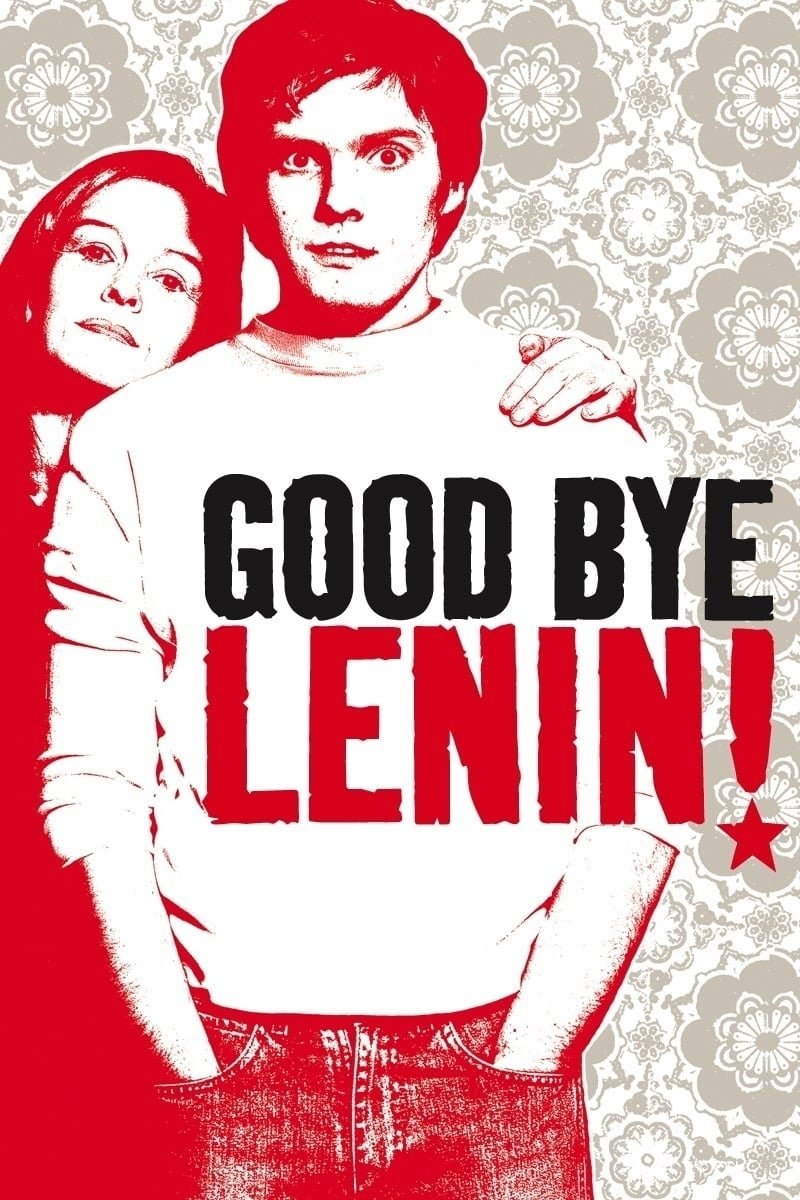
When I think about Good Bye, Lenin!, what strikes me immediately is the storm of conflicting emotions at its center. Instead of feeling like a straightforward political drama or satire, I’m drawn into a bittersweet story about a son—Alex—struggling to shield his fragile mother from the truth that her world has vanished almost overnight. Underneath the clever conceit of a family masquerade, I discover a lacerating portrait of loss, nostalgia, and the fantasy of control in a time of headlong change.
I experience the film less as a narrative than as a meditation on what happens when history rewrites not just public facts, but the most personal parts of who we are. The emotional journey is messy and tangled: Alex is propelled by love and guilt, caught between honoring his mother’s ideals and forging his own future. Every choice he makes feels like stitching together the shreds of a past—one he’s half grieving and half desperate to preserve. That torment, to me, is the film’s true direction: a scramble to make sense of identity, family, and loyalty amid the chaos of societal upheaval.
Core Themes
In my view, the film’s most resonant theme is the collision between individual memory and collective history. I see Alex building an elaborate illusion to protect his mother from the shock of a unified, capitalist Germany, but what he’s really doing is fighting to hold onto the emotional stability that the old East once represented for him. I feel that on some level, every lie he tells is a desperate effort to slow down time or anchor his family against an oncoming tide of change. In this sense, the film treats memory not as a fixed record, but as scaffolding—constantly rebuilt in response to what we lose or cannot bear to confront.
Another idea that has always haunted me is the film’s exploration of truth—its slipperiness, and whether it’s always the most ethical or loving path to take. Alex’s elaborate ruse calls into question the moral calculus of deception in the name of kindness. I find myself asking: is truth inherently virtuous, or does love sometimes demand an easier fiction? The movie never gives me a decisive answer, but it demands I sit with the discomfort of the question.
For many, especially when looking at the film through the lens of post-reunification Germany, Good Bye, Lenin! is also a meditation on “Ostalgie”—that longing for a vanished past, warts and all. While the West might presume the collapse of the GDR was an unalloyed victory for liberty and capitalism, I register a deep sympathy for the psychic dislocation suffered by those whose identities were rooted in the old system. I think the film’s relevance persists because it reveals how transitions, even those outwardly celebrated, often come at immense, private human cost. As I watch, I’m reminded that no revolution sweeps the ground clean of memory.
Above all, I sense an existential melancholy running through Good Bye, Lenin!: the ache of realizing we are powerless to stop time, and that history—personal or political—never waits for us to catch up. This is why, for me, the themes still matter today. Whether we are mourning a lost country, a lost parent, or a lost sense of certainty, the film holds up a mirror to the ways all of us wrestle with change. It feels as relevant in an age of global upheaval as it did in 2003.
Symbolism & Motifs
Reflecting on the film’s visual and narrative motifs, I’m continually struck by the symbolism of space and home. The family’s apartment stands as an eerie time capsule—a constant backdrop to Alex’s charade, and, in many ways, a museum of the socialist era. To me, the cramped, familiar rooms symbolize not just his mother’s mental state, suspended in 1989, but also the human tendency to seek solace in what’s known, even as worlds outside those walls change irrevocably. Every artifact—pickled gherkins, old packaging, fading portraits—feels freighted with nostalgia and the urge to preserve identity through material things.
Television, too, emerges as a recurring motif that fascinates me. Far from being a neutral source of information, it becomes the chief illusion-making engine, with Alex fabricating nightly news broadcasts to keep his mother in the past. On one level, it’s farcical, but on another, it’s a chilling commentary on how narratives are constructed. I think the TV screen becomes a metaphor for the stories we tell ourselves—sometimes to protect, sometimes to obscure, sometimes simply to cope.
I also find great significance in the motif of the broken, repaired, or repurposed objects scattered throughout the film. The persistence of relics from the GDR—brands, uniforms, even language—serves as living reminders that the past is never simply erased; it’s reconfigured, sometimes awkwardly, sometimes lovingly, into new contexts. The director’s use of these details makes me consider how people everywhere carry remnants of earlier selves, unable or unwilling to discard them even as society marches forward.
Key Scenes
Key Scene 1
For me, the scene where Alex orchestrates the first fake newscast for his bedridden mother is crucial to understanding the film’s soul. It’s not just a clever comic set-piece or an absurd exercise in historical revision. Watching Alex, I sense a son’s deep yearning to shield his mother from emotional catastrophe—he becomes both director and performer, desperate to sustain her belief that the world is still intact. The emotional weight of this scene, for me, is almost unbearable: it’s not the lie itself, but the reason for the lie that twists my heart. The lengths to which Alex goes underscore how love and desperation can drive us to remake reality for the sake of those we care for.
Key Scene 2
The moment Alex rushes through a newly capitalistic Berlin hunting for East German pickles is, in my eyes, more symbolic than any speech or argument the film might deploy. Here, I see him physically navigating a marketplace that embodies change—shelves filled with Western products, his mother’s favorites replaced or gone. This search isn’t about cucumbers; it’s about tracking down fragments of identity in a city no longer structured around the logic of the past. To me, this scene beautifully embodies how post-reunification Germans (and really, anyone facing sweeping change) hunt for tiny touchstones of familiarity to anchor themselves amid the bewilderment of upheaval. The search becomes a lament for all that has irrevocably slipped away.
Key Scene 3
What haunts me most is the film’s final major gesture, when Alex creates a last, lovingly fabricated broadcast in which the GDR has reportedly “chosen” unification, as an act of self-determination. In giving his mother this comforting narrative—that East Germany voluntarily joined with the West—he offers her not the truth, but a story she can embrace without heartbreak. For me, this is the film’s ultimate interrogation of how myths are made, and how history is as much about the stories we need as the realities we endure. It’s here that the film’s meaning crystallizes: sometimes, protecting loved ones means crafting fictions with more mercy than the world itself provides. I leave this scene feeling gutted by the knowledge that emotional truths sometimes diverge from historical ones, yet both are valid in their own spheres.
Common Interpretations
Among critics and audiences, I often see Good Bye, Lenin! framed as both a gentle satire and an elegy—a comic portrait of East Germany’s demise, and a tender acknowledgment of the losses endured by those left behind. Some read the film primarily as biting commentary on “Ostalgie,” seeing Alex’s ruses as a metaphor for a society unable to let go of comfortable illusions even when faced with better alternatives. Others, like myself, find the film less judgmental: I see it as poignantly non-dogmatic, suggesting that grief for the past doesn’t equate to political blindness or reactionary nostalgia, but rather reveals the profound psychological costs that massive change exacts on ordinary people.
One widely accepted interpretation involves the function of storytelling—not just on the level of Alex’s deception, but as a larger, humane impulse to make experience meaningful. I resonate with this, recognizing the film’s gentle assertion that constructing narratives is central to how humans survive dislocation or trauma. Few films, in my view, pose the question so directly: is a comforting lie sometimes an act of mercy, rather than betrayal?
There are critics who approach the film through a political lens, highlighting its balanced portrayal of both GDR repression and West German superficiality. I agree that the film refuses to idealize either system, showing the flaws and merits embedded in both, and gently mocking the self-righteousness of easy utopias. Ultimately, what unites these readings, and aligns with my own response, is the sense that the movie asks us to grapple with ambiguity: to recognize that longing for stability, or even for a distorted past, is deeply human in the face of uncertainty. It neither condemns nor fully exonerates anyone, but instead situates everyone—Alex, his mother, the whole of East Berlin—within the tragicomedy of historical transformation.
To explore how this film has been judged over time, consider these additional viewpoints.
Films with Similar Themes
- The Lives of Others (2006) – I always connect this film with Good Bye, Lenin! because it explores life in East Germany with a similar focus on private loyalty versus public ideology, showing how political change devastates and liberates, often at once.
- The Death of Stalin (2017) – While far more irreverent and darkly comic, this film’s satirical look at the end of a totalitarian regime echoes the struggles with truth, propaganda, and the rewriting of history that I see in Good Bye, Lenin!.
- Underground (1995) – Emir Kusturica’s epic black comedy uses the break-up of Yugoslavia to probe the human compulsion to sustain myths and illusions in the midst of chaos—a motif that feels closely allied to Alex’s efforts.
- Eternal Sunshine of the Spotless Mind (2004) – Here, it’s not politics but memory and loss: the impulse to rewrite or erase painful recollections dovetails perfectly with the emotional dynamics that, to me, drive Good Bye, Lenin!.
What I take away from Good Bye, Lenin!, after all these years, is a kind of tender plea to honor both the need to remember and the need to let go. The film invites me to ask how much of my own history—my personal and collective past—I’m willing to release in order to meet the new realities of life. And yet, it refuses to offer a clear directive; instead, it asks me to linger sympathetically with those caught in the crossfire of eras, those who lie or pretend out of love, and those who ache for vanished certainties. In the end, I find the film’s wisdom in its compassion: bearing witness to the beautiful, absurd, and sometimes sorrowful ways humans survive history’s relentless march, it reminds me that mourning the past is not weakness, but a testament to what made it home in the first place.