
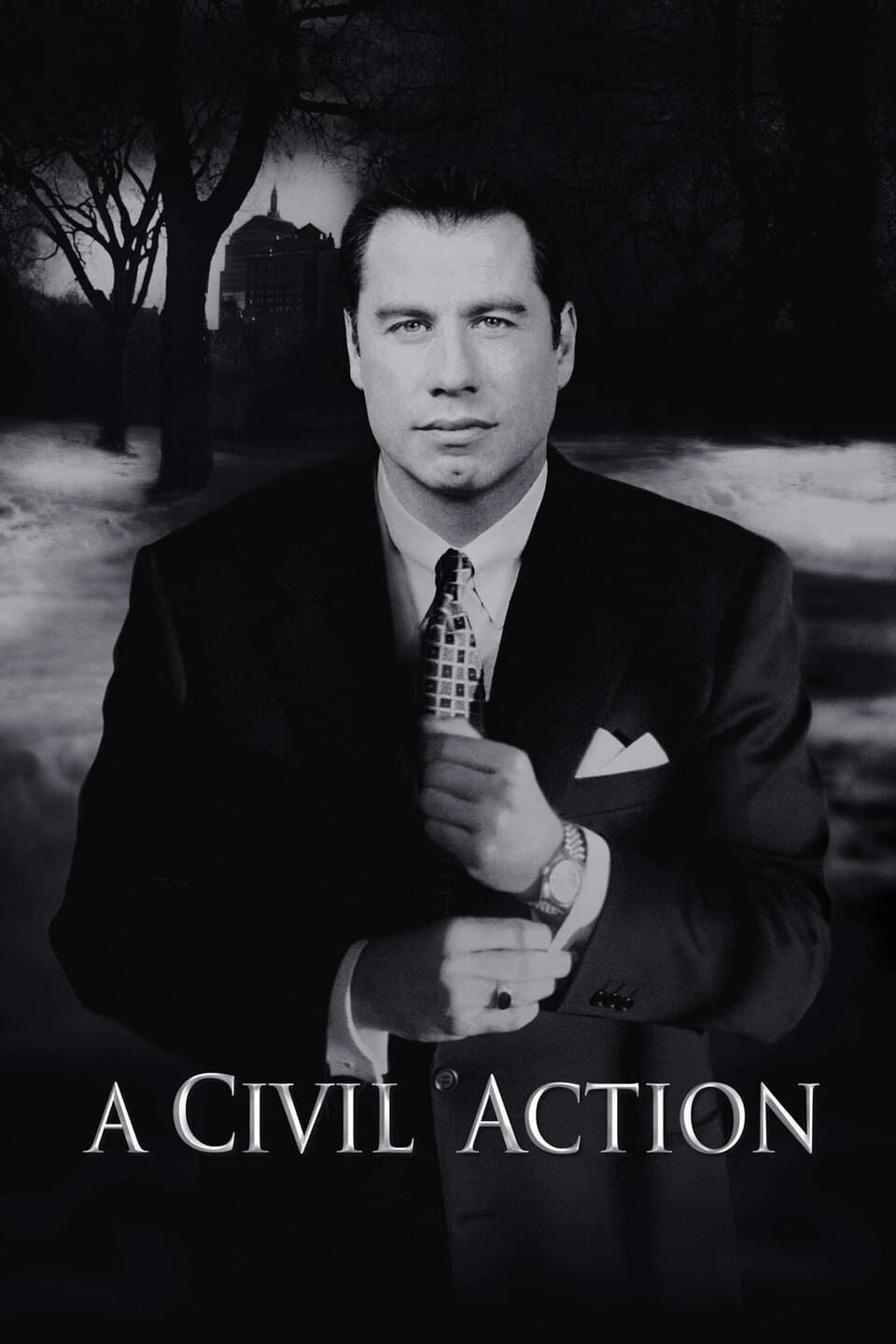
What the Film Is About
“A Civil Action” is fundamentally a story about the pursuit of justice amid daunting personal and moral costs. At its heart, the film follows a driven yet flawed attorney, Jan Schlichtmann, as he grapples with the ethical complexities of representing families whose lives have been upended by environmental contamination. The narrative is propelled by the emotional tension between legal ambition and personal conviction, with the lead character experiencing a gradual unraveling of certainty regarding right and wrong. Over the course of the film, Schlichtmann’s journey shifts from one of financial gain and prestige to a desperate, nearly sacrificial quest for accountability, exposing the challenges embedded in confronting powerful institutions.
The film weaves a narrative that is less about the intricacies of courtroom victories and more about the existential costs of confronting systemic failure. It explores the emotional journey of individuals caught in the machinery of corporate and legal power, as well as the consequences—both expected and unforeseen—of seeking change within those systems. “A Civil Action” becomes not simply a legal drama, but a deeply reflective examination of the price of righteousness in a society fraught with moral ambiguity.
Core Themes
The film’s core themes revolve around justice versus pragmatism, the limits of moral action, and the far-reaching impact of environmental harm. Fundamental to “A Civil Action” is its exploration of the tension between idealism and reality: the way abstract notions of justice must contend with the harsh realities of legal systems structured around money, influence, and procedural technicalities rather than absolute truths. The protagonist’s journey exemplifies how personal ideals are often forced to reckon with, and sometimes succumb to, the more utilitarian demands of survival—be that financial, psychological, or institutional.
Morality, too, serves as a central pillar. The film probes the boundaries of ethical responsibility for both individuals and corporations, showing how expediency and self-preservation can supersede duty of care. This theme resonates with the zeitgeist of the late 1990s—a period marked by growing scrutiny of corporate behavior, environmental hazards, and public distrust in institutions. Yet, its relevance persists today as society continues to grapple with questions about the balance between profit and responsibility, the fragility of justice when pitted against powerful interests, and the personal toll exacted on those who challenge the status quo.
Additionally, “A Civil Action” examines the theme of sacrifice—how the pursuit of justice can strip individuals of their security, comfort, and even hope, and how victories can be pyrrhic, with profound personal losses outweighing any tangible gains achieved. The film ultimately invites viewers to consider the cost of caring deeply in an indifferent world, and how integrity may not always yield the change or recognition one expects.
Symbolism & Motifs
Throughout the film, several recurring symbols and motifs reinforce its deeper meanings. Water, both as a literal contaminant and as a metaphor, is perhaps the most prominent. Water represents purity, life, and community; when it is tainted, it becomes a symbol of collective harm and systemic neglect. The persistent visual references to water—flowing, pooling, or being sampled—serve to remind the audience of the omnipresent threat and the invisible ways in which harm can seep into the fabric of a community.
Another motif is the imagery of paperwork, files, and legal documents. These stacks of evidence not only signify the daunting scale of the battle but also embody the suffocating bureaucracy that stands in the way of substantive justice. The overwhelming presence of documents visually communicates the difficulty of piercing through procedural obstacles to reach moral truths.
The motif of the courtroom itself, with its rigid decorum and impersonal rituals, functions as a symbol of the gap between formal justice and real human consequences. The frequent juxtaposition of corporate boardrooms and family kitchens underscores the disparity in power and perspective: for one group, the issue is a line-item risk; for the other, it is a matter of life and death. Cars and roadways, seen in shots of characters traveling to meetings or driving home at night, symbolize the arduous, often solitary journey taken by those who refuse to capitulate to easy answers or external pressures.
Key Scenes
Key Scene 1
A defining scene in the film occurs when Jan Schlichtmann stands in front of the grieving families and lays out the unvarnished truth about the case’s improbability of success. The moment is crucial, not for any legal breakthrough, but for the deep honesty and vulnerability it reveals. Here, the film interrogates the limitations of hope in the face of overwhelming odds, and demonstrates the emotional weight borne by those who advocate on others’ behalf. This encounter crystallizes the core dilemma of the film: should one persist in the pursuit of justice when the cost appears insurmountable and the outcome uncertain? The stripped-down sincerity of this exchange foregrounds the moral stakes at hand, urging viewers to consider the value in fighting for justice, irrespective of certainty or reward.
Key Scene 2
Another pivotal scene unfolds in the negotiations between Schlichtmann and the opposing corporate lawyers. Rather than an explosive confrontation, the sequence is marked by chilling civility and the cold machinations of negotiation. This scene develops the central themes of institutional apathy and the transactional nature of justice in a capitalist society. It peels back the curtain to reveal how even the most high-minded struggles can become mired in calculation and self-interest, highlighting the emotional toll on Schlichtmann as he realizes the depth of the system’s indifference. The film subtly suggests that legal battles, at this level, are less about moral clarity and more about leverage and calculation, laying bare the profound alienation felt by those outside the corridors of power.
Key Scene 3
A late turning-point scene signals the culmination of Schlichtmann’s downward spiral. As he sits alone, financially and emotionally depleted, the symbolism of his near-total loss becomes clear. In this quiet devastation, the film articulates a bittersweet final statement: justice is costly, sometimes even ruinous, and does not necessarily yield catharsis or repair. This powerful visual and emotional climax is less a traditional resolution than an existential reckoning—an assertion that true moral commitment may lead not to triumph, but to loneliness and sacrifice. It invites the audience to reinterpret heroism as perseverance in the face of futility, underscoring the enduring ambiguity at the heart of meaningful action.
Common Interpretations
Critics and audiences commonly interpret “A Civil Action” as a critique of the American legal system’s structural inadequacies, particularly its susceptibility to influence by wealth and institutional power. Many see the film as a cautionary tale, illustrating how even the most righteous causes can be stymied or diluted by procedural complexity, legal maneuvering, and the exhausting demands placed on those who seek change. The character of Jan Schlichtmann often garners sympathy as both a tragic hero and a cautionary figure—someone whose passion invites both admiration and concern for the limits of individual agency against immovable systems.
Others interpret the film as a meditation on the potential—and the peril—of moral absolutism. Some viewers regard Schlichtmann’s journey as emblematic of the lonely road traveled by change-makers, while others see him as an example of hubris, illustrating the dangers of conflating personal validation with justice. Yet another reading focuses on the systemic tension between the legal process and true accountability, noting that “justice” is too often a negotiable commodity, especially when powerful interests are involved. Collectively, these interpretations converge on a shared recognition of how the film’s narrative complexity resists simple answers, prompting viewers to confront uncomfortable truths about integrity, courage, and compromise.
Films with Similar Themes
- Erin Brockovich (2000) – This film also explores environmental contamination, corporate malfeasance, and the struggle of determined individuals to hold large companies accountable, echoing similar themes of justice and sacrifice.
- Michael Clayton (2007) – Through its depiction of law, ethics, and personal cost, it examines the intersection of legal practice and moral responsibility, paralleling the moral ambiguity in “A Civil Action.”
- The Verdict (1982) – This courtroom drama offers a portrait of a flawed lawyer fighting against the odds, highlighting personal redemption and the imperfect nature of legal justice, much like Schlichtmann’s arc.
- Dark Waters (2019) – Like “A Civil Action,” this film centers on the personal toll of challenging corporate wrongdoing in environmental cases, emphasizing perseverance in the face of institutional inertia.
Ultimately, “A Civil Action” communicates a sobering truth: that the quest for justice often involves profound personal risk, and the machinery of the legal system is fraught with compromise, frustration, and heartbreak. The film’s narrative asks viewers to reconsider the price of decency and the meaning of success—or failure—when facing entrenched systems of power. Through its blend of emotional honesty, thematic rigor, and symbolic depth, it remains a powerful meditation on the fragility of justice and the resilience required by those who confront society’s greatest inequities.