
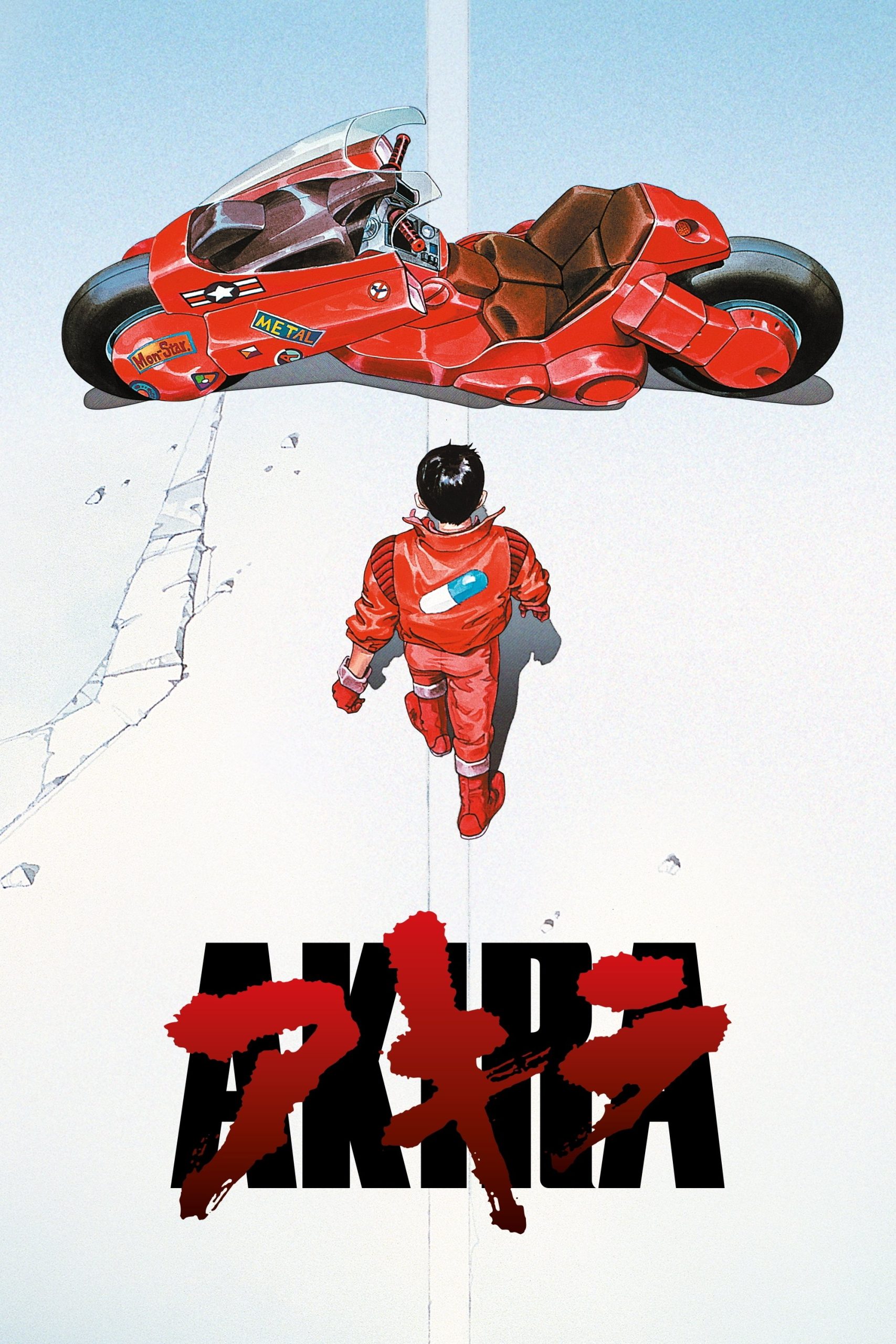
What the Film Is About
“Akira” is an emotionally charged journey through a dystopian future, where the boundaries between technology, government power, and the individual psyche collapse. At its core, the film centers on the turbulent friendship between Kaneda and Tetsuo, two young men swept up in a crisis that is far bigger than themselves. Their story unfolds against the bruised but chaotic backdrop of Neo-Tokyo, a city marked by trauma, unrest, and the scars of past calamities. The film’s central conflict revolves not just around the cataclysm that threatens the city, but around the frailty and volatility of human ambition—how power transforms, corrupts, and isolates.
The emotional weight of “Akira” lies in its exploration of alienation, anger, and the destructive allure of unchecked potential. As Tetsuo’s psychic abilities awaken, he is consumed by the desire for agency and recognition, which propels him towards both liberation and tragic self-destruction. Kaneda, meanwhile, embodies loyalty and resistance—struggling to save his friend from forces internal and external. The narrative is less a traditional hero’s journey than a meditation on chaos, self-realization, and the cost of progress.
Core Themes
At its essence, “Akira” investigates the dangers inherent in absolute power. It frames power as both a personal and societal force, capable of liberation but also of unimaginable destruction. Tetsuo’s transformation—framed through his psychic awakening—is less about heroism and more about the seduction and horror of unchecked potential. The film relentlessly questions who should wield power, if anyone at all, and to what ends. This theme was especially poignant in 1988 Japan, a nation grappling with its legacy of atomic trauma and its rapid technological advancement.
Another central theme is the role of authority—be it governmental, military, or scientific—and its impact on the individual. “Akira” is skeptical of institutions, portraying them as callous, manipulative, or helpless in the face of forces they cannot control. Youth rebellion figures heavily, with the biker gangs of Neo-Tokyo clashing against a backdrop of political cover-ups and scientific hubris. The generational divide is acute: young characters are left to inherit the ruins of their elders’ mistakes.
A third key theme is the question of identity, especially as it unravels under traumatic change. Tetsuo’s journey is a desperate search for selfhood amid pain, isolation, and rapid transformation. His struggle is both literal and metaphorical, mirroring the anxiety of adolescence—where the boundaries of the self are tested, sometimes violently, against the world. “Akira” anticipates the alienation of modern urban life, the fragility of community, and the ever-present threat of losing oneself in chaos.
These themes remain urgent today, resonating in a world marked by technological anxiety, mistrust of institutions, and the persistent question of how to balance progress with responsibility.
Symbolism & Motifs
“Akira” is saturated with symbols and motifs that deepen its philosophical inquiries. Most striking is the recurring imagery of transformation and mutation—seen in explosions, evolving cityscapes, and the grotesque physical changes experienced by Tetsuo. Mutation becomes a metaphor for both personal and societal upheaval. It signals the breakdown of order and clarity, echoing the instability of both adolescence and civilization itself.
The cityscape of Neo-Tokyo operates as more than just a backdrop; it is a character in its own right, reflecting cycles of destruction and rebirth. The omnipresent ruins and neon-lit streets allude to atomic trauma, modernization, and the fragility of civilization. The constant rebuilding of the city mirrors the characters’ attempts to reconstruct their own damaged identities and histories.
Motifs of light and energy—the swirling, uncontrollable forces that Tetsuo wields—stand in for the dangerous allure of forbidden knowledge and the costs of overreaching. These visuals evoke both the threat and promise of science, harkening back to nuclear power and the ethical dilemmas it poses. Another important motif is the motif of childhood and lost innocence, embodied by the mysterious, childlike Espers. Their presence underscores that power, once awakened, is impossible to simply “put back to sleep,” and that the wounds of the past can resurface in unpredictable forms.
Key Scenes
Key Scene 1
The hospital sequence, in which Tetsuo first experiences hallucinations and glimpses of the Espers, is crucial in framing the film’s examination of trauma and awakening. This scene is less about the mechanics of his powers and more about psychological dislocation—a flood of subconscious fears and desires. It is here that the audience truly feels Tetsuo’s profound vulnerability, laying the groundwork for his subsequent rage and alienation. The surreal visuals—toy animals, shifting realities—act as a visual metaphor for Tetsuo’s fractured sense of self and mark the beginning of his irreversible transformation.
Key Scene 2
The confrontation between Tetsuo and the military on the ruins of Olympic Stadium stands as a pointed critique of institutional authority and scientific ambition. Here, the boundaries between hero and villain blur; Tetsuo lashes out not only in self-defense but from a place of deep pain, while the military’s methods are equally ruthless. The scene raises questions about responsibility, the cycle of violence, and the inability of traditional structures to contain the chaos they’ve helped unleash. It’s a meditation on the limits of force and the consequences of treating human beings as experiments or weapons.
Key Scene 3
The climactic transformation scene—where Tetsuo loses control of his powers and becomes a grotesque, swelling mass—serves as a final, visceral metaphor for the dangers of unchecked growth, be it technological, psychological, or societal. In this moment, Tetsuo is both more powerful and more isolated than ever. Kaneda’s desperate attempt to reach his friend is an act of grace and loyalty, highlighting the persistence of human connection even amid destruction. The transcendental resolution, with Akira’s intervention, suggests both destruction and the possibility of rebirth—a new beginning born from catastrophe. This denouement encapsulates the film’s vision of cyclical history: that trauma, if not confronted and understood, will erupt again and again.
Common Interpretations
Critics and audiences have offered several broad interpretations of “Akira.” One prevailing reading frames the film as an allegory for postwar Japanese anxiety, particularly the collective trauma of Hiroshima and Nagasaki, and the subsequent unease around atomic power and modernization. The film’s vision of Neo-Tokyo—a city marked by both progress and devastation—echoes this ambivalence, presenting technology as both miraculous and monstrous.
Another common interpretation focuses on adolescence as a period of crisis and transformation. Tetsuo’s journey, from bullied orphan to psychic titan, mirrors the turbulence of coming-of-age—where identity is unstable, boundaries are in flux, and the search for power can both liberate and destroy. Some viewers see the film as a reflection on social alienation, in which young people inherit a broken world and must navigate systems that refuse to acknowledge or nurture them.
A third, often overlapping, perspective is political: “Akira” is read as a critique of authoritarianism and institutional hubris. The military-industrial complex’s failure to control or understand Akira’s power stands as a warning against the dangers of treating human advancement as a purely technical problem, divorced from ethical considerations.
Films with Similar Themes
- Ghost in the Shell (1995) – Explores the intersection of technology and identity, questioning what it means to be human in an age of rapid technological enhancement.
- Blade Runner (1982) – Raises ethical questions about artificial life, memory, and what constitutes true humanity, set within a dystopian future marked by societal decay.
- Neon Genesis Evangelion (1995–1996) – An anime series that delves into trauma, adolescence, and the burden of inherited catastrophe, blending philosophical themes with apocalyptic spectacle.
- Children of Men (2006) – Depicts a society on the brink of collapse, using personal stories to highlight themes of hope, loss, and the threat posed by unchecked institutional control.
Ultimately, “Akira” stands as a piercing statement on the volatility of human progress and the shadows cast by social and psychological trauma. It cautions that power, no matter how scientific or supernatural its source, always has the potential to destroy when stripped of accountability and empathy. “Akira” remains relevant decades after its release because it exposes the anxieties of its era—while capturing timeless questions about who we are, what we inherit, and how we shape the future. Its message, both cautionary and hopeful, endures: rebirth is possible, but only if we learn from the ruins of what came before.