
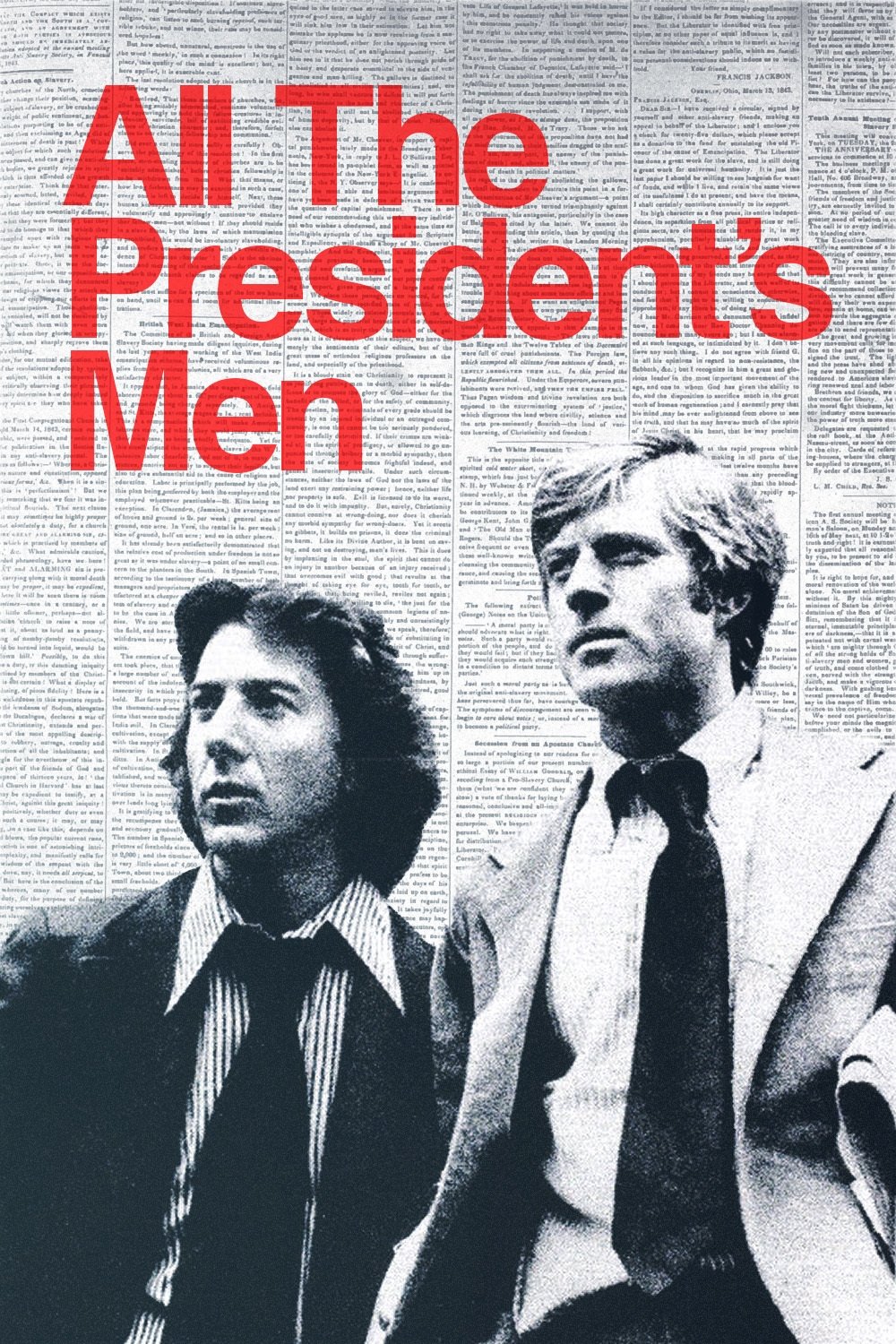
What the Film Is About
“All the President’s Men” is an incisive political drama that traces the relentless efforts of two young Washington Post reporters, Bob Woodward and Carl Bernstein, as they investigate the 1972 Watergate break-in. Rather than focusing on the break-in itself or the ultimate political downfall it triggered, the film immerses viewers in the grueling process of uncovering layers of secrecy. The emotional journey tracks their persistence, moments of self-doubt, and the mounting tension as their reporting threatens powerful interests. Through the eyes of these journalists, the audience feels the enormous weight of truth-seeking in a world defined by deception and institutional resistance.
At its core, the narrative is less about the specifics of political scandal and more about the fragility of democracy, the importance of ethical journalism, and the ways in which ordinary individuals confront waves of intimidation. The central conflict pits ideals of accountability and transparency against the machinery of state secrecy, making the story both a personal odyssey for its protagonists and a reflection on the public’s right to know.
Core Themes
“All the President’s Men” operates on several thematic levels. Foremost is the theme of truth versus power—how the pursuit of facts collides with deeply entrenched systems designed to obscure and mislead. The film examines the moral responsibility inherent in journalism, suggesting that democracy is protected not by those in office, but by those willing to question authority and expose corruption. This investigation is painted as both noble and perilous, with real stakes for those who engage in it.
Another central theme is institutional accountability. The film explores what happens when primary mechanisms of oversight, such as the government and the press, either fail or succeed in their duties. Released in the wake of national cynicism after Watergate, the film meditates on public skepticism, the fragility of trust, and the painstaking labor required to restore faith in democracy. These issues retain relevance today, as modern societies continue to grapple with political scandals, misinformation, and the changing role of journalism in holding power to account.
Also present is the theme of perseverance in the face of adversity. Woodward and Bernstein’s determination stands as a testament to individual and collective resolve. The film celebrates the slow, methodical nature of real investigative work—repetitive phone calls, endless source meetings, cross-checking facts—contrasting these against the often-glamorized depiction of reporting. In doing so, it honors the subtle, tedious, and sometimes isolating reality of pursuing the truth.
Symbolism & Motifs
The film employs numerous motifs and symbols to reinforce its deeper messages. One of the most striking is the recurring use of darkness and shadow, both visually and metaphorically. Cinematographer Gordon Willis, often called the “Prince of Darkness,” fills scenes with deep shadows and low lighting, expressing both the literal and figurative obscurity shrouding the Watergate scandal. These visuals also reflect the isolation experienced by the reporters and the difficulty of separating truth from lies.
Telephones are another notable motif, with much of the film’s action taking place over tense calls, often in dimly lit or cluttered spaces. The repeated image of phones underscores the tedious, incremental nature of reporting, as well as the precariousness of every new lead. Files, notes, and documents accumulate in Bernstein and Woodward’s workspaces, depicting both the overwhelming complexity of the case and the persistence required to organize chaos into coherence.
The parking garage, where the reporters meet their informant Deep Throat, becomes a symbol of both secrecy and exposure. Its cavernous and echoing emptiness visually emphasizes the enormity of the forces at play, while the physical descent into the garage literalizes the notion of “digging deep” for concealed truth. Even the bustling newsroom serves as a visual motif—a swirl of voices, typewriters, and urgency—contrasting the journalists’ methodical efforts with the static inertia of official power structures.
Key Scenes
Key Scene 1
One crucial scene involves Woodward’s initial late-night encounter with Deep Throat in the parking garage. This meeting is pivotal not just for advancing the investigation, but for its mood: hushed voices, relentless paranoia, and the sense of the unknown. The scene is drenched in anxiety, with Deep Throat’s cryptic advice—“Follow the money”—encapsulating the dangerous, convoluted path ahead. This moment crystallizes the reporters’ dawning understanding of the scale of their adversary as well as the ethical and personal risks involved. It becomes a moment of existential choice, where commitment to principle is weighed against fear for personal safety.
Key Scene 2
Another defining sequence occurs as Woodward and Bernstein painstakingly confirm facts with reluctant, frightened sources. A tense phone call to a vulnerable witness, who initially refuses to talk but eventually provides a vital clue, stands out. This scene epitomizes the film’s examination of moral courage under pressure—not just for journalists, but for ordinary people complicit in systems of power. The encounter foregrounds themes of trust, fear, and the slow erosion of silence. It’s not the climactic “scoop” of newspaper mythology, but rather a quiet victory for persistence and integrity.
Key Scene 3
The film’s closing moments, when the teletype clatters in the Washington Post newsroom with the news of high-level resignations and indictments, serve as a subdued yet profound capstone. Bernstein and Woodward are dwarfed by the routine backdrop of daily reporting, silently typing as history unfolds. Unlike conventional narrative resolutions, there’s no triumphant celebration; instead, the moment suggests that the struggle for accountability is ongoing, iterative, and collective. This understated ending leaves the audience contemplating the nature of progress—not as definitive victory, but as incremental and hard-won, requiring continuous vigilance.
Common Interpretations
“All the President’s Men” is often interpreted as a celebration of journalistic diligence and the critical role of the free press in safeguarding democracy. Critics laud the film’s realism, restraint, and refusal to sensationalize, highlighting its commitment to portraying investigative work as difficult and morally ambiguous. Many see it as a shot of hope amid an era of profound disillusionment, suggesting that even deeply flawed systems can be challenged from within by ordinary citizens.
Some viewers interpret the film as a cautionary tale about the limits of institutional trust, emphasizing not just the triumph of exposure but the exhaustive and sometimes lonely path to truth. Others argue that the film raises important questions about the ethics of journalism—how far reporters should go in pursuit of a story, and what responsibilities they bear to those they implicate. While consensus surrounds its value as a historical document and a call for integrity, debate continues over whether the film’s restraint signals optimism or a sober warning about the perils and ambiguities of holding power to account.
Films with Similar Themes
- Spotlight – This 2015 film also celebrates investigative journalism, chronicling The Boston Globe’s persistent efforts to uncover institutional abuse within the Catholic Church. Both films highlight the slow, meticulous process of chasing the truth and emphasize the stakes for democracy when institutions fail.
- The Post – Focusing on the publication of the Pentagon Papers, this film explores similar questions of press freedom, government transparency, and the courage required to inform the public in the face of intimidation.
- Z – Costa-Gavras’s political thriller depicts state corruption and cover-up in Greece, emphasizing the dangers facing those seeking accountability within repressive systems. Like “All the President’s Men,” it stresses the role of persistent inquiry in confronting power.
- Good Night, and Good Luck – George Clooney’s examination of Edward R. Murrow’s challenge to McCarthyism explores journalistic integrity and the media’s responsibility to confront abuses of power—paralleling the themes of dogged perseverance and ethical reporting.
Ultimately, “All the President’s Men” is a meditation on the necessity and cost of truth in public life. It communicates that open societies depend on the courage of individuals willing to question, persist, and resist intimidation. The film honors the process of seeking clarity in darkness while warning against complacency. Its enduring resonance lies in the reminder that democracy thrives not on easy triumphs, but on relentless vigilance, persistence, and integrity—values as vital today as in the era it depicts.