
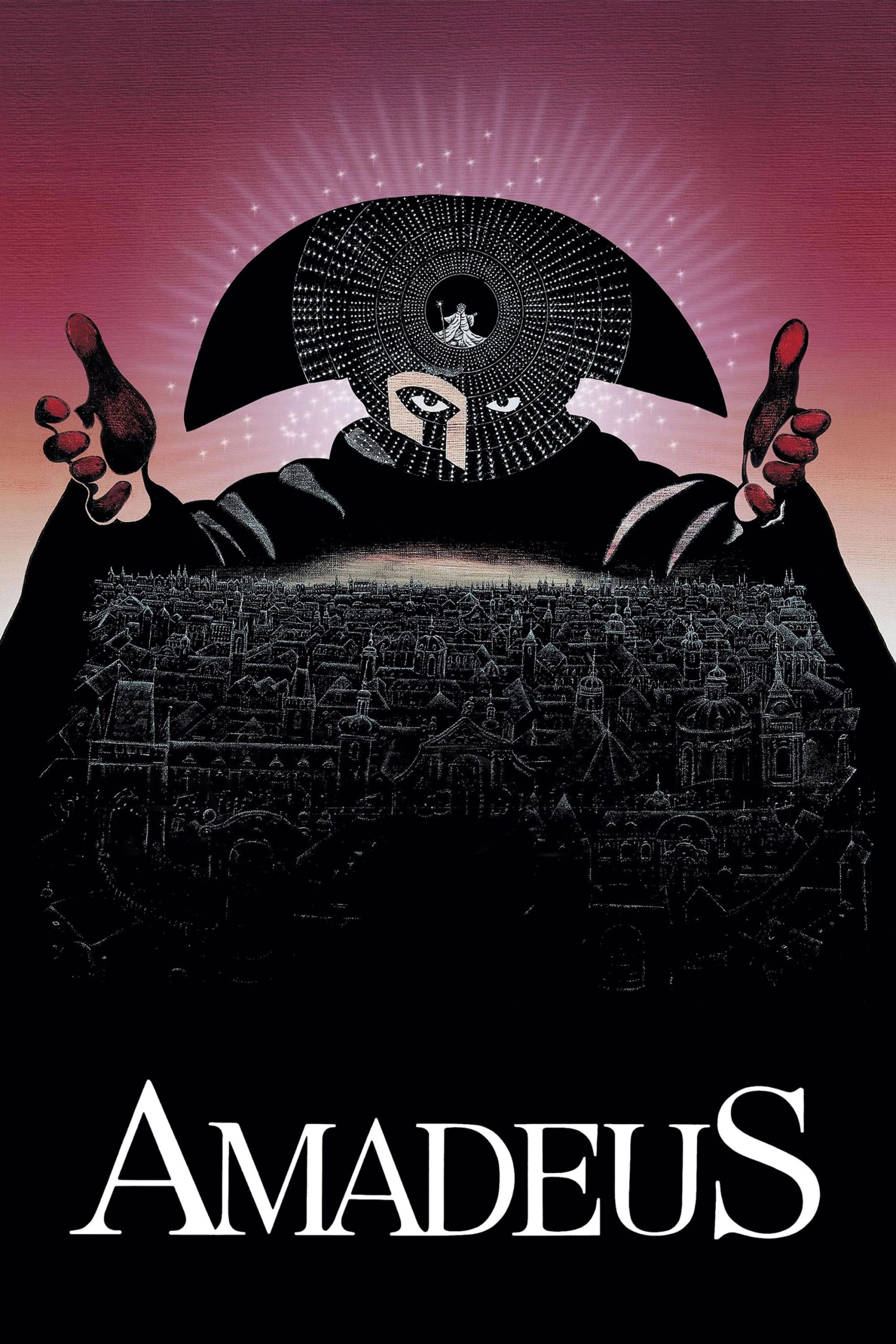
What the Film Is About
At its heart, Amadeus is not merely a biographical recounting of Wolfgang Amadeus Mozart’s life, but rather a burning meditation on jealousy, genius, and the painful contradictions inherent in creative ambition. Through the tormented perspective of court composer Antonio Salieri, the film explores the emotional devastation wrought when extraordinary talent is encountered by one bound to mediocrity. The central conflict is thus internal and philosophical, centering on Salieri’s struggle to reconcile his devotion to God with his seething resentment towards Mozart, whose effortless brilliance exposes the limits of Salieri’s own abilities and the hollowness of his ambitions.
The journey of Amadeus is defined not by actions but by spiraling obsessions: Salieri’s transition from admiration to envy, Mozart’s ecstasy and agony of creation, and both men’s desperate grappling with the meaning of legacy. As the story unfolds, the emotional landscape deepens, posing enduring questions about the costs of genius, the arbitrariness of fate, and the desperate hunger for significance in an indifferent world.
Core Themes
Amadeus weaves several profound themes into its tapestry, each challenging the viewer’s assumptions about greatness, morality, and the nature of artistic achievement. Foremost among these is the theme of envy—its corrosive power and capacity to pervert both faith and virtue. Through Salieri’s eyes, we see how envy transforms admiration into bitterness, eventually consuming the soul and distorting one’s relationship with the divine and with others. Envy here is not just a personal vice but a lens for examining societal hierarchies and how institutions reward pedigree over prodigy.
Intertwined with envy is the exploration of genius and mediocrity. The film contrasts Mozart’s innate, almost otherworldly talent with Salieri’s labored but earnest craftsmanship, interrogating what it means to be truly gifted. Is genius a blessing or a curse? Is a life’s worth determined by recognition, or by an inner sense of fulfillment?
Another critical theme is the role of faith. Salieri dedicates his life and chastity to God, believing such sacrifice will be rewarded with musical greatness. Instead, he finds himself a spectator to Mozart’s divine gift, prompting a crisis of belief and igniting a spiritual rebellion. The film delves deeply into the idea that fervent faith does not guarantee reward, and that talent—like suffering—is distributed arbitrarily. This theme of cosmic injustice resonated strongly in the skeptical mood of the 1980s, amid cultural debates about meritocracy and fate, and it continues to feel relevant in an age preoccupied with questions of fairness, purpose, and recognition.
Amadeus also scrutinizes the destructive potential of unchecked ambition. Both main characters are consumed by their aspirations—Mozart to create, Salieri to be remembered—and in their pursuit, they neglect the well-being of themselves and their loved ones. The film ultimately asks: Is greatness worth the personal cost?
Symbolism & Motifs
Amadeus employs a rich fabric of symbols and recurring motifs to reinforce its central ideas. Perhaps most pervasive is the motif of masks. From the literal masquerade balls to the more figurative masks characters wear in social interactions, these images reflect the dualities at the film’s core: outward civility versus inner turmoil, and public success versus private despair. The infamous “Commendatore” mask, worn by Salieri in a decisive sequence, becomes an emblem of death, vengeance, and anonymity—a devastating commentary on how envy often wears a false face.
Music itself functions as both symbol and substance in the film. Mozart’s compositions, filled with joy and invention, symbolize divine grace—unpredictable, unearned, and impossible to duplicate. In contrast, Salieri’s music, though competent, is heavy with frustration, representing the limitations of human striving. Throughout the film, the act of composition becomes a battleground where spiritual longing and corporeal limitations collide.
Another recurring image is that of food and confectionery. Mozart’s appetite for sweets serves not only as a humorous detail but also as a metaphor for his hedonistic embrace of life and his unfiltered, childlike approach to creativity. These motifs reinforce themes of abundance and excess, as well as the perils of unrestrained indulgence in both art and personal conduct.
The color palette of the film—with its deep shadows, candlelit interiors, and opulent costumes—serves as a visual motif for the tension between light (genius, inspiration) and darkness (jealousy, decay). The interplay of grandeur and gloom suggests that greatness and suffering are inextricably entwined, echoing the film’s broader thematic preoccupations.
Key Scenes
Key Scene 1
One of the most potent scenes is Salieri’s first encounter with Mozart’s manuscript work. As Salieri pores over the uncorrected scores, he is overwhelmed by their beauty and perfection. This moment is crucial emotionally and symbolically, as it crystallizes Salieri’s sense of inadequacy and awe. The film uses this scene to pose the existential question at its center: Why does genius alight on one individual over another? The audience is invited into both Salieri’s rapture with the music and his profound dismay that such talent is denied to him. This duality sets the tone for the spiritual and psychological conflict that drives the narrative.
Key Scene 2
The dictation scene late in the film—where a dying Mozart, wracked with fever, composes his final Requiem mass with Salieri’s help—is a masterful embodiment of the film’s central themes. Here, Salieri becomes both confessor and accomplice. The boundaries between envy and admiration blur as the two men collaborate; Salieri, for a few brief hours, is granted intimate access to the creative process that has eluded him his whole life. This scene highlights the paradox of creation: the proximity of mediocrity to genius, and the torment of being close to brilliance yet never achieving it oneself. The Requiem takes on symbolic weight—at once a memorial for Mozart and Salieri’s own aspirations.
Key Scene 3
In the film’s coda, an aged Salieri is confined to an asylum, granting “absolution” to fellow inmates, all while declaring himself the patron saint of mediocrities. This scene serves as a final, sardonic meditation on fame, legacy, and the inherently arbitrary nature of history’s judgment. By embracing his mediocrity, Salieri claims a sort of perverse victory—a last, bitter comment on the futility of envy and the tragic capacity for self-destruction when one’s self-worth hinges on external validation. The scene encapsulates the film’s ambiguous message: not all who suffer for art achieve transcendence, and those left behind must find meaning in the void.
Common Interpretations
Critics and audiences have long debated the deeper meanings of Amadeus, often focusing on its portrayal of creativity, spirituality, and rivalry. Many view the film as a parable about the arbitrary distribution of talent and the psychological costs of envy. In this reading, Salieri and Mozart are not just historical figures, but archetypes: the former representing the “everyman’s” longing for greatness, and the latter symbolizing unattainable perfection.
Another common interpretation is that the film interrogates the nature of divinity and justice. Salieri’s anger is not merely toward Mozart, but toward God, whose grace he feels has been unjustly bestowed. For some, this struggle mirrors broader existential anxieties about fairness and suffering. Others see Amadeus as a study in obsession, detailing how the urge to outstrip one’s peers can corrode even the most devout spirit.
While there are differences in emphasis—some prioritize the film’s critique of artistic institutions, others its exploration of faith or madness—most agree that Amadeus transcends biopic conventions. It offers an emotionally searing meditation on human limitation, the fleeting nature of glory, and the desperate search for meaning in circumstances beyond our control.
Films with Similar Themes
- Whiplash – Like Amadeus, this film examines the costs of artistic ambition, focusing on the obsessive drive for perfection and the uneasy relationship between mentor and protégé.
- Black Swan – This psychological drama reflects similar anxieties about talent, self-destruction, and the relentless pursuit of greatness at the expense of mental and emotional health.
- The Red Shoes – This classic film explores the sacrifices made for art, the lure of genius, and the clash between personal life and creative fulfillment.
- Finding Neverland – In exploring the imaginative brilliance of playwright J.M. Barrie, the film addresses the nature of inspiration, the longing for legacy, and the transformative power of creativity.
Ultimately, Amadeus communicates that human value is not measured solely by dazzling achievement, nor is suffering proportionate to merit. The film’s enduring power lies in its recognition of the universality of longing—for recognition, for purpose, for grace—and the tragedy that such longing can breed resentment and self-destruction alongside moments of sublime beauty. Set against the splendor and decay of eighteenth-century Vienna, the story remains as vital now as at its release: a reminder that the search for significance is both our greatest torment and, at times, our only redemption.