
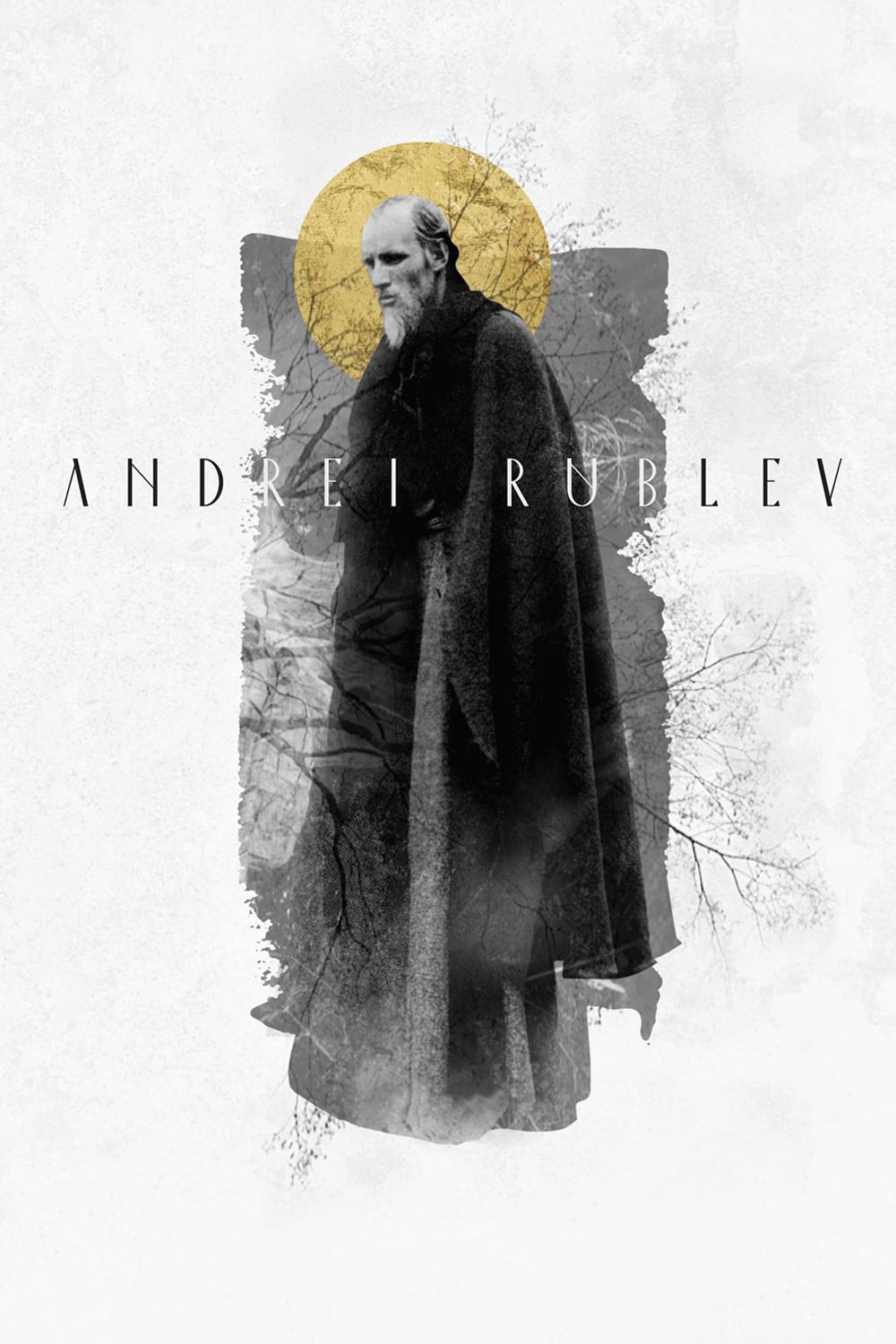
What the Film Is About
Every time I revisit Andrei Rublev, I’m struck by how deeply it refuses to offer comfort, yet how irresistibly it pulls me into the emotional weather of medieval Russia. It’s not a traditional biopic—far from it. For me, the film is less concerned with narrating Rublev’s chronological life and more with charting a spiritual journey: a fraught and often harrowing confrontation with violence, doubt, and the silence of God. I experience the film as an extended meditation on the tension between artistic creation and a world sundering itself through chaos. Rublev’s struggles with faith, his doubts about the worth of his art, and the crushing weight of responsibility feel both timeless and piercingly personal.
What I find most mesmerizing is the way the film holds a mirror to humanity at its most vulnerable. The central conflict isn’t hero-vs-villain; it’s a soul wrestling with whether beauty or meaning can survive in a world that routinely betrays those very ideals. Rublev’s journey, filtered through Tarkovsky’s singularly poetic eye, becomes the journey of every artist—or, I might say, every person—trying to find clarity when the world seems bent on obliterating it.
Core Themes
When I think about the film’s core themes, what rises to the top is its reckoning with faith—both religious and artistic. I’m moved by how Rublev’s faith is not just about dogma or spiritual certainty, but about the often bitter act of persevering when belief feels futile. The film constantly asks: how does one remain an artist—or a believer—amid brutality, ignorance, and despair? In 1966, when the film was made, these questions felt searingly subversive within the Soviet context, where official narratives tended to exalt progress or collective spirit. Tarkovsky dares to dwell in failure and fracture; to me, that’s what makes the film so painfully relevant even now.
Violence also runs like a dark vein through every frame. But it’s not violence for spectacle’s sake; it’s the chronic violence of uncertainty. Personally, I find that the film’s recurring images of cruelty—bodies trampled, people silenced, visions defiled—become almost a kind of negative space around Rublev’s art and silence. The world tears itself apart, and yet there remains some stubborn thread of hope in creation, even if that hope is frayed to near-invisibility.
Another theme I can never shake off is the nature of artistic responsibility. As someone who spends their days immersed in cinema and art, I’m continually haunted by the film’s interrogation: what does it mean to create truthfully when the world is manifestly untruthful? Rublev’s silence for the film’s central portion—the retreat from painting—embodies the paralyzing fear that art might be frivolous, or even wrong, in a world so cruel. This is a question I return to repeatedly in my own work: can art really matter when real suffering is so omnipresent?
At the same time, the film is saturated with a kind of mournful, battered hope. For me, Tarkovsky suggests that meaning survives—not because the world grants it, but because people persist in making it, despite everything. If there’s love in the film, it’s the ragged, disappointed love one feels for flawed humanity, and the longing for transcendence that never quite disappears.
Symbolism & Motifs
What’s always energized me about Andrei Rublev is how its symbolism functions like an interior lode, humming underneath the story. From the first minutes, fire and darkness compete for dominance, recurring as literal elements and as states of the soul. When I see fire in the film—churches burning, torches lighting the night—I don’t just see physical destruction but an ambivalent force: fire both destroys and purifies. In my eyes, these flames are metaphors for the creative process itself, something that can consume as much as it enlightens.
Bells, too, have always deeply resonated with me. The motif comes to life in the film’s final act, presiding over the hope and terror of putting something into the world that might never find its purpose—or audience. I interpret the bell as a living act of faith: you pour your whole being into its creation and can never be sure it will ring. In the hands of a young, desperate craftsman, the forging of the bell becomes an echo of Rublev’s own artistic struggles. It’s gone beyond the personal—it becomes collective, communal, generational.
I can’t ignore water, either, which is everywhere in Tarkovsky’s cinema but feels uniquely moving here. Baths, rain, rivers: in Andrei Rublev, water stands for cleansing, but also confusion. Any sense of clarity is hard-won, always emerging from turbulence. The recurring presence of animals—famously, the white horse—becomes a motif for innocence, vulnerability, and sometimes, the absurd and inexplicable persistence of life even in devastation.
Color (or the absence of it, since most of the film is in black and white) plays another symbolic role I find inescapable. The film blooms into color only at the very end, revealing Rublev’s surviving icons. For me, this is a spiritual and emotional jolt: the color is a benediction, a proof that art can outlast the bleakest of times and return us, for a moment, to the possibility of transcendence.
Key Scenes
Key Scene 1
There’s one moment I always carry with me: the Tatar raid on the cathedral. This is, for me, a crucible—both ethically and emotionally. Tarkovsky renders the violence in a way that’s agonizing, deliberate, and entirely without heroics. Watching it, I always feel Rublev’s sense of helplessness as he faces the destruction not just of buildings, but of shared meaning and spiritual order. This scene encapsulates the central wound of the entire film: the violence that shatters faith and leaves Rublev—and, by extension, each of us—asking whether beauty has any place in a shattered world. The scene is not about spectacular tragedy, but about the numbing force of evil and the paralysis it breeds in those who can only bear witness.
Key Scene 2
Later, when Rublev finds himself in the forest with the mute girl, I always feel a shiver of ambiguous possibility. Here, speech fails; only gestures and sheltering matter. In their mute communion, I see the possibility of renewal—not through grand theological revelation, but through small acts of care. This is where the film shifts its focus from the public, historical sweep to the quietly private: what sustains us in the aftermath of disaster? For me, the girl’s muteness is not just literal but metaphoric—she stands for everything that has been silenced by history, including potential and hope. Rublev’s instinct to protect her, after so much passivity and despair, reads to me as an act of reclamation, a small step away from nihilism. In that forest, I sense the first flickers of his return to art, grounded in compassion rather than detachment.
Key Scene 3
The sequence of the bell casting is, in my mind, one of the most profound statements on creation I have ever witnessed in cinema. As I watch Boriska, the boy, frantically orchestrate the casting despite his ignorance and fear, something in me resonates deeply. This entire episode crystallizes the film’s question about the cost and meaning of creativity. The boy’s desperate gamble, his feigned confidence, even his breakdown after the bell finally rings—all of it, to me, refracts Rublev’s own struggles. It’s not certainty that gives birth to art, but the willingness to leap, to risk utter failure, and to hold space for hope in the void. For me, when the bell peals out and Rublev finally breaks his silence, it feels like a resurrection—a testament to the idea that art survives not because we control its outcome, but because we find the courage to act despite our helplessness. This, I believe, is the film’s final, wrenching faith.
Common Interpretations
When I engage with other viewers and critics, I find that interpretations of Andrei Rublev tend to orbit the tension between individual expression and communal suffering. Some, like me, see the central message as a plea for the endurance of creativity in hostile times. For others, the film’s core is its spiritual journey: the agony of doubt, the silence of God, and the eventual renewal of faith through service and compassion. What fascinates me is how the film’s ambiguity is often celebrated—Tarkovsky doesn’t dictate meaning so much as open a space for contemplation.
I’ve encountered readings that position the film as a parable about Soviet artists under censorship: Rublev’s silence is an allegory for the enforced silence of creators in Stalinist Russia. Some viewers, especially those with a religious background, read the film as a monastic epic about wrestling with theodicy (the problem of evil) and ultimately affirming grace. Others focus on the political dimension, seeing the film as a lament for Russian culture subjected to cycles of violence and loss. I respect each of these interpretations, but for me, their power is cumulative rather than mutually exclusive.
In my own experience, the most powerful readings unite the personal and the historical—seeing Rublev as Everyman, a figure lost in the tempest but stubbornly refusing to let light go out altogether. The universality of this struggle is, I think, what allows Andrei Rublev to find new audiences and meanings, long after its troubled release.
Films with Similar Themes
- The Seventh Seal – Ingmar Bergman’s medieval odyssey shares a haunted fascination with faith and doubt. I see both films as interrogations of spiritual crisis set against relentless mortality and violence.
- Ivan’s Childhood – Also by Tarkovsky, this film echoes Andrei Rublev’s concern with innocence violated by war and the struggle to find beauty in ruin. Each feels to me like an elegy for lost childhood and faith.
- Silence – Martin Scorsese’s meditation on the hardships of missionary faith in a hostile land feels, for me, like a contemporary sibling to Rublev’s trials. The tension between belief and empathy is central to both films.
- Solaris – While set in an entirely different era and genre, I’m continually surprised by how Solaris shares with Andrei Rublev a preoccupation with doubt, memory, and the boundaries of what can be known or expressed.
When I pull back and reflect on what Andrei Rublev ultimately says to me, I keep returning to its unsentimental gaze at humanity’s ability to persist through darkness. The film aches with the knowledge of how easily violence and despair can break us, how often we lose the thread of meaning, and how art can be both a helpless gesture and a stubborn act of hope. For me, Tarkovsky is never promising redemption—rather, he’s suggesting that the very act of seeking beauty or truth is itself an answer, however incomplete. In a world both medieval and modern, riven by cruelty and uncertainty, it’s the courage to continue—to create, to care, to shelter another in the ruins—that emerges as the most profound statement of faith I’ve found in cinema.
After learning the historical background, you may also want to explore how this film was received and remembered.