
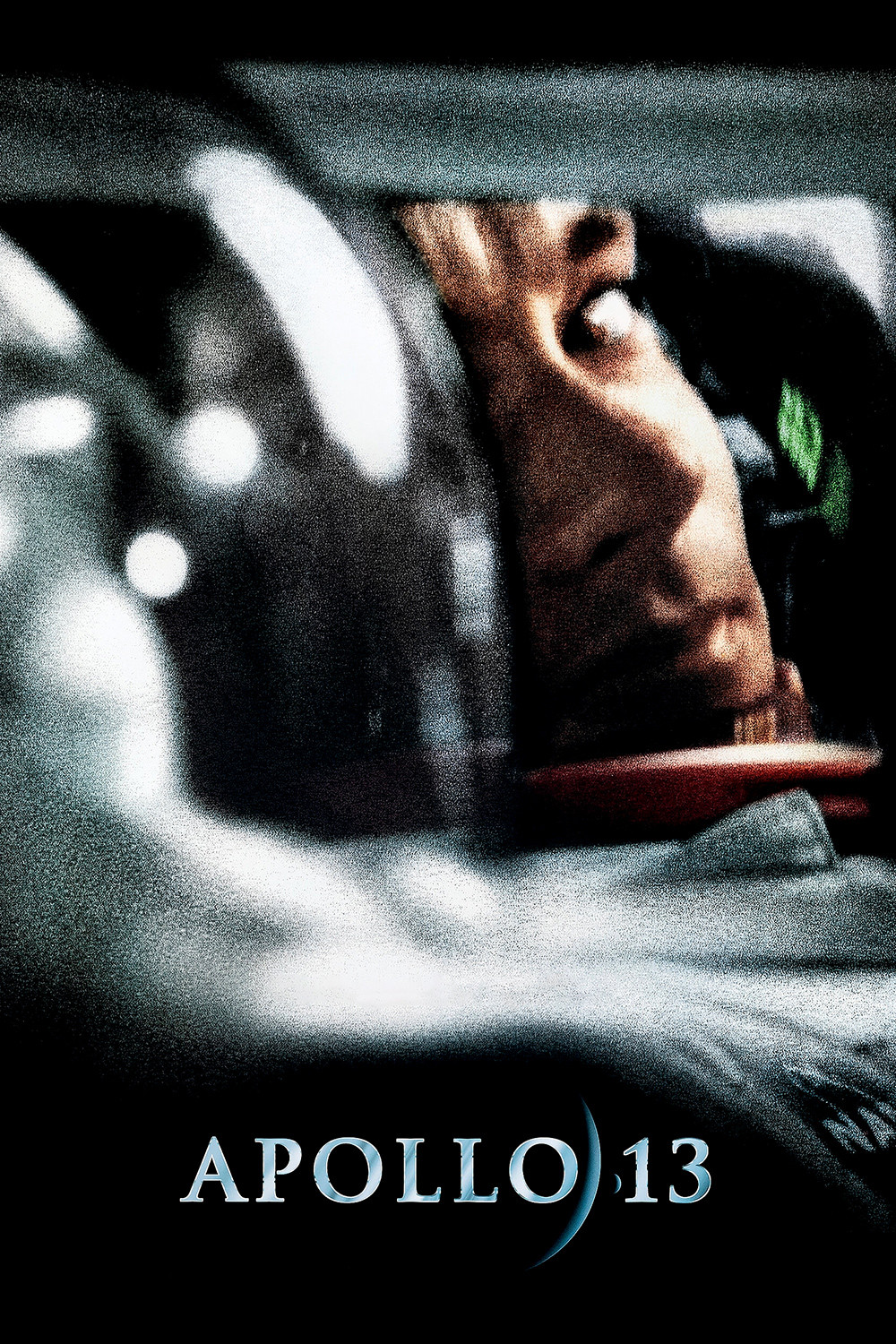
What the Film Is About
The first time I experienced Apollo 13, I was struck less by the scale of its disaster and more by the emotional gravity tugging at everyone involved. I see the film not just as a chronicle of technical failure in space, but as a meditation on human ingenuity in the face of overwhelming odds. Beneath the mission’s factual framework and dramatic momentum, there’s this mounting sense that every emotion – fear, hope, doubt, faith – binds the astronauts in their crippled vessel to those supporting them down on earth. The real heart of the journey, for me, isn’t their desperate attempt to get home; it’s the way perseverance emerges, almost reluctantly, from a chaos nobody wanted.
At its core, the film feels like an ode to resilience. I’ve always been moved by how the central conflict—man versus catastrophe—tests not only the men trapped in space but their families and the teams at NASA. Stakes are existential, yet the story remains deeply personal. Every step toward survival is loaded with vulnerability and ingenuity, forging trust between people who may never meet face to face. If there’s a narrative direction that defines Apollo 13 for me, it’s the relentless pursuit to find purpose, connection, and meaning within unexpected crisis.
Core Themes
When I reflect on Apollo 13, the first idea that resonates is the film’s insistence on the necessity—and limits—of control. The story underscores that even the most carefully planned human endeavors can be undone by a twist of fate. The astronauts and mission control both confront their own helplessness, yet what emerges is a profound faith in collaborative problem-solving. It’s a portrait of how adversity, unexpected and uninvited, can force innovation and inspire courage. There’s something almost therapeutic about the way the film celebrates the stubborn persistence of hope, even when odds defy calculation.
Duty and trust edge into the spotlight as well. I see the narrative as a subtle warning against both arrogance and despair. The astronauts begin the film as seasoned professionals, but the crisis strips them down, revealing the raw and sometimes uncomfortable essence of trust—between friends, between strangers, and, most vitally, in the systems and training they’ve relied on for years. It’s a theme that ripples outward to the families waiting back home, wrestling with their own fears yet sustaining the hope that their loved ones’ sacrifices matter. In a way, the story of Apollo 13 is a reflection on how vulnerability unites us all, no matter our station or mission.
Watching the film again decades after its release, I’m reminded how relevant these themes remain. In 1995, the idea of institutions and individuals coming together during breakdown felt like both a historical tribute and an aspirational ideal—perhaps a response to growing cynicism about institutions. Today, as we confront uncertainty at global scales, the message feels even more urgent. Apollo 13 insists that our survival doesn’t depend on perfection, but on adaptation, humility, and the strength to acknowledge what we can’t control.
Symbolism & Motifs
One of the motifs I find most striking in the film is the pervasive use of isolation. The void of space becomes more than a physical setting—it reflects the psychological disconnection and loneliness that threatens to unravel each character. The claustrophobic interiors of the spacecraft, with its blinking lights and rattling panels, reinforce a sense of precariousness. To me, the capsule becomes a microcosm of human endurance; its fragility represents how thin the line is between order and disaster, safety and annihilation.
Communication—its breakdowns and improvisations—acts as another recurring pattern. Static-laced transmissions, missed signals, hurried calculations; all serve as reminders that human achievement is, at its roots, an act of reaching out. The film lingers on these moments of uncertainty, and I feel that each transmission symbolizes both hope and risk. The constant referencing of checklists and procedures becomes emblematic of the way we try, often desperately, to exert order over chaos.
There’s also the symbolic presence of the American flag, which appears not as a boastful prop but as a backdrop for loss and determination. I see it less as a tool of patriotism and more as a visual anchor—the promise that brings people together, but also the burden they carry. When juxtaposed with the battered spacecraft, the flag quietly speaks to the tension between national ambition and individual vulnerability.
Finally, the recurring motif of breath and heartbeat—heard in anxious breathing, thumping controls, and the repeated checks of life support systems—anchors the narrative in the most primal dimension of survival. It’s tantalizing and unsettling to realize how every person, every machine, is governed by such delicate rhythms. The film seems to ask, will those rhythms continue? And who will keep them going?
Key Scenes
Key Scene 1
Whenever I revisit the moment the oxygen tank explodes, I’m reminded why this scene is critical to understanding Apollo 13’s emotional soul. Beyond the immediate shock and technical scramble, I see it as the film’s most honest confrontation with vulnerability. The illusion of infallibility is shattered in an instant, exposing the astronauts not as invincible pioneers, but as fallible human beings suddenly thrust into survival mode. There’s terror on their faces, but also a stubborn clarity: here, in crisis, they must become more than the sum of their skills. For me, this turning point calls forth themes of humility and interdependence—no amount of expertise can wholly erase our reliance on one another, especially when the universe refuses to follow our plans.
Key Scene 2
The sequence in which the flight director and ground crew work through the night, scrawling solutions on chalkboards as engineers argue and compromise, stands out as a celebration of collective intellect. What fascinates me isn’t just their technical brilliance, but their willingness to listen—often to the least authoritative voice in the room—and adapt. The scene is a vivid portrait of democracy under strain, pushing past ego and hierarchy. I’m continually struck by how it illustrates the central theme: heroism is not a lone endeavor but something forged in collaboration, debate, and relentless questioning. Instead of grandstanding, these characters achieve greatness through humility and openness. To me, this is the film’s answer to crisis: real solutions require real cooperation.
Key Scene 3
The re-entry sequence, with its drawn-out silence and agonizing uncertainty back in Mission Control, functions as the emotional fulcrum of the film. I always feel a tightness in my chest as the radio blackout drags on; it’s as if the film itself is holding its breath alongside the characters. This moment resonates because it embodies faith—faith in ingenuity, in preparation, in the human bond that stretches across incomprehensible distances. No one can guarantee success, and that vulnerability is everywhere—on every expectant face staring at a blank screen. When contact is finally restored and cheers erupt, it is, to me, an affirmation of the larger theme: the ultimate reward for resilience isn’t just survival, but the sense of connection restored. Alienation gives way to unity—not perfectly, but triumphantly enough.
Common Interpretations
Most interpretations of Apollo 13 I’ve read or encountered circle back to its ideas about perseverance and teamwork. Many critics praise the film for being a tribute to the ingenuity and courage of both astronauts and engineers; it is often seen as director Ron Howard’s love letter to the can-do American spirit. I tend to agree with this, but find extra resonance in the way Howard avoids pure hero-worship—everyone, from the ambitious Jim Lovell to the cautious Ken Mattingly, is given vulnerability as well as competence. Audience reactions frequently highlight the film’s ability to generate suspense without a traditional villain, which I read as a testament to the story’s respect for reality: nature and circumstance create the real obstacles, not malice.
There’s also a recurring interpretation that sees the film as an allegory for institutional trust and crisis management. Some viewers see Mission Control as a symbol of American confidence at its best—able to unite, adapt, and improvise. Others note that the film’s release, amid the 1990s wave of nostalgia for “simpler times,” offered a sense of reassurance that competence and altruism haven’t vanished. Yet, in my view, there’s a thread of quiet skepticism running beneath the optimism. The failure at the film’s center reminds us that exploration and ambition are always shadowed by risk; hubris and error are never entirely absent. This conflict between confidence and caution, action and reflection, seems to deepen the interpretive richness of the film for me.
Less commonly, some interpret the movie through a more existential lens: the void of space, the fragility of life, the randomness of disaster, and the deep need for connection. I find this reading just as potent—because while the film is about a specific historical moment, it’s also about how we confront our insignificance. The longing for home and the urge to matter are universal. That’s why Apollo 13 still feels personal, long after its credits roll.
Films with Similar Themes
- Gravity (2013) – I think of this film whenever I want to revisit the theme of survival in space, not just as a technical challenge, but as a test of emotional endurance and human tenacity. The sense of vulnerability in the void closely parallels the psychological isolation in Apollo 13.
- The Martian (2015) – What draws me to The Martian is its embrace of innovation-against-impossible-odds. Like Apollo 13, it elevates resourcefulness and problem-solving as the keys to human survival, celebrating both individual grit and collective ingenuity.
- Hidden Figures (2016) – I see a powerful thematic connection in the way both films acknowledge the unseen labor behind great achievements. Hidden Figures brings to light the contributions of marginalized mathematicians at NASA, emphasizing teamwork and the value of every individual’s expertise.
- First Man (2018) – This film, for me, complements Apollo 13’s meditation on ambition and sacrifice, delving even deeper into the emotional cost of space exploration and the private lives touched by public missions.
What keeps drawing me back to Apollo 13 is its refusal to reduce the space race to easy heroics or to cynicism about institutional failure. The film’s drama pulses not just from narrow escapes but from the emotional honesty of its characters as they navigate dread, longing, and relief. I see it as a reminder that our greatest strengths often bloom during our weakest moments. It whispers that no matter how advanced our machines or grand our missions, it is our willingness to lean on others, to face failure openly, and to keep moving forward anyway, that defines us—both as individuals and as a society. In an era obsessed with the myth of perfect control, I find immense value in a story that holds up uncertainty and says: this, too, can be survived, maybe even transcended, together.
After learning the historical background, you may also want to explore how this film was received and remembered.