
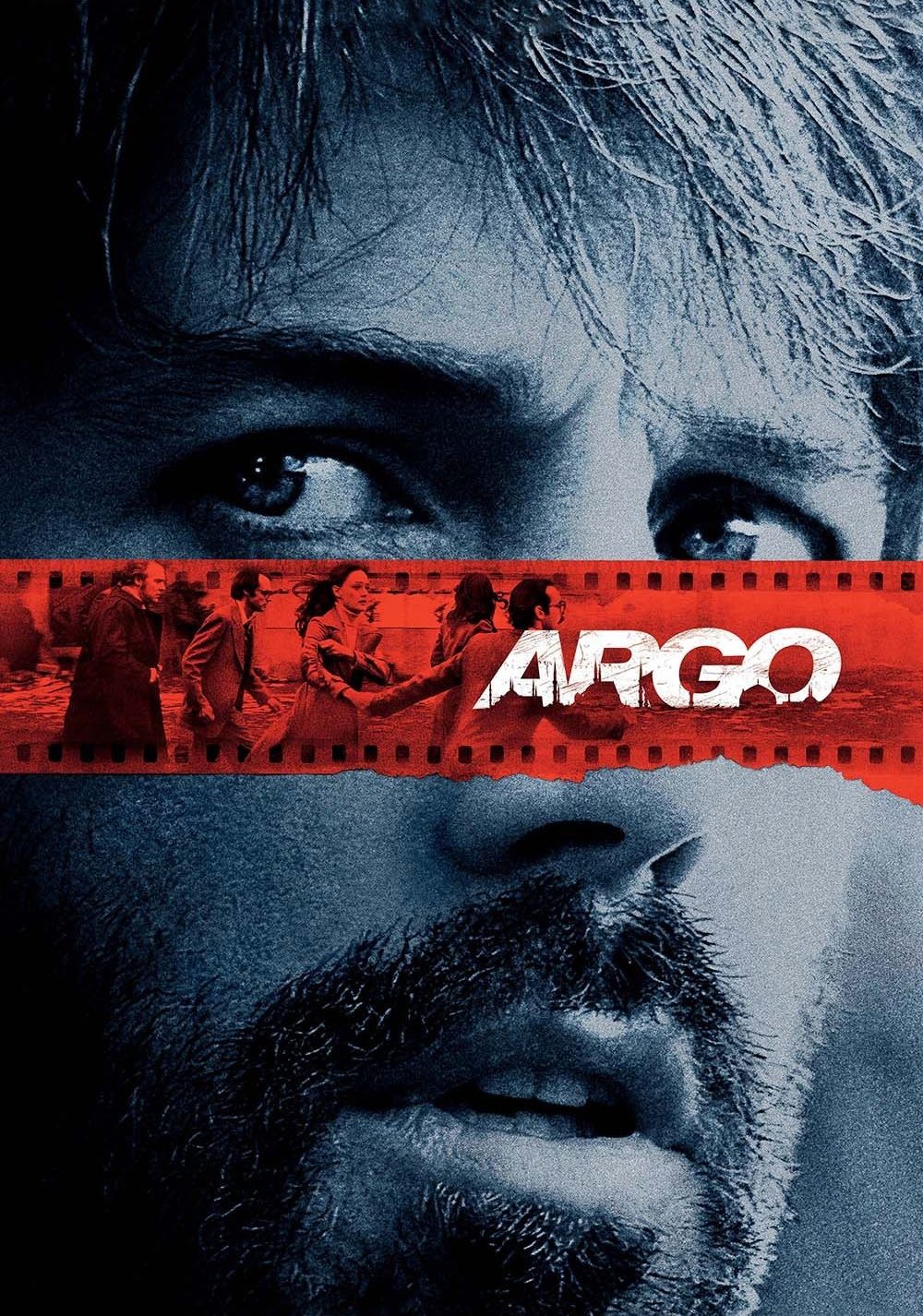
What the Film Is About
The first time I saw “Argo,” I was pulled, almost against my will, into its relentless anxiety—so much so that the drama lingered well after the credits. For me, this isn’t just a rescue story; it’s an impressionistic study of trust, invention, and risk in desperately uncertain times. The emotional journey I witnessed was less about individual heroics and more about the brittle thread of faith people hold during chaos—faith in colleagues, in process, in absurdities that somehow become possible. What propels “Argo” is a uniquely American kind of desperation, the feeling that survival often depends on creative deception.
I found the central conflict to be not only external—between captives and captors—but strikingly internal: between cynicism and hope, compliance and rebellion. The film draws viewers into government corridors, Hollywood backlots, and tense diplomatic spaces, braiding these worlds together until every boundary blurs. What unfolds isn’t a straightforward tale of escape but a meditation on the strange partnerships and illusions required when ordinary rules fall away.
Core Themes
For me, one of the richest veins running through “Argo” is the theme of constructed reality. The film asks pointed questions about the nature of truth, staging a world where pretending becomes a matter of life or death. Each character, willingly or not, is drafted into layers of performance. There’s a deliberate blurring of who is authentic and who is acting—not just literally in a “fake movie,” but professionally, diplomatically, and personally. This idea resonated with me deeply, especially as I considered how, at the time of its release in 2012, anxieties about disinformation, image-making, and institutional trust were reaching a new peak.
I noticed that “Argo” also explores the ethics of intervention, particularly the toll such actions take on the individuals involved. The film delivers a cutting commentary on national gamesmanship: it frames government agencies and Hollywood alike as factories of fiction, but it never lets us forget the very real stakes for those caught in the machinery. I wrestled with the questions this raised: Is there a right way to “do good” when institutions profit from smoke and mirrors? Can acts of heroism remain untainted by the murkiness of their circumstances? These are questions that, to my mind, remain profoundly relevant in any era full of spectacle and spin.
I can’t overlook the theme of collective versus individual agency. The hostages’ fate isn’t merely in their own hands, nor solely in the hands of a singular savior. Instead, “Argo” seems to suggest that salvation—like danger—arises from unpredictable cooperation across wildly different worlds. This is as much a story about solidarity and the irrepressible ingenuity of a group as it is about one man’s actions. That theme feels as urgent today as ever, in a world still shaped by cross-cultural misunderstanding and forced alliances.
Symbolism & Motifs
As I watched “Argo” for the third time, I became more attuned to the subtle motifs laced throughout its visuals and narrative structure. The motif that struck me most was the persistent layering of screens, lenses, and barriers. Nearly every major environment—the U.S. embassy, the Hollywood office, the Tehran airport—features a proliferation of windows, glass partitions, or surveillance, making visual the film’s obsession with observation and mediation. These physical divisions amplify the sense that reality itself is constantly filtered or reframed, and I found myself reflecting on the ways perception gets distorted by necessity or manipulation.
The film repeatedly returns to the motif of make-believe: storyboards, film reels, elaborate costuming—all serve to literalize the notion that hiding in plain sight can be the safest option when truth becomes dangerous. The fake sci-fi film isn’t just a plot device, in my mind; it’s a metaphor for the distant worlds we invent to avoid confronting the world we’re actually living in. There is a tension, too, in how “Argo” mirrors its own production: a Hollywood movie about a Hollywood scam, made and watched against a backdrop of real consequences, serves as a meta-commentary on cinema’s ambiguous relationship with the truth.
I also noticed a subtle play with light and shadow throughout “Argo.” Dim interiors and starkly lit exteriors often bleed into one another, visually echoing the film’s blurring of secrecy and exposure. This perpetual interplay made me consider how the film uses its visual aesthetic to reinforce the fragility of safety—how quickly sanctuary can become a trap, how visibility can oscillate between salvation and threat.
Key Scenes
Key Scene 1
The moment that crystallizes much of what “Argo” is trying to say, at least for me, is the sequence where Hollywood insiders rehearse the lines to the fake script. On paper, it’s comic relief; on screen, it’s deeply unsettling. Watching these jaded industry veterans recite and posture, I realized the film was meditating on the ethics of storytelling itself. This ritual performance, which exists solely for an audience of foreign officials thousands of miles away, exposes the performative nature of politics and, by extension, the entire rescue mission. It forced me to confront how often real lives hinge on someone else’s ability to convincingly stage a fiction—and how, in moments of crisis, the distance between play-acting and reality nearly disappears.
Key Scene 2
Another pivotal scene for me is an anxious exchange between Tony Mendez and one of the hostages as they debate whether the “Argo” plan is absurd or their only real choice. I see this interaction as digging straight to the film’s heart: it underlines the agony of having to trust strangers, institutions, and ideas that feel inherently dubious. The characters’ vulnerability is palpable—they’re forced to gamble their fate on a setup so improbable it might just work. This scene brought home, on a personal level, the way fear and hope can coexist, feeding on and undercutting each other in equal measure. It made me wonder about the real cost of faith under pressure—not just for those running, but for those shouldering the responsibility to lead.
Key Scene 3
The runway climax—when the group finally passes through the last checkpoint—is the film’s emotional gut punch, but to me, it’s also a kind of thesis statement. As tension peaks and the facades are tested, I felt the whole film’s inquiry into appearances and reality crumple into a single instant: would the elaborate charade hold, or would it catastrophically collapse? When freedom is finally won, it doesn’t feel purely triumphant, at least to my eyes. There’s exhaustion, relief, and a sour undertow—the knowledge that survival required mastering the logic of deception better than those they outwitted. It’s a bittersweet coda, asking us to weigh the price exacted by secrecy and the lengths to which human beings will go to save each other under impossible odds.
Common Interpretations
In my experience reading critical reactions and talking to fellow viewers, I’ve found that “Argo” is most commonly seen as both a celebration and a critique of American ingenuity. On one hand, audiences respond to the can-do spirit and resourcefulness that carried the rescue through; on the other, there’s a sense of discomfort with how much relied on illusion and manipulation. Some see the film as a straightforward patriotic story, one that flatters the myth of American heroism. Others, myself included, read it as quietly skeptical: “Argo” doesn’t let us forget how much damage bureaucracies, national interests, and even artistic escapism can leave in their wake.
Another prominent thread I’ve noticed in critical interpretation revolves around the film’s treatment of Hollywood. While some viewers appreciate the affectionate ribbing of industry egos, I see a layered reflection on entertainment’s ambivalent power. The movie-within-the-movie structure is, to many, a sly nod to the fact that all politics are in part constructed, and all media can be weaponized or warped for larger agendas. Beyond that, there’s a melancholic undertone that lingers: the characters’ escape depends on the world’s willingness to believe in its own fictions.
Some historians and genre critics have scrutinized the film’s accuracy and politics, arguing over what “Argo” omits or finesses from the historical record. While this debate is undeniably important, I tend to focus more on what truths the film reveals at an emotional or experiential level. To me, the story’s resonance doesn’t hinge purely on factual fidelity, but on how it dramatizes a pervasive, enduring anxiety: the sense that we are always navigating a world shaped as much by stories as by facts.
Films with Similar Themes
- Munich – Spielberg’s exploration of covert operations and moral ambiguity resonates strongly with me in relation to “Argo.” Both films probe the toll that secrecy, improvisation, and violence exert on individuals trying to do their best in a compromised system.
- The Lives of Others – This German drama’s focus on surveillance, false identities, and the personal cost of state intervention makes it a close thematic sibling. Like “Argo,” it offers a powerful meditation on the ethics of intrusion and deception.
- Syriana – I see a clear connection here in the examination of geopolitical maneuvering, shadowy alliances, and how individual destinies are tossed about by institutional interests. Both films prompt viewers to question who benefits from constructed realities.
- Wag the Dog – This dark satire’s take on political and media fabrication cuts to the core of “Argo’s” commentary about how spectacle can be more potent than substance—making both a study in the mechanics and dangers of manufactured truths.
Stepping back, I’m left haunted by what “Argo” ultimately says about our world. When I revisit it, I don’t simply recall a suspenseful rescue—I’m reminded of the uncomfortable ease with which people, institutions, and entire countries can slide into constructing narratives that protect or endanger, liberate or ensnare. The film, for me, is less about heroism than about the uneasy peace we broker with the truth itself, and about the resilience people muster when the normal rules of reality collapse. It’s an urgent caution, and a tribute to the ingenuity that emerges from collective vulnerability, asking us to consider anew the power and peril of believing in illusions when the stakes could not be higher.
To explore how this film has been judged over time, consider these additional viewpoints.