
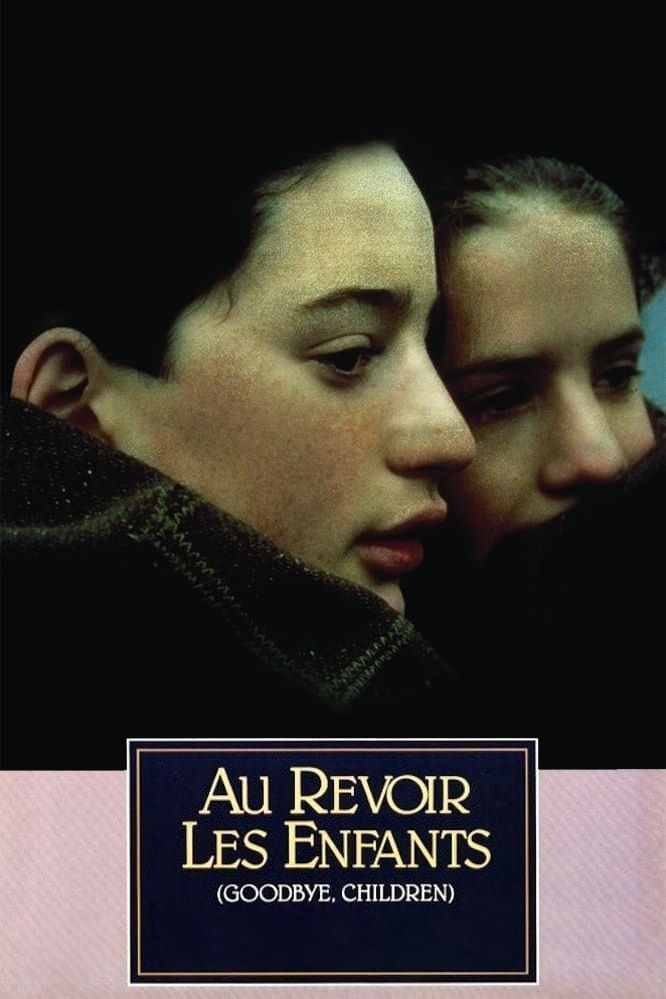
What the Film Is About
Every time I revisit “Au Revoir les Enfants,” I’m struck not by the events themselves but by the lingering sense of innocence under threat, of friendships tested by forces too vast for children to comprehend. To me, the heart of the film lies not simply in its wartime setting, but in the way it quietly, almost clandestinely, exposes the inner landscape of adolescence: those tentative connections, the ache of otherness, and the irreparable cracks that appear in a world once thought safe. I watch as characters wrestle silently with complicated loyalties and moral uncertainties, knowing they are on the precipice of irretrievable loss.
The film’s central conflict—set in a French Catholic boarding school during World War II—unfolds through the innocent friendship between two boys, Julien and Jean. Beneath the surface of their daily routines, there’s the ever-present, suffocating tension of Nazi-occupied France and the knowledge that secret lives are being lived all around them. As a viewer, I felt not just the suspense of discovery, but the slow encroachment of adult realities upon youthful bonds. The narrative draws me inexorably toward a devastating confrontation between compassion and cruelty, complicity and resistance, presence and absence. The emotional trajectory aches with a kind of doomed tenderness, as if these children are being ushered—painfully and forever—across the threshold of their own innocence.
Core Themes
What always resonates with me about “Au Revoir les Enfants” is how rigorously it interrogates the fragility of innocence and the moral complexities faced by ordinary people under extraordinary duress. I see an exploration of how childhood is anything but immune to the crosscurrents of history. The film’s most enduring themes—betrayal, guilt, ethical courage, and the ambiguities of loyalty—unfold with the unvarnished truth of memory. It’s less about overt heroism and more about the small, everyday moments of moral consequence: a gesture of kindness, a glance betraying knowledge, a silence that screams culpability.
At the time of its release, the film represented a reckoning for France and much of Europe. The conversation about complicity—about the roles played by ordinary citizens in the machinery of occupation and oppression—was raw and urgent. When I watch the film, I sense how it invites individuals of every era to examine the ease with which empathy can give way to self-preservation, and how easy it is for moral certainties to fracture. In schools, in homes, in moments between friends, the dilemmas are not just historical curiosities but ongoing challenges: When do we intervene? How do we honor our convictions when doing so threatens our own safety?
For me, the question of identity under duress stands as one of the film’s most enduring questions. Jean’s concealed Jewish heritage, the veils of secrecy, and the layers of self-protection reveal a world where identity is both shield and target. I’m always moved by the way the film refuses to render good and evil in simple terms. Instead, it examines how ambiguity and uncertainty are central to the human experience during times of crisis—a lesson as vital today as it was in 1987.
Symbolism & Motifs
I often find myself fascinated by the film’s deployment of recurring images and subtle motifs—each chosen with a deliberate restraint that speaks volumes. Perhaps most evocatively, the motif of doors and thresholds recurs throughout the film. Every closed door seems pregnant with secrets, while every hesitant passage from one space to another is fraught with risk and the unknown. For me, these thresholds operate not only as physical barriers but as metaphors for liminality: these boys are standing on the cusp of adulthood, just as their nation stands on the dividing line of complicity and resistance.
I’m also drawn to the use of light and darkness, which the film leverages with exquisite care. The warm, communal glow of the dormitory contrasts with the icy chiaroscuro of the outside world, particularly during moments when danger intrudes. Light becomes an emblem of fleeting safety, while darkness is layered with threat and transformation. This duality serves as a visual cue for the boundaries between innocence and knowledge, between safety and profound jeopardy. I’m reminded each time how quickly sanctuary can evaporate in the face of violence and betrayal.
Other motifs—such as forbidden books, religious rituals, and acts of secrecy or concealment—strike me as poignant reminders of both spiritual protection and desperate survival. The rituals of mass or confession aren’t just background detail; they shape how characters understand loyalty and guilt, constructing a moral framework through which their betrayals and acts of courage are filtered. The symbolism is never heavy-handed. Instead, it unfolds quietly, through gestures like the sharing of food or the keeping of confidences—small acts that, in this context, take on enormous significance.
Key Scenes
Key Scene 1
One scene that consistently lingers with me—both for its emotional rawness and its understated symbolism—is the moment the Gestapo arrives at the school during a communion mass. The fragile peace within the church is violently interrupted. All at once, the sanctuary is transformed into a place of exposure and dread, underlining how even spiritual rituals can offer only intermittent protection from the world outside. In my eyes, this moment becomes a crucible in which the boys’ illusions of safety are stripped away, and latent fears, previously kept at bay, are realized in devastating fashion. The moment isn’t only about the authorities entering a sacred space; it’s about the irrevocable shattering of the boys’ belief that innocence itself could serve as a shield. This intrusion is a physical manifestation of the intrusion of history into private worlds.
Key Scene 2
For me, another unforgettable scene occurs when Julien inadvertently betrays Jean by glancing at him during the tense questioning by the Gestapo. This seemingly minuscule moment reverberates with meaning. It is not the machinations of bureaucrats or even the calculated manipulations of adults that most haunt me, but the involuntary flicker of human recognition—a glance, a flash of guilt, an impossible choice imprinted on a child’s face. That single look captures the core paradox the film interrogates: none of us can exist outside of the context we inhabit, and even the purest affection can have devastating consequences. What devastates me is that this betrayal is accidental—an act of love as much as fear, fraught with all the complexity of childhood’s first collision with mortality and accountability.
Key Scene 3
The finale, austere yet unforgettable, is for me the film’s most powerful testament to memory and trauma. Father Jean, the headmaster, is exposed and quietly taken away alongside the Jewish boys who had taken refuge at the school. Julien, powerless, watches as those he cares for are seized, simultaneously losing a friend and a rhythm of life that can never be recovered. Each time I watch, I’m reminded of how evil is not always spectacular but is often quietly administered, indifferent and bureaucratic. The film’s closing note—a narration reflecting on memory and survivor’s guilt—leaves me wrestling with not only the tragic loss of life, but the enduring pain of having been a passive observer. It affirms, in the tenderest and most harrowing way, how witnessing injustice never leaves one untouched and how the past remakes us in its shadow.
Common Interpretations
What fascinates me about the discourse around “Au Revoir les Enfants” is the spectrum of interpretations it has inspired. Many critics view the film as a narrative about the loss of innocence—a microcosmic representation of how the Holocaust drew children into the world of adult tragedy. In conversations I’ve had and essays I’ve read, this angle often feels the most immediate: the film as a lament for a childhood corrupted by historical violence beyond its control.
At the same time, there’s a powerful tradition of reading the film as a meditation on memory and the difficulties of bearing witness. The director, Louis Malle, drew heavily from his own wartime childhood, and every frame vibrates with personal reminiscence. This autobiographical aspect leads me to think of the film as both confession and exorcism, inviting the audience to grapple with questions of complicity, regret, and the burden of remembrance. I frequently come across readings that stress how the film avoids easy moral directness—no individual is purely villain or victim. Instead, the tangled layers of fear, guilt, and circumstance offer a more nuanced, and troubling, account of human behavior under duress.
Some also interpret the film as a subtle critique of institutional religion and its limits. There is compassion and courage within the school walls, but also impotence and fear; even acts of sanctuary are ultimately inadequate against the machinery of oppression. I’ve noticed, however, that the film resists outright condemnation. Instead, it presents faith as deeply entwined with human fallibility. These interpretations, while distinct, all orbit a central question: How do ordinary people respond to extraordinary acts of cruelty—and how are we marked, forever, by the decisions we make or fail to make?
Films with Similar Themes
- Schindler’s List – This film’s focus on hidden identity, moral responsibility, and everyday heroism under the shadow of the Holocaust echoes “Au Revoir les Enfants,” though it depicts these struggles on a vastly different scale.
- The White Ribbon – I see this film as thematically related through its exploration of childhood innocence, collective guilt, and the corrosive effects of authoritarianism on community life.
- Grave of the Fireflies – Like Malle’s film, this animated work faces the traumas of war through the tender yet harrowing experiences of children who must survive amidst devastation and loss.
- La Vita è Bella (Life Is Beautiful) – Both films are deeply invested in the interplay of innocence, secrecy, and resistance under fascism, using the lens of family and childhood to reveal timeless truths about love’s endurance and limits under oppression.
Reflecting on “Au Revoir les Enfants,” I’m left most affected by its quiet insistence that cruelty is often banal, masked by ritual and ordinary routine, and that the boundaries between perpetrator, victim, and bystander are rarely rigid. The film ultimately asks me to reckon with uncomfortable truths about what it means to grow up—not just as an individual, but within a society shaped by forces larger than any one person. What endures for me is the sense of memory’s double edge: how remembering the past can be a wound but also a provisional form of justice. The film refuses to offer solace or closure, instead demanding from me an ongoing engagement with the questions it raises about courage, responsibility, and what it truly costs to say goodbye to innocence.
After learning the historical background, you may also want to explore how this film was received and remembered.