
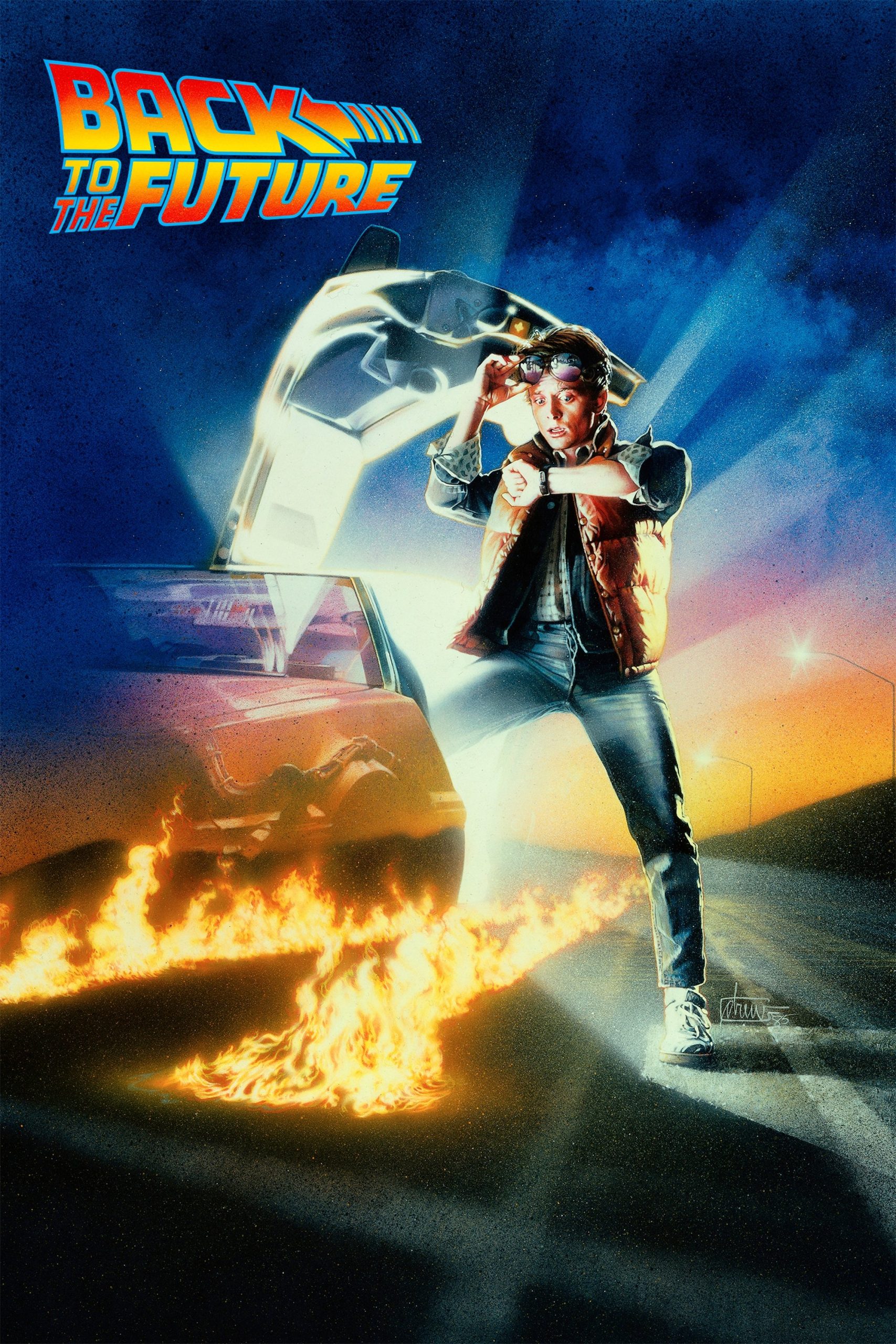
What the Film Is About
Whenever I return to Back to the Future, I’m struck by just how much more it is than a zany time-travel romp. To me, this is a movie about yearning for connection, the anxieties of coming of age, and the wild possibility that one mistake—or one bold move—really can change your entire life. At its core, I’ve always felt an aching sense of wish fulfillment: the chance to revisit your parents’ past not just to understand them, but to alter the course of their lives, and by extension, your own. Marty McFly’s journey isn’t simply about fixing a timeline; it’s about healing familial wounds and rediscovering a sense of power in a world that often feels overwhelmingly out of your control.
What keeps me coming back, and what draws so many to this film, is that swirling emotional conflict at the heart of the story. You’re watching a teenager desperate to escape mediocrity and the burdens of his family’s failings, only to be thrown deep into the awkwardness, pain, and triumphs of those very people he thinks he knows. The movie becomes a tapestry of anxiety, hope, regret, and ultimately, reconciliation—not just between the past and present, but between who we were and who we want to become.
Core Themes
For me, some of the richest veins the film mines are those of personal agency and the interconnectedness of generations. Every time Marty interacts with his young parents, I’m reminded of how much we inherit—not just genetically, but emotionally and behaviorally. The film asks, in a sly and entertaining way, whether destiny is set in stone or if we can reclaim it, rewrite it, and make it our own. I’ve always seen Back to the Future as grappling with fate and self-determination in equal measure.
I’m particularly drawn to how the film reflects the anxieties of both the 1980s and the 1950s. When it was released, America was still grappling with its post-war idealism, changing family dynamics, and a burgeoning nostalgia for ‘simpler times.’ I personally see the movie as both embracing and gently mocking that nostalgia. Marty, a child of the ’80s, witnesses firsthand the cracks in the veneer of his parents’ supposedly idyllic 1950s adolescence. The film thus explores the myth versus the reality of family life—how every generation romanticizes the past, and in doing so, sometimes misses the present.
I also find a clear thread about the power and perils of technology running through the movie. The DeLorean time machine is as much a symbol of human ingenuity as it is a literal vehicle for chaos and unintended consequences. Watching it as an adult, I’m more aware of the underlying message: progress is exhilarating, but meddling with timelines (or with the boundaries of what we should know) will always carry risks. This resonates in an era that oscillates between technological optimism and moral panic.
The film continues to matter now, I think, because its questions—about identity, legacy, and the complexity of family—are timeless. Every generation asks: can we be better than those who came before us? And what happens if we try to rewrite our own story?
Symbolism & Motifs
The more I analyze Back to the Future, the more I notice how it’s stitched together with recurring motifs that serve as signposts through its tangled timeline. The clock tower, for example, is far more than just a setting for a climactic sequence. To me, it embodies the inexorable march of time—the idea that there are fixed points in history, moments that demand notice and, when tampered with, ripple outward in unpredictable ways. Each time I see that looming clock face, I think about the ways our lives are governed by moments we can rarely control, and the fantasy that maybe, with enough courage (or luck), we can reset the clock.
Then there’s the motif of photographs—particularly that fading snapshot of Marty’s siblings. It’s such a visceral metaphor for the fragility of existence. Each time Marty or Doc Brown glances at that photo, I’m reminded how our actions, big and small, shape not just ourselves but everyone around us. The fading figures are a constant, physical manifestation of the butterfly effect—a reminder that one poorly chosen or heroic act can erase or restore someone else’s life story.
The DeLorean itself is perhaps the purest symbol of the movie’s conflicted relationship with technology: a gleaming, over-engineered sports car transformed into a vessel for rewriting fate. It’s funny to look at it now—so 1980s in its lines and aspirations—and realize how it captures that era’s excitement about the future and the lurking fear of what could go wrong. Each time the DeLorean fires up, I catch a whiff of both hope and dread.
Finally, I would be remiss if I didn’t mention the recurring theme of music—particularly Marty’s love for rock and roll, which stands for youthful rebellion and the urge to change the tone of your own life. When Marty electrifies the 1950s dance with sounds from the ‘future,’ to me, it becomes a symbol of breaking generational patterns and the infectious power of self-expression.
Key Scenes
Key Scene 1
One of the moments that’s always stuck with me is the sequence when Marty first realizes his mother has developed a crush on him. It’s played for comedy, but I think the subtext is deeply unsettling—and deeply revealing. In my view, it distills one of the film’s essential questions: what do we really know about the people closest to us? What are the unintended consequences of stepping outside your own time? The whole Oedipal tension shakes Marty’s sense of reality and forces him—and by proxy, the audience—to contend with the unruly, messy undercurrents of adolescence, desire, and family secrets. It’s a scene that moves quickly past embarrassment, into a meditation on the mistakes and vulnerabilities of our parents as human beings, before they were “our parents.” That, for me, is the portal through which the entire movie’s emotional force flows.
Key Scene 2
I’m astonished each time I watch the climactic dance sequence at the “Enchantment Under the Sea” dance. It reads as both a feverish wish to repair your parents’ history and a metaphor for agency in the face of fate. In helping his father, George, stand up for himself, Marty’s not just securing his own future; he’s kindling the courage—to change, to seize a moment—that George could never seem to muster alone. I see this moment as the film’s true coming-of-age turning point: Marty moves from passive bystander to an active architect of the family legacy. It’s also telling that this self-actualization comes through an act of moral courage—intervention in the face of cruelty—rather than technological wizardry.
Key Scene 3
After so much chaos, the final scenes where Marty returns to his own time and finds his family transformed have always left me unsettled. On the surface, it’s a wish-fulfillment fantasy come true—Marty’s parents are happy, his siblings successful, and he’s living in the family he always wanted. But, for me, there’s a bittersweet undercurrent: what does it mean to fundamentally reshape your own history? Was the price paid worth the outcome gained? This ending forces me to reflect on the limits of control and the ambiguity of consequence—just because we can change the past doesn’t mean we can predict or live with all the new realities that result. I sense the film is nodding to the complexity of adulthood: happiness and loss are forever intertwined, and growing up means learning to make peace with that.
Common Interpretations
Every time I engage with critics and audience discussions of Back to the Future, I’m struck by how layered the common interpretations are. Many see it as a joyous fantasy about fixing your family’s mistakes, the ultimate act of adolescent wish fulfillment—get a second shot at making everything right. Others, however, recognize the film’s cynicism: that all “improvements” come at a cost and that nostalgia can both heal and blind. To my mind, one of the most popular readings centers on the generational divide. The film’s structure—juxtaposing the conservative, prosperous 1950s with the uneasy, disillusioned 1980s—surely invites viewers to consider how each generation misremembers its youth and struggles to relate to the next.
Some interpretations dig deeper into the ethics of time travel. I sympathize with the view that Marty’s tinkering in the past is a kind of metaphor for the ripple effects of our choices. When Marty improves his father’s confidence or his mother’s self-esteem, is he fixing the past or imposing his own values? This moral ambiguity is what gives the film its lasting bite—I can’t help but return to the troubling possibility that changing one misstep might erase something precious. The movie seems to ask: how much should you try to perfect the world, knowing you might lose the essential messiness that makes you who you are?
Despite these darker interpretations, I see that most viewers still embrace a mostly optimistic message. The film reassures us that, with enough bravery and cleverness, we can shape our fate for the better. That’s an intoxicating idea, and one that has sustained the film’s popularity for decades.
Films with Similar Themes
- It’s a Wonderful Life – I always see a thematic connection in the way both films use supernatural means (angels, time travel) to prompt their protagonists to re-examine the impact of past choices and the quiet heroism of ordinary lives.
- Peggy Sue Got Married – This movie, like Back to the Future, explores time travel as a chance for intergenerational healing and reconsideration of youthful decisions, especially from a female perspective.
- Groundhog Day – I find the link here in the recurring motif of self-improvement via supernatural time anomalies—both films suggest that breaking toxic cycles (for yourself or your community) takes insight, compassion, and real work.
- About Time – When I watch this film, I see it riffing directly on questions posed by Back to the Future: How do our choices, great and small, ripple outward through the lives of those we love, and how does accepting imperfection sometimes lead to genuine happiness?
What I ultimately take away from Back to the Future is a deeply personal, yet universally resonant, meditation on the struggle to reconcile who we are with where we come from. The movie both consoles and unsettles me: it encourages hope that change is possible, even as it whispers unease about the unpredictable cost of rewriting our story. Watching the film now, with more distance from the 1980s than when I first saw it, I find myself returning to a single question: is it better to try to perfect the past, or to learn how to live more fully in the present? In this tension, I see not only the anxieties of its era, but the essential quandary of being human—caught between nostalgia and progress, regret and forgiveness, memory and identity.
After learning the historical background, you may also want to explore how this film was received and remembered.