
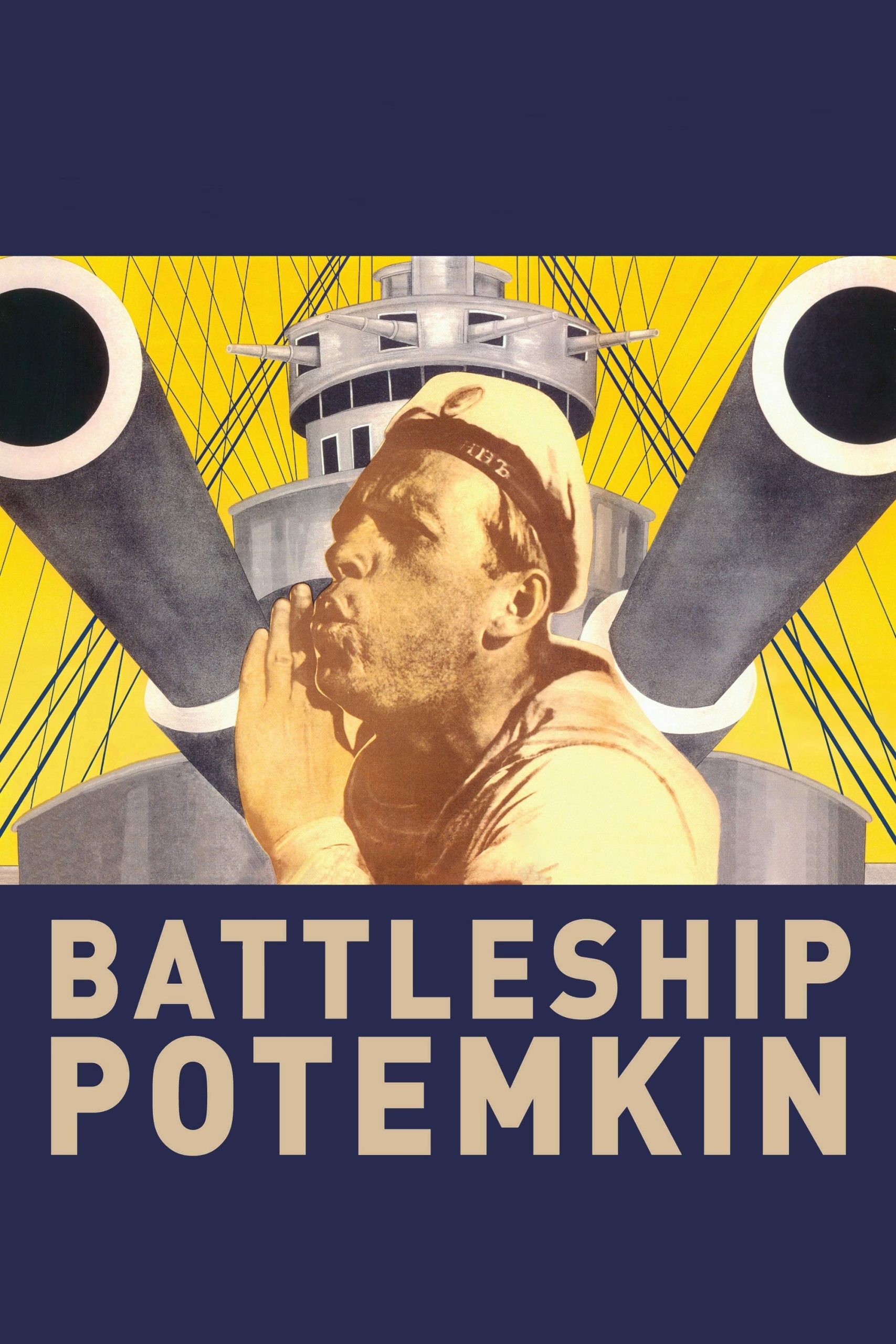
What the Film Is About
I’ll never forget the first time I watched “Battleship Potemkin”; it struck me as less an account of an isolated mutiny than as an outpouring of collective outrage and yearning—an urgent call echoing across time. For me, the film works as a viscerally emotional arc: it channels the stifled frustrations of ordinary people caught under the grinding machinery of authority, then channels those emotions into a single, explosive uprising. It’s a journey from despair and exhaustion to a fleeting but electrifying sense of possibility, experienced not just by the film’s sailors but by the faceless crowds who gather around them.
Rather than drawing me into the individuality of any one protagonist, “Battleship Potemkin” sweeps me into the tide of history itself. The film doesn’t so much offer a neat, linear narrative as it invites me to experience the momentum of rebellion—the push and pull between power and resistance. Its emotional core radiates out from a shared hunger for dignity, erupting when oppression grows unbearable. In that sense, it’s less a story and more a pulse: of anger justified, of hope suddenly breaking through the surface.
Core Themes
What continues to fascinate me whenever I revisit “Battleship Potemkin” is the film’s bold inquiry into power—how it is wielded, defended, and upended. Power here is not just embodied by czarist officers or faceless bureaucrats; it’s a living web of fear, tradition, and violence that binds the sailors even as it crushes them. The mutiny itself is portrayed not as an act of individual heroism but as the birth of collective identity: an awakening that reveals the might of common purpose. The film interrogates loyalty—who deserves it, and how easily it can be weaponized against those who serve. I find the film’s handling of violence to be especially bracing: the violence inflicted is not sleek or cathartic, but chaotic and deeply consequential, reminding me that revolutions demand sacrifice as much as bravery.
I’ve always read Potemkin as a meditation on the morality of rebellion. Is there righteousness in defying orders, even if those orders are wielded by authority? The film’s answer is yes, when justice and humanity are at stake. At a time when it was released, this was nothing short of incendiary—an era marked by state repression and ideological upheaval. As much as it was a work of art, it was a bomb planted beneath the feet of czarist nostalgia. In today’s world, those themes remain sharply current; the struggle to break free of dehumanizing institutions is as urgent now as it was then, whether in politics, labor, or everyday defiance. I’m struck by how the film, nearly a century old, still seems to breathe with the anxieties and possibilities of the present moment.
Symbolism & Motifs
On every viewing, I can’t help but be drawn to Eisenstein’s use of potent symbols—each carefully chosen image feels like an arrow aimed at the heart of oppression. The battleship itself is no mere setting; it’s a crucible, a floating microcosm of a divided society. Below decks, the huddled sailors represent the suffering masses, and above, the officers mirror the self-perpetuating elite clinging to old power. I see the ship as an agent of transformation; once the mutiny begins, it transforms from a prison into a beacon of hope, its guns no longer aimed inward.
The repeated image of the broken plate etched with “Give Us Our Daily Bread” still haunts me. It’s not just a plea for food; it’s the raw insistence that dignity requires the basics of life. The plate’s shattering is symbolic for me: with it breaks the illusion that submission will keep one safe or fed under a callous regime. Above all, the most inescapable motif is the recurring focus on eyes—wide and fearful, defiant and resolute. Eisenstein lingers on faces en masse, creating a composite portrait of outrage and solidarity, as if to tell me: this is not about a single man, but about vision, about awakening.
The motif of stairs—most famously in the Odessa Steps sequence—captures the wrenching rise and fall of revolution itself. I read the endless, merciless descent of innocent people as a metaphor for how the inertia of history grinds down those who dare resist. The steps become a battleground, a stage on which both hope and horror play out, elevating tragedy into a universal drama of human struggle. Visual repetition in the film doesn’t simply illustrate plot points for me; it hammers home the film’s deepest obsessions: with transformation, collective experience, and the price of change.
Key Scenes
Key Scene 1
For me, the heart of the film is the moment when the sailors refuse to eat the rotten meat, culminating in the infamous maggot-ridden beef inspection. This isn’t just an instance of revulsion—it’s the instant when the mask of authority slips and the sailors realize their common suffering. In my view, this is where the idea of mutiny is born—not simply as a protest against hunger, but as a rejection of the entire system that normalizes abuse. The emotional charge here is profound; it’s not just an indignation at physical conditions, but an existential fury at being treated as less than human. I see this scene as a primal cry: we will not endure this degradation any longer.
Key Scene 2
The sequence that forever altered my sense of what cinema could express is the Odessa Steps massacre. Watching it, I don’t just see the trauma of individuals—I witness the deliberate targeting of the fabric of society itself: women, children, the elderly, ordinary citizens. The famous image of the baby carriage tumbling down the steps cements, in my mind, the indiscriminate cruelty of unchecked power. This is the defining moment when the violence of the state is laid bare, no longer masked by decorum or hierarchy. The scene becomes a pivotal examination of how innocence and hope are crushed by brute force, and why solidarity becomes not only powerful but absolutely necessary. For me, this is the axis on which the film’s morality spins: passive suffering tips over into determined defiance.
Key Scene 3
After so much loss and terror, the final confrontation between the Potemkin and the approaching squadron bursts with unbearable tension. I watch not just for the outcome—will there be battle or surrender?—but for what is at stake. When the approaching ships lower their guns in solidarity and allow the Potemkin to pass, I feel an almost overwhelming relief. The film, so saturated with agony and struggle, finally offers a vision of triumph through collective action. It’s not a neatly resolved victory, but a statement: solidarity among the oppressed can interrupt the cycles of violence and fear. This, to me, is less about historical accuracy than about possibility—what might happen when people choose compassion over division.
Common Interpretations
Among critics and viewers, “Battleship Potemkin” is almost universally acknowledged as a rallying cry against tyranny—both as a product of the Soviet revolutionary period and as a more universal expression of resistance. Many see the film as a sort of political catechism, designed to inspire commitment to the revolutionary cause. I’ve met longtime cinephiles who regard it as a bold propaganda work—magnifying the struggles of the oppressed into a heroic myth. Others, myself included, are more attuned to its psychological and emotional layers: the ways it depicts trauma, grief, and hope on a deeply human scale.
Some interpreters focus on Eisenstein’s editing and visual innovations, seeing in them a language of revolution itself—montage as a way of reshaping perception, not just storytelling. There’s also a strand of interpretation that views the film as a warning about the costs of inertia; the slaughter on the steps is, in this sense, a lesson in what happens when power goes unchallenged. What interests me most, though, is the film’s tension between collective identity and individuality—it exalts mass action, but never lets me forget the cost in individual suffering. That’s why debates persist: is the film a hymn to the people or a lament for those swept away by the tides of history?
Films with Similar Themes
- October (1927) – I see “October,” also by Eisenstein, delving deeply into revolutionary upheaval, using montage to explore how ordinary people become the shapers of history, much like Potemkin’s collective spirit.
- The Grapes of Wrath (1940) – To me, this film resonates with the dignity-in-defiance found in “Potemkin,” examining working-class suffering and the stirring potential for mass resistance against systemic injustice.
- Z (1969) – I find that “Z” digs into the clash between oppression and activism within a corrupt regime, echoing Potemkin’s exposure of state violence and its ripple effects on society’s conscience.
- V for Vendetta (2005) – While more stylized, this film explores the moral complexity of rebellion and asks, as Potemkin does: when does insurrection become a pathway to justice?
Looking back, “Battleship Potemkin” whispers to me not just about the particulars of 1905 Russia, but about the persistent fault lines that run through any society—struggles over dignity, justice, and the right to be heard. The film’s true legacy, as I interpret it, is not in its overt political message, but in its exhilarating assertion that history is not a closed book. Instead, it invites every generation to ask: Where does my loyalty lie? What would I risk to set things right? Every time I encounter those questions within this film, I’m reminded that the drive for liberation—however transient, however tragic—remains the wild, unbreakable heart of our collective story.
After learning the historical background, you may also want to explore how this film was received and remembered.