
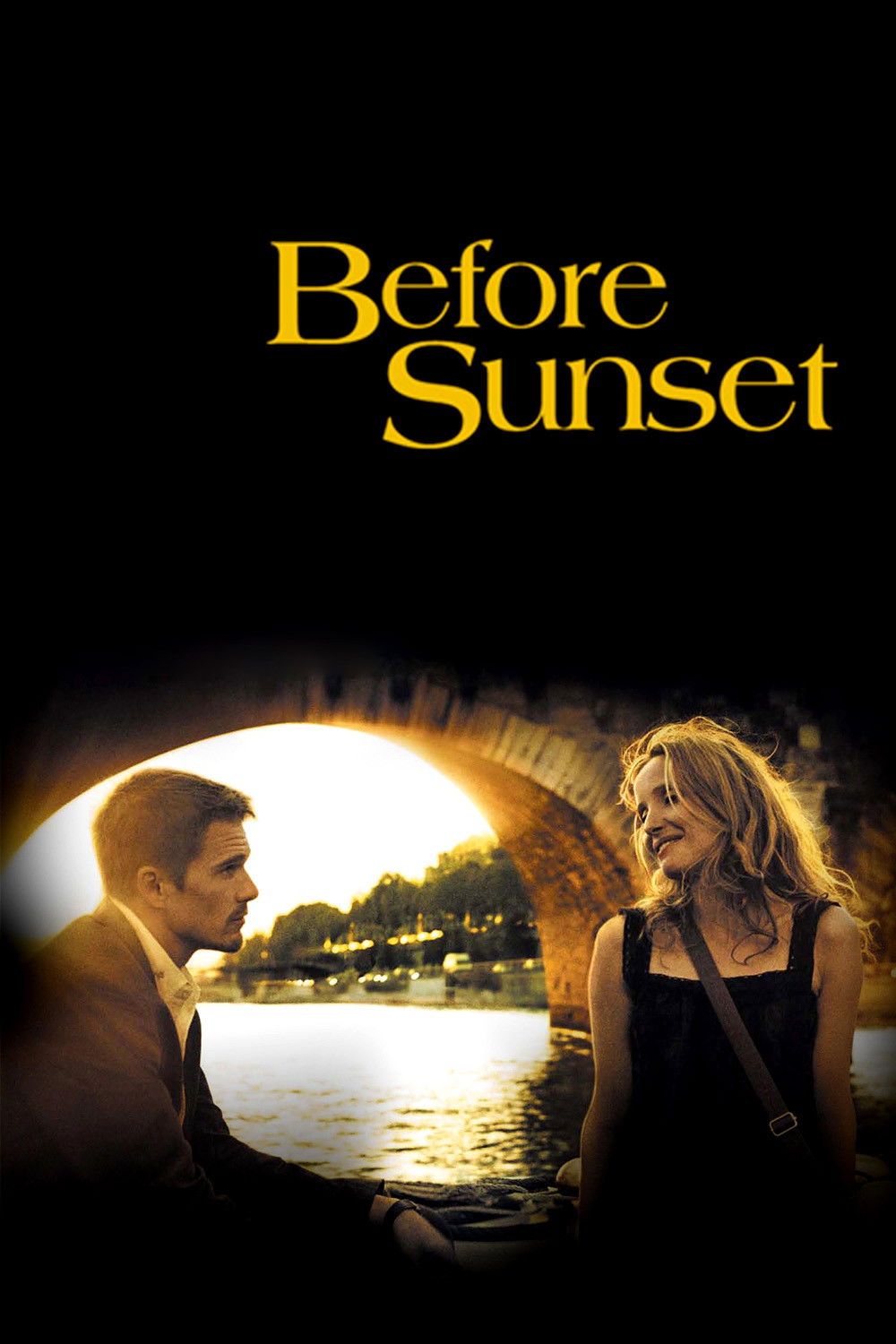
What the Film Is About
Sometimes I watch films that leave an emotional imprint deeper than words can easily reach, and for me, Before Sunset is one of those rare cinematic encounters. What resonated most is not actually what happened between Jesse and Celine, but what didn’t happen—the charged spaces between their words, the years of longing coiling underneath the surface. The film feels like a testament to all the lives we almost live, and to the haunting “what if” we each quietly carry.
Rather than being a conventional love story, I experience Before Sunset as an intimate meditation on time, regret, and the fragile intersection of hope and memory. The heart of the film is their walk through Paris, which strikes me as more of an emotional excavation than a reunion. Their conversation isn’t just catching up; it’s a tense ballet between honesty and evasion, with each confession threatening to tip the fragile balance between a dream of romantic fulfillment and the equally compelling gravity of their separate, more ordinary realities.
Core Themes
When I reflect on the atmosphere of Before Sunset, I’m struck by its deep engagement with the theme of time’s passage. This is not a film preoccupied with youthful passion; it’s about how we come to terms with the lives we’ve built—or failed to build—over years. I find myself returning again and again to the idea of choice and consequence. Every word between Jesse and Celine is freighted with the awareness of what the intervening years have cost them, emotionally and spiritually.
One theme that lingers is the elusiveness of authentic connection. Each character arrives weighed down by the compromises adulthood exacts: Jesse, with the responsibilities and quiet disappointments of marriage and fatherhood; Celine, with the simultaneous yearning for and distrust of intimacy. I see the film’s conversation as a dance of vulnerability, with each character testing how much of their interior world they dare to reveal. It’s raw and unsentimental, stripping away the idealism of their earlier encounter in favor of something more honest—and to me, all the more moving for it.
What also stands out is the film’s meditation on memory versus reality. Their recollections don’t always align. I’m always haunted by how much Jesse and Celine mythologized their original night together, how their divergent memories underscore the slipperiness of personal history. At its core, I find Before Sunset asks if “what might have been” is more meaningful—or painful—than “what is.” At the time of its release, that felt bracingly modern. Today, in a culture obsessed with nostalgia and reunions, the question is as urgent as ever.
Symbolism & Motifs
What continues to captivate me about Before Sunset is how even its physical spaces become psychological terrain. The simple act of walking through Paris becomes, in my eyes, a journey through the emotional landscapes of memory, regret, and desire. The city isn’t just scenery; it functions almost as a third character—timeless, romantic, and impersonal. I can’t think of another film that so gracefully marries movement with meaning.
Another motif I love is the way the film uses river imagery—Jesse and Celine’s stroll along the Seine strikes me as a powerful metaphor for the flow of time and inevitability of change. The river drifts inexorably onward, echoing the current of their conversation. To me, it’s a subtle yet persistent reminder that, unlike the river, we often fight the current, clinging to the illusion that life could be paused, replayed, or taken in a different direction if only we act in time.
The motif of watches, clocks, and the nearing sunset also carries immense symbolic weight for me. Every tick of the clock is a subtle prod, injecting urgency into their encounter, reminding me—and them—that time is running out. The liminality of “sunset,” that fleeting moment between day and night, perfectly mirrors their emotional state: not quite ready to surrender, but painfully aware of the impending end point, whether it’s separation or an irrevocable leap into something new.
Music, too, is a recurring element, with Celine’s song at the end crystallizing years of regret and longing into a few devastating chords. I always experience it as a confession she’s too guarded to speak outright—a motif that reinforces how our deepest truths can be both hidden and revealed through art, story, or song.
Key Scenes
Key Scene 1
For me, the moment Jesse and Celine first sit down at the café is crucial—it casts the die for everything to follow. It’s where their initially polite, almost awkward conversation starts cracking open to reveal layers of vulnerability and unresolved yearning. When Celine lashes out about missed opportunities, I see not just an accusation for Jesse but an agonized reckoning with time’s relentless advance. The café’s intimacy works like a confessional space where, despite their best efforts to keep things “casual,” the conversation veers toward uncomfortable honesty. In these moments, I found myself holding my breath, sensing the emotional stakes rise with every exchanged glance and unfinished sentence.
Key Scene 2
The car drive through Paris stands out as a scene that truly unsettles me. It’s here that their dialogue sheds its last traces of safety. Celine’s suppressed anger and Jesse’s admission of disappointment in adulthood crystallize into a confrontation that is as much with themselves as with each other. I get the sense they are teetering on the edge of choices that could shatter or redeem them. In that small, moving vehicle—cut off from the flow of the city—they are forced into naked self-exposure. The vulnerability here is almost unbearable: it’s one of the rare moments in cinema where I genuinely feel two people imparting the truth not only about love, but about their own self-deceptions.
Key Scene 3
The closing sequence in Celine’s apartment is, for me, among the most ambiguous and sublime scenes in contemporary film. As Celine dances and sings, and Jesse watches, the boundaries between fantasy and reality seem to dissolve. The sun is literally setting, signaling the endpoint of their encounter and catapulting us into a state of emotional suspension. I interpret this as the film’s final statement: love is as much about the possibility that burns at the edge of our lives as it is about commitment or certainty. The question of “what will happen next” remains unanswered, echoing the incompleteness at the heart of all human longing. I left that scene feeling as if I’d witnessed not an ending, but a surrender—to possibility, imperfection, and the unresolvable tension between the lives we lead and the dreams we perpetually chase.
Common Interpretations
In my immersion among critics and cinephiles, I often see Before Sunset understood as a meditation on the tension between romance and reality. Some interpret the film as an affirmation that love’s true nature is ephemeral, existing more in moments and what-ifs than in any kind of lasting domestic arrangement. Others focus on how the film critiques the limitations of romantic idealism, arguing that Celine and Jesse’s connection, though electrifying, cannot possibly survive the demands of real life without some cost to their integrity.
There’s also the perspective—one I find endlessly rich—that the film is less about love for another and more about self-reconciliation. Jesse and Celine, some viewers argue, represent the fractured parts of our own selves: the dreamer and the pragmatist, the past and the present, regret and hope. Their afternoon together may never resolve their actual relationship, but it offers a unique catharsis—an honest reckoning with one’s own choices and missed opportunities.
A more existential reading I often encounter sees the narrative as a microcosm of broader human longing: the search for meaning, identity, and understanding in a world that is fundamentally ambiguous. For these viewers, the film’s refusal to provide closure is not a cop-out; it’s the very point, mirroring the uncertainties we encounter every day. I resonate with this idea, as it’s rare for a film to capture ambiguity not as a flaw to be fixed but as an integral part of what makes life worth contemplating.
Films with Similar Themes
- Lost in Translation (2003) – I see a profound thematic link in the way both films examine fleeting, transformative encounters that momentarily disrupt the inertia of everyday life. Like Jesse and Celine, Bob and Charlotte forge a connection that is defined not by permanence but by its emotional intensity and ambiguity.
- In the Mood for Love (2000) – Wong Kar-wai’s masterpiece dives into yearning and the ache of unrealized love, sharing Before Sunset’s preoccupation with timing and the parallel lives we never get to live.
- Her (2013) – This film’s exploration of intimacy, authentic communication, and the spaces between technology and real connection strikes me as a modern echo of Jesse and Celine’s struggle to bridge distance and loneliness through dialogue.
- Certified Copy (2010) – Abbas Kiarostami’s enigmatic conversation between two strangers in Tuscany mirrors the way Before Sunset uses dialogue and shifting identities to question what is real, what is pretended, and what we ultimately want from each other.
What I ultimately walk away with, whenever I revisit Before Sunset, is a sense that the film is telling me something painfully simple and true: that being human means struggling with irresolvable contradictions—the desire to move forward and the pull of the past, the need for connection and the inevitability of misunderstanding. It’s a film that refuses comfort and resolution, offering instead an invitation to dwell, just for a moment, in the ambiguous beauty of possibility. Released in an era speeding toward digital immediacy, its focus on conversation, slowness, and mutual discovery feels not just timeless, but quietly radical. I leave it each time both healed and aching, reminded that to live is to wonder if I made the right choices, and to find meaning in the very act of wondering.
After learning the historical background, you may also want to explore how this film was received and remembered.