
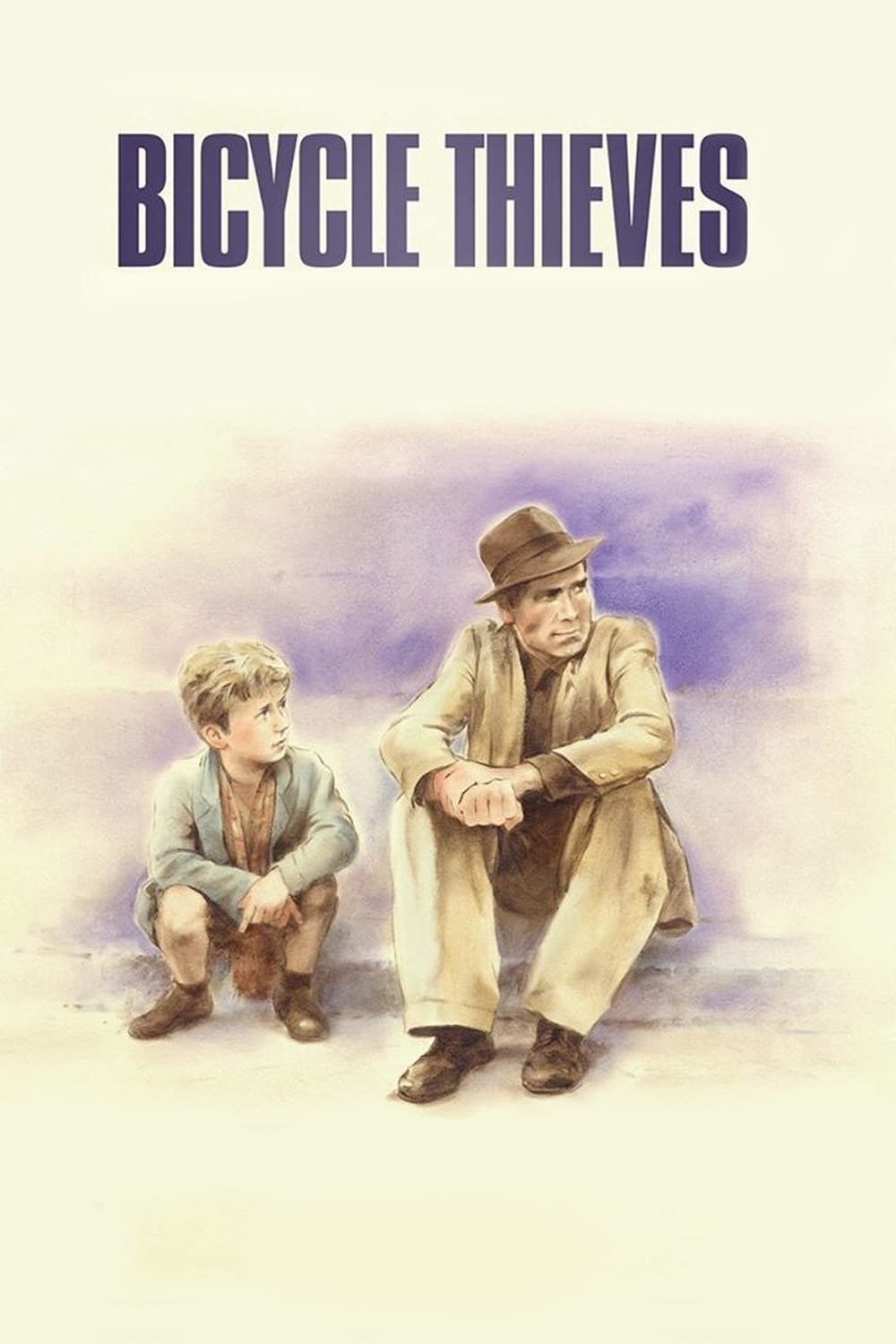
What the Film Is About
Watching Bicycle Thieves for the first time, I was struck not by the mechanics of its plot, but by the overwhelming sense of human vulnerability that runs through every moment. The world depicted here feels so vividly merciless, yet inextricably tender; to me, the film is less a story about a man who loses his bicycle than a raw portrait of what it means to keep searching for dignity when everything seems designed to take it away. The emotional journey at the core is one of hope repeatedly battered by circumstance, until hope becomes a fragile, aching thing—something you clutch to your chest with the last of your strength.
What moves me most is the central conflict, not between good and evil, but between the daily erosion of trust and the desperate urge to believe in justice. The movie renders this struggle with a startling simplicity, presenting poverty not as a melodramatic affliction, but as the silent architect of heartbreak and compromise. The story’s momentum flows entirely from this tension: a father’s desperate search for the stolen bicycle that he needs to survive, and a child’s questioning eyes that silently ask what kind of world they are inheriting. Ultimately, I felt the film was less about a stolen object and more an exploration of what makes a life bearable—or unbearable—when the social fabric unravels.
Core Themes
For me, the most haunting element of Bicycle Thieves is its unblinking confrontation with economic desperation. At its core, the film explores the consequences of poverty with a subtlety that still feels radical. I see this film as a meditation on dignity—how it’s bestowed and stolen, and the ways it both crumbles and endures under pressure. Every decision the protagonist makes, from moments of stoic resolve to flashes of weakness, feels shaped by the anxiety of living on the edge of survival. The film echoes with the question: how much of our morality is a luxury only afforded when life is secure?
Another theme that resonates powerfully with me is the fragile bond between parent and child in a world where adults are rendered powerless. There’s deep pathos in watching a father, Antonio, oscillate between being his son’s protector and, at times, his disappointment. In these moments, the film shapes the father-son relationship into a microcosm of generational hope—hope that the next generation will find a world less cruel and arbitrary. This, to me, is where the story’s timelessness lies. Though set in postwar Rome, the distress and yearning for redemption are instantly recognizable, echoing the anxieties of any era marked by upheaval.
I also find the film to be a treatise on moral ambiguity and societal complicity. The world of Bicycle Thieves is not populated by villains in the traditional sense; instead, it’s a landscape of ordinary people, each making ethical compromises to survive. I left the film with the uneasy sense that the very structures designed to uphold fairness—police, church, community—collapse under the strain of poverty. It offers no redemptive comfort, only a gentle insistence on seeing even the most painful truths.
At the time of its release, these themes would have felt almost uncomfortably immediate to Italian audiences living through postwar economic crisis, but I find them just as relevant now. To watch this film today is to confront the ongoing global realities of economic insecurity, the moral hazards of desperation, and the tender ache of familial love tested by forces far beyond personal control.
Symbolism & Motifs
If I had to choose what gives Bicycle Thieves its enduring power, it would be the way it weaves everyday objects and recurring visuals into rich layers of meaning. The bicycle itself is the film’s most obvious symbol, but in my view, it becomes far more than a means of transportation—it’s a stand-in for hope, security, and self-worth. The bicycle’s thin tires seem barely able to support the weight of expectation placed upon them; its absence throws everything into chaos, as if the entire structure of life is thrown off balance when that one fragile asset disappears.
I’ve always been struck by the motif of crowds—endless rivers of faces passing by, each with their own private struggles. The streets of Rome throng with people, both witnesses and bystanders to the protagonist’s suffering, reflecting the anonymity and loneliness that come with living in a vast and indifferent city. These crowds reinforce the idea that Antonio’s struggle isn’t unique but emblematic—one story among thousands, each tethered to the same precarious economic reality.
Another recurring motif that resonates with me is the act of searching. This isn’t just a practical search for a lost item; it’s also a much deeper, existential quest for a place in a society that seems to have no room for you. Whether it’s combing flea markets, pleading with uncaring officials, or scanning faces in the rain, these repetitive actions take on a ritualistic quality. They suggest that survival itself is a never-ending pursuit, where peace and security are always just out of reach.
Rain and weather also figure prominently in my reading of the film’s symbolism. The relentless rain seems, at times, like another antagonist—it soaks, isolates, and erases what little comfort remains, while also functioning as a cleansing force that lays bare the bleakness of the protagonist’s situation. Each environmental detail feels carefully chosen to reinforce the emotional barrenness and instability that define Antonio’s world.
Throughout, the motifs of repetition—be it footsteps, glances exchanged, or doors closing—underscore the cyclical nature of hardship. They reinforce my sense that the film’s tragedy is not borne from extraordinary evil but from the ordinary, relentless grind of a system that cannot (or will not) protect the vulnerable.
Key Scenes
Key Scene 1
One moment that I find crucial for unlocking the film’s message comes early on, when Antonio’s luck seems finally to have turned, and he is reunited with his bicycle. The bicycle is not simply an object retrieved; it is a promise of normalcy, a brief respite from the constant uncertainty. The mood in this scene is quietly jubilant, but as I reflect on it, I realize the celebration feels almost desperate—tinged with an awareness of how easily fortune slips away. This is the emotional high-water mark, where hope stands on shaky legs before being swept out from under him. For me, this scene lays bare both the fragility of working-class dreams and the perpetual anxiety that underpins them.
Key Scene 2
Another scene that lingers in my mind is the sequence inside the church. Antonio and his son seek a few silent moments of respite, sitting among the devout and the weary. On the surface, it’s a brief interlude; beneath it, I see a powerful commentary on the inadequacy of institutional comfort. The church is grand, yet the solace it offers is fleeting, overwhelmed by the inescapable pressures waiting outside. Here, the camera lingers especially on the faces of the marginalized, all clustered together yet profoundly alone. This scene challenges the notion that religion or tradition can provide real sanctuary from material deprivation. It also develops the central theme of spiritual drought: faith, like justice, feels out of reach in a world dictated by scarcity.
Key Scene 3
The film reaches, for me, its emotional and thematic peak in the devastating final scene. I can recall the unbearable tension as Antonio, faced with utter exhaustion and humiliation, makes an irreversible decision. The tragedy here is not limited to the act itself, but in Bruno’s silent, wounded observation—his son’s gaze shifting from confusion to heartbreaking understanding. The image of father and son walking wordlessly into the endless crowd haunts me long after the credits. This isn’t just disappointment; it is the collapse of mythic ideals about fatherhood, justice, and social order. This moment, above all, cements for me the film’s ultimate assertion: under crushing societal failure, even the most ordinary people can be drawn to actions they once thought unthinkable. Yet the gentle, forgiving gesture that passes between Antonio and Bruno in the end reaffirms, if only faintly, the stubborn endurance of love against despair.
Common Interpretations
When I’ve discussed Bicycle Thieves among fellow critics and students, the most common interpretation centers on its profound humanism. Many see it as an indictment of postwar social structures—a work that asks viewers to empathize with those who are usually invisible, and to recognize how easily circumstances, rather than morality, steer our lives. The film’s realism is often noted as a deliberate challenge to the escapist fare of its era, forcing audiences to look at suffering unromanticized and unadorned.
Some readings focus on its political implications, interpreting Antonio’s struggle as a quiet act of resistance against a state unwilling to protect its citizens. Others, myself included, tend to read the film through a more existential lens: a parable of ordinary defeat, where survival takes precedence over ideals, and the world offers meager consolation to those who stumble. I am continually moved by interpretations that highlight the shifting parent-child dynamic, especially as they suggest the painful maturation not just of the child, but of the adult—stripped of authority and innocence alike.
While there is broad agreement about the film’s critique of poverty and injustice, I’ve also heard compelling arguments that the movie is, ultimately, about the limitations of hope in a world that resists redemption. Some detect a glimmer of optimism in the father and son’s reconciliation, but my own view is more conflicted. I see in that final image less a solution than an invitation: to witness, to remember, and perhaps to act differently when faced with the suffering of others.
Films with Similar Themes
- The 400 Blows (1959) – I’ve always connected Truffaut’s deeply personal depiction of a young boy’s drifting loneliness to Bicycle Thieves; both films use the gaze of a child to critique society’s neglect and the consequences of adult failings.
- Umberto D. (1952) – To me, this film provides a companion exploration of postwar poverty, focusing on an elderly protagonist; it, too, uses the rhythms of daily hardship to humanize social crisis without sentimentality.
- The Kid with a Bike (2011) – The Dardenne brothers’ work, centered on a boy and his missing bicycle, feels like an explicit homage; it inherits the Italian neorealist tradition, examining parental absence and the longing for love in a world that is alternately indifferent and kind.
- Pather Panchali (1955) – Satyajit Ray’s rural epic echoes, for me, the lyricism and empathy of Bicycle Thieves, tracing a family’s dignity and sorrow amid poverty’s grip, and offering a similarly unflinching social gaze.
For all the decades that have passed since I first saw Bicycle Thieves, its message feels undiminished in force: it invites us to witness the quiet agony of ordinary people and to understand that virtue and failure are often born from circumstance rather than character. The film challenges my comfortable notions about justice and goodness, leaving me with the unsettling realization that society’s indifference is itself a kind of violence. Yet in the closing moments, I find at least a fragile kind of hope—in the enduring link between father and child, and in the act of bearing witness itself. Where institutions falter, the film suggests, compassion and attention remain our last defenses against a world that won’t easily change.
To explore how this film has been judged over time, consider these additional viewpoints.