
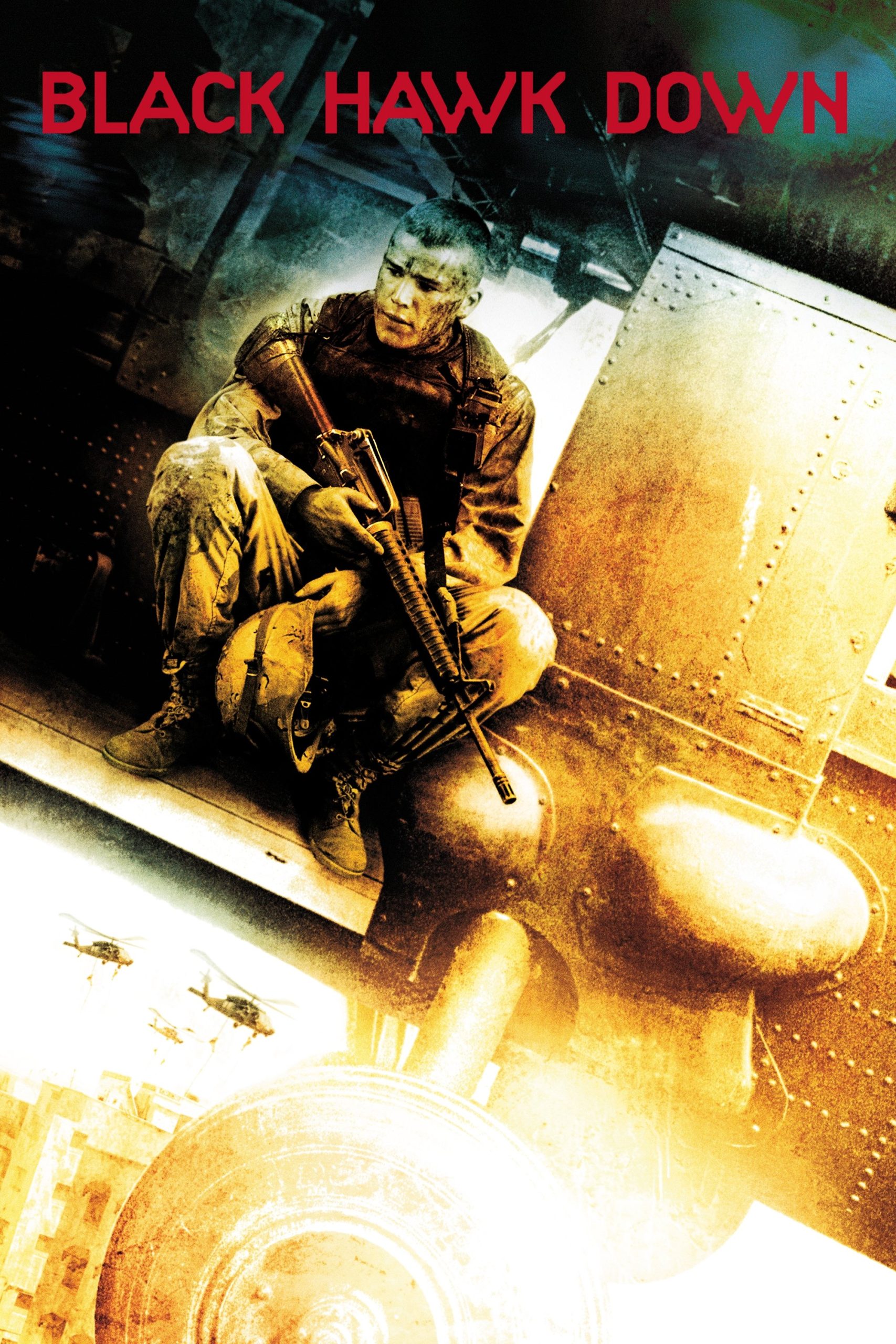
What the Film Is About
Every time I revisit “Black Hawk Down,” I’m shaken not only by the visceral chaos spilling across the screen but by the way it holds a mirror up to our capacity for empathy and despair amid relentless violence. Instead of offering the tidy arc of traditional war stories, I find the film immerses me, at an almost cellular level, in the confusion, terror, and moral uncertainty of a mission that unravels minute by minute. The film isn’t simply recounting military calamity. It’s pulling me into the collective heartbeat of young men embroiled in a situation where training, loyalty, and personal codes blur under unbearable pressure.
The emotional core, for me, is defined by the constant seesaw between human connection and the dehumanizing grind of warfare. While the narrative orbits around a failed operation, its gravity swerves toward the internal: the shifting understanding each soldier has of bravery, fear, and the worth of a human life. I can’t help but feel the desperation of men trying to hold onto a sense of purpose when thrown headlong into unfathomable circumstances—the triumphs and failures intermingle, daring me to question whether heroism and futility can exist side by side.
Core Themes
I see “Black Hawk Down” as a relentless dissection of the machinery of modern warfare, both literal and psychological. Its most pressing theme, in my view, is the tension between collective duty and the individual’s moral reckoning within a system built on obedience. Watching the film, I’m continually confronted by how quickly the simplicity of a mission dissolves into a series of impossible choices. The soldiers move in a tightly scripted dance of tactics and codes, yet when chaos reigns, it’s the fragments of conscience and camaraderie that linger longest in my mind.
For me, the film is deeply entrenched in questions of loyalty: to one’s unit, to one’s values, and to a country’s ideals as filtered through the fog of war. I’m fascinated by the way it refuses to glorify combat or sanitize its consequences. Instead, the narrative seems fixated on exposing how warfare tests, distorts, and sometimes shatters the constructs soldiers bring with them. That’s why, even over twenty years after its release, I think the themes still sear with relevance—the ethical ambiguities of intervention, the burden of responsibility, and the corrosiveness of violence never truly age out of the global conversation.
The resonance is also timely: the film landed in theaters after September 11, 2001, unintentionally answering the world’s renewed, anxious demand to understand military engagement and its aftermath. Yet when I watch it now, I’m struck by how little its cautionary tone has faded. Its message about the cost, both personal and political, of military adventures abroad could not be more urgent today. Violence begets more violence, and “winning” seems not only elusive but possibly illusory.
Symbolism & Motifs
What draws me most deeply into “Black Hawk Down” is its visual and narrative motif of disorientation. The ever-present swirl of dust, punctuated by the whirr of helicopter blades and punctures of light, comes to represent the blurred boundary between authority and abandonment. The Black Hawk helicopters themselves emerge as much more than vehicles—they are symbols of technological might, American reach, and the illusion of control.
Uniforms, too, take on a kind of quiet symbolism. The initial neatness of pressed fatigues gives way to bloodied bandages and torn gear. Watching this progression, I see individuality being both stripped away and, paradoxically, highlighted in crisis. Small tokens—photographs tucked into helmets, religious medals, handwritten notes—linger in the camera’s gaze, becoming reminders of the ordinary lives interrupted and endangered by extraordinary events.
Even the city of Mogadishu becomes a recurring symbol. Its landscape, densely populated and labyrinthine, feels hostile yet hauntingly ordinary, hammering home the theme of cultural disconnect. I notice how the film employs architecture as both shelter and trap: crumbling buildings and twisting alleys repeatedly upend any assumption that overwhelming military force alone can guarantee safety or clarity. Each motif, from the staccato of gunfire to the incessant calls for medics, serves to reinforce that beneath tactics and technology, the beating heart of the story is human vulnerability.
Key Scenes
Key Scene 1
One moment I continually return to as a keystone is the sequence where two soldiers volunteer to defend a downed helicopter crew, fully aware of the overwhelming odds. This decision isn’t portrayed with patriotic fanfare, but rather with a mix of resignation and conviction that I find staggeringly honest. For me, the emotional force of this scene is not in its violence, but in the silent communication that passes between the men—a recognition of shared duty, and the acceptance of possible sacrifice. It’s here that the film asks me to grapple with what courage means when stripped of reward, recognition, or even hope of survival. That kind of existential bravery becomes the core of the movie’s message: doing the right thing is rarely simple and never guaranteed to succeed.
Key Scene 2
Another scene that echoes long after my viewing is one steeped in helplessness—as medics attempt desperate measures to save a gravely wounded soldier. The clinical urgency clashes with a backdrop of chaos, and I find myself transfixed, not by the blood or the struggle, but by the mingling of expertise and impotence. Watching the soldiers’ faces, the dawning realization that sometimes all skill and all effort are not enough, I’m reminded of mortality’s absolute rule, even for the best among us. The film here isn’t only about loss; it’s about the psychological wound left when soldiers cannot save one of their own. It speaks to the trauma carried off the battlefield, the invisible shrapnel of guilt, self-questioning, and grief that lingers in memory.
Key Scene 3
In the film’s closing moments, what lingers with me is the quiet, almost anticlimactic choice of the survivors to return to the field or help their injured. There’s no victory speech—just the exhausted faces of people carrying new scars, physical and emotional, back into the uncertain future. This return, a literal and symbolic reentry into the fray, challenges the archetype of the triumphant soldier and instead illuminates the cyclical, unresolved nature of such conflicts. The war doesn’t end with rescue or victory; it persists in memory and within the system, echoing the film’s skepticism of simple solutions. For me, this scene crystallizes the film’s deepest argument: what matters isn’t whether the mission succeeded, but what survives in the minds and souls of those who bear witness.
Common Interpretations
Often when I discuss “Black Hawk Down” with friends or fellow critics, the conversation splits along the lines of whether the film is ultimately pro-military, anti-intervention, or something knottier. In my experience, many audiences view the movie as a raw tribute to soldierly courage—a harrowing celebration of brotherhood and self-sacrifice under fire. They see it as an endorsement of the unwavering commitment required to survive such missions, even when the world outside doesn’t fully grasp the cost.
Yet, for others (myself included), the film’s stance feels far more complicated. I read in its relentless tempo and grim cataloging of mistakes an implicit questioning of both the justifications for foreign interventions and the human cost of projecting power far from home. The faces of the Somali civilians, caught in the crossfire or rendered faceless by the camera’s focus on the Americans, raise uncomfortable questions about perspective and empathy—who tells the story, and who is allowed to matter within it.
This divergence of opinion is precisely why I find the film fascinating. It resists clear answers, wedging itself into the unresolved space between patriotism and skepticism. Some see it as valorizing American might; others, as a critique of military hubris and the limits of force. Nearly all agree, though, that the film’s refusal to provide easy moral resolutions is what gives it staying power and modern resonance.
Films with Similar Themes
- Saving Private Ryan – Like “Black Hawk Down,” this film sears itself into my memory with its unvarnished realism and its meditation on duty, the randomness of survival, and the immense psychological toll of combat.
- The Hurt Locker – I think of this film as a complementary exploration of addiction to the adrenaline and trauma of war, focusing even more pointedly on the personal cost of prolonged exposure to violence.
- Full Metal Jacket – I see Kubrick’s masterwork as another brutally honest deconstruction of military training, the deindividualization of soldiers, and the blurred border between discipline and dehumanization.
- Platoon – This film, steeped in moral ambiguity, compels me to consider how war splinters ideals, breeds internal conflict, and leaves indelible scars on every participant, regardless of side.
When I step back from “Black Hawk Down,” its ultimate message strikes me as both grave and essential. Warfare, as depicted here, is not a stage for unalloyed heroism, but a churning arena of panic, courage, error, and solidarity. The film suggests that in the crucible of relentless crisis, our noblest and darkest selves surface side by side. This is not a rallying cry; it is a challenge to remember the generational costs of violence and the unfinished business that haunts both the actors and the societies that send them. I walk away less certain, more questioning, yet deeply moved by the film’s unyielding exposure of what happens when ideology collides headlong with human frailty.
To explore how this film has been judged over time, consider these additional viewpoints.