
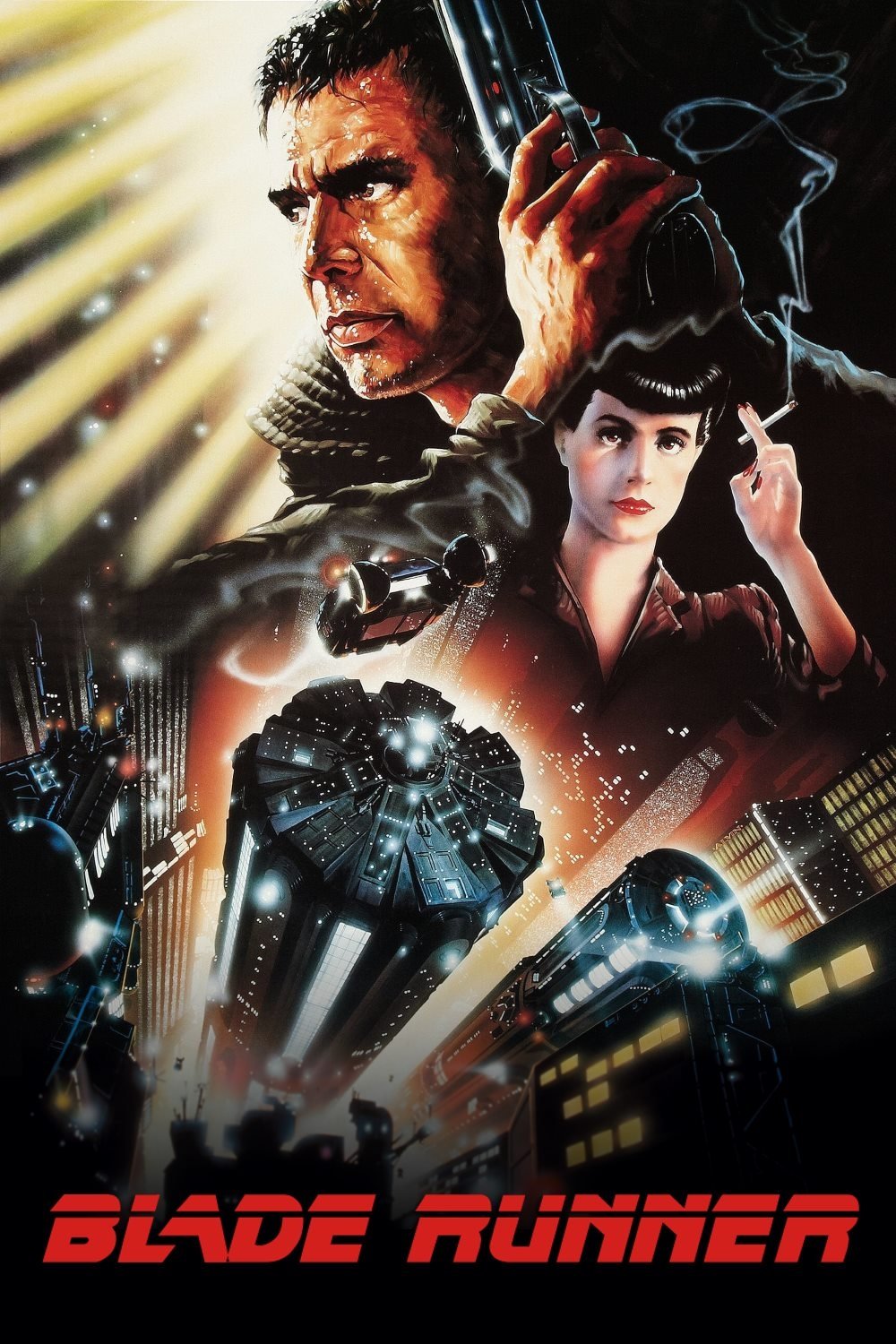
What the Film Is About
Whenever I return to this film, I’m struck by how it always leaves me aching for answers and simultaneously accepting their impossibility. The film doesn’t just run through a futuristic cityscape—it invites me into a kind of existential labyrinth, where identity, empathy, and mortality collide, and nothing is certain except longing and impermanence. For me, the emotional journey here is less about tracking some hero’s arc and more about watching the characters, both human and artificial, fumble for meaning and connection in a world that’s blurred the line between real and replica.
I never feel like this film is interested in a straightforward confrontation between good and evil. Instead, it thrusts me into a central conflict fueled by ambiguity and doubt: Who truly deserves compassion, and how do I know if anyone—human or not—actually possesses a soul? The narrative direction is always pushing toward this deeply personal zone where the struggle is internal, forcing characters and viewers alike to reevaluate their own definitions of humanity, love, and even freedom.
Core Themes
When I think about what animates this film beneath its neon-lit surfaces, I’m drawn immediately to its meditation on identity. The film’s world seems obsessed with origins—what makes someone real, and what it means to have a past. As I watch, I realize these questions aren’t just for the characters; they’re intended for me. I find myself mulling over the way memory is used as both weapon and salvation. In a society where artificial beings are almost indistinguishable from humans, am I forced to admit that human-ness may be defined by far more than biology?
Another theme that hits me hard is empathy—or perhaps, the lack of it. The chilling detachment with which most humans treat the androids always unsettles me. The film interrogates not only our tendency toward dehumanization, but also the corresponding risk that we might be losing our own essential humanity in the process. These ideas felt urgent in the early 1980s, with the world anxious about rising technology, corporatization, and Cold War era alienation; to me, they reverberate even more now, as artificial intelligence and automation edge ever closer to collapsing the borders of what “life” means.
The film’s exploration of mortality becomes personal, even desperate, as the replicant characters pursue fleeting extensions of their lives. I keep coming back to how this is not so different from the way anyone deals with the knowledge of death—seeking legacy, memory, a lover’s touch, or simply another day. This yearning for more time, for deeper experience, for meaning in the face of inevitable expiration, is what gives the film its enduring gravity for me. It’s not just about technological future shock; it’s about the universality of longing and the fear of disappearance.
I’m also riveted by the film’s sustained unease around power—particularly the power to create, define, and destroy. Watching it now, I see questions seeded about who gets to set the boundaries of morality, and whether authority itself is just an elaborate performance. The violence that erupts, both physical and existential, feels less like action spectacle and more like a tragic, nihilistic consequence of everyone’s refusal to truly see one another.
Symbolism & Motifs
I notice that this film speaks as much through rain, neon, and shadows as it does through dialogue, and that’s no accident. Every time I watch it, certain motifs settle deeper into my consciousness. The rain, which never seems to stop falling, becomes for me a potent metaphor for cleansing, renewal, and, paradoxically, obscurity—it washes everything but never quite clarifies anything. I think of it as the sky’s way of both hiding and exposing the city’s rot and yearning.
Eyes appear everywhere in the film, and I keep noticing new layers to this symbol. There are literal eye inspections to test for humanity, the replicant creator obsessed with manufacturing ocular perfection, and the ever-watchful gaze of those in power. To me, eyes symbolize both the quest for authenticity and the fear of being truly seen. They’re reminders that perception, memory, and identity are bound together in mysterious, often unreliable ways.
Origami animals, carefully folded by a detective who seems more observer than participant, have become iconic in my mind. Each shape feels loaded with meaning: an expression of fragility, artifice, and transformation. They’re also, at least to me, an acknowledgment that everyone in this world is performing their version of reality—the crafted, vulnerable swan just as lost in the city as the people and androids around her.
Throughout the film, urban decay and overwhelming technological advancement create a visual and emotional mood of claustrophobia and alienation. I’m always enveloped by a sense that the future has arrived but left its soul behind. In this way, the motifs of artificial animals, endless advertisements, and polluted vistas reinforce a deep underlying sadness—one about progress that forgets its own cost.
Key Scenes
Key Scene 1
For me, the moment of the Voight-Kampff test never loses its power. This isn’t just a mechanical examination, but rather a slow, tense peeling away of identity and vulnerability; the subject’s mounting anxiety becomes a mirror for my own discomfort. The test is supposed to separate human from artificial, but as I watch, I realize it really exposes the callousness of those who police these boundaries. This scene crystallizes the film’s essential question: What does it mean to have feelings, to suffer, to care about another’s pain? The test, in its cold probing, feels almost crueler than any act of violence, and it forces me to confront just how arbitrary and unsettling our definitions of personhood can be.
Key Scene 2
The confrontation between creator and creation stands out most vividly in my memory, years after my first viewing. It’s less important to me which specific characters are involved, and more about the larger emotional weight: the yearning for answers, the desperate wish to matter. In this moment, the film’s big questions about mortality echo in every word and gesture. I see the arrogance and fear of those who play god, set against the bewilderment and rage of creations who want only what all of us want—time, empathy, acknowledgment. There’s a rawness here, something like a confession, and it deepens my sense of the film as a meditation on the limits of love, power, and understanding.
Key Scene 3
Nothing, for me, encapsulates the film’s meaning more than the rooftop revelation in the rain. The so-called villain, at the end of his journey, chooses to show mercy instead of vengeance. In this act, I witness the shedding of every rigid distinction between hero and antagonist, human and nonhuman. Compassion emerges precisely where I expect retribution; empathy blossoms where I fear indifference. This moment transforms the entire film into a plea for understanding and shared suffering. I’m left with the profound knowledge that the true moral force doesn’t come from victors or survivors, but from those who can recognize another’s pain and offer grace, even in their own final moments.
Common Interpretations
Over time, I’ve seen critics and audiences divide along lines of hard science fiction, noir fatalism, and philosophical inquiry when interpreting the film’s meaning. One light in which I often find it read is as a parable about the limits of human progress and the unintended consequences of playing god. In this view, the film serves both as warning and elegy, mourning a world where technology threatens to erase empathy and connection. For others, the story is more intimately existential—a reflection on death, memory, and the slippery nature of selfhood itself.
The perpetually debated question of the main character’s own identity—whether he is human or replicant—opens up a vast interpretive space. To me, this ambiguity is less about plot twists than about the essential instability of identity itself; the uncertainty haunts the experience. Some watchers prefer to see the film as a classically noir-inflected tale of corruption and lost innocence, while others lean into its allegorical critique of racism, othering, or even climate anxiety. What I find most enduring is that none of these readings closes off the others. The film’s greatest power is its capacity to refract back each viewer’s own anxieties, desires, and doubts about technology, morality, and compassion.
Regardless of where one lands, I think everyone who loves this film recognizes its enduring relevance. Whether you see it as a cautionary tale, a philosophical puzzle box, or a raw emotional canvas, the film provokes and unsettles in ways that few works of speculative cinema have matched.
Films with Similar Themes
- Her (2013) – I see a clear kinship in this film’s exploration of love, humanity, and the ambiguous boundaries between authentic and artificial experience in a technologically advanced society.
- Ex Machina (2014) – This provocative film dives into the morality of creation and the manipulative power dynamics that arise once lines between creator and creation are crossed.
- Ghost in the Shell (1995) – I’m often reminded of how both films approach identity and self-awareness in relation to the fusion of organic and artificial life, questioning what makes consciousness truly “alive.”
- Brazil (1985) – While its approach is more satirical, I feel it tackles the same anxieties about bureaucracy, dehumanization, and individual resistance within a dystopian future.
Reflecting on everything I’ve absorbed from this film, I come away convinced that it offers no easy answers—only urgent, beautiful questions about what it means to be alive and to love. At its heart, I believe the film mourns not just for the beings on screen, but for anyone who has ever doubted their own worth or felt alien in a hostile world. It’s as much about the pain of isolation as the possibility of connection. More than four decades after its release, the film—at least for me—is a testament to the stubborn hope that empathy endures, even when all ideals seem to dissolve in the rain-soaked neon of a lost city.
After learning the historical background, you may also want to explore how this film was received and remembered.