
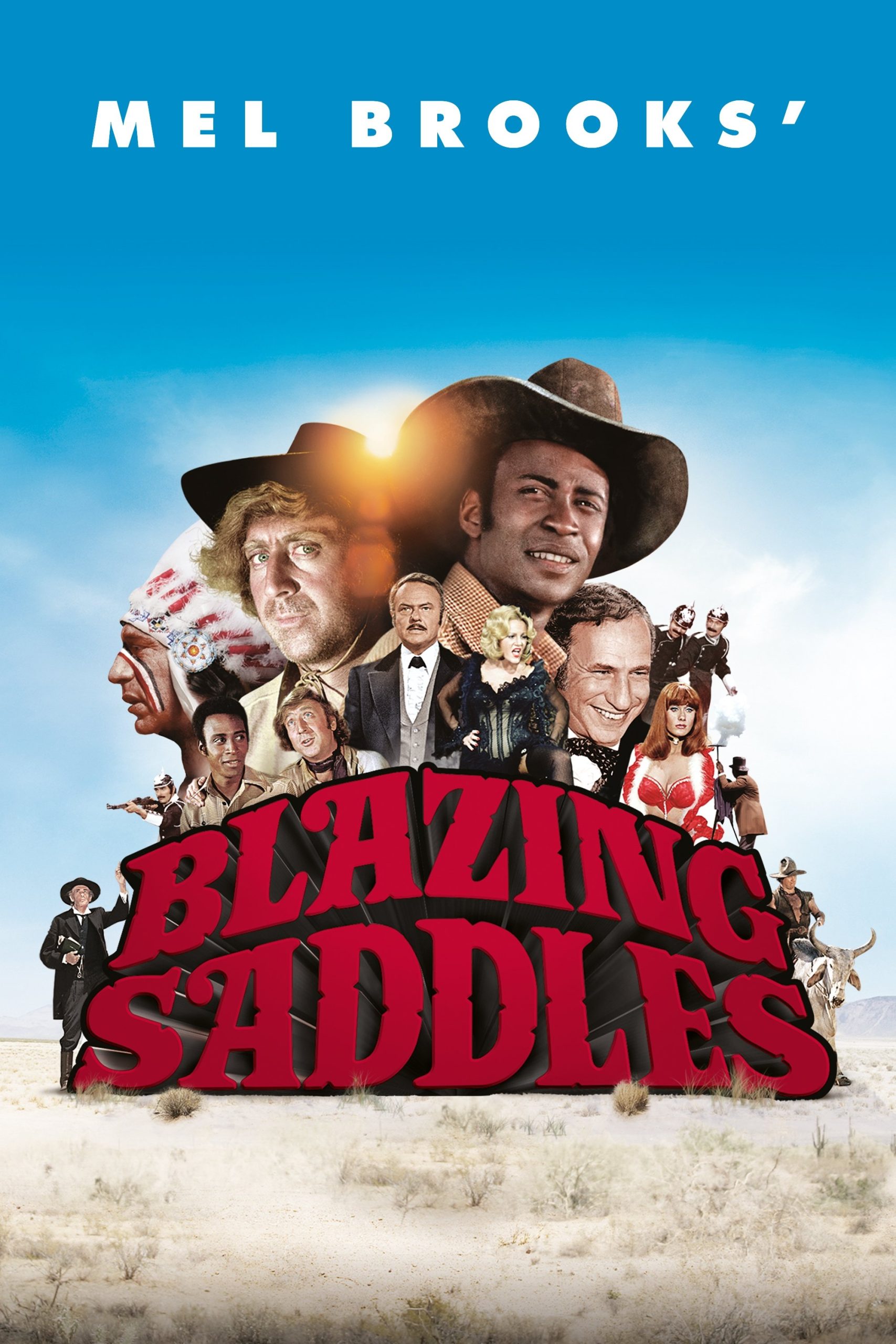
What the Film Is About
Every time I watch “Blazing Saddles,” I find myself startled by just how bravely it confronts American mythmaking. To me, this film is about upending expectations and laying bare the ugliness tucked behind wide, Hollywood grins. The humor—wildly irreverent, delightfully chaotic—serves not just to entertain, but to force me into an uncomfortable confrontation with my own assumptions. The emotional journey isn’t only that of its famous Black sheriff, but is also one that implicates the audience as it drags the Old West out from sepia-toned legend into something far more unpredictable, unruly, and honest. The central conflict feels like a collision between who we claim to be and who we actually are—and what it takes to laugh, or grimace, our way through that gap.
At its core, “Blazing Saddles” leads me along a path where absurdity exposes prejudice, and where improbable courage in the face of ignorance and self-interest becomes a source of both pain and catharsis. It is a film preoccupied with the façade of civilization, with groupthink and scapegoating, and with the possibilities that open up when just one person refuses to play along. The story might look simple from a distance, but emotionally, it’s a minefield—howlingly funny and deeply challenging if I allow myself to see what lies beneath the gags.
Core Themes
The longer I sit with “Blazing Saddles,” the clearer it becomes that Mel Brooks was not merely aiming for laughs—he was waging a kind of comic revolution against American racism, hypocrisy, and the self-seriousness of cultural myths. Chief among the film’s themes is the corrosiveness of prejudice, not only how it infects institutions but also how it warps ordinary people. Watching the townsfolk’s suspicion and hostility toward Sheriff Bart, I am reminded of the reflexive barriers so many societies construct to preserve a shallow sense of order. Racism here is not just a plot obstacle; it operates as an entire system, propped up by tradition, fear, and group inertia—something Brooks lampoons, but never trivializes.
I also see the film as a wry meditation on power. There’s an ongoing tension between individual agency and conformity, where the true “law” of the town isn’t codified in statutes, but enforced through collective prejudice. Bart’s appointment as sheriff becomes less about heroism in the classic sense and more about how power is distributed and undermined. That same power structure, whether political, social, or psychological, is forever teetering between absurdity and oppression—a balance that Brooks exaggerates until it’s impossible to ignore or excuse.
This movie also interrogates the idea of identity as performance. Bart, Hedley Lamarr, Jim (“The Waco Kid”), and even Lili Von Shtupp—all of them occupy shifting roles, sometimes donning literal or metaphorical costumes to protect themselves or to get by. This performativity asks me to consider where authenticity ends and social survival begins, especially in a world defined by stereotype and exclusion. Of course, there’s also the theme of complicity: how mobs form, how individuals grow numb to injustice, and how easily we laugh along with cruelty if it’s what everyone else is doing. In 1974, just as now, these questions about identity, power, and moral responsibility continue to haunt every story about who gets to belong—and who is always the outsider.
Perhaps what makes the film eternally relevant in my eyes is its insistence that satire serves a deeper purpose than derision. “Blazing Saddles” takes no prisoners; its humor stings because it’s always asking, “Who is the butt of this joke—and why?” In the post-civil rights era of the seventies, America was forced to look straight at the cultural systems underpinning racism. That reckoning is far from over, which is why the film’s themes still cut through today’s noise with damning clarity and, paradoxically, hope.
Symbolism & Motifs
What keeps drawing me back, beyond the shock and laughter, are the film’s symbols and recurring patterns—always building new layers beneath the burlesque. The railroad serves as a particularly loaded symbol. Though on the surface a backdrop for slapstick and mayhem, to me it represents the connective tissue of American progress, powered by exploitation and displacement. The tracks are both horizon and boundary, progress and punishment, threading together unlikely communities even as they tear others apart. Every time the railroad comes into play, I sense the film pointing at the costs paid for western “civilization”—who profits and who is left at the margins.
Another recurring motif is the deliberate breaking of the fourth wall. I never grow tired of the way “Blazing Saddles” refuses to stay inside its own world. The actors look out toward me, characters wander off the set, and the whole illusion collapses. I interpret this as a provocation, a reminder that I, too, am implicated—that the bigotry and absurdity onscreen are only exaggerations of the ordinary. This device isn’t simply about cleverness; it’s a call to awareness, forcing me to question how stories, especially Westerns, shape cultural memory and morality.
Cowboy hats, badges, and saloons might look like window dressing, but each becomes a symbol of the stories Americans tell about themselves—about order, masculinity, violence, and respectability. Here, every costume is both shield and trap, a way of asserting worth and marking difference. For Bart, the sheriff’s badge is at once a weapon, a target, and an invitation to ridicule. The panoply of disguises and costumes used throughout the movie reminds me just how much societal roles are negotiated, protected, and undermined through surface performance.
I also notice how food acts as a recurring visual and comedic motif. Outlandish scenes involving beans, for instance, use base bodily humor to puncture the heroism and nobility of the Western mythos. It becomes a running reminder that, behind every legend, there are real, flawed bodies—hungry, crude, unpredictable—stripping away pretense at every opportunity. Even the film’s dialogue and wordplay operate as motifs; their repetition and escalation mock both the conventions of the genre and the hollow politeness of social norms.
Key Scenes
Key Scene 1
The first time Sheriff Bart enters the town he’s meant to protect is, for me, the film’s defining crucible. The silent, slack-jawed hostility of the townsfolk isn’t just a punchline—it’s a visceral portrayal of exclusion in action. The moment is funny, but it aches underneath; Brooks dares me to laugh at the townspeople’s absurdity, even as I recognize echoes of real-world behavior. This scene distills the movie’s thesis: it’s not enough to wear a badge or claim authority if the audience (both on-screen and off) refuses to recognize your humanity. The tension between spectacle and sincerity here reveals how deep social scripts run, and how hard it is to rewrite them, even when injustice is plain for all to see.
Key Scene 2
I find the campfire scene with the cowboys—seemingly a detour for crude humor—serves a crucial thematic function. On the surface, it’s ballistic farce as the cowboys are felled by their own bean-fueled eruptions. But beneath the gags is an affront to the sanitized, heroic vision of the West. Bodily comedy here is more than a joke; it’s a leveling force, a democratization of the myth. These rough, unseen aspects of daily life demolish the genre’s stiffness, reminding me that the legends we cherish are always incomplete, built on selective memory and sanitized nostalgia. The scene’s unpretentious honesty underscores the gulf between myth and reality—a running commentary on how cultures build their ideals on denial and omission.
Key Scene 3
When the film’s characters physically burst through the set walls and rampage through a neighboring Hollywood soundstage, I encountered the movie’s ultimate act of truth-telling. For me, this finale is less deconstructive prank than a last, burning message: that the fantasies we inherit and the prejudices they encode are not confined to any one story, genre, or community. Their chaos spills everywhere, unchecked, until confronted. When fiction and reality collide, no one—neither character nor audience—can hide behind the excuse of “just a story.” To me, this is the film’s boldest gesture, a final declaration that we are all participants in the myths and injustices we perpetuate or challenge.
Common Interpretations
Whenever I discuss “Blazing Saddles” with others, I hear a spectrum of interpretations, though most converge on its role as both a satire of the Hollywood Western and a pointed critique of American racism. Many critics see it as a loving, savage send-up of Western clichés—where every stock character and plot device is ramped up until it collapses under its own absurdity. This reading is hard to avoid, but it never fully captures what moves me about the film. Most viewers, and I include myself here, recognize Brooks’ sharper agenda: to make social critique not only visible but impossible to ignore. By taking the conventions of the Western and breaking them open—sometimes literally—the film exposes the stakes (and limits) of cultural mythmaking.
I’ve observed that some interpretations emphasize its place as an artifact of the seventies, using its rapid-fire irreverence to challenge polite, surface-level engagement with race and identity. Others, perhaps less comfortable with its provocations, latch onto the slapstick and view it as “just a comedy.” Still, there’s broad consensus that its humor, however divisive, is inseparable from its ambition to spur reflection and even discomfort. The jokes are weapons and shields—sometimes they liberate, sometimes they wound, but they always insist on a second look.
More nuanced readings point out the film’s self-awareness and its willingness to indict its audience. Mel Brooks never offers “safe” targets; even when we laugh at the most bigoted or foolish characters, we have to ask ourselves where our sympathies really lie. There is also debate about whether the movie’s use of offensive language and stereotypes ultimately subverts bigotry or risks perpetuating it. After countless viewings and conversations, I land on the side that the film’s pointed exaggeration is meant to reveal and undo the mechanisms of prejudice, though it walks a precarious line that continues to incite discussion today.
Films with Similar Themes
- “Dr. Strangelove or: How I Learned to Stop Worrying and Love the Bomb” (1964) – To me, the link here is in how both films use exaggerated, anarchic satire to unveil the absurdity and danger of entrenched systems—in one case, military strategy and nuclear paranoia, in the other, American racism and mythmaking.
- “Do the Right Thing” (1989) – Whenever I watch Spike Lee’s film, I recognize a thematic kinship with “Blazing Saddles” in its bold, unflinching look at race, community, and individual conscience. Both challenge audiences, refusing simple answers or easy comfort, often by way of humor’s unsettling power.
- “Unforgiven” (1992) – Clint Eastwood’s revisionist Western, though dramatically different in tone, shares a desire to expose and deconstruct the myths of the West, stripping away legend to reveal the brutality and moral ambiguity beneath. Both films interrogate heroism, violence, and the cost of building a society on such stories.
- “Jojo Rabbit” (2019) – I feel a clear resonance in how this film uses absurdist, sometimes shocking comedy to grapple with the legacy and mechanics of hatred. Like “Blazing Saddles,” it walks the line between laughter and discomfort, asking what it costs to confront the bigotry that shapes nations.
As I let the laughs fade and revisit the film’s provocations, what remains is a challenge that feels as urgent as ever: “Blazing Saddles” isn’t simply mockery or nostalgia run wild; it is, at its heart, a plea for vigilance, for empathy, and for the courage to question the stories—about race, power, and belonging—that we inherit and transmit. By forcing us to laugh at the extremes of our own culture, it never lets us forget that beneath every myth, there are real people struggling for dignity and recognition. In Brooks’ hands, the past does not stay politely boxed in; it spills, with all its contradictions, into the present and demands, with a wink and a punchline, that I decide what kind of world I want to help create.
After learning the historical background, you may also want to explore how this film was received and remembered.