
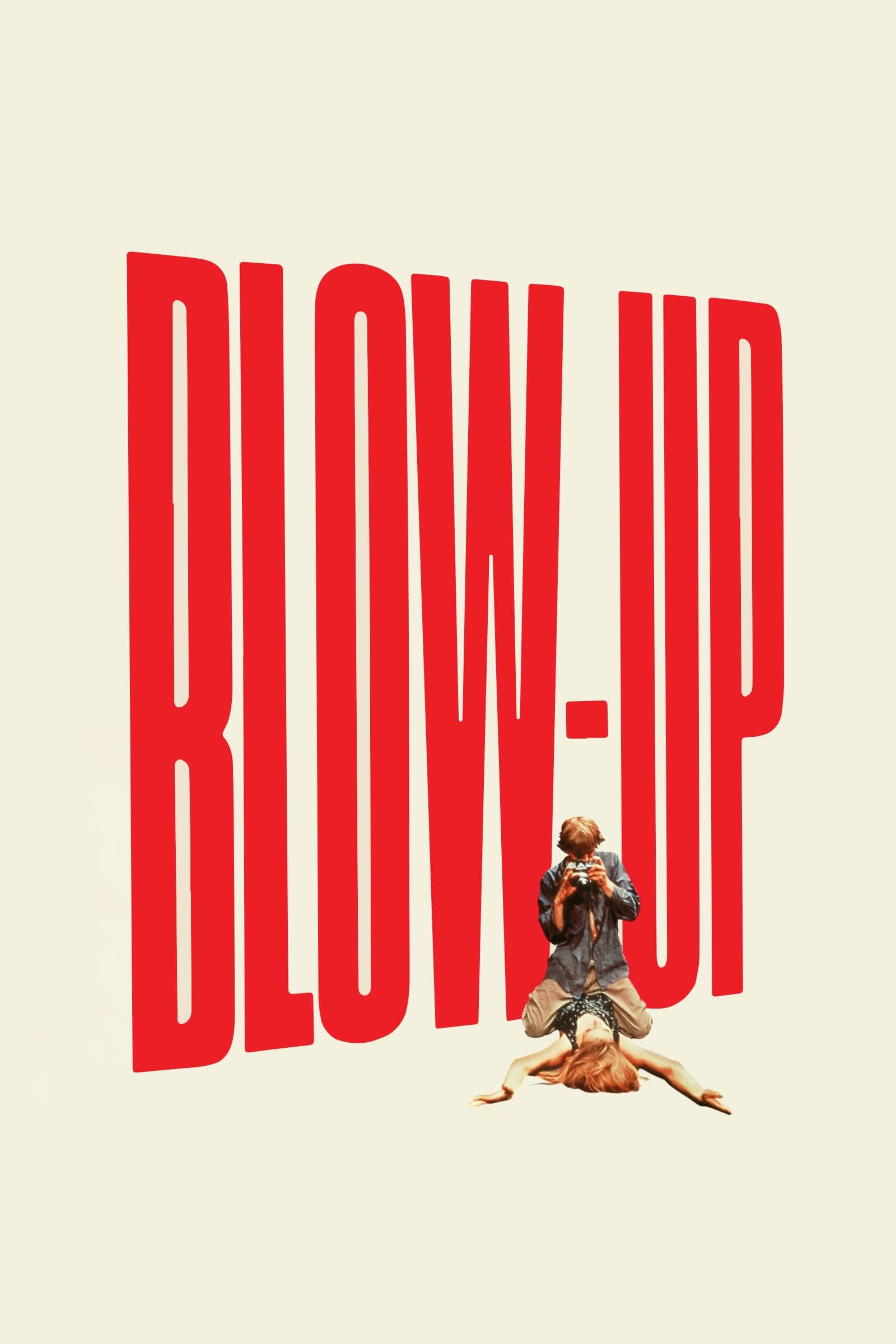
What the Film Is About
When I first experienced “Blow-Up,” I was instantly struck by how the film refuses to deliver certainty or closure. Instead, it pulls me into the enigmatic world of a London fashion photographer, whose casually glamorous life takes a dark and bewildering turn. I’m drawn along as he uncovers something mysterious—possibly sinister—hidden in the margins of the images he captures almost by accident. However, this film is much more than a puzzle about crime or evidence; it is a study of perception, obsession, and the slippery relationship between reality and illusion.
To me, the film charts a uniquely modern journey—one defined by doubt, alienation, and the constant friction between what I see and what is truly there. The emotional trajectory mirrors my own growing uncertainty about what I can trust: other people, my senses, and even my own memories. What begins as an almost playful investigation turns into a philosophical labyrinth, leaving me questioning not just what the protagonist saw, but whether any kind of truth can ever be known with certainty.
Core Themes
What fascinates me most about “Blow-Up” is its deep interrogation of perception versus reality. The film constantly asks: How much of what I see is real? How much is constructed? As a viewer, I’m forced to confront the uncomfortable idea that objective truth might be forever beyond my grasp—that everything I know is filtered, edited, and colored by my perspective. I believe that Michelangelo Antonioni, the director, is less interested in the facts of the story and more captivated by how the meaning of those facts constantly slips away as I try to analyze them.
Another key theme that grips me is alienation in modern urban life. The world of “Blow-Up” is filled with swinging parties, iconic London landmarks, and beautiful people, but there’s a profound loneliness that I can never quite ignore. The characters drift in and out of each other’s lives, often failing to connect on any meaningful level. This emotional distance feels as relevant to me now as it must have been in the 1960s, when shifting cultural values were beginning to erode traditional bonds. The film’s exploration of voyeurism and the commodification of beauty and violence resonates powerfully, especially today when images and appearances so often substitute for genuine experience.
I also detect a powerful meditation on the ambiguity of art itself. Does photography reveal the truth, or merely rearrange reality according to someone’s gaze? For me, “Blow-Up” is a sly commentary on the limitations and responsibilities that come with being both a creator and a spectator. It asks whether art can ever capture life—or if it always misses the essential truths, distorting or erasing meaning in the very act of preservation.
The film’s release era—the mid-1960s—was a period of upheaval, uncertainty, and discovery. Social structures were changing, the boundaries between public and private were eroding, and new forms of seeing (through art, media, and technology) were emerging. I find it remarkable how “Blow-Up” captures both the excitement and anxiety of this historical moment, while still speaking ably to my contemporary concerns about authenticity, apathy, and the limitations of perception.
Symbolism & Motifs
The more I think about “Blow-Up,” the more I am struck by its dazzling array of symbols and recurring motifs. Antonioni turns the act of photography itself into a kind of metaphor for all human attempts to make sense of the world. Every time the camera clicks, I sense the protagonist reaching for certainty—only to find that each enlargement, each close-up, leaves him further from clarity. For me, the repeated act of “blowing up” a photograph is less about searching for evidence and more about illustrating how analysis can fragment reality, turning meaning into abstraction.
I often linger on the motif of framing and looking—mirrors, lenses, windows, and the act of staring. Everywhere I look in the film, boundaries between observer and observed are blurred. The protagonist himself is both watcher and watched, endlessly composing and being composed. Even the physical spaces—claustrophobic studios, wind-blown parks, anonymous apartments—seem to emphasize how my own viewpoint is always hemmed in, partial, and unreliable.
I have always found the use of silence and ambient sound in “Blow-Up” particularly meaningful. Antonioni often avoids music and dialogue, leaving me alone with visual fragments or ordinary noises. In these moments, I feel the emptiness and alienation swelling—the city may be crowded, but its emotional emptiness is alarming. The closing pantomime tennis match, which frames the film both visually and thematically, is the ultimate symbol of ambiguity for me: a game played with invisible objects, whose “reality” depends entirely on the willingness of the participants (and myself as a viewer) to suspend disbelief.
Finally, I’d argue that colors themselves function as coded signals throughout the film. The vibrant pop art palette—the reds, blues, and greens—seems at first to offer pleasure and clarity, but quickly becomes disorienting. I am constantly reminded that surface appearances can dazzle and distract, hiding the chaos or violence lingering beneath. Through these shifting visual patterns, Antonioni invites me to embrace uncertainty as the only honest response to a world of ever-deepening mystery.
Key Scenes
Key Scene 1
For me, the sequence where the protagonist obsessively enlarges his photographs is the film’s emotional and thematic heart. Watching him hunched over the prints, blurring and distorting the images in hopes of discovering “what really happened,” I feel the mounting desperation not only for answers, but for meaning itself. This is less about uncovering a crime and more about the futility of analysis—the way each new revelation only generates more questions. I’m haunted by how this scene visualizes my own endless cycle of searching for clarity in a chaotic, opaque world.
Key Scene 2
There’s a moment when the main character returns to the park at night, hoping to find some final piece of evidence of the possible crime. The emptiness of the space, the still trees, and the cold quietness create an atmosphere that is almost existential. Here, I sense that the protagonist is not so much investigating an external mystery, but confronting his own limitations as a witness and interpreter. The uncertainty becomes all-consuming; instead of knowledge, he finds only void. This realization—at the heart of the scene—underscores Antonioni’s skepticism toward the hope of ever pinning down objective truth or meaning.
Key Scene 3
The film’s final sequence, with its mimed tennis match, is for me the culminating statement about ambiguity and alienation. Watching the protagonist’s gaze follow the invisible ball, I feel the weight of the film’s central question: does reality exist outside of collective agreement, or do we all pretend for the sake of coherence? The fact that he ultimately joins in the illusion, accepting the “rules” of the imaginary game, strikes me as both deeply sad and strangely liberating. This ending asks me to reckon not only with the uncertainties of art and perception, but also with my own role in constructing reality through belief and participation.
Common Interpretations
Every time I discuss “Blow-Up” with others or revisit critical essays, I find that people tend to follow a handful of dominant interpretations—each colored by their own priorities and anxieties. Many critics emphasize the film’s postmodern skepticism: the view that Antonioni is ultimately arguing for the unreliability of all images and representations. From this perspective, the central message becomes a warning about the seductive, but ultimately misleading, nature of visual evidence—in art, in media, and even in memory.
Others (and I sometimes agree with this camp) see the film as a biting social critique, aimed at the emptiness and moral apathy of the “Swinging Sixties” era. The protagonist, surrounded by beauty and pleasure, is nonetheless incapable of meaningful action or connection; the potential crime goes unreported, the victim unnamed, and the evidence forever ambiguous. Through this reading, “Blow-Up” becomes an indictment of both artistic and social disengagement—a challenge for me to confront my own willingness to look aside or become complicit in collective denial.
Some viewers are more interested in the existential qualities of the film—the sense that all my efforts to find meaning or certainty are doomed, yet still necessary. I’ve read moving commentaries about how Antonioni is ultimately sympathetic to my desire for connection and truth, even as he undercuts the possibility of fulfillment. There’s a haunting beauty in this perspective: if life is nothing but surfaces and uncertainty, then my quest for meaning, however futile, is what makes me truly human.
Less widely accepted, but still present, are interpretations focused on the satire of celebrity culture, gender politics, or even the crisis of masculinity in the modern world. I find these readings valuable as reminders of the film’s richness—it can never be reduced to a single message. For me, its power comes precisely from its irreducible ambiguity.
Films with Similar Themes
- “The Conversation” (1974) by Francis Ford Coppola – Like “Blow-Up,” this film dives into the dangers and limitations of surveillance, evidence, and interpretation. The protagonist, a surveillance expert, obsessively unpacks audio recordings, but each analysis seems only to widen the gulf between appearance and reality. I am fascinated by how both films question whether technology brings me closer to the truth or simply fragments it further.
- “Rear Window” (1954) by Alfred Hitchcock – Here, voyeurism is at the narrative core; the protagonist’s attempts to make sense of what he witnesses across the courtyard echo the same struggles I see in “Blow-Up.” I feel both films probe the ethics of observation, the unreliability of evidence, and the gap between knowing and understanding other people’s lives.
- “Cache” (2005) by Michael Haneke – I find “Cache” artistically indebted to Antonioni’s approach. The film revolves around mysterious surveillance tapes, blurring the lines between public and private, guilt and innocence. This film, like “Blow-Up,” leaves me wrestling with questions about responsibility in the face of ambiguous evidence and the inability of images to ever fully illuminate hidden truths.
- “Blow Out” (1981) by Brian De Palma – Inspired directly by “Blow-Up,” this film reimagines its story through the world of sound. Both movies feature a protagonist whose only clues to a potential crime come from obsessively analyzing fragments of recorded reality. I am fascinated by how De Palma explores paranoia and artistic alienation in ways that echo, and occasionally subvert, Antonioni’s haunting vision.
When I reflect on “Blow-Up,” I’m left with an enduring sense that the film is less an answer than an open-ended question—a mirror held up to my desire for certainty in a world that continuously eludes me. I see it as a work relentlessly skeptical about my ability to know or control reality, challenging me to accept the beauty and terror of ambiguity. In offering no easy resolution, Antonioni forces me to confront the possibility that what I see, and what I “know,” are always hovering just beyond the reach of understanding. The film’s genius, for me, is in making peace with this irresolvable uncertainty, and in recognizing the strange, poignant vitality that emerges from the search itself.
To explore how this film has been judged over time, consider these additional viewpoints.