
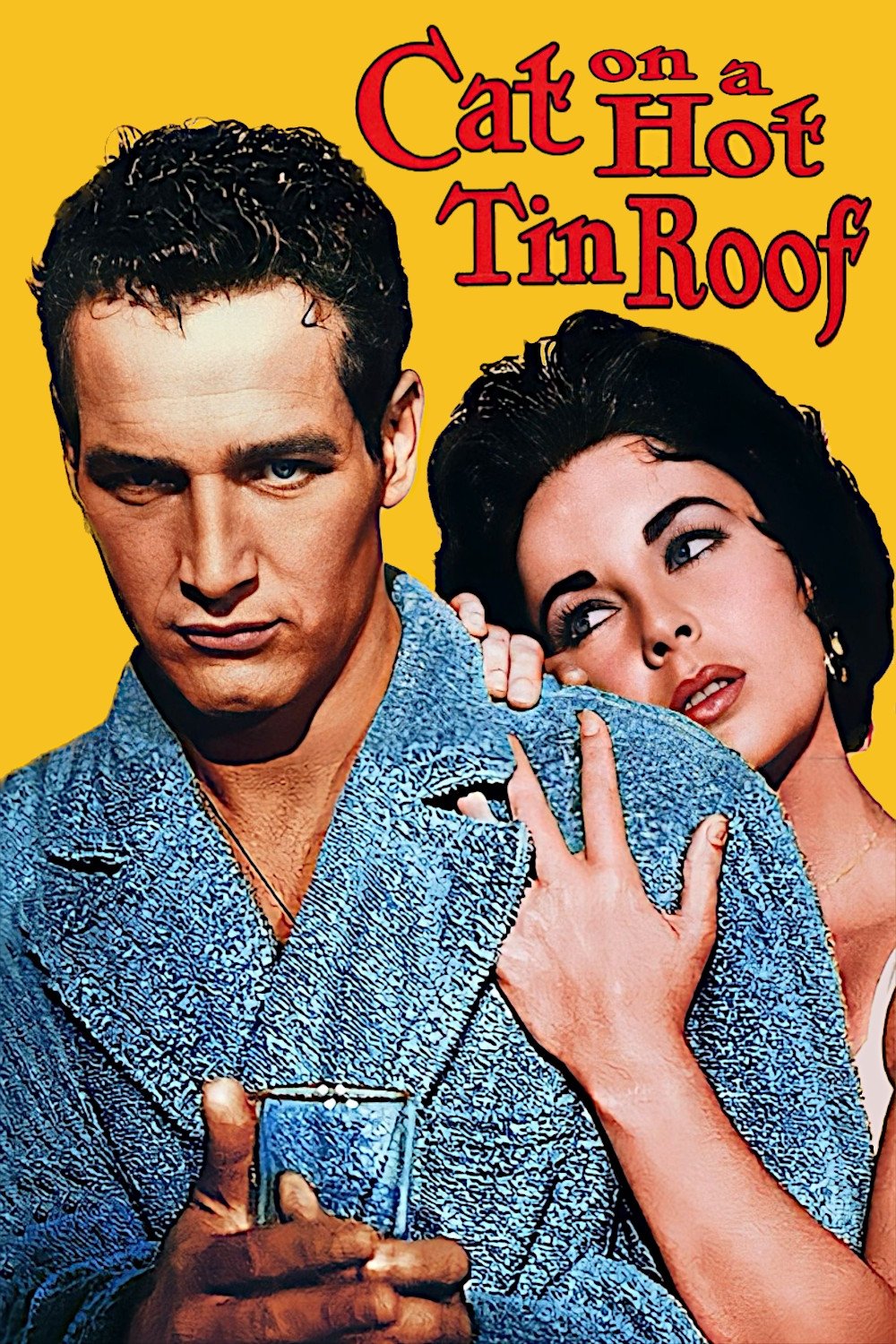
What the Film Is About
Looking back on “Cat on a Hot Tin Roof,” my overriding impression isn’t of catty dinners or steamy Southern nights, but rather of a relentless, bruising confrontation between truth and illusion. The film seems less interested in charting the course of a family gathering and more compelled to dissect the aching voids and jagged secrets that fester behind closed doors. Conflict, in this story, isn’t just verbal—it’s a matter of survival. Brick and Maggie, swirling in their own private storms, are locked in a struggle not just with each other but with their unspoken histories, personal failures, and desperate needs for connection. Watching their struggles, I felt the film situated itself like a pressure cooker, where emotional honesty is both the poison and the cure.
At the heart of the narrative is emotional paralysis—this refusal or inability to name feelings, face regret, or forgive transgressions, even as life demands a reckoning. I see the story’s overall journey as viciously circular, with everyone dancing around pain, clinging to old myths, and hoping someone else will make the first leap toward truth. What stays with me most are the moments the film lets silence speak volumes. The characters remain haunted by things left unsaid, caught between their yearning for love and their shame over weakness. It’s these delicate battlegrounds—personal, internal, and stubbornly unresolved—that give the film its piercing intensity for me.
Core Themes
When I revisit “Cat on a Hot Tin Roof,” the themes that strike me most honestly are mendacity (that Tennessee Williams word for lies), repression, and the agony of lost communication. For me, the film exists in a kind of purgatory where everyone is trapped by their own unspoken truths. The notion that survival, both physically and emotionally, may depend on one’s ability to deceive or self-deceive is threaded throughout. There’s a brutal honesty to the way the characters evade, distort, or even weaponize their stories to protect themselves or claim emotional territory.
I also find the film’s meditation on masculinity and vulnerability especially profound. Brick’s struggle isn’t simply with alcohol—it’s a refusal to live in the aftermath of love, loss, and perceived weakness. The film interrogates those tightly held ideas about what a man can or cannot acknowledge, especially in the mid-20th-century South, where anything that smacks of softness is suspect. Yet, beneath all the gunmetal pride, there’s a disarming rawness to the characters’ longing—for validation, for family, for forgiveness. It’s as if the film is asking: What does it cost to keep telling yourself lies? Who pays that price when bonds begin to unravel?
Then, there’s the theme of mortality and the desperate scramble for legacy. Big Daddy’s bluster barely conceals his terror of the grave and the meaninglessness that might await him. I’ve always viewed his quest to secure material and emotional order before he dies as emblematic of broader societal anxieties: the need for dignity, the fear of being forgotten, the relentless pressure to tidy up loose ends while there’s still time. The play’s original sexual undercurrents (and the film’s softened treatment) also gesture, to me, toward the heartbreak of forbidden longings—how desire, in any unaccepted form, becomes both private hell and public scandal. At its debut, these ideas spoke loudest to those living in shadows, but even today, the oppressive weight of societal expectation makes the film’s themes feel uncannily current.
Symbolism & Motifs
I’ve always been struck by how physicality in “Cat on a Hot Tin Roof” becomes its own language, with the most seemingly mundane elements taking on an aching symbolic weight. The crutch that Brick hobbles around on feels, to me, less like a medical necessity and more like a constantly visible reminder of emotional wounds, old betrayals, and the inability to move on. It’s almost as if every limping step is a confession—here is a man encumbered not just by injury, but by memories that have never been healed.
The motif of heat and the stifling Southern summer is omnipresent, and I think it acts as a metaphorical container for all the repressed emotions and simmering resentments in the house. Everyone seems physically uncomfortable—sticky, restless, agitated—as if the climate itself conspires to wring the truth out of them before night’s end. To me, that oppressiveness is a stand-in for internalized pressure, both personal and social, forcing the characters (and us) to acknowledge realities they’d rather smother.
Another consistent motif is the endless talk of inheritance. There’s a tension between what’s openly fought over (Big Daddy’s land, money, power) and what’s truly at stake (acceptance, forgiveness, self-worth). I see the entire estate not merely as property, but as a battleground for approval and legitimacy. Every conversation about “who gets what” becomes, in my view, a masked plea for love and recognition—reminding me of how material concerns in families often act as covers for buried emotional struggles.
Finally, I can’t ignore the recurring references to mendacity. This word echoes through the film almost like a curse—spoken, spat, and even reflected in silent exchanges. I read it as a totem for everything the family refuses to face directly, everything that’s been papered over. It cautions me that denial is contagious; when honesty is perceived as too dangerous, entire relationships buckle beneath the weight of lies.
Key Scenes
Key Scene 1
There’s a particular confrontation between Big Daddy and Brick that, for me, sits at the aching heart of the film’s project. It’s more than a father-son argument; it’s a volcanic release of decades’ worth of suspicion, bitterness, and yearning. I always find my breath catching in this scene—not for what is said explicitly, but for the thundercloud of feeling that hangs over every word and pause. This is where mendacity stops being abstract and becomes a shattering reality. Big Daddy’s demand for honesty forces Brick, and viewers like me, to question which pain is truly unendurable: facing the truth, or living with a lie. In this moment, the film seems to say that confession, however painful, is an act of courage. Even if reconciliation proves elusive, the simple act of voicing the unspoken can be transformative—and even redemptive.
Key Scene 2
One of the most revealing scenes, in my reading, is Maggie’s desperate soliloquy to Brick. Here, her raw honesty—her need for connection, her anger at being shut out, her razor-edged wit—comes through fully. It’s not about marital bickering or sexual frustration in the narrow sense. It’s the cry of someone who knows love can turn to spite, and that withholding affection is a form of self-destruction. The scene challenges conventional notions of femininity and wifely obedience. Instead, Maggie becomes both heroic and pitiable—waging a one-woman war against isolation. I always sense, in her pleas, the film’s insistence that genuine intimacy must be fought for. Vulnerability, the film seems to argue, is neither weakness nor defeat; it’s a necessary risk, as frightening as it is vital.
Key Scene 3
The climactic moment that lodges in my mind arrives when the family is finally forced to confront Big Daddy’s mortality, and previously taboo secrets swirl out into the open. It’s not a scene of neat answers or Hollywood catharsis. Instead, the rawness is left exposed—wounds acknowledged, but not fully healed. Watching this unfold, I find myself reminded that truth, even when named, does not automatically bring harmony. Yet, the willingness to stop running from pain feels, to me, like a kind of hope. The characters are exhausted but unfinished, as if the night carved out a new, fraught honesty that will echo beyond the last frame. The film’s refusal to tie up its emotional loose ends makes its message resonate in my own life: growth begins in discomfort, and meaning is forged in the fires we’d rather avoid.
Common Interpretations
Among critics and viewers, I’ve noticed a near-consensus that “Cat on a Hot Tin Roof” is a relentless investigation into self-deception and the costs of emotional dishonesty. Many point to the way the film holds a cracked mirror up to family dynamics, exposing how polite facades can mask a deeper, corrosive shame. Some see it almost as a cautionary tale: the more one clings to image and denial, the more isolated and broken-hearted everyone becomes.
Yet I’ve encountered diverging interpretations as well. Some critics, especially in more recent decades, highlight the subtextual exploration of sexuality and identity—reading Brick’s struggles as reflections of societal intolerance and internalized homophobia, even though the film’s censorship-era constraints force such themes underground. For viewers sensitive to these coded messages, the film is much more than a family melodrama; it’s a meditation on the consequences of repressed desire and culturally sanctioned silence. Another school of thought sees Maggie not as a “schemer,” but as the film’s moral center—her persistence and suffering revealing the grinding limitations placed on women, particularly in patriarchal, tradition-bound settings.
To me, the durability and passion of these various readings point to the film’s richness. Whether one sees it as a bold critique of Southern values, a psychological drama about wounded masculinity, or a veiled commentary on sexuality and exclusion, “Cat on a Hot Tin Roof” refuses to offer simple answers. Instead, it asks us to reflect on our own investments in comfort, illusion, and the stories we tell ourselves to avoid facing what hurts most.
Films with Similar Themes
- Who’s Afraid of Virginia Woolf? (1966) – I see a clear parallel in its brutally honest portrayal of marital strife, the masks couples wear, and the pain of unmet expectations, all set within the confines of a claustrophobic domestic space. Like “Cat on a Hot Tin Roof,” it questions whether truth can ever be purely redemptive.
- Long Day’s Journey Into Night (1962) – This film, for me, echoes the pattern of familial self-destruction driven by secrets, addiction, and the unending search for forgiveness. The sense of generational wounds and the impossibility of pure reconciliation ties these two works together.
- Ordinary People (1980) – I’m reminded here of a different era’s take on repression and emotional paralysis within families. There’s the same desperate need for connection, the same avoidance of painful truths, and the hope that naming trauma may offer a route to healing.
- August: Osage County (2013) – This modern drama gives me much of the same exhausting but authentic sense of intergenerational pain, deception, and longing for significance. The Southern backdrop, sharp dialogue, and layer upon layer of exposed wounds make it feel like a spiritual descendant of “Cat on a Hot Tin Roof.”
When I step back and consider what “Cat on a Hot Tin Roof” ultimately communicates, I feel it’s an unvarnished plea for honesty—however brutal, however incomplete. It is a work that stubbornly insists the greatest tragedies don’t always come from outside forces but from the secrets and silences we build up inside ourselves and our families. Beneath the film’s stylized Southern gothic surface, I see a portrait of human nature that is terrified by truth—and yet, paradoxically, only truly alive when daring to speak it. For me, its legacy lies in showing how every era, including our own, is haunted not just by what we do, but by what we refuse to confront, forgive, and finally accept.
After learning the historical background, you may also want to explore how this film was received and remembered.