
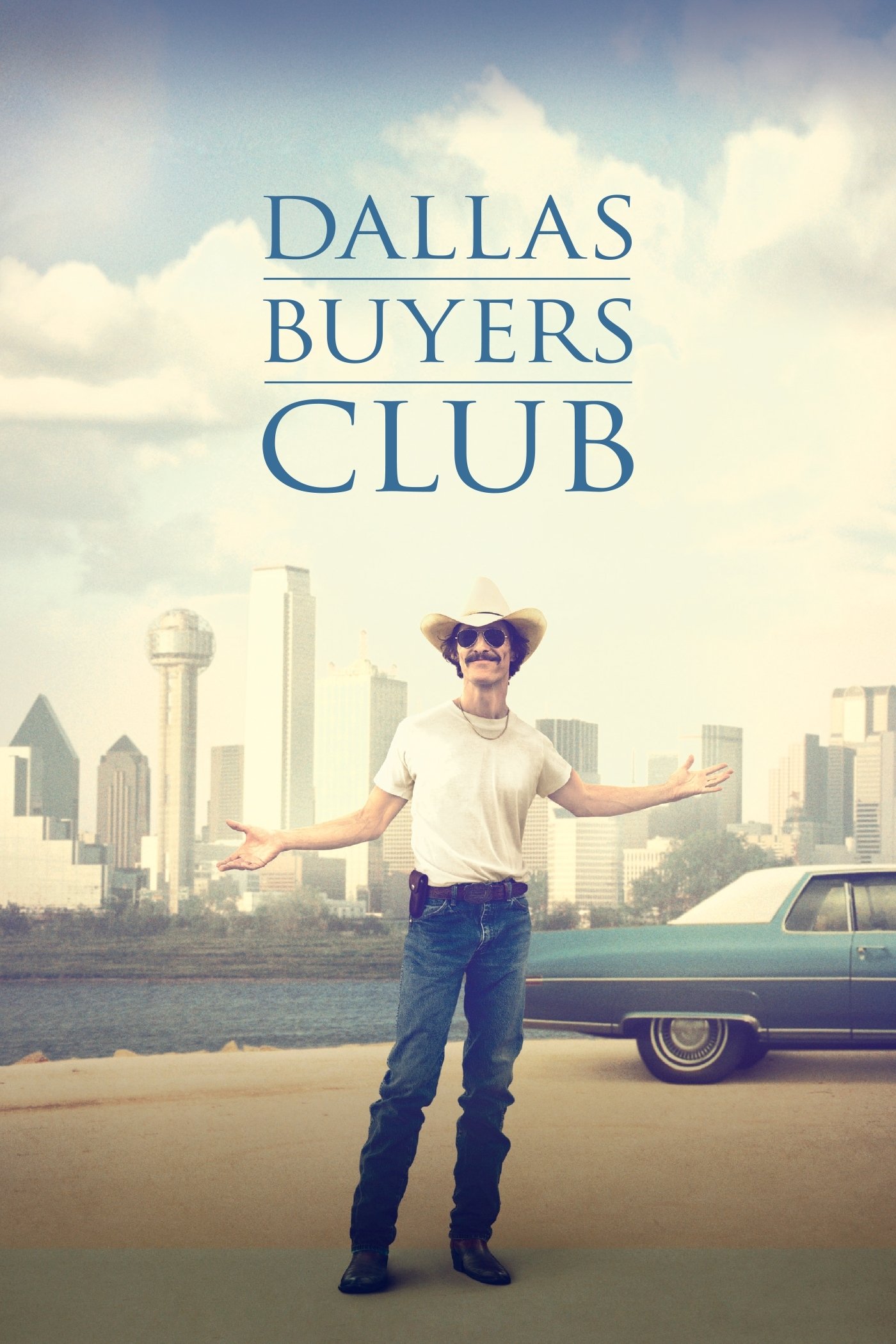
What the Film Is About
When I first encountered “Dallas Buyers Club,” I didn’t just see a story about a man fighting for his life — I felt immersed in a world where survival instinct collides with the blunt force of bureaucracy and social prejudice. It’s a film about transformation, not just of the body ravaged by illness, but of the soul, forced to expand beyond narrow confines by unforeseen hardship. The emotional journey is raw: a man who begins battling doctors, government agencies, and even his own prejudices, ultimately learns radical empathy. By the end, I realized this film is less about disease and more about dignity — about the stubborn, pulsing will to claim agency and meaning, even when every external authority tells you it’s already gone.
The central conflict hinges on one man’s rebellion against an indifferent system — but it’s also an inner battle with shame, fear, and denial. Watching the film, I found myself compelled by how resistance to change becomes the crucible in which genuine compassion is forged. What emerges is not just a fight for justice, but a noisy, lit-up assertion of identity in the face of death, injustice, and social invisibility. The narrative pulls us through anger, desperation, and finally hope, in a trajectory that challenges me to rethink my own boundaries of tolerance and courage.
Core Themes
What struck me most powerfully throughout “Dallas Buyers Club” was its unflinching meditation on the nature of survival — not just physical, but existential. When I peel back the surface, I see that the film tackles themes of autonomy, moral ambiguity, and the complex dance between self-interest and collective responsibility. Here, I’m reminded constantly of how power structures shape who lives and who dies: the facelessness of institutions versus the grit of individuals determined to outwit them.
Moral complexity reverberates in every frame for me. The hero’s business is not legal; the distribution of unapproved drugs blurs the lines between help and harm, law and ethics. Yet I found myself rooting for him, reminded how morality in the trenches often defies tidy definitions. Loneliness and alienation are woven tightly into the script; to me, this isn’t just a commentary on how we treat the sick, but an indictment of how society draws unwarranted lines between “us” and “them.”
At the time of its release, this was a searingly relevant conversation, as the ongoing AIDS crisis had already exposed the deep fissures in health care, activism, and public prejudices. But watching it now, I feel the timeliness hasn’t waned. Questions about access to medicine, government overreach, and the stigmas attached to illness continue to loom large. For me, the film’s enduring importance lies in how it urges viewers to challenge not only unjust systems, but themselves — to confront where empathy ends and apathy begins.
Symbolism & Motifs
Symbols and motifs ripple through “Dallas Buyers Club,” each amplifying its underground current of resistance and change. The constant intrusion of hospital machines, IV bags, and medical paraphernalia represent both the hope of survival and the cold impersonality of institutional care. Every time I saw these sterile objects, I felt the paradox: the promise of modern medicine is incessantly undercut by its distance from the staggeringly real needs of patients.
The recurring image of borders — whether it’s the rope marking a line in the dirt at rodeos, a locked office door, or the literal crossing into Mexico for alternative treatments — resonates deeply with me. Each border is more than a physical barrier; it’s a limit imposed by law, attitude, or self-concept. Watching the protagonist cross and recross these boundaries, I felt a persistent tension between exclusion and belonging, legality and necessity.
Clothing and appearance, too, serve as powerful motifs in shaping identity. The protagonist’s initial cowboy garb stands as an emblem of stubborn masculinity, but as the film progresses, subtle changes in his attire reveal cracks in his old armor. It evokes, for me, the slow evolution of self as a defensive posture gives way to newfound vulnerability. The transformation of supporting characters, especially Rayon, is rendered with equal visual care, where makeup and dress signify the courage required to assert one’s true self in public.
Finally, the motif of the “club” itself keeps echoing for me. The idea that salvation lies in community — even a ragtag one constructed under threat — highlights the paradox that our greatest strength often emerges when we band together against shared adversity. The club is both a literal vehicle for distributing hope and a metaphor for the necessity of human connection when systems fail us.
Key Scenes
Key Scene 1
For me, one of the film’s most crucial scenes comes when the protagonist, standing in front of a roomful of desperate faces, hands out life-sustaining medication with nothing but a folding table between him and the law. This moment crystallizes the movie’s challenge to institutional authority — but on a deeper level, I felt it throb with the question of moral responsibility. Here, the exchange isn’t simply about banned drugs; it’s a ritual of hope, offered by one outcast to another. The scene’s charged atmosphere underscored, for me, how acts of rebellion driven by empathy can become sacred, transformative gestures. It made me reflect on the thin line between outlaw and healer, and how those branded as troublemakers sometimes become the unsung architects of redemption.
Key Scene 2
I can’t forget the confrontation between the main character and his one-time friends — the moment he’s shunned in the local bar. This isn’t a wailing, melodramatic sequence, but its quiet cruelty carries tremendous weight for me. It’s here that the film excavates the corrosive effects of stigma and ignorance, but even more, it lays bare the subtle violence of ostracism. I saw in this scene not just the pain of social death, but the way it catalyzes a new kind of feisty self-awareness. The protagonist’s refusal to be cowed or reduced by others’ hatred becomes, in my eyes, a statement of dignity lodged deep in the marrow of the story. It’s a test, not only of resolve but also of capacity for growth — forcing both character and viewer to confront how easy it is to other and exclude those who no longer fit our comfort zone.
Key Scene 3
The film’s emotional peak arrived for me in a scene near the end, as the protagonist faces his reflection, aged, weakened, but strangely at peace. The moment is stripped of dialogue, heavy with unspoken reckoning. What moved me most was how the camera lingered on a gaze now emptied of bluster, filled instead with tired grace — the surrender not of defeat, but of acceptance. It’s here that the film, as I see it, makes its final, resounding statement about meaning: that dignity is found not just in fighting the system, but in learning to accept oneself and others, flaws and all. This scene felt like a benediction, an acknowledgment that while victory isn’t always possible, finding purpose is still within reach.
Common Interpretations
Among critics and viewers alike, I’ve noticed “Dallas Buyers Club” is widely interpreted as a critique of the pharmaceutical industry and a stirring celebration of human resilience. Many read it, as I do, as an indictment of bureaucratic inertia and the moral blindness of institutions meant to protect the vulnerable. I’ve heard some viewers focus especially on the film’s portrayal of the AIDS crisis, seeing it as a time capsule of both governmental failures and the grassroots activism that bloomed in response. Others emphasize the transformation of the central character: from bigoted outsider to reluctant ally.
There’s also nuanced debate about the film’s stance toward its characters’ moral choices. Some argue it lionizes a rule-breaker without interrogating the broader risks of unregulated “buyers’ clubs.” Personally, I think the film invites us to consider the complexity of making choices when the system itself is broken — and how sometimes survival necessitates coloring outside the lines. The portrayal of relationships across lines of gender and sexuality is celebrated for its honesty by many, although a few have critiqued the film for certain narrative simplifications or omissions.
In my experience, one of the film’s most powerful legacies is how it provokes audiences to grapple with large, urgent questions: Who gets to make decisions about life and death? How does community happen when all official avenues are closed? And what, ultimately, does it mean to live decently when facing the indecent realities of illness and prejudice?
Films with Similar Themes
- Philadelphia – To me, this film is an obvious thematic sibling, exploring both the stigma of AIDS and the harrowing battle for justice. Like “Dallas Buyers Club,” it dramatizes the intersection of personal prejudice and legal obstruction, with a similarly urgent sense of humanization.
- The Constant Gardener – I’ve always connected this film’s exploration of pharmaceutical ethics and governmental indifference to “Dallas Buyers Club.” Both films peel away the layers of medical bureaucracy, exposing how the pursuit of profit can leave ordinary people vulnerable.
- Milk – While rooted in political activism rather than medical activism, “Milk” resonates with me for its depiction of individuals (often outsiders themselves) who confront systemic injustice with courage and ingenuity. The focus on community and building coalitions echoes key aspects of “Dallas Buyers Club.”
- Erin Brockovich – Although it focuses on environmental rather than medical injustice, I read “Erin Brockovich” as a kindred narrative: a determined outsider challenging corrupt authority for the sake of others’ wellbeing, navigating the ambiguities of legal and moral action.
Having spent time with “Dallas Buyers Club” as both a viewer and an analyst, what lingers for me is its insistent assertion that dignity persists even when the world seems intent on stripping it away. The film doesn’t paper over the cost of resistance — in fact, it scrutinizes every frayed nerve and moral misstep along the journey. But what I find most meaningful is the way it illuminates the immense power of empathy forged in hardship. We are reminded that heroism can manifest in the most unlikely places: not just in grand gestures, but in small acts of defiance, shared burdens, and the relentless hope that things — people, systems, hearts — can change. In the context of its era and ours, I see “Dallas Buyers Club” as a vital reminder of the stakes of apathy, the power of unlikely alliances, and the fundamental human hunger — for agency, connection, and love — that no illness or injustice can fully extinguish.
To explore how this film has been judged over time, consider these additional viewpoints.