
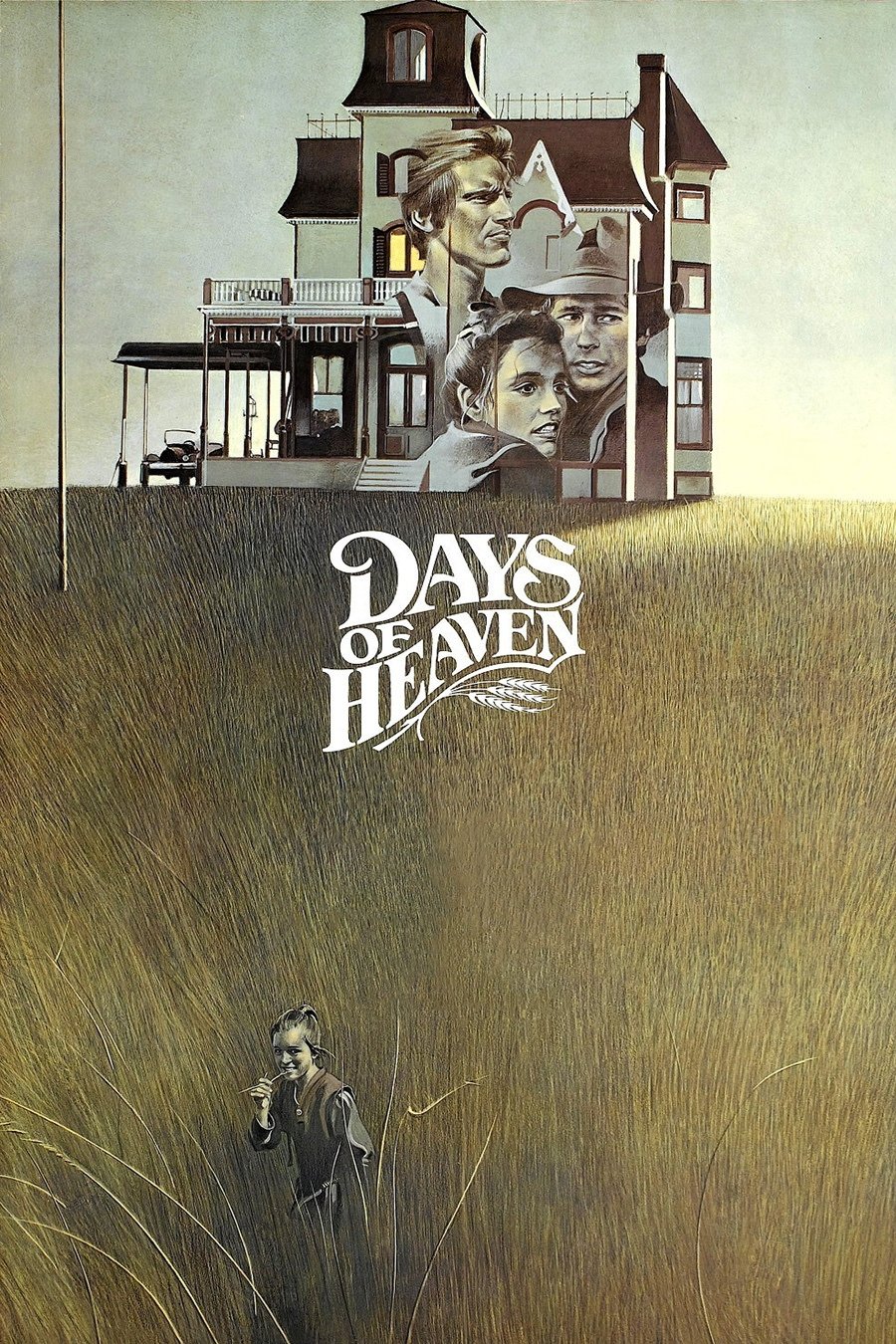
What the Film Is About
The first time I watched “Days of Heaven,” I felt as if I was floating through a memory that didn’t quite belong to me, but was shaped from half-forgotten dreams, fragile desires, and the blurry sadness that lingers on the edge of hope. The film’s story, cast in golden light and long, haunted silences, moves less like a traditional narrative and more like a meditation on longing, desperation, and the impossibility of escape. What struck me wasn’t simply the story’s events, but the emotional turbulence beneath its surface — a sense of yearning for a life just out of reach, and the quiet devastation that shadows even our brightest pursuits.
At its core, “Days of Heaven” strikes me as an elegy for the American Dream’s inherent contradictions. The conflict that pulses beneath every wind-swept field is less a battle between people, and more a restless confrontation with fate, class, and the consequences of yearning for more. Ultimately, the film isn’t about any one character’s journey; it’s about the ache that all of them share — the fragile hope for freedom and peace, and the silent forces (both natural and human) that conspire to unravel those dreams.
Core Themes
When I immerse myself in “Days of Heaven,” I find the film’s major themes are woven together with a kind of poetic subtlety that rewards patient, attentive viewing. Chief among these is the corrosive power of desire. The characters are driven by hunger — not just for physical survival, but for love, security, and a sense of belonging. Each of them, it seems to me, is marked by an ache to transcend the limitations of their social and personal circumstances, a desire that is both deeply sympathetic and quietly destructive.
Class and power are impossibly intertwined here. What I see is not merely a love triangle, but a meditation on how need and opportunity intersect. The landowner’s wealth and isolation is mirrored by the itinerant laborers’ poverty and intimacy, raising uncomfortable questions about who holds power and who can claim happiness. Released in the late 1970s, during a time of economic and spiritual uncertainty in America, the film almost feels like an answer to the fading optimism of earlier decades. Today, these themes resonate even more, as economic divides and questions about what constitutes a “good life” still haunt our cultural imagination.
I also find in “Days of Heaven” an urgent thread of mortality and transience. Nothing lasts: The wheat, the love, the delicate harmony of the household, and even the beauty of the land are all in constant danger of slipping away. Time, like the wind that ripples through the fields, is always moving forward, eroding whatever the characters try to preserve. This sense of impermanence — that happiness can only ever be borrowed — is, to me, one of the film’s most heartbreaking and universal insights.
Symbolism & Motifs
What stays with me most after each viewing of “Days of Heaven” isn’t just the narrative, but the stream of images and symbols that linger long after the credits roll. The motif of the wheat fields, stretching endlessly beneath wide, indifferent skies, is the film’s visual heart. I see those fields as representing more than livelihood or beauty — they seem to be a symbol for both opportunity and futility. The workers labor beneath the sun in pursuit of some future abundance, but the fields are also a reminder of how small and fragile human life is against the sweep of nature.
Light is another recurring motif that speaks volumes. Everything is bathed in the so-called ‘magic hour’ glow — and this golden light, to me, is both idyllic and ominous. Light here isn’t just natural beauty; it is fleeting, precious, and a constant reminder that any happiness is temporary. Even in moments of apparent peace, there’s a melancholy inevitability to the way the light fades, inches away from dusk and darkness.
Mechanical motifs — the repetitive movement of harvest machines, the whirring of gears — punctuate the otherwise pastoral world. These images, in my mind, are not only reminders of the industrialization underpinning agricultural wealth, but also of fate and inevitability. The machines cut down the wheat as inexorably as time cuts down dreams, rendering the characters’ efforts at control both valiant and hopeless.
Above all, Malick threads the film with religious and elemental imagery. Swarms of locusts and sudden, purifying fires feel like biblical judgments, closing in with a sort of mythic inevitability that dwarfs human ambition. I feel this connects the struggles in the film to a much older, almost mythic cycle of rise, fall, and regeneration — as if every personal tragedy is just another echo in the endless unfolding of history and nature.
Key Scenes
Key Scene 1
One scene that has always haunted me is the image of the lovers and the landowner, standing together as dusk settles over the fields. There is hardly any dialogue — only glances, gestures, and the slow, heavy silence that falls in their wake. I find this moment crucial, not because it advances the story, but because it perfectly encapsulates the emotional contradiction at the film’s center: beauty laced with anxiety, happiness on the brink of collapse. The stillness is suffused with longing, guilt, and an undercurrent of dread. For me, this is the essence of “Days of Heaven”: a moment of grace that contains, within itself, the seeds of destruction.
Key Scene 2
Years after first seeing the film, I still return to the devastating sequence when the fields are overtaken by locusts and fire. The visuals of countless insects swarming against the sky, followed by billowing flames, feel almost apocalyptic. What strikes me here is not just the awe-inspiring scale of these disasters, but what they represent emotionally and symbolically. In my eyes, these calamities are more than ‘acts of God’ — they are physical manifestations of the characters’ internal turmoil and the unsustainable tensions underlying their lives. Everything they’ve built, hoped for, or tried to hide is consumed in moments, suggesting that no amount of human cunning can withstand the indifferent, sometimes cruel cycles of nature and fate.
Key Scene 3
As the film draws to a close, I’m deeply moved by the quiet, open-ended coda — the girl’s reflective voiceover, the lingering images of the plain, and the slow trickle of survivors wandering into the unknown. This ending doesn’t offer catharsis, but instead a sense of perpetual searching. The characters haven’t found rest or resolution, and maybe never will. For me, this is where the film’s meaning crystallizes: life is a series of departures, losses, and the faintest hints of renewal. The message is neither wholly despairing nor redemptive; it acknowledges that peace may be elusive, but the act of seeking — of living and hoping — remains.
Common Interpretations
Throughout my own reckoning with “Days of Heaven,” I’ve noticed a remarkable diversity of interpretations, and I’m convinced that this richness is part of why the film endures. Many critics and viewers see it as a meditation on the American myth — specifically, the notion that happiness and prosperity can always be achieved through will, cunning, or hard work. For these audiences, the narrative dismantles that dream, highlighting how such ambition is inevitably shadowed by suffering, envy, and moral compromise.
Another school of interpretation, one that resonates with me, regards the film as an ecological or spiritual parable. Here, the ceaseless cycles of growth and destruction evoke nature’s indifference to human drama, and the instances of biblical imagery (like the locusts and the fire) are read as commentary on the arrogance and smallness of people. There’s also a strong current of fatalism — that the forces at play are so vast that no amount of effort or love can make us truly masters of our fate.
Some critics focus on the film’s aesthetics and narration, drawn in particular to the perspective of the young narrator. They interpret her detached, sometimes childlike voice as an expression of innocence caught in the undertow of adult sorrow — reinforcing the idea that understanding is always partial and mediated, that life’s greatest lessons are elusive even as we live through them. For others, the ambiguous relationships and understated emotional tone signal a broader reflection on the difficulty of connection, the ambiguity of motives, and the way love is tangled with exploitation and secrecy.
I’m personally most drawn to interpretations that hold these strands together: “Days of Heaven” is, for me, a study in longing that refuses simple answers, instead suggesting that to be human is to be buffeted by desire and circumstance, never quite able to claim happiness without consequence.
Films with Similar Themes
- Badlands – Every time I watch “Badlands,” I’m reminded of its shared fascination with doomed love and the pursuit of freedom at the edge of civilization. Like “Days of Heaven,” it unfolds as a meditation on innocence and violence against a vast, indifferent landscape.
- Giant – “Giant” digs deeply into themes of social class, power, and the shaping of individual destinies by forces larger than oneself. Its sweeping visuals and exploration of American myth connect it thematically to Malick’s vision of hope and disillusionment among Texas’ plains.
- The Grapes of Wrath – Steinbeck’s story, as brought to life in the film, resonates with “Days of Heaven” through its focus on itinerant workers, economic hardship, and the struggle for dignity and belonging amid environmental and societal pressures.
- The Assassination of Jesse James by the Coward Robert Ford – This film’s lyrical cinematography and mournful sense of time passing echo the visual and philosophical concerns of “Days of Heaven.” Both are preoccupied with the price of ambition, mythmaking, and the loneliness that attends them.
From my vantage point, “Days of Heaven” speaks most powerfully to the tragic, poignant beauty of impermanence. It’s a film that invites me — and, I feel, most viewers — to sit with the aching contradictions of human nature: our incessant striving, our longing to belong, and the perpetual, unresolvable mystery of what it means to live in a world that is both breathtakingly beautiful and indifferent to our dreams. It’s a reminder that, although we may be swept along by forces beyond our control, our capacity to yearn, to try, and to reflect — these are the things that make our brief time meaningful, even as the light fades.
After learning the historical background, you may also want to explore how this film was received and remembered.