
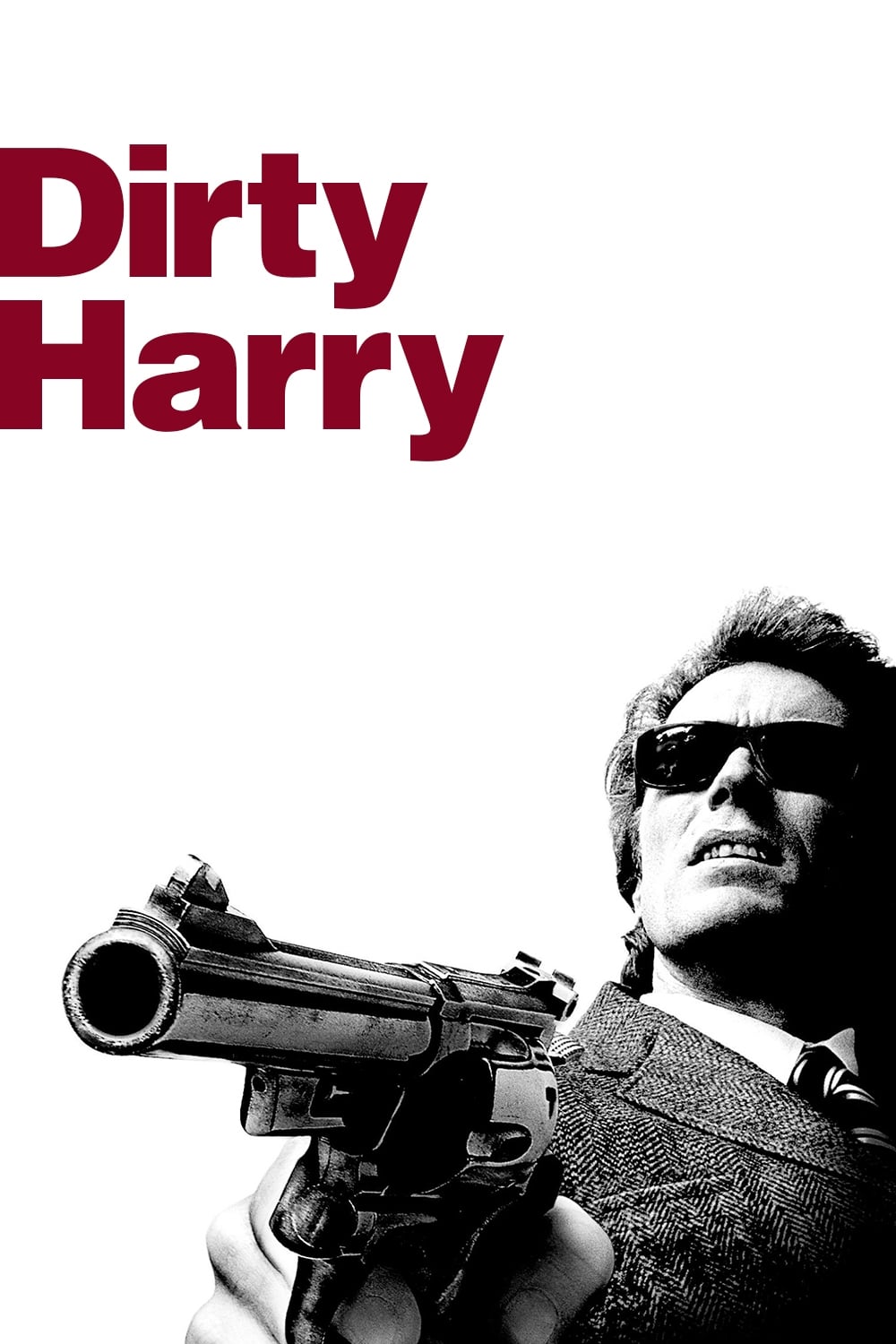
What the Film Is About
When I first experienced “Dirty Harry,” I wasn’t just watching a crime thriller—I felt thrust into a moral minefield. For me, the film isn’t merely about a cop chasing a killer; it’s a stark voyage into the psyche of urban America during a period of turmoil and mistrust. I see it as a story about a deeply flawed man—Inspector Harry Callahan—grappling with his own instincts and a world where justice and legality come into uneasy conflict. At its core, my emotional journey with the film has always centered on the tension between security and freedom, force and restraint.
What really struck me, far more than the procedural elements, is the film’s emotional undertow: the persistent feeling that every time Harry steps into the shadows, he’s walking the line between order and chaos, driven as much by personal pain as by civic duty. I believe the narrative direction is relentlessly forward, bearing witness to a society that’s as battered and bruised as its protagonist. There’s no easy catharsis—only the stubborn grind of someone trying, and often failing, to keep some kind of moral order intact.
Core Themes
The film’s most riveting power, to me, lies in its direct confrontation with the theme of justice: not the sanitized, procedural kind, but a messy and often ugly quest. I find myself drawn to how “Dirty Harry” explores the limits of due process and asks, in the most uncomfortable way, what price we’re willing to pay for safety. Through Harry Callahan’s relentless intensity, the movie forces me to grapple with the dangers of unchecked power and the moral compromises people make in the name of the greater good.
Watching it in the context of the early 1970s, I sense the film mirrors American anxieties: rising crime rates, distrust in institutions, and fears of social upheaval. But the resonance doesn’t end there—today, I find these questions more relevant than ever. The film invites reflection on whether violence can ever serve justice, and whether bending the law destroys what it’s supposed to protect. There’s a constant interrogation of authority: Is Callahan’s rebellion against red tape heroic or reckless? For me, the answer is never simple.
I’m also haunted by the film’s meditation on alienation. Harry is a man isolated from colleagues, bureaucracy, and even the public he claims to serve. This isolation feels like a mirror to broader social fragmentation—the sense of everyone fending for themselves in an increasingly dangerous city. In that regard, I believe “Dirty Harry” is as much about the cost of heroism as its necessity, and it quietly poses a challenge to viewers: How much compromise is too much?
Symbolism & Motifs
One recurring visual motif that always catches my eye is Harry’s .44 Magnum revolver—less a weapon, more a symbol of uncompromising direct action. It’s almost mythic, a gleaming manifestation of the urge to bypass bureaucracy and impose justice instantly. Yet for me, every shot fired is a loud, troubling exclamation mark: What does it mean when a society invests faith in one man’s ability to judge, punish, and protect?
I also notice how the city of San Francisco itself becomes a symbol—its sunlit streets and shadowed alleys expressing the duality between civil order and lurking chaos. Every time Harry surveys the city, I’m reminded that this is not just a setting, but an active battleground for the soul of America; the blurred lines between light and darkness reflect the ambiguity of Harry’s own ethics. The bridges and freeways form a kind of labyrinth, suggesting there’s no direct route to moral clarity, only a series of fraught decisions and perilous shortcuts.
Then there’s Callahan’s characteristic sunglasses—a detail I can’t help but see as a barrier, both shielding him from the world and making him unreadable to those around him. They represent both protection and emotional detachment, reinforcing his status as an outsider. Taken together, these symbols reinforce the central message I take from “Dirty Harry”: the tools we create for safety can become double-edged, and our defenses may eventually cut us off from our deepest humanity.
Key Scenes
Key Scene 1
For me, the most defining moment arrives when Harry confronts a wounded criminal and delivers his infamous “Do you feel lucky?” speech. I find this sequence electrifying and deeply paradoxical. On the surface, it’s a flex of bravado, but beneath the swagger, I sense a weary acknowledgment of the randomness of violence and power. The scene stands as a meditation on uncertainty and chaos—Harry himself doesn’t know if his gun is loaded, mirroring society’s broader ignorance about the true consequences of force. In that moment, I feel the film peels away the illusion of absolute control; the lawman’s authority becomes as arbitrary as the luck of the draw. It’s a moment that never lets me forget justice is often a gamble, no matter who wields the weapon.
Key Scene 2
The anguished rooftop sequence, where Harry must decide whether to heed legal restrictions or save a life, always sticks with me. I see this as the film’s ethical crucible—a raw, suspenseful situation that lays bare the costs of principle versus pragmatism. Harry’s anguish is as palpable as his fury at being restrained by rules seemingly oblivious to real danger. I read the scene as a direct challenge to the viewer: which matters more, the letter or the spirit of the law? Watching his moral disintegration, I can’t help but feel both empathy and alarm; the film makes me question whose safety is being protected and whose rights are being eroded.
Key Scene 3
For me, the ending—where Harry disposes of his badge after his final confrontation—feels like the film’s unresolved sigh, more weary than triumphant. Callahan’s act is quietly devastating; it represents not just his personal exhaustion, but also an institutional failure. By discarding his badge, I sense Harry is expressing a painful recognition: there may be no place for his methods within the structure he once served. The gesture is far from a clean break, though. It lingers with me as a lingering question—can any single figure bear the weight of justice, or does that burden become too corrosive? This denouement feels like the film’s most honest admission, revealing the impossibility of reconciling personal conviction with public duty.
Common Interpretations
I often encounter viewers and critics who see “Dirty Harry” as a forceful endorsement of vigilantism—a blueprint for tough-on-crime attitudes that dominated the American landscape for decades. In that view, Callahan is the last honest man in a compromised world, and his actions are an understandable, if not desirable, answer to institutional paralysis. This interpretation is especially common among those who grew up during an era of perceived lawlessness, and I can understand the appeal of a clear-cut, if ruthless, protagonist.
But I also find persistent voices who argue the film is more complex—less a manifesto and more a warning. For these viewers, Harry’s isolation isn’t a sign of heroism, but a symptom of alienation and moral decay. Bureaucratic roadblocks aren’t just obstacles, but reminders of the necessary limits to personal power. When I talk with people who interpret the film this way, they point out how Harry’s victories are always tinged with ambiguity and loss, leaving audiences with as much anxiety as relief.
There are also nuanced takes I resonate with: “Dirty Harry” as a reflection on the impossibility of perfect justice, and on the human tendency to carry trauma from the very systems designed to save us. The film can be read as tragic, with Harry less a model to emulate than a figure wracked by doubt and consequence. In this light, his journey becomes a meditation on the costs of moral certainty—an uneasy legacy that continues to inspire debate.
Films with Similar Themes
- Taxi Driver (1976) – When I watch Martin Scorsese’s New York, I see the same tormented landscape of violence and alienation. Travis Bickle’s one-man war against perceived decay echoes Harry’s struggle, and both films pose unsettling questions about the line between vigilance and fanaticism.
- Serpico (1973) – For me, “Serpico” is a compelling counterpart, also dissecting the theme of justice and institutional failure. Frank Serpico’s battle with police corruption is less violent but equally risky, highlighting the agony of pushing back against a broken system from within.
- The French Connection (1971) – I find “The French Connection” shares that relentless energy and urban grit. Popeye Doyle’s relentless pursuit of criminals is driven by obsession, blurring lines between heroism and recklessness in a way that reminds me of Callahan’s journey.
- Se7en (1995) – Watching “Se7en,” I notice how it channels the despair and darkness of “Dirty Harry,” but with a more existential twist. Its detectives, like Harry, are mired in the impossibility of clean justice in a corrupted world; the film offers no easy solution, only a grim meditation on the persistence of evil.
When I reflect on “Dirty Harry,” what lingers with me isn’t any singular moral lesson, but a persistent sense of discomfort—a nagging suspicion that the search for security can erode our shared values, and that even the noblest intentions are shadowed by unintended consequences. The film doesn’t offer comfort or closure. Instead, it dramatizes the uneasy compromises forged in the crucible of public fear and personal conviction. I come away believing “Dirty Harry” is less about punishment than about the difficulties and dangers inherent in enforcing order, especially in times of cultural upheaval. In doing so, the film allows me—however uneasily—to ask where the boundaries of law, morality, and empathy truly lie.
To explore how this film has been judged over time, consider these additional viewpoints.